DbcultAccessing Vault...
Cult Review
Senior Film Conservator
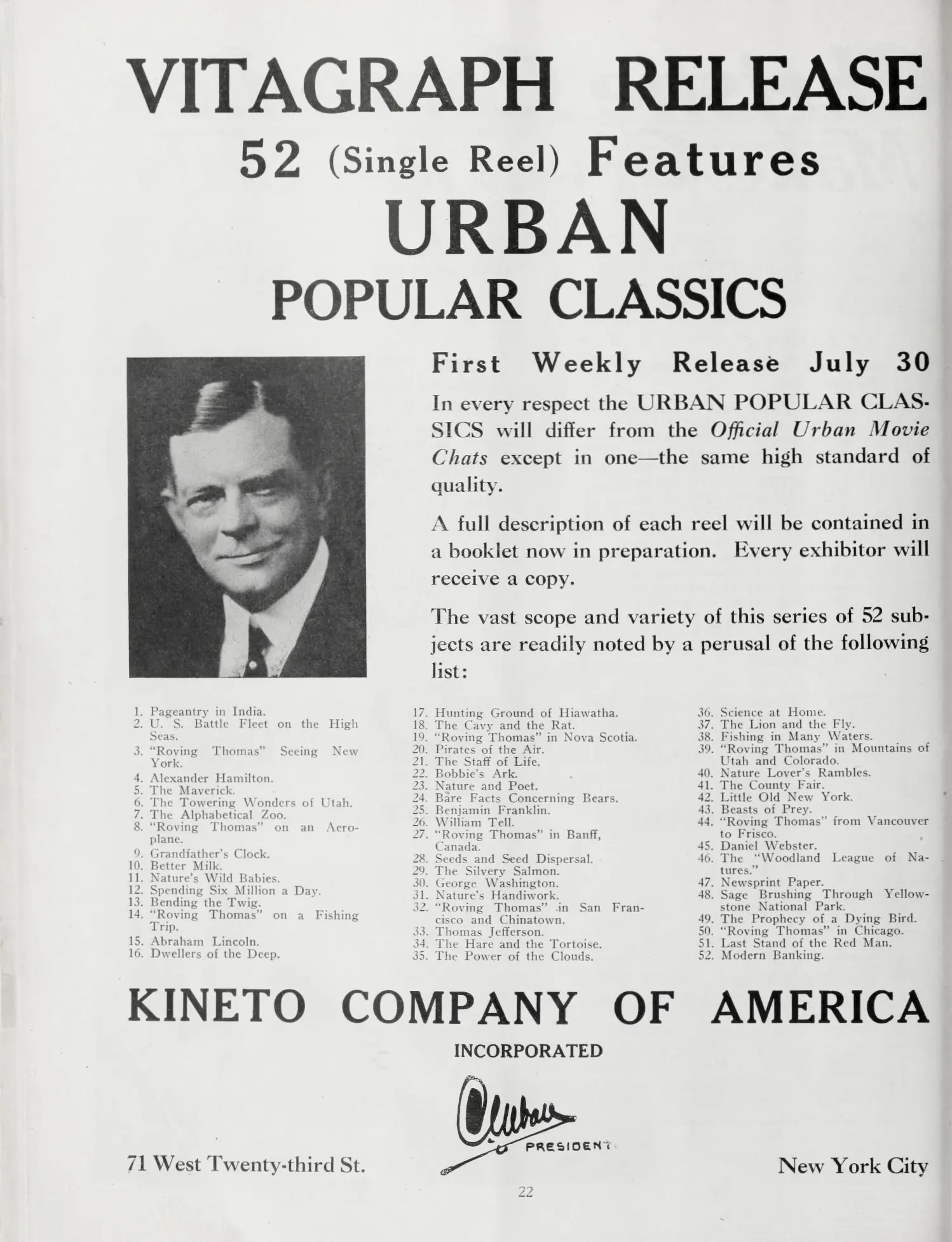
Benjamin Franklin arrives as a cinematic meditation on the restless ingenuity that forged a nation. From the opening tableau—a cramped, soot‑blackened workshop where a lanky Franklin (played with uncanny vitality) juggles a brass printing press and a fledgling kite—the film establishes a rhythm of relentless curiosity. The director’s choice to bathe the opening scenes in chiaroscuro, punctuated by the amber glow of a single lantern, immediately signals a visual language that mirrors the subject’s own oscillation between darkness and enlightenment.
The narrative structure, rather than adhering to a linear chronology, adopts a mosaic approach: flashbacks intercut with diplomatic negotiations, scientific experiments juxtaposed against political intrigue. This fragmented storytelling mirrors the polymath’s own compartmentalized genius. When Franklin ascends to the bustling streets of London, the camera follows with a kinetic handheld style, the sea‑blue hue of the Thames rendered in a saturated #0E7490 that evokes both the literal and metaphorical currents he navigated. The film’s palette—anchored by dark orange (#C2410C) accents on period costumes and yellow (#EAB308) highlights on the electrical arcs—creates a visual leitmotif that underscores moments of revelation.
Performance-wise, the lead delivers a layered portrait that oscillates between the mischievous prankster who once famously threw a firecracker into a church and the gravitas of a seasoned diplomat brokering the Treaty of Paris. The supporting cast, particularly the actress portraying Deborah Read, imbues the narrative with an emotional anchor; their exchanges are rendered in tight close‑ups where the sea‑blue background of the bedroom scenes reflects the turbulent undercurrents of their relationship. The script, penned with a deft blend of period‑accurate diction and contemporary wit, avoids the trap of hagiography. Instead, it probes the contradictions inherent in Franklin’s character: his advocacy for liberty juxtaposed with his ownership of enslaved people, his public persona of affable optimism shadowed by private bouts of melancholy.
The film’s thematic preoccupations resonate with several contemporaneous works. Its exploration of scientific curiosity parallels the intellectual fervor in Reaching for the Moon, while its diplomatic intrigue recalls the tension‑filled negotiations depicted in The Dark Silence. Moreover, the personal sacrifices made by Franklin echo the societal constraints examined in Barriers of Society. These intertextual nods enrich the viewing experience, inviting the audience to situate Franklin’s saga within a broader cinematic conversation about ambition, morality, and the cost of progress.
Cinematographically, the film excels in its use of light as a narrative device. The recurring motif of the kite‑laden storm—captured in slow‑motion with droplets of rain glinting like tiny diamonds against the dark orange sky—serves as a visual metaphor for Franklin’s electrifying discoveries. When the kite finally draws a spark, the screen erupts in a burst of yellow (#EAB308) that bathes the protagonist’s face, a moment that feels both historically faithful and poetically amplified. This scene, arguably the film’s visual apex, is balanced by quieter, introspective moments: a solitary figure seated by a fireplace, the flames reflected in his spectacles, the sea‑blue hue of the hearth casting a melancholic glow that underscores his internal conflict.
The production design merits particular commendation. The recreation of 18th‑century Philadelphia, with its timbered facades and bustling market squares, is rendered with an authenticity that rivals the meticulous world‑building seen in Germinal; or, The Toll of Labor. The diplomatic chambers of Paris are suffused with gilded accents, yet the director deliberately desaturates these spaces, allowing the sea‑blue drapery to dominate, thereby emphasizing the cold, calculated nature of political maneuvering. In contrast, the American colonies are bathed in the warm, earthy tones of dark orange, symbolizing the fertile ground of revolutionary ideas.
Sound design, too, plays a pivotal role. The crackle of static electricity is amplified, creating an audible tension that parallels the narrative stakes. The score, composed of period‑appropriate strings interwoven with subtle electronic undertones, mirrors the film’s central dichotomy: the marriage of tradition and innovation. The subtle inclusion of a lone violin during Franklin’s moments of solitude evokes a sense of yearning, reminiscent of the melancholic strains heard in An Old Sweetheart of Mine.
Historically, the film does not shy away from the contentious aspects of Franklin’s legacy. The screenplay incorporates scenes where he confronts the moral paradox of his involvement in the slave trade, delivering a monologue that is both raw and reflective. This willingness to grapple with uncomfortable truths aligns the film with the ethical rigor of The Witness for the Defense, offering viewers a more nuanced portrait than the sanitized narratives of earlier biopics.
The pacing, while deliberate, occasionally falters during the extensive montage of Franklin’s printing ventures. However, this segment is redeemed by a masterful sequence where the camera pans across rows of freshly printed pamphlets, each bearing the bold dark orange header of "Poor Richard’s Almanack." The rapid succession of close‑ups, set to a staccato rhythm, conveys the frenetic energy of a man who refused to be confined by a single discipline.
In terms of comparative cinema, the film’s treatment of a historical figure’s internal conflict bears resemblance to the introspective style of The Right Way. Yet, where that film leans heavily on dialogue, Benjamin Franklin employs visual symbolism—most notably the recurring motif of the kite, the sea‑blue sky, and the dark orange lantern—to convey subtext. This visual storytelling elevates the work beyond mere recounting of events, positioning it as a meditation on the very nature of invention and the burden of legacy.
The climax, the signing of the Treaty of Paris, is rendered with a restrained grandeur. The camera lingers on the ink‑stained fingertips of Franklin, the dark orange seal of the United States pressing into the parchment, while a muted sea‑blue backdrop of the hall’s vaulted ceiling suggests the vast, uncharted future awaiting the fledgling nation. The moment is underscored by a soft swell of the score, allowing the audience to absorb the weight of the scene without resorting to melodramatic fanfare.
The film’s denouement, a quiet tableau of Franklin returning to his modest Philadelphia home, is suffused with a gentle yellow glow, symbolizing the enduring light of his ideas. The final shot—a lingering focus on a solitary candle flickering against the night‑black walls—evokes the paradox of a man who illuminated the world while remaining, at his core, an enigmatic figure.
Overall, Benjamin Franklin stands as a triumph of period filmmaking that balances scholarly rigor with emotive storytelling. Its visual palette, anchored by dark orange, yellow, and sea blue, creates a cohesive aesthetic that reinforces thematic concerns. The performances, particularly the lead’s nuanced embodiment of the polymath, elevate the script’s intricate dialogue. While the film occasionally lingers too long on procedural minutiae, its commitment to portraying both the brilliance and the blemishes of its subject renders it a compelling addition to the canon of historical biopics. For viewers seeking a portrait that is as intellectually stimulating as it is emotionally resonant, this film offers a richly textured experience that lingers long after the credits fade.
IMDb 5.5
1920
Community
Log in to comment.