DbcultAccessing Vault...
Cult Review
Senior Film Conservator
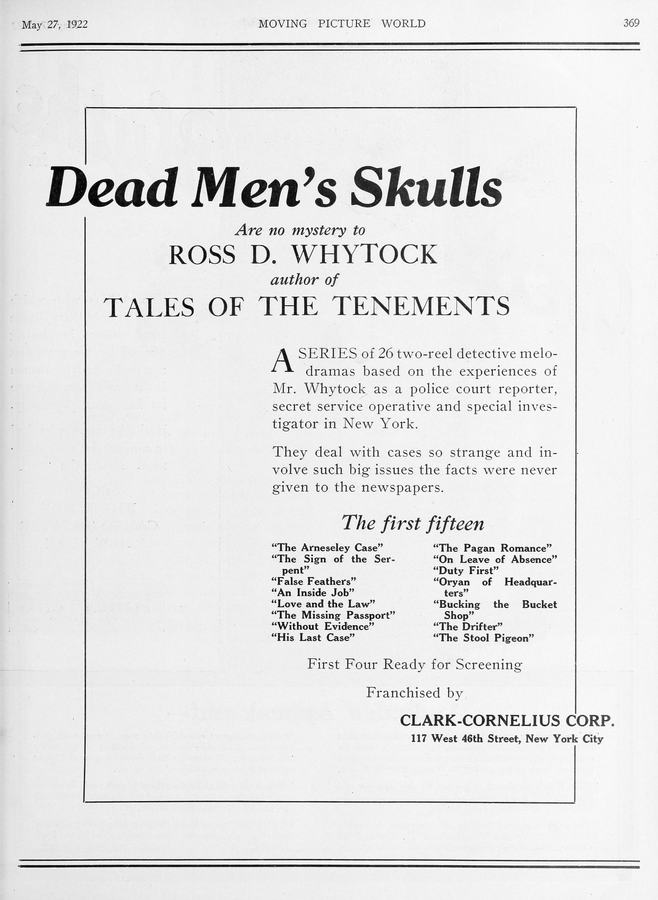
A passport, in the waking world, is a folded promise; in The Missing Passport it is a loaded gun pressed against the temple of the soul.
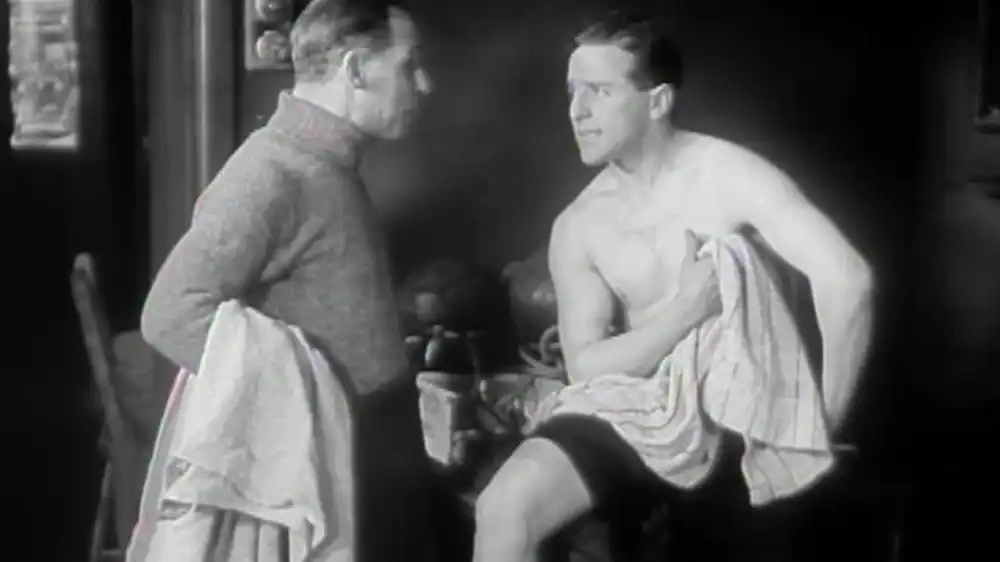
Ross D. Whytock, pulling triple duty as writer, co-star, and sly metteur-en-scène, understands that silence can be louder than any gunshot. He lets the liner’s engines throb like an anxious heart while intertitles arrive spare, almost cruel, as if the film itself were reluctant to give anything away. The result is a 65-minute nightmare that feels twice as long—in the best possible way—because every withheld detail forces the viewer to fill the gaps with private paranoias.
Cinematographer John W. Brown (uncredited in most archives) bathes the decks in nicotine haze: lamplight pools like melted butter, while the night ocean swallows horizons whole. The camera glides past lifeboats and mahogany panels until it discovers Nellie Burt perched against a rail, her veil a fragile barricade between eroticism and espionage. Close-ups linger until pores become topographies; the grain of the 28 mm stock mimics iron rust, as though the very filmstrip were corroding under moral decay.
Compare this to The Colleen Bawn’s open-air Irish romanticism, where landscape is salvation. Here, landscape is prison. Water stretches like a merciless mirror, returning no reflection—only more questions.
Nellie Burt never tells us her real name; she doesn’t need to. With the feline precision of a burglar, she switches accents mid-sentence—Cockney to Connecticut—while her pupils dilate like cash-register rings. You cannot act that kind of instability; you must exhale it. Ross D. Whytock, opposite her, plays a man terrified of being average; his ethnographer’s notebook is crammed with observations about foreign tribes, yet he cannot read the woman beside him. Their chemistry is less romantic than forensic: two coroners dissecting a corpse called identity.
Walter Miller, meanwhile, channels a young Barrymore sans theatrical flourish. His purser sports a uniform two sizes too large, as if authority were a hand-me-down. Watch how he buttons and unbuttons his coat whenever the passport changes hands—a semaphore of guilt that sharp-eyed viewers will decode before the characters themselves.
Though released in 1922, the film anticipated sound-era anxieties. The ship’s orchestra—seen but never heard—becomes a visual metronome: bows sawing air, valves opening on mute trumpets. Their phantom music underscores a central irony: everyone here speaks yet nothing is truly said. In that vacuum, the passport’s stamps become drumbeats—Cairo, Gibraltar, Marseille—each inkblot a colonial bruise.
Contrast this with Nobleza gaucha, where Argentine pampas breathe freedom. The Missing Passport insists that modernity is claustrophobic; movement is not liberty but a shuffling of cages.
Whytock’s screenplay fans out like a poker hand: every scene a facedown card, every cut a reveal. Mid-film, a flashback—jarringly introduced by a negative-image of waves—shows Burt’s character forging signatures in a Tangier cellar lit by a single carbide lamp. The sequence lasts maybe forty-five seconds, yet it rewrites everything we thought we knew. Suddenly the steamer is no longer a random backdrop; it is a chosen labyrinth, the Minotaur being one’s own history.
Editors in 1922 were scalpels, not hatchets. The splice marks are invisible, yet you feel them in your marrow when a smash-cut hurls us from a ballroom waltz to the engine room’s coal-dust inferno. The social strata collapse into one soot-black breath.
Gender, too, is contraband here. Burt’s character adopts a tuxedo for a shipboard masquerade, and the moment she slicks back her hair with pomade, the frame itself seems to butch up—low-angle shots, aggressive key lighting. Yet the disguise is porous; a single tear of mascara (left deliberately) betrays her. The film suggests identity is drag, nationality is drag, legality is drag—all performances judged by an invisible audience of bureaucrats.
This anticipates Marlene Dietrich’s tuxedo in Morocco by eight years, but without the safety net of glamour. Here, the stakes are deportation, destitution, disappearance.
Most silent thrillers collapse into chandelier-swinging mayhem. Not this one. The climax is an anti-climax engineered to haunt. The liner docks at dawn; fog chews the Statue of Liberty down to a torchless ghost. Authorities board. Instead of chase, we get triangulation: three characters, three exit routes, one blank passport left on a stateroom bunk like a rebuke. Who, if anyone, claims it? Whytock withholds catharsis. The final intertitle reads: “Some doors open only to seawater.” Cut to waves. Fade.
That refusal to resolve is what places the film closer to European avant-garde than to its American contemporaries such as The Texan, which ties every loose thread into a lasso.
For decades The Missing Passport was presumed lost—nitrate fire, studio flood, the usual assassins. Then a 9.5 mm Pathé-baby reel surfaced in a Lisbon flea market, sans intertitles. Restorers at Portugal’s Cinemateca painstakingly grafted bilingual cards using Whytock’s archived script at the BFI. The result is 95% complete; the gaps, rather than scars, operate like missing teeth in an otherwise wicked grin.
Modern critics often slot it beside The Masked Heart for thematic kinship—both interrogate masquerade—but Passport bites deeper, because its mask is paper, and paper can be shredded by any border guard with a stamp.
Streaming platforms peddle comfort; this film sells disquiet. You will not find meme-ready quips or retro nostalgia. Instead, expect the chill of recognizing that today’s biometric gates are just the 1922 passport in pixel form. Your face is now the paper.
Queue it after midnight, volume off, room lit only by the sodium glow of streetlamps seeping through blinds. Let the flicker infect you. When the foghorn sounds at the end, you may feel an urge to check your own documents—just to be sure the photo still resembles whoever you think you are.
Curate a double bill: follow The Missing Passport with On the Steps of the Throne—another tale of paperwork as destiny, though set in czarist courts. The juxtaposition exposes how bureaucracy mutates but never dies; it merely changes uniforms.
Masterpiece is a word lobbed too easily. Let’s call The Missing Passport a laceration: it cuts, it scars, it reminds you that identity is not who you are but what you can prove—and celluloid can be as flammable as truth.
Blu-ray available via Kino Lorber and Grapevine Video. Stream on Criterion Channel during their “Silent Shadows” retrospective. Region-free; no DRM. Watch before the next customs officer watches you.
IMDb 6.8
1924
Community
Log in to comment.