DbcultAccessing Vault...
6.9/10
Senior Film Conservator
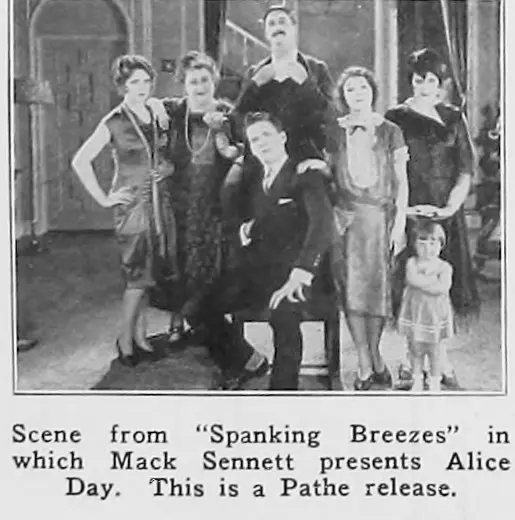
A definitive 6.9/10 rating for a film that redefined the boundaries of cult cinema. Spanking Breezes remains a cornerstone of transgressive art.
Is Spanking Breezes worth watching today? Short answer: yes, but only if you appreciate the frantic energy of silent-era slapstick and the universal pain of uninvited houseguests. This film is for history buffs who enjoy domestic farces like Dabbling in Society, but it is certainly not for viewers who require modern pacing or complex character arcs.
The 1920s was a decade obsessed with the burgeoning middle class and the friction of modern living. In 'Spanking Breezes', we see this friction manifest as a literal invasion. The film works because it taps into a primal, relatable anxiety: the loss of one's private sanctuary. It fails because it leans too heavily on a singular punchline that repeats until the nautical setting is fully exhausted. You should watch it if you want to see how early cinema handled the transition from stage-bound comedy to more dynamic, location-based storytelling.
The opening act of 'Spanking Breezes' establishes a tempo that feels akin to a pressure cooker. We see the newlyweds, played with a frantic desperation by Eugenia Gilbert and Danny O'Shea, attempting to navigate their own home as if it were a minefield. The relatives are not just characters; they are obstacles. They occupy every chair, interrupt every conversation, and consume every resource. This isn't just comedy; for anyone who has ever hosted a relative who overstayed their welcome, it is a documentary of the soul.
Take, for instance, the scene where the couple tries to share a quiet moment in the parlor. Within seconds, a relative appears from behind a newspaper, another enters from the kitchen, and a third seemingly materializes from the floorboards. The blocking here is masterful, emphasizing the lack of literal and metaphorical space. It reminds me of the social maneuvering seen in Paid in Full, though with a much lighter, more slapstick-driven intent.
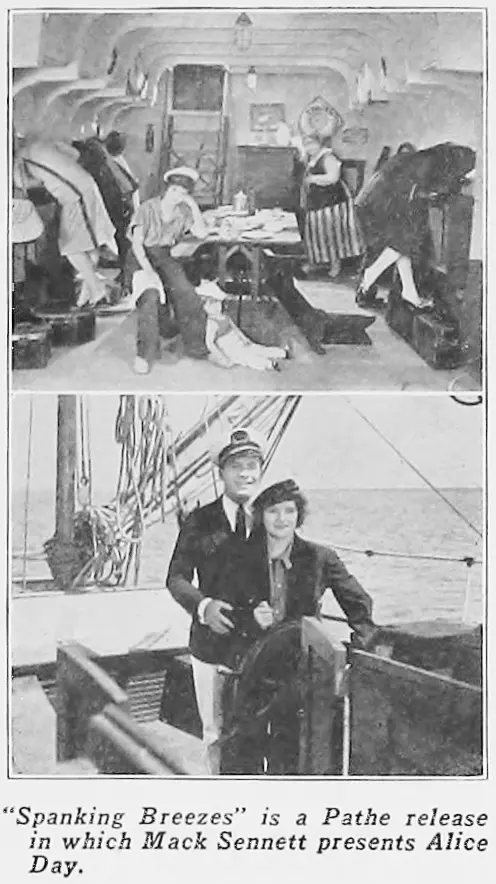
If you are looking for a quick, punchy example of 1920s social satire, 'Spanking Breezes' is an excellent candidate. It captures the zeitgeist of a generation trying to define the 'nuclear family' while still being tethered to the 'extended family' traditions of the past. The film is worth watching for the performance of Sunshine Hart alone, whose physical presence dominates every frame she occupies. She represents the immovable object to the protagonists' irresistible force.
However, if you are looking for the technical sophistication of a Keaton or Chaplin production, you might find this a bit thin. It lacks the complex stunt work or the deep pathos found in the era's masterpieces. It is a 'bread and butter' comedy—functional, satisfying, but ultimately simple. It works. But it’s flawed.
The transition to the yacht should, theoretically, provide a visual and narrative relief. The cinematography opens up, moving from the cramped interiors of the house to the deck of the boat. Yet, the director uses this new space to heighten the tension rather than diffuse it. The 'reveal'—the moment the couple realizes the relatives have beaten them to the boat—is a masterclass in silent comedic timing. The camera lingers on the husband's face as his expression shifts from pure bliss to a mask of horrified realization.
This sequence mirrors the relentless pursuit found in The Texas Trail, where the environment itself becomes a character. On the yacht, the ocean represents a literal barrier; there is nowhere left to run. The 'breezes' of the title are not just weather patterns; they are the winds of fate blowing the couple back into the arms of their tormentors. It is a cynical, yet hilarious, conclusion to their quest for solitude.
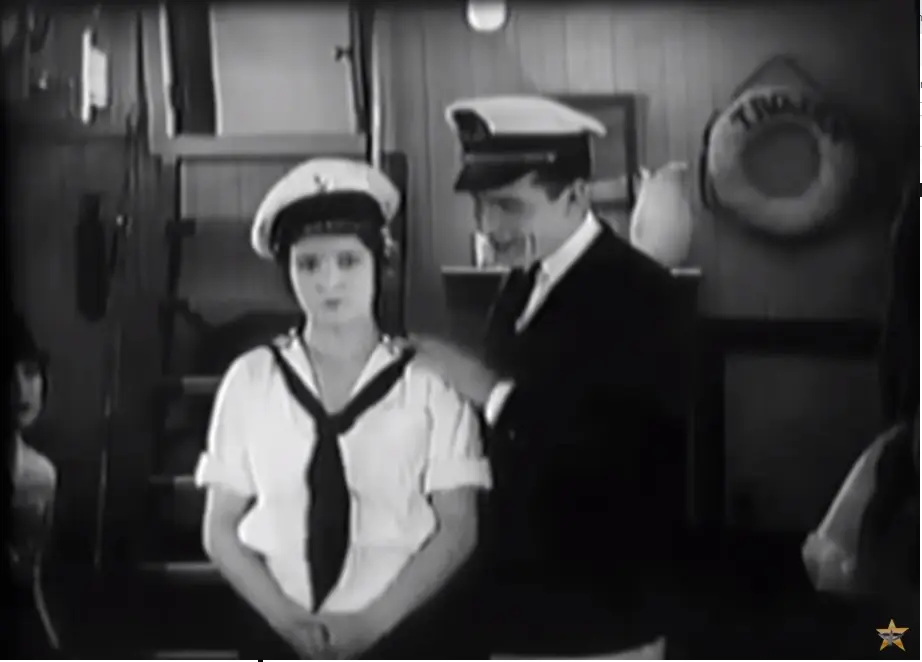
The cast is a 'who's who' of reliable silent-era character actors. Joe Bordeaux brings a specific kind of hangdog energy to the screen that serves as the perfect foil for Sunshine Hart's more aggressive comedic style. While Felix at the Fair relied on animation to convey impossible physics, 'Spanking Breezes' relies on the very real, very heavy presence of its actors. There is a weight to the comedy here that feels grounded in reality.
Eugenia Gilbert provides the emotional anchor. Her frustration is palpable. When she looks at the camera, you aren't just seeing an actress in a 1926 short; you are seeing every woman who has ever had to smile through a dinner with a relative she can't stand. It’s a subtle performance in a film that is otherwise anything but subtle. This groundedness is what separates it from more whimsical fare like Cupid's Roundup.
The pacing of 'Spanking Breezes' is breakneck. Writers Vernon Smith and Ewart Adamson clearly understood that the premise couldn't sustain a feature-length runtime, so they packed the short with as much visual information as possible. The editing is sharp, cutting between the couple’s hope and the relatives’ obliviousness with surgical precision. It shares a similar rhythmic quality with Rarin' to Go, where the momentum is the primary driver of the plot.
"The film operates on the logic of a nightmare, where every door opened reveals a face you were trying to forget."
The use of the yacht as a setting is particularly inspired. In 1926, a yacht was the ultimate symbol of luxury and escape. By turning it into a crowded tenement on water, the filmmakers subvert the audience's expectations of a 'happy ending'. This subversion is a bold choice for the time, suggesting a level of cynicism about the 'American Dream' of domestic bliss that one might expect from a film like Life or The Cost.
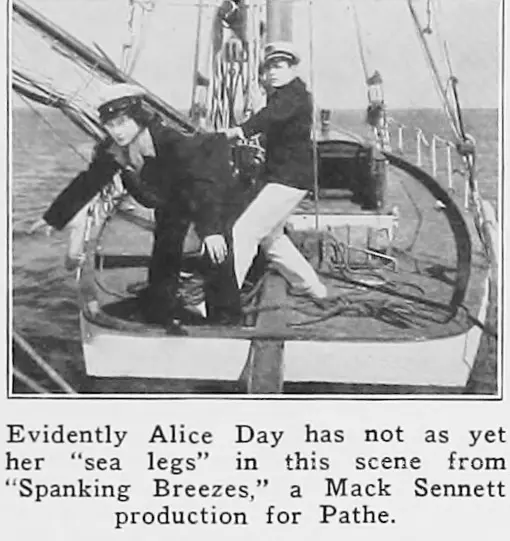
One thing that struck me while watching 'Spanking Breezes' was the lack of a clear 'villain'. The relatives aren't malicious; they are simply oblivious. This makes the comedy much darker than it appears on the surface. It’s not a battle of good vs. evil, but a battle of boundaries vs. lack thereof. It reminds me of the psychological tension in The Message of the Mouse, albeit played for laughs. The couple is trapped by politeness as much as they are by the yacht.
This nuance is often lost in modern assessments of silent comedy. We tend to think of this era as purely physical, but 'Spanking Breezes' shows a keen interest in social etiquette and the ways it can be weaponized. The film is as much about the 'price of silence'—the inability of the couple to simply tell their family to leave—as it is about anything else. For a more serious take on similar themes, one might look to The Price of Silence.
'Spanking Breezes' is a loud, chaotic, and ultimately charming relic of the silent era. It doesn't reinvent the wheel, but it spins it with such vigor that you can't help but be swept up in the madness. It is a testament to the fact that while technology changes, the frustration of having your space invaded by family is eternal. Whether you are watching it for historical research or just a quick laugh, it delivers exactly what it promises: a brisk, salty breeze of 1920s humor. It’s not a masterpiece, but it’s a damn good time.
For those exploring the depths of early 20th-century cinema, this is a necessary stop. It sits comfortably alongside other genre explorations like The Port of Missing Men or Paying the Piper, providing a comedic counterpoint to the more dramatic offerings of the day. Don't expect a profound life lesson—just expect to be glad you're not on that yacht.
IMDb 5.5
1932
Community
Log in to comment.