DbcultAccessing Vault...
7.3/10
Senior Film Conservator
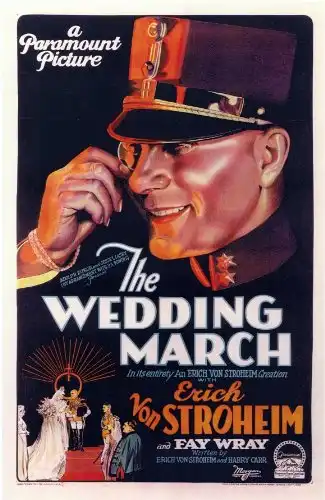
A definitive 7.3/10 rating for a film that redefined the boundaries of cult cinema. The Wedding March remains a cornerstone of transgressive art.
The Wedding March is absolutely worth watching today, but you have to go into it knowing you are entering the mind of a beautiful, obsessive madman. It is primarily for viewers who appreciate 'the tactile' in cinema—people who want to feel the weight of a wool uniform, smell the incense in a cathedral, and see the grease on a butcher’s apron. If you prefer your silent films to be light, fast-paced slapstick or breezy romances, this will likely feel like a slow-motion car crash. It is a film of immense beauty and profound ugliness, often occupying the same frame.
Erich von Stroheim didn't just direct movies; he built worlds and then invited the audience to watch them rot. In The Wedding March, his recreation of Vienna isn't a postcard version. It feels lived-in and heavy. There is a specific scene during the Corpus Christi procession where the camera lingers on the sheer scale of the crowd and the rigid, glittering uniforms of the cavalry. You can see the sweat on the faces of the soldiers and the genuine dust in the air. It’s a level of detail that makes modern CGI crowds look like the hollow ghosts they are.
The film thrives on the contrast between the high and the low. One moment we are in the palace, where Nicki’s parents (played with delightful, sneering cynicism by Maude George and George Fawcett) discuss his marriage as a cold business transaction while lounging in silk. The next, we are in the 'Steffl' beer garden, where the air feels thick with cheap tobacco and spilled lager. Stroheim uses these environments to tell us everything we need to know about the characters before they even open their mouths.
Fay Wray, long before she met King Kong, gives a performance here as Mitzi that is startlingly modern. She avoids the frantic 'semaphore' acting style common in the 1920s. Instead, she uses her eyes to convey a devastating mix of hope and impending grief. There is a moment when she first looks at Nicki from the crowd—a tiny, hesitant smile that feels entirely unscripted and human. It makes the subsequent tragedy feel personal rather than theatrical.
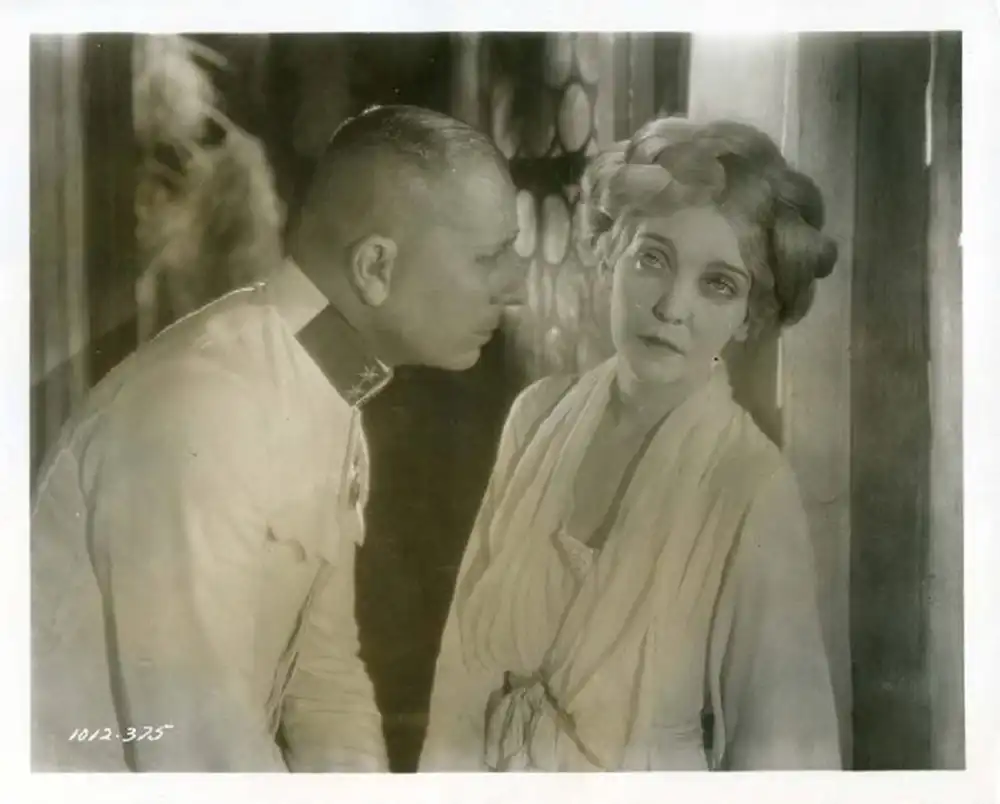
Stroheim himself, playing Nicki, is a fascinating study in contradictions. He is the 'Man You Love to Hate,' yet he manages to make Nicki sympathetic despite his cowardice. You see it in the way he handles his monocle—it’s not just a prop, but a shield he uses to distance himself from the world. When he is with Mitzi under the apple blossoms, his posture softens; when he is with his father, he turns back into a rigid, lifeless doll. It’s a physical performance that tells a complete psychological story.
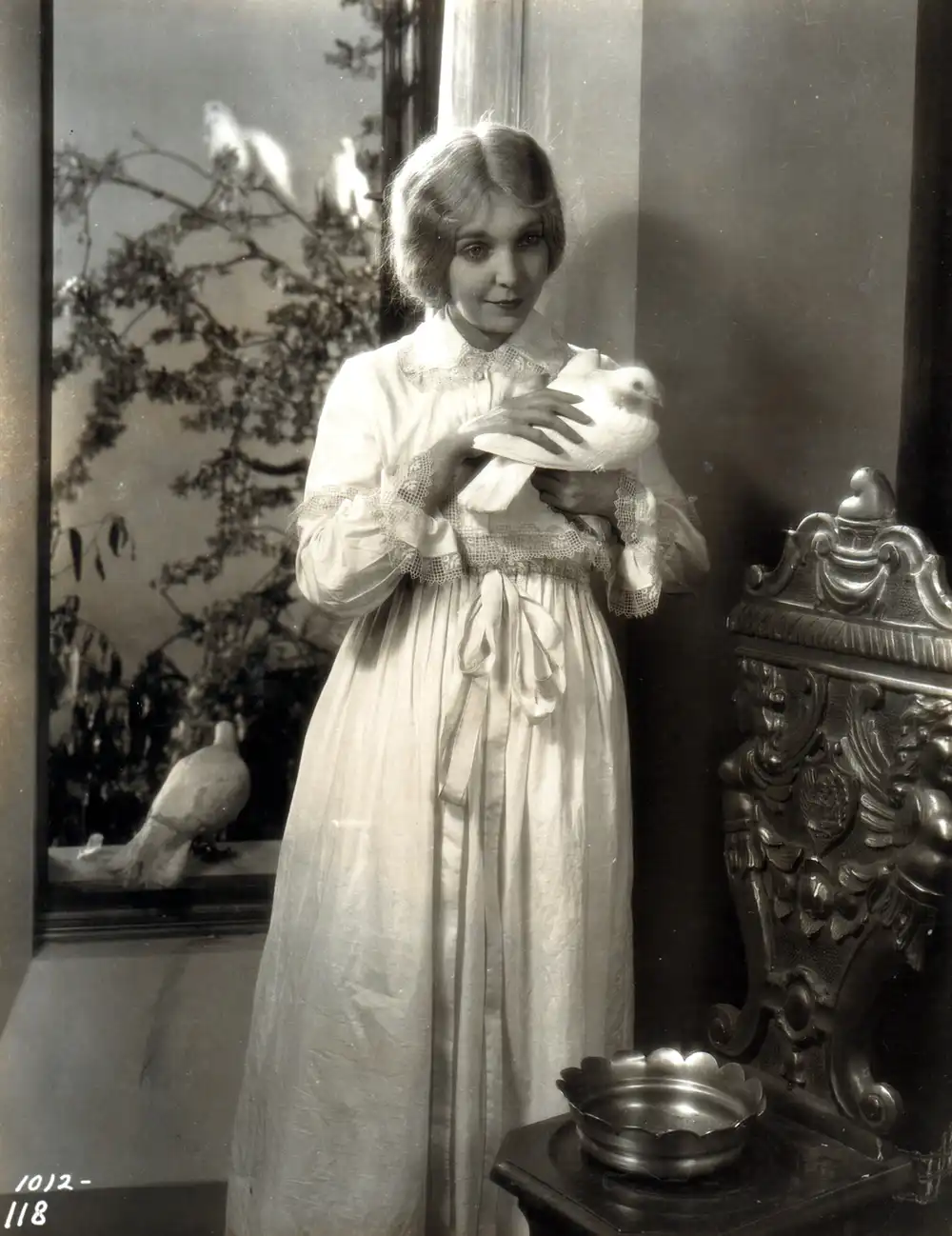
Special mention must go to Zasu Pitts as Cecelia, the heiress Nicki is forced to marry. Usually a comedic actress, Pitts is heartbreaking here. The scene where she hobbles down the aisle, fully aware that her husband-to-be finds her repulsive, is one of the most uncomfortable and moving sequences in silent cinema. Her performance turns what could have been a caricature into a tragic figure of quiet dignity.
If the romance provides the film’s soul, Matthew Betz as Schani the butcher provides its nightmares. He is a terrifying presence, usually seen covered in animal blood or lurking in the shadows like a literal monster. The scene in the butcher shop, where a fly crawls across a carcass while Schani stares at Mitzi, is a piece of grotesque realism that most directors of the era wouldn't have dared to include. It grounds the film’s romanticism in a very harsh, physical reality.
This tonal shift—from the ethereal beauty of the apple blossoms to the filth of the slaughterhouse—is the film’s greatest strength. It prevents the story from becoming a sentimental melodrama. You are constantly reminded that while Nicki and Mitzi are dreaming, the world around them is made of meat, money, and cold stone.
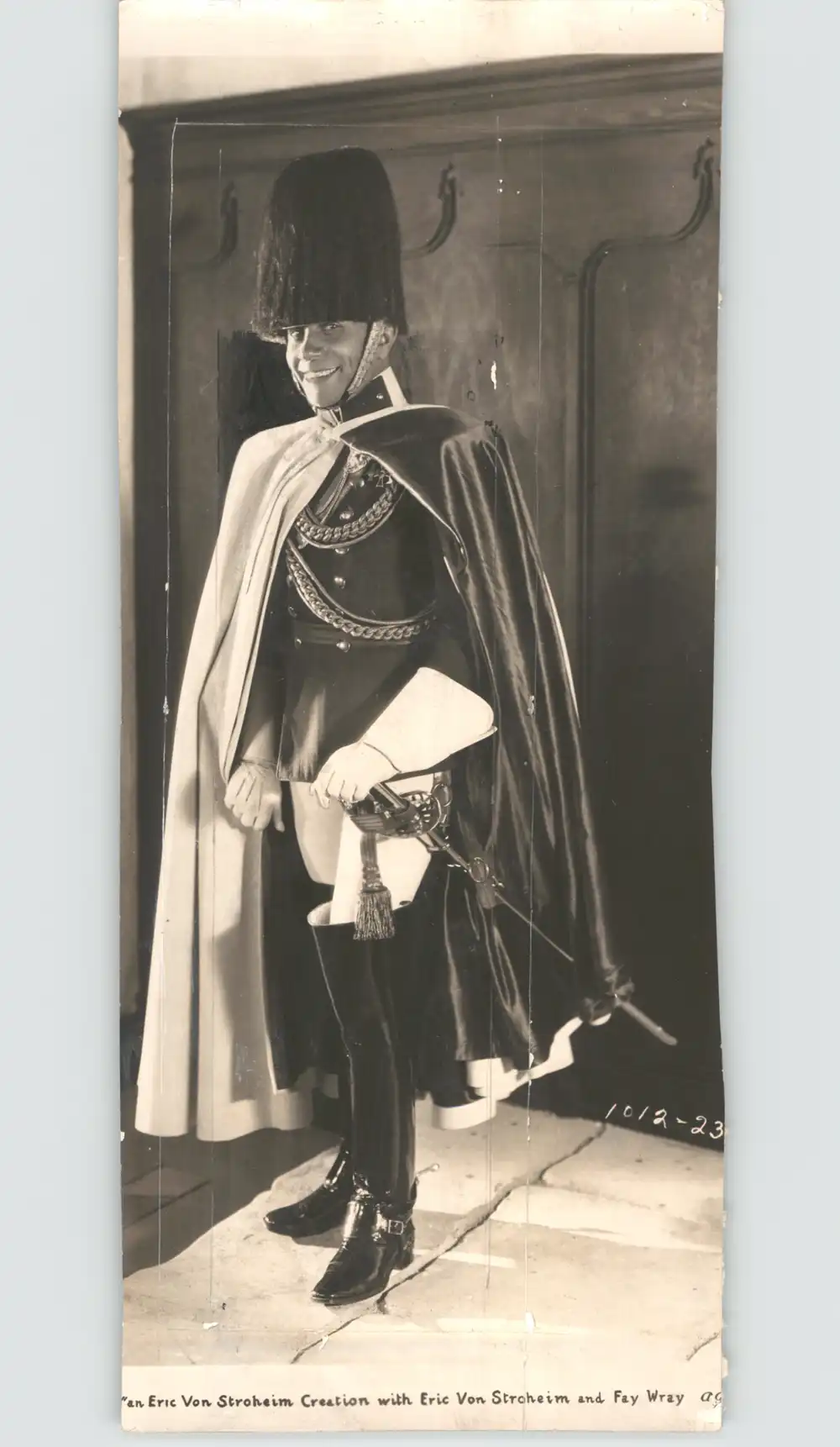
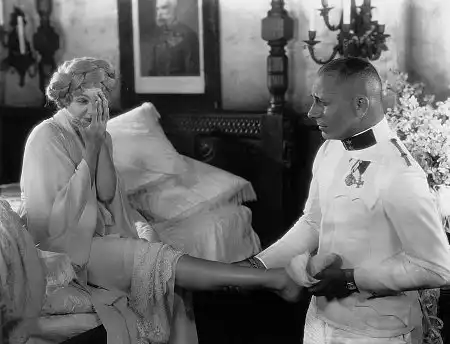
The film does drag in its middle act, particularly during the extended sequences of aristocratic debauchery in the brothel. Stroheim was famous for his inability to cut his own work, and you can feel the 'more is more' philosophy at play here. Some of the reaction shots are held for several seconds too long, and the intertitles occasionally over-explain emotions that the actors have already clearly conveyed.
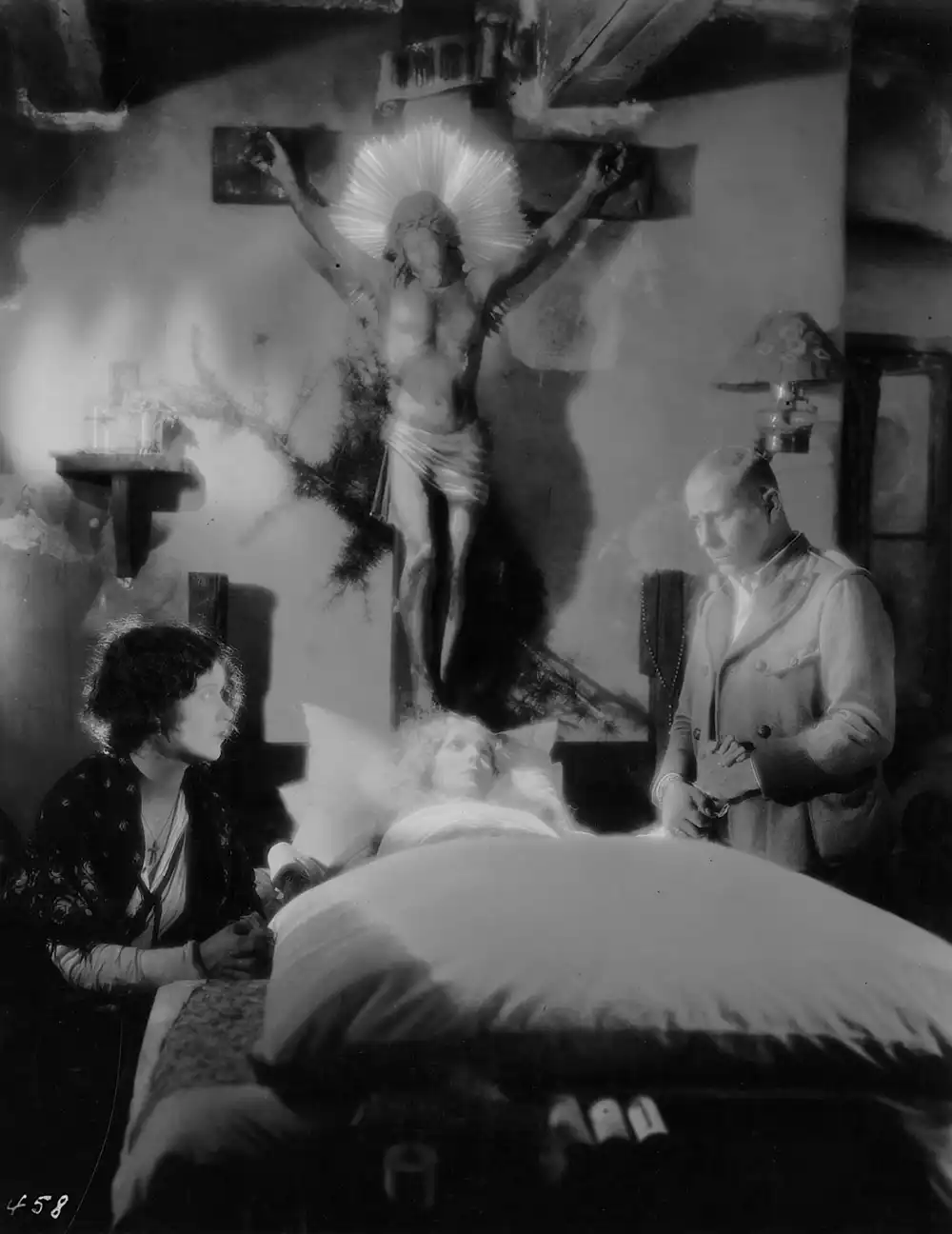
However, the editing rhythm during the climax is masterful. The intercutting between the wedding ceremony and the brewing violence outside creates a sense of suffocating tension. The use of color—specifically the hand-colored red in the uniforms and the gold in the religious icons—adds a hallucinatory quality to the final act that stays with you long after the credits roll.
The Wedding March is a flawed masterpiece, but its flaws are the result of an artist having too much vision rather than too little. It’s a far more grounded and gritty experience than something like Lady Audley's Secret, eschewing stagey theatrics for a sensory-heavy realism. While it lacks the tight narrative of The Taint, it compensates with a visual richness that few films have ever matched.
If you can forgive the occasionally indulgent pacing, you will find a film that feels remarkably alive. It is a ghost of a vanished world, captured with a clarity that makes the 1920s feel like yesterday. It’s a must-watch for anyone interested in how cinema can capture the specific, painful intersection of class and the human heart.
IMDb —
1925
Community
Log in to comment.