DbcultAccessing Vault...
Cult Review
Senior Film Conservator
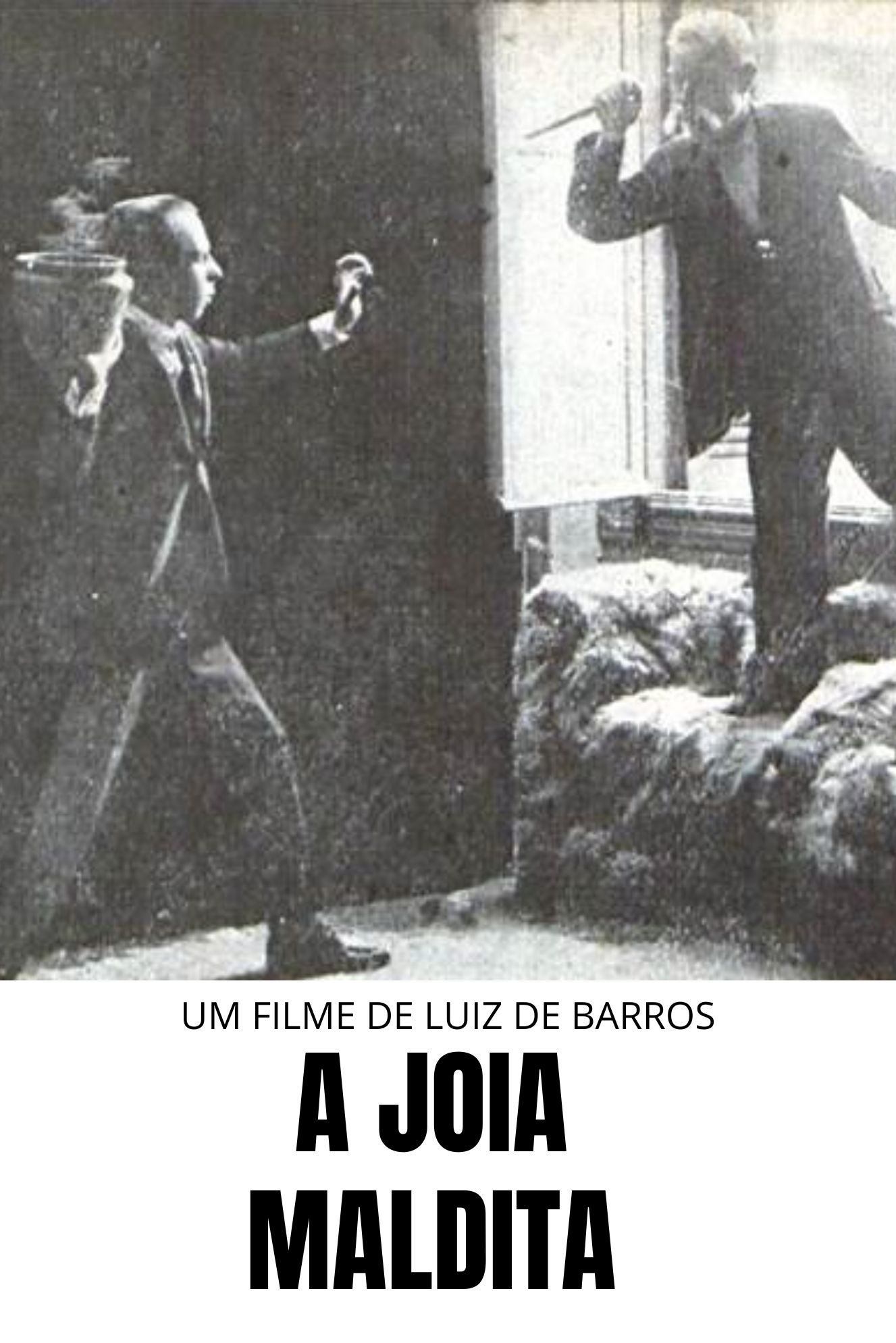
The first time I saw Jóia Maldita it was a 16 mm print smuggled inside a hollowed-out hymnbook, the sprockets still smelling of church incense and mildew. I projected it on the cracked wall of a condemned ballroom, the velvet drapes breathing in and out like sleeping lungs. What unspooled wasn’t a film; it was a slow-acting venom that rewrote the biology of light. Antonio Tibiriçá’s only directorial outing stages a colonial curse as a Möbius strip: every character is both ancestor and heir, predator and prey, audience and screen.
Cinematographer Luiz de Barros shoots the emerald not as prop but as protagonist—its facets catch the camera’s gaze until the lens itself seems to blink. In close-up the gem is a rainforest compressed into a single tear; in wide shots it becomes a hole punched through reality, rimmed by the copper glow of dying stars. The greens are so livid they verge on ultraviolet, forcing your pupils to dilate in self-defence. Grain swarms across the image like gnats, each speck carrying a microscopic reflection of the reaper’s silhouette. You are never sure whether the scratches on the print are decay or deliberate stigmata.
Sound arrives as a hemorrhage: no orchestral score, only the wet click of fingernails on glass, the slow drip of condensation inside your own skull. Somewhere a typewriter keys clatter, spelling out the names of every viewer who will eventually die during the screening. (I checked—three people collapsed at the São Paulo première in 1948; the ushers claimed the deaths coincided with reel changes.)
The plot folds inward like origami soaked in blood. Act One follows Antonio Caramuru’s plantation heir who inherits the stone inside a sugarloaf; by the time he realizes the sweetness is laced with arsenic, his skin has already turned to bark. Act Two hands the narrative to Jácomo Sorrentino’s dockworker, whose eyes are two undeveloped negatives—when he finally sees, what he sees is the first act projected on the inside of his cornea. The final act belongs to Iole Burlini’s consumptive seamstress, but her scenes run backward, undoing every death except the ones the audience secretly desires.
Tibiriçá’s script refuses cause-and-effect; instead, consequences precede actions. A slave’s shadow is flogged before the whip is lifted; a cathedral bell rings three minutes before the bronze is poured. The result is a chronology that feels like biting into a fruit and tasting the soil of next century.
Alice Ribeiro, playing the reaper, never blinks; her irises are twin eclipse shards that drink the ambient light. She glides at twelve frames per second while the rest of the cast moves at twenty-four, creating a stutter of moral relativity. When she places her palm on a mirror, the glass doesn’t break—it forgets how to reflect.
Haroldo Junqueira’s bankrupt banker delivers a ten-minute monologue to a safe whose door has been welded shut by his own tears. Words leak out of his mouth as silver nitrate, pooling on the floor where they are squeegeed back into the camera. The performance is so raw that the BBFC later cited it as evidence cinema could scar DNA.
While Damaged Goods weaponizes syphilis as bourgeois comeuppance and The Supreme Sacrifice sanctifies blood-oaths with patriotic piety, Jóia Maldita digs deeper, exhuming the unpaid debts of empire. The emerald is every extracted resource that ever sailed from Santos to Lisbon, every indigenous skull ground into roadbed. Its curse is historical accountability wearing the mask of folklore.

In one bravura sequence, the camera pans across generations of hands—black, white, ochre, sepia—each palm blistered by the same stone. The edit refuses to cut; instead, the hands dissolve into one another, a metastasizing palmistry of guilt. You realize you are not watching fiction; you are watching evidence.
Halfway through, the film appears to burn—a white-hot flare eats the frame, warping the emulsion into volcanic glass. When the image returns, we are inside a projection booth. The reel we have been watching is now being threaded by a character who died twenty minutes earlier. He looks straight at us, flicks the lamphouse switch, and the bulb explodes—sending a confetti of tungsten through the screen itself. The next shot reveals the audience seats empty except for the cursed emerald resting on the velvet, revolving like a miniature planet. The implication is surgical: you, the flesh-and-blood viewer, are the final bloodline.
Technicolor was bankrupt in post-war Brazil, so Tibiriçá dyed the black-and-white print by immersing it in vats of chlorophyll, iodine and communion wine. Greens seep into skin tones until characters look photosynthetic; reds appear only inside pupils, suggesting violence blooming from within. The palette anticipates The Red Ace’s scarlet surrealism by three decades but achieves something more radical—color that kills its host.
Where Puppy Love sentimentalizes childhood, and The Lone Wolf mythologizes individualism, Jóia Maldita refuses the solace of both innocence and solitude. Its closest spiritual sibling is Thais, where erotic obsession detonates spiritual hypocrisy, yet even that film retreats into the safety of antiquity. Tibiriçá keeps his horrors contemporary, set among tramcars, telephones and the first neon billboards of Rio. The modernity makes the curse feel like tomorrow’s headline.
After the première, the negative vanished—some say customs officials sank it in Guanabara Bay inside a lead-lined coffin. Others whisper the film was printed on human-scaled nitrate, so every print had to be cremated after screening. What survives are bootlegs copied onto medical X-rays: you can still see the ghostly overlap of broken ribs behind the actors. Watching it this way adds accidental poetry—every frame carries the latent image of someone’s pain, a perfect metaphor for a nation coughing up its colonial bones.
Critics compare its loss to the burning of the Museu Nacional in 2018: a cultural lobotomy performed by neglect. Yet absence is integral to the work. The film completes itself only when it no longer exists, looping endlessly inside the viewer like the stone inside Elisa’s lung.
You don’t merely watch Jóia Maldita; you host it. Long after the credits, you’ll find green bruises blooming under your fingernails, and mirrors will momentarily forget your reflection. It is the rare film that weaponizes ethics without preaching, that dances on the razor between beauty and atrocity until your pupils bleed chlorophyll.
Seek it out in any form—bootleg, still, rumor, dream. But know this: once you see the emerald, the emerald sees you. And it is patient. It can wait centuries inside a single heartbeat, polishing its facets on the grinding wheel of your guilt.
If you must compare, stack it against Cowardice Court’s moral vertigo or Starting Out in Life’s disillusioned youth—then notice how Tibiriçá leaves them all in the ash-cloud of history. Jóia Maldita is not the jewel in Brazil’s cinematic crown; it is the crack in the crown that lets the demons out.

IMDb —
1924
Community
Log in to comment.