DbcultAccessing Vault...
Cult Review
Senior Film Conservator
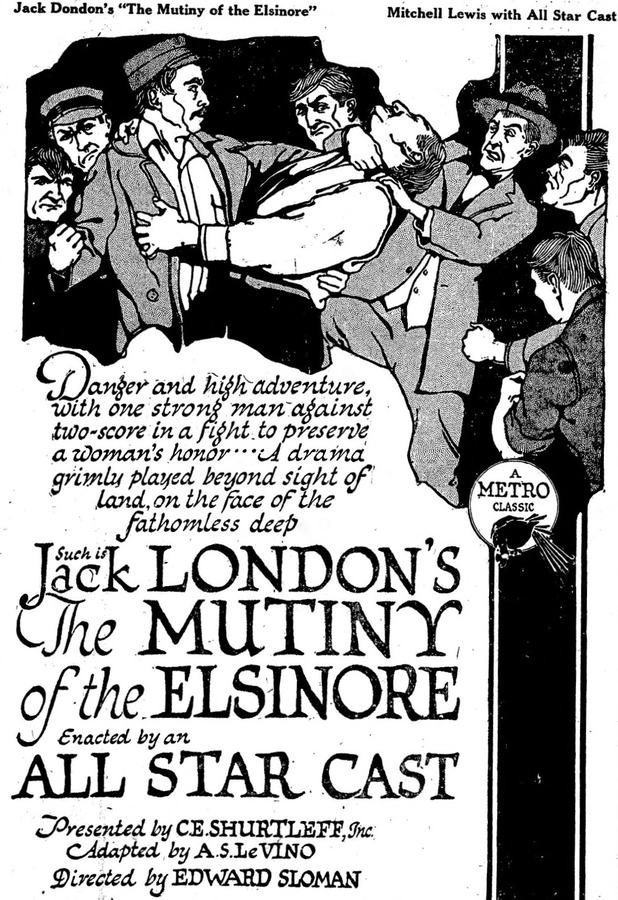
The 1920 adaptation of Jack London’s The Mutiny of the Elsinore stands as a monumental achievement in early silent cinema, capturing the raw, unadulterated essence of the naturalist philosophy that defined London’s literary career. Unlike the more polished, suburban dramas of the era, such as Come Out of the Kitchen, this film plunges the viewer into a world where the veneer of civilization is thin and the underlying brutality of nature is ever-present. The Elsinore is not merely a setting; it is a character in its own right—a creaking, groaning microcosm of a society on the brink of collapse.
The film opens with a sequence of stark violence that sets the tone for the entire narrative. The death of Captain Nathaniel Somers is handled with a gritty realism that avoids the melodramatic flourishes common in contemporary works like The Fire Flingers. Here, the stakes are immediate and visceral. We are introduced to Dick Somers, played with a nuanced transition by Casson Ferguson, who begins the film as a quintessential 'wastrel.' His initial state of profligacy is not merely a character trait but a symptom of a life lived without the grounding force of hardship. The brilliance of Pike’s character—portrayed with a weathered, stolid intensity by William V. Mong—is his recognition that only the sea can cure what ails the young man’s soul.
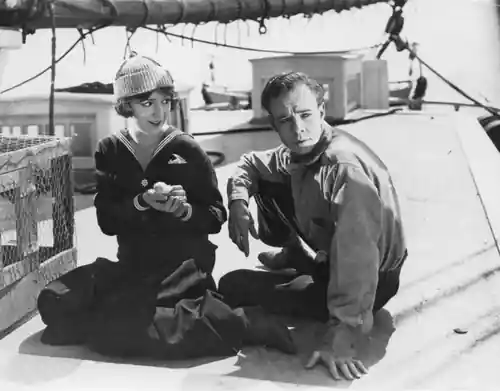
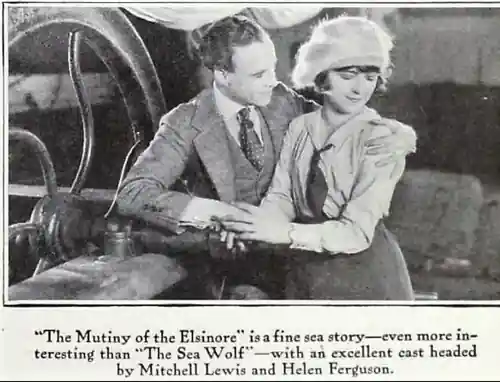
The ensemble cast of The Mutiny of the Elsinore is a fascinating study in the archetypes of the early 20th-century adventure film. Mitchell Lewis as Mellaire provides a villain who is both physically imposing and psychologically menacing. There is a palpable sense of dread whenever he appears on screen, a shadow from the past that threatens to consume the future. This isn't the theatrical villainy one might find in The Mirror; rather, it is a grounded, desperate kind of malice that feels entirely appropriate for a Jack London antagonist.
Helen Ferguson’s Margaret West serves as the emotional anchor of the film. While the plot involves three men vying for her affection, she is far from a passive prize. Her presence on the Elsinore introduces a layer of sophisticated tension, contrasting sharply with the 'bad lot' that makes up the crew. Her interaction with Dick is pivotal; she doesn't just offer love, she offers a reason for his transformation. This dynamic is handled with a maturity that arguably surpasses the romantic subplots found in Her Greatest Love.
Technically, the film is a marvel for its time. The storm sequence is a triumph of practical effects and editing. The way the camera captures the swaying of the ship and the crashing of the waves creates a sense of vertigo that remains effective even by modern standards. It is within this tempest that the film’s central conflict reaches its boiling point. The mutiny, led by Mellaire and the sinister 'Rat' (Sidney D'Albrook), is not a clean, cinematic battle; it is a messy, desperate scramble for survival.
Pike’s single-handed defense of the ship is one of the most iconic sequences in silent maritime cinema. It evokes the same sense of rugged individualism found in The Border Legion, yet it is transplanted into an environment where there is no escape. When Dick finally steps forward to assist Pike, the audience witnesses the culmination of his character arc. It is a moment of pure, Jack London-esque 'red blood' masculinity—the realization that a man is defined by his actions in the face of certain death.
Writing for the screen, Albert S. Le Vino captures the philosophical weight of London’s prose without the need for excessive intertitles. The film understands that the visual language of the sea—the tightening of a rope, the spray of salt water, the glint of a knife in the moonlight—is more than enough to convey the story’s themes. In comparison to the more experimental narrative of The Wildcat, The Mutiny of the Elsinore is more traditional in its structure, but it uses that tradition to explore deeper, more existential questions about leadership, loyalty, and the inherent darkness of the human heart.
The inclusion of Noah Beery and a young Noah Beery Jr. adds a layer of historical interest to the production. The Beery family’s contribution to the 'tough guy' archetype in Hollywood cannot be overstated, and their presence here reinforces the film’s commitment to a rugged, uncompromising aesthetic. The film’s pacing is relentless, moving from the initial tragedy to the claustrophobic tension of the voyage with a precision that keeps the viewer perpetually off-balance.
When we look at other films of the era, such as The Clutch of Circumstance, we see a recurring theme of fate and the struggle against one's environment. However, The Mutiny of the Elsinore stands out because it frames this struggle as a necessary path to self-actualization. Dick Somers is not a victim of his circumstances; he is a man who must learn to master them. This distinguishes the film from the more fatalistic tone of The Web of Life.
The cinematography, while limited by the technology of 1920, makes excellent use of shadows and light to emphasize the psychological states of the characters. Mellaire is often framed in shadow, highlighting his role as the lingering ghost of Dick’s father’s past, while Margaret and the reformed Dick are often bathed in the light of the sun or the ship’s lanterns, symbolizing their hope for a future beyond the Elsinore’s wooden walls.
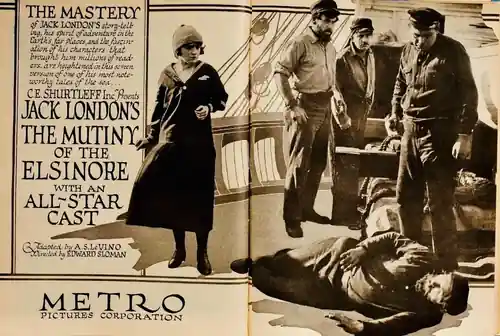
The climax of the film is a masterclass in emotional payoff. Pike’s injury and his subsequent decision to hand over command to Dick is a poignant moment of passing the torch. It represents the end of an era—the old, iron-willed mariners giving way to a new generation that has been tested in the fires of rebellion. The death of Mellaire and The Rat in the churning waters of the ocean provides a sense of cosmic justice that is deeply satisfying. The sea, which has been the catalyst for Dick’s growth, also serves as the final arbiter for those who sought to exploit its lawlessness.
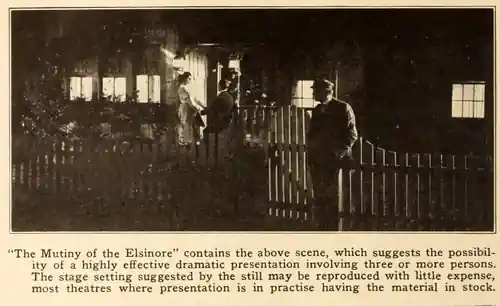
In the final frames, as Dick and Margaret stand together on the deck, there is a sense of hard-won peace. This isn't the easy, comedic resolution of A Jazzed Honeymoon; it is a peace bought with blood and sacrifice. It leaves the viewer with a profound sense of the cost of maturity. The film successfully navigates the transition from a story of revenge to a story of redemption, making it one of the more sophisticated adaptations of London’s work.
Why does The Mutiny of the Elsinore remain relevant today? Perhaps it is because the themes it explores—the search for purpose, the battle against internal and external corruption, and the redemptive power of responsibility—are universal. In an age of digital effects, the practical, dangerous-looking stunts and the genuine salt-sprayed atmosphere of this 1920 production offer a refreshing authenticity. It is a reminder of the power of silent cinema to tell grand, sweeping stories through the simple interplay of human emotion and the natural world.
For those interested in the evolution of the action-drama, this film is essential viewing. It bridges the gap between the early, simplistic adventure shorts and the complex, character-driven epics that would define the later years of the silent era and the beginning of the talkies. It shares a certain DNA with Battling Jane in its depiction of a protagonist forced to find their inner strength, yet its scope is significantly more ambitious. The Mutiny of the Elsinore is a testament to the enduring power of Jack London’s vision and the creative ingenuity of the early Hollywood pioneers who brought his rugged world to life.
As the Elsinore sails into the sunset of cinematic history, it leaves behind a wake of influence that can still be felt in every modern seafaring tale. It is a film that demands to be seen, not just as a historical curiosity, but as a vibrant, breathing piece of art that still has the power to thrill, to move, and to inspire. Whether you are a fan of silent film or simply a lover of great storytelling, this is a voyage worth taking.

IMDb 6.6
1925
Community
Log in to comment.