DbcultAccessing Vault...
Cult Review
Senior Film Conservator
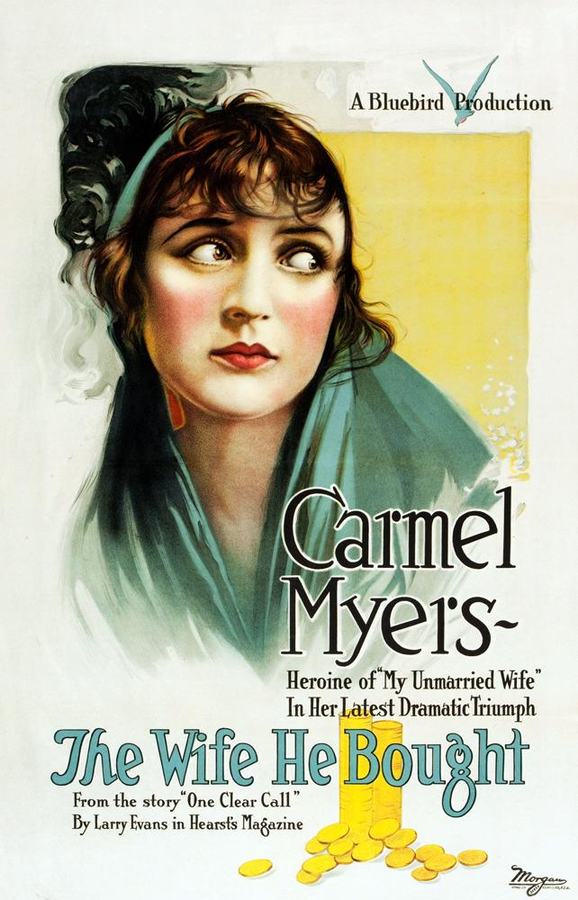
*The Wife He Bought* is a film that demands to be dissected like a specimen under glass—its narrative clarity, emotional resonance, and technical execution all contribute to a cinematic experience that feels both archaic and eternally relevant. Directed by a pair of uncredited hands (Larry Evans and Harvey Gates), this 1924 silent film is a study in contrasts: the brutal and the tender, the transactional and the transcendent, the past’s shadow and the future’s fragile hope. It is a story that dares to suggest that love, in its purest form, cannot be manufactured, yet often begins in the most unlikeliest of conditions.
The film’s opening act is a masterstroke of tension. Allan Sears, as the vengeful young man, channels a rage that feels both justified and irrational, a duality that anchors the film’s moral ambiguity. His target, the father of Carmel Myers’ character, is a figure of quiet despotism, a man whose past sins have calcified into a fortress of indifference. The arrangement—a marriage of convenience turned into a psychological battleground—is not just a plot device but a metaphor for the human condition: our tendency to weaponize relationships in the name of justice, only to discover that the wounds we inflict often mirror our own.
What distinguishes *The Wife He Bought* from the glut of early 20th-century melodramas is its refusal to oversimplify its characters. Carmel Myers’ performance is a revelation, her eyes and gestures conveying a woman torn between societal expectations and personal agency. She is neither a passive victim nor a plucky heroine but a complex figure whose growth is both earned and inevitable. The film’s pacing, deliberate and unflinching, allows the audience to sit with the discomfort of moral compromise, a rarity in an era that often prioritized catharsis over introspection.
Technically, the film is a testament to the artistry of silent cinema. The use of shadow and light in key scenes—particularly the climactic confrontation between the protagonists—is nothing short of operatic. The score, though uncredited, swells with a melancholic grandeur that elevates the film’s emotional stakes. Yet, it is in the silences that the film speaks most powerfully. The unspoken understanding between Sears and Myers, conveyed through glances and pauses, is a reminder of the era’s reliance on visual storytelling to convey the inexpressible.
Comparisons are inevitable. Like *A Son of Erin* (1918), this film grapples with familial betrayal and the cyclical nature of vengeance. However, where *Der Katzensteg* (1917) leans into Gothic excess, *The Wife He Bought* opts for a more intimate, almost claustrophobic tension. The dynamic between the central couple echoes the fraught power struggles in *The Price Mark* (1922), yet here, the resolution is far less predictable. Unlike the overtly tragic *The Martyrdom of Philip Strong* (1916), this film offers a glimmer of hope—an acknowledgment that redemption, while costly, is not entirely out of reach.
One might argue that the film’s reliance on early 20th-century gender dynamics limits its modern appeal. The patriarchal forces at play, while central to the plot, reflect the societal norms of the time. However, it is precisely this historical specificity that makes the film so compelling. By embedding its moral dilemmas within a context of rigid social hierarchies, the film invites contemporary viewers to interrogate their own assumptions about agency, retribution, and forgiveness. Carmel Myers’ character, in particular, evolves from a symbol of patriarchal control to a figure of quiet resilience, a transformation that feels both subversive and authentic.
The film’s secondary characters, though less developed, serve as effective foils. S.K. Shilling’s portrayal of a conflicted ally adds depth to the central conflict, while Kenneth Harlan’s supporting role as a cynical observer grounds the narrative in a world that is far from black-and-white. These performances, though occasionally hampered by the era’s theatrical tendencies, contribute to a sense of authenticity that is hard to replicate in later, more stylized films.
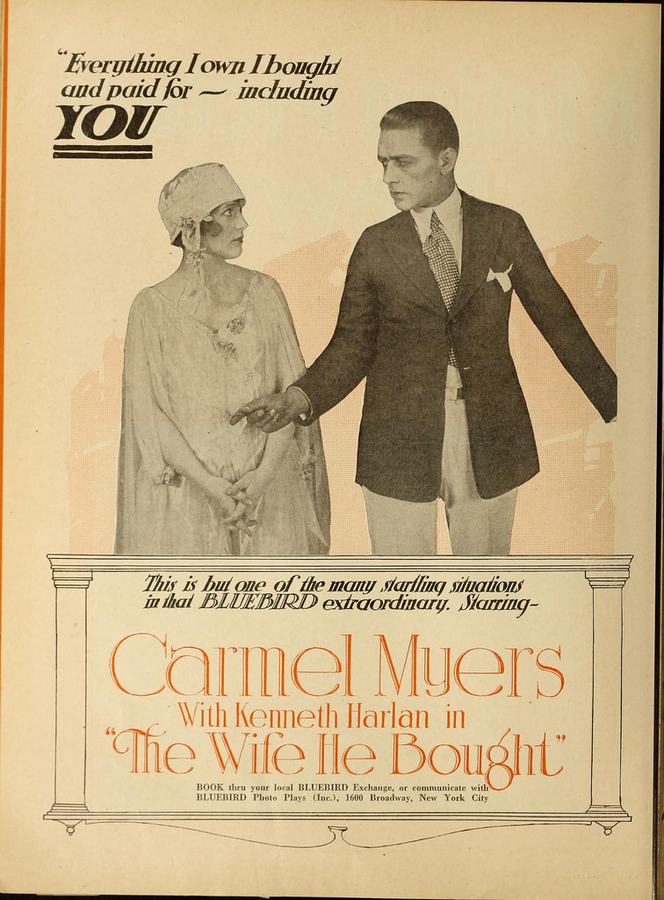
Thematically, *The Wife He Bought* dances on a tightrope between social commentary and personal drama. The film critiques the destructive nature of vengeance while simultaneously acknowledging its visceral allure. This duality is best exemplified in Allan Sears’ character, whose journey from vengeful conqueror to self-aware participant in the very system he despises is both tragic and redemptive. The film’s resolution, while not entirely satisfying in a modern sense, is thematically consistent—a reminder that true reconciliation often requires the dismantling of one’s own ego.
In the pantheon of silent cinema, *The Wife He Bought* occupies a unique niche. It is less a film of spectacle than a chamber piece of psychological nuance, its power lying in its restraint. The absence of dialogue forces the audience to pay attention to subtleties—micro-expressions, the weight of a pause, the way light falls across a face. These elements, combined with the film’s unflinching exploration of moral complexity, create a viewing experience that is as intellectually stimulating as it is emotionally gripping.
For modern audiences, the film offers a valuable lesson in the evolution of cinematic language. Its unapologetic melodrama may feel dated in some moments, but its core themes—love as a force of unexpected reconciliation, the corrosive nature of grudges, the interplay of power and vulnerability—remain timeless. The film’s influence can be seen in later works such as *Kick In* (1928) and *The Opened Shutters* (1929), both of which explore similar tensions between societal constraints and individual desire.
Critics of the time praised the film’s "uncompromising realism" and "emotional veracity," terms that still hold water today. However, some contemporary scholars argue that the film’s focus on interpersonal drama at the expense of broader social critique limits its scope. This is a fair point, but one that overlooks the film’s central thesis: that personal transformation is the first step toward societal change. By focusing on the microcosm of a single relationship, *The Wife He Bought* achieves a level of emotional truth that many of its contemporaries, with their grand political narratives, could not match.
Ultimately, the film is a testament to the power of storytelling to transcend its historical context. It invites viewers to confront the uncomfortable truth that love and hatred often share a common source—that the same wound that fuels vengeance can also, under the right conditions, become the soil for compassion. In this light, *The Wife He Bought* is not just a film about a forced marriage, but a meditation on the human capacity for both destruction and renewal.
If you find yourself drawn to the works of *When a Man Sees Red* (1924) or *Tempest and Sunshine* (1921), you will likely appreciate the unflinching honesty and emotional depth of *The Wife He Bought*. It is a film that rewards repeated viewings, each time revealing new layers of meaning in its deceptively simple narrative. For those seeking a more overtly tragic experience, *The Criminal* (1920) offers a darker, more fatalistic counterpart. Conversely, *The Pretty Sister of Jose* (1928) provides a lighter, more romanticized take on the themes of identity and deception.
In conclusion, *The Wife He Bought* is a film that defies easy categorization. It is neither a pure romance nor a straightforward revenge tale but a hybrid of genres that thrives on its own contradictions. Its legacy lies not in its fidelity to any one narrative convention but in its willingness to explore the messy, often contradictory nature of human emotion. For those willing to engage with its complexities, the film offers a rich, rewarding experience that is as thought-provoking as it is entertaining.
IMDb —
1919
Community
Log in to comment.