DbcultAccessing Vault...
Cult Review
Senior Film Conservator
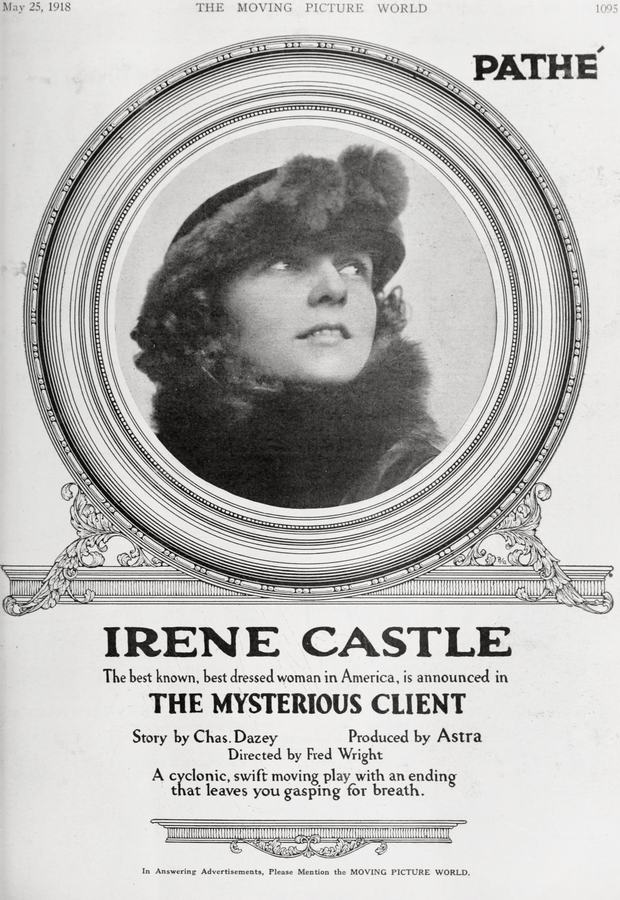
The opening tableau of The Mysterious Client is a study in chiaroscuro, the shadows of Harry Nelson's cramped office mirroring the moral darkness that threatens to engulf him. Milton Sills embodies the young lawyer with a nervous energy that crackles beneath his polished veneer, while Warner Oland’s Boris Norjunov looms like a specter of corruption, his silhouette framed against a single, flickering streetlamp.
When Boris proposes an illicit transaction, Harry’s indignation is palpable; his refusal is not merely a plot device but a declaration of the film’s central ethical dilemma. The moment Boris exits, the narrative pivots dramatically as Jeanne Darcy—portrayed with luminous poise by Irene Castle—bursts in, her desperation rendered through exaggerated gestures that the silent medium demands. She clutches an envelope, the contents of which remain deliberately opaque, inviting the audience to project their own anxieties about secrets and betrayal.
Harry’s decision to escort Jeanne outside is a catalyst that propels the story into a kinetic chase sequence. The cinematography here is striking: rapid cuts, low-angle shots, and a kinetic camera that follows the duo through rain‑slicked alleys, all underscored by a pulsating, die‑getic drumbeat. The envelope is snatched in a blur of motion, a visual metaphor for the fragility of trust in a world where appearances are mutable.
The subsequent night‑time confrontation in Boris’s lair is staged with theatrical flair. Boris’s assault on Harry is choreographed like a silent‑film ballet, each blow punctuated by a flash of white light that momentarily illuminates the characters’ faces. The locked room becomes a crucible, a confined space where Harry confronts his own vulnerability. Jeanne’s unexpected act of releasing him—only after he witnesses their mirrored reflections locked in an embrace—introduces a motif of duality that recurs throughout the film.
Weeks later, the narrative resurfaces with a summons that feels both ominous and inevitable. Harry’s arrival at the clandestine meeting place is filmed from a distance, the camera lingering on his silhouette as he approaches a dimly lit courtyard. Here, Boris’s threat to Jeanne—demanding she kill the kidnapped heiress Miss Lonsdale—escalates the stakes to a near‑tragic climax. The gunshot, captured in a single, stark frame, reverberates with a silence that is louder than any dialogue could convey.
The revelation that the entire ordeal was a staged performance orchestrated by Jeanne and her father is delivered with a mixture of levity and irony. Their laughter, echoing against the stone walls, shatters the film’s earlier tension and reframes the preceding events as a test of Harry’s chivalric potential. This twist invites a reevaluation of the film’s commentary on gender roles: Jeanne, though initially presented as a damsel in distress, emerges as the mastermind, manipulating the patriarchal expectations placed upon her.
The performances are bolstered by Cesare Gravina’s subtle yet effective portrayal of the ever‑watchful butler, whose silent observations provide a grounding counterpoint to the melodramatic excesses of the main plot. The screenplay, penned by Roy Somerville and Charles T. Dazey, weaves together elements of noir, melodrama, and farce, creating a tonal tapestry that feels both avant‑garde and firmly rooted in the conventions of its era.
Visually, the film employs a palette that is both restrained and symbolic. The recurring use of dark orange (#C2410C) in set pieces—such as the flickering lanterns in Boris’s den—evokes a sense of impending danger. Yellow (#EAB308) accents appear in Jeanne’s wardrobe, signaling her role as both the object of desire and the orchestrator of intrigue. Sea blue (#0E7490) surfaces in the background of the final courtyard scene, a cool counterbalance that underscores the revelation’s emotional detachment.
When situating The Mysterious Client within the broader silent‑era canon, parallels emerge with William Voß. Der Millionendieb, where a protagonist is similarly drawn into a web of deception by a charismatic yet morally ambiguous figure. Both films interrogate the thin line between honor and opportunism, though The Mysterious Client leans more heavily into gendered power dynamics.
Another point of comparison is The Price of Silence, which also explores the consequences of a lawyer’s ethical compromise. While The Mysterious Client resolves its moral quandary through a theatrical reveal, The Price of Silence opts for a tragic denouement, highlighting the divergent narrative strategies of the period.
The film’s pacing oscillates between breathless chase sequences and languid, tension‑filled tableaux. This rhythm mirrors the protagonist’s internal oscillation between ambition and integrity. The editing, though constrained by the technological limits of the 1920s, demonstrates a sophisticated understanding of temporal compression, particularly in the montage that depicts the envelope’s theft and the subsequent pursuit.
Sound, or rather the lack thereof, is wielded as a narrative instrument. The intertitles are sparingly used, each line crafted with poetic brevity that enhances the visual storytelling rather than detracting from it. The occasional musical cue—suggested by the on‑screen orchestra—underscores moments of revelation, such as the final laughter that reverberates like a cymbal crash.
The thematic core of the film interrogates the performative nature of chivalry. Harry’s journey is less about solving a crime than about proving his worthiness as a gentleman. Jeanne’s manipulation of this expectation reveals a subversive critique: the very standards of honor that constrain women can be weaponized by them to assert agency.
In terms of set design, the film excels at creating atmospheric spaces that reflect character psychology. Boris’s lair is cluttered with heavy drapery and dim lanterns, evoking a sense of entrapment. Conversely, the safe deposit vault—though never fully shown—remains an unseen locus of power, its absence heightening the audience’s curiosity.
The cinematographer’s use of reflective surfaces—mirrors, windows, polished metal—serves as a visual metaphor for the duplicity that permeates the narrative. The mirrored embrace of Jeanne and Boris, captured in a single, lingering shot, is perhaps the film’s most iconic image, encapsulating the duality of love and manipulation.
From a contemporary perspective, the film’s gender politics are both progressive and problematic. Jeanne’s agency is undeniable, yet the ultimate resolution still hinges on her securing a “chivalrous” husband, reinforcing a conventional romantic endpoint. This tension invites modern viewers to appreciate the film’s ambition while critiquing its adherence to period norms.
The legacy of The Mysterious Client can be traced through later works that explore staged realities, such as Il fuoco (la favilla - la vampa - la cenere), where characters navigate layers of performance and authenticity. Both films employ the motif of a fabricated crisis to reveal deeper truths about their protagonists.
In sum, The Mysterious Client stands as a testament to the silent era’s capacity for narrative complexity. Its intertwining of deception, gendered expectation, and moral testing creates a rich tapestry that rewards repeated viewings. The film’s visual ingenuity, coupled with strong performances and a daring script, ensures its place among the most intriguing silent dramas of its time.
IMDb —
1919
Community
Log in to comment.