DbcultAccessing Vault...
4.4/10
Senior Film Conservator
A definitive 4.4/10 rating for a film that redefined the boundaries of cult cinema. Der Herr des Todes remains a cornerstone of transgressive art.
Short answer: Only for the cinematic archeologist. This film is for those who find beauty in the flickering shadows of the Weimar era; it is NOT for anyone expecting the kinetic energy of modern thrillers or the Shaw Scope action its title sometimes suggests.
Is Der Herr des Todes a lost masterpiece? Not quite, but it is a fascinating artifact of a time when German cinema was the center of the creative universe. It is a film that demands patience and a willingness to read between the literal and figurative lines of its script.
1) This film works because of its atmospheric lighting and the raw, expressive power of Hertha von Walther.
2) This film fails because its narrative pacing often succumbs to the heavy-handed melodrama typical of mid-20s European productions.
3) You should watch it if you want to see S.Z. Sakall before he became Hollywood’s beloved 'Cuddles' or if you are studying the evolution of German silent drama.
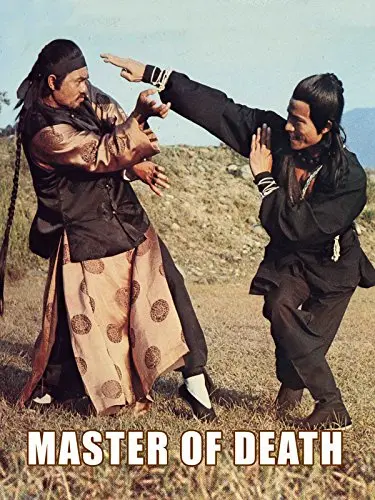
Before diving into the celluloid, we must address the elephant in the room. If you search for this title today, you might find posters depicting martial arts masters or Shaw Scope logos. That is a historical clerical error. The 1926 Der Herr des Todes is a purely German production, directed with a somber intensity that has more in common with The Burning Soil than any action flick.
The film exists in a space of transition. By 1926, the extreme distortion of Caligari-style Expressionism was fading, replaced by the 'New Objectivity' (Neue Sachlichkeit). Yet, this film clings to the shadows. It treats death not as a character, but as a social consequence. The direction focuses heavily on the faces of its cast, utilizing tight close-ups that were revolutionary for the time.
The ensemble here is a who’s who of 1920s Berlin. Hertha von Walther, who would later appear in Fritz Lang’s M, provides a performance that is uncomfortably intimate. In one specific scene where she confronts Ferdinand von Alten, her eyes convey a sense of impending doom that no title card could ever capture. It’s haunting. It’s real.
Ferdinand von Alten brings a rigid, almost terrifying aristocratic coldness to his role. He moves through the sets like a man made of stone. This contrast between Walther’s fluidity and Alten’s stiffness creates a tension that carries the film through its slower second act. It is a masterclass in silent-era physical acting.
Then there is S.Z. Sakall. For modern audiences, Sakall is the flustered, adorable waiter in Casablanca. Seeing him here, in a German silent drama, is jarring. He provides a groundedness to the film, a reminder that even in these high-concept dramas, there are real people with real vulnerabilities. His presence is a surprising highlight that keeps the film from floating off into pure abstraction.
The cinematography in Der Herr des Todes is its strongest asset. The use of chiaroscuro—the sharp contrast between light and dark—is used to delineate the moral state of the characters. When characters are in the throes of despair, the shadows literally begin to swallow the edges of the frame. It’s a technique seen in other works of the era like Kino-pravda no. 4, though applied here to a much more traditional narrative structure.
Specific attention must be paid to the interior sets. The high ceilings and sparse furniture make the characters look small, almost insignificant. This visual choice reinforces the theme that these people are not in control of their lives. They are subjects of the 'Master of Death'—which, in this context, is the rigid social order of the time. It works. But it’s flawed by a lack of variety in its shots.
Does Der Herr des Todes hold up for a modern audience?
If you are looking for a casual Friday night movie, the answer is a firm no. However, if you are a student of film history or a fan of the Weimar aesthetic, it is an essential watch. It provides a bridge between the avant-garde experiments of the early 20s and the more polished psychological dramas of the late silent era. The performances alone justify the runtime, even if the plot occasionally drags like a heavy anchor.
"The film is a visual poem of despair, punctuated by moments of genuine human warmth that are all too brief."
Pros:
- Exceptional use of shadow and light to tell a story without words.
- A rare look at the dramatic range of S.Z. Sakall.
- Authentic Weimar atmosphere that feels thick enough to touch.
- Strong chemistry between the lead actors despite the silent medium.
Cons:
- The pacing in the middle hour is glacial.
- Some of the title cards are overly flowery and distract from the visual storytelling.
- The print quality of surviving copies is often poor, making some details hard to discern.
The writing by Hans Székely and Karl Rosner is where the film struggles most. They seem caught between wanting to write a high-concept allegory about death and a grounded social drama. This creates a tonal whiplash. In one moment, we are watching a nuanced scene of social rejection; in the next, a character is staring into the camera as if they are seeing a ghost. It’s a debatable choice—some might call it 'operatic,' I call it 'indecisive.'
Compared to other 1926 releases like It Is the Law, which utilized a much tighter narrative structure, Der Herr des Todes feels sprawling and occasionally lost in its own gloom. It lacks the punchy, rhythmic editing of something like Kino-pravda no. 4, opting instead for long, lingering takes that test the viewer's focus.
Der Herr des Todes is a somber, beautiful, and occasionally frustrating piece of cinema. It is a film that refuses to be forgotten, even if it has been misunderstood for years. It isn’t a masterpiece, but it is a vital piece of the puzzle that was the German silent era. It is a relic that still breathes, albeit heavily. If you have the patience to sit with it, the film rewards you with a profound sense of time and place that few modern movies can replicate. It works. But it’s flawed. And in that flaw, it finds its humanity.
IMDb 7.2
1929
Community
Log in to comment.