DbcultAccessing Vault...
Cult Review
Senior Film Conservator
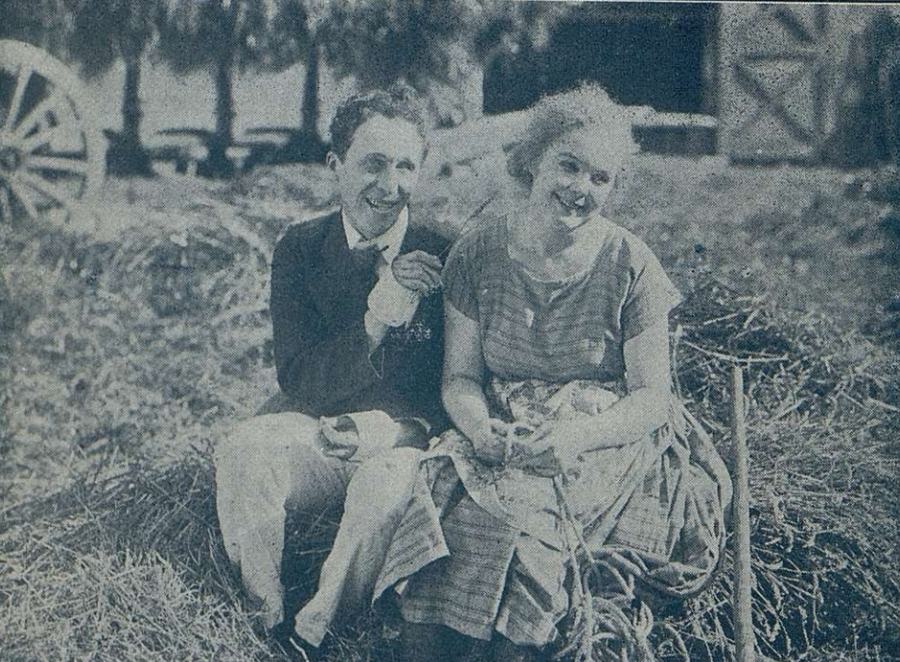
The year 1922 occupies a peculiar, almost sacred space in the chronology of the moving image. While the world was still reeling from the tectonic shifts of the Great War, the cinematic landscape in France was undergoing a metamorphosis of its own, shedding the skin of theatrical rigidity for a more fluid, visual vernacular. At the heart of this evolution stood Décadence et grandeur, a film that remains an enigma to the casual viewer but a treasure trove for the devotee of the silent era. It represents a rare alignment of the stars: the acerbic wit of Tristan Bernard, a giant of the stage, fused with the visionary direction of his son, Raymond Bernard. This isn't merely a collaboration; it is a generational dialogue concerning the decay of old-world values and the frantic, often clumsy birth of the modern ego.
To understand the magnetism of Décadence et grandeur, one must first reckon with the linguistic DNA of its creators. Tristan Bernard possessed an uncanny ability to strip the French bourgeoisie of their pretensions using nothing but a well-placed pause or a subtle subversion of social etiquette. In this film, those literary qualities are translated into a visual grammar that feels surprisingly contemporary. Unlike the overtly sentimental tones found in D.W. Griffith’s The White Rose, which relied on a more traditional moral framework, the Bernards lean into a cynical, almost nihilistic humor that predates the dark comedies of the late 20th century. There is a palpable sense of irony in every frame, a feeling that the grandeur being depicted is merely a gilded cage, and the decadence is the only honest reaction to a world that has lost its center.
The narrative structure avoids the linear simplicity of contemporary Hollywood fare like The Ten Dollar Raise. While the latter focuses on a bootstrap-pulling optimism, Décadence et grandeur revels in the downward spiral. It is a film about the 'un-becoming' of a man. Armand Bernard, an actor of immense physical dexterity, plays the lead with a frantic energy that borders on the grotesque. He embodies the panic of a social climber who realizes the ladder is made of rotting wood. His performance is a fascinating counterpoint to the stoic heroism often seen in early westerns like Westward Ho! or the rugged masculinity found in The Mission Trail. Instead, Armand gives us a man who is soft, malleable, and desperately trying to maintain a facade of dignity while his world crumbles into farce.
Visually, the film is a masterclass in the use of interior space to reflect psychological states. Raymond Bernard, who would later go on to direct the monumental 1934 version of Les Misérables, demonstrates here an early mastery of the frame. The lavish sets of the Parisian salons are not just backdrops; they are oppressive entities. The high ceilings and ornate moldings dwarf the characters, emphasizing their insignificance in the face of history and tradition. This use of architecture as a character in itself reminds me of the atmospheric density in The Dark Star, though Bernard applies it to the drawing-room drama rather than the supernatural.
The lighting in Décadence et grandeur oscillates between the bright, flat light of public scrutiny and the deep, expressionistic shadows of private despair. There is a sequence halfway through the film—a dinner party that descends into quiet chaos—that rivals the best work of the era. The camera lingers on the faces of the guests, capturing the micro-expressions of boredom, envy, and malice. It is a far cry from the slapstick simplicity of Swat That Fly or the lighthearted escapades of Nice and Friendly. Here, the comedy is found in the excruciating tension of social failure. Every clink of a spoon against a porcelain bowl feels like a gunshot in the silent atmosphere created by Bernard’s meticulous pacing.
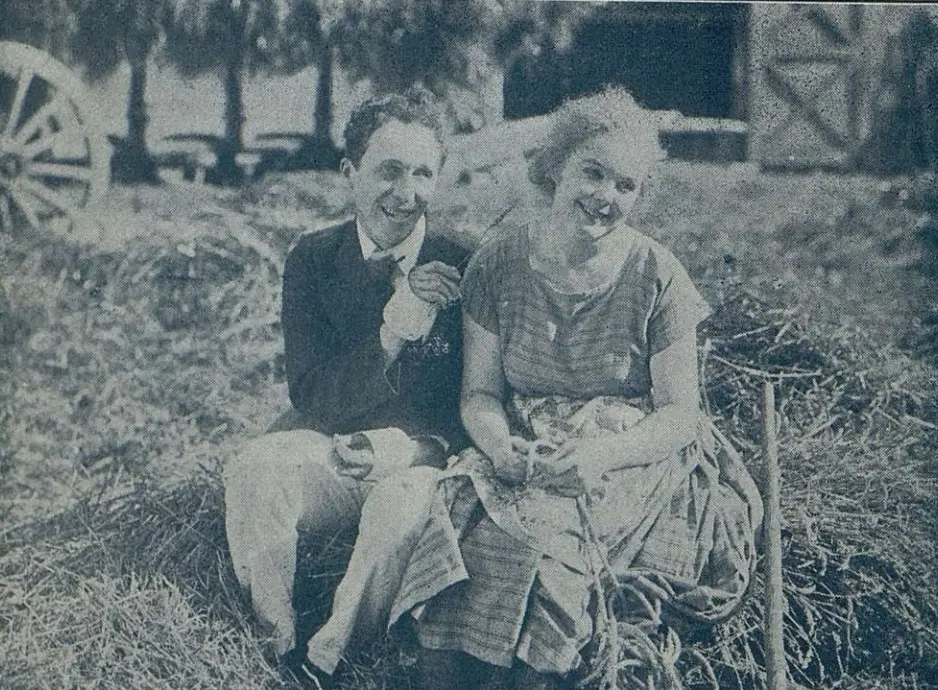
When we place Décadence et grandeur alongside its contemporaries, its unique flavor becomes even more apparent. While Life of the Jews of Palestine was providing a documentary-style window into a specific cultural moment, and The Bar Sinister was exploring the melodramatic potential of social outcasts, the Bernards were busy deconstructing the very idea of 'the hero.' There is no moral victory here, only survival. This lack of a traditional catharsis might have been jarring for audiences used to the resolution of films like Little Wildcat or the pulp thrills of Filibus.
The film shares a certain spiritual kinship with Broken Bubbles, particularly in its fascination with the fragility of dreams. However, where Broken Bubbles leans into the tragedy of the ephemeral, Décadence et grandeur finds a gritty, almost perverse joy in the wreckage. Albert Préjean, who would later become one of the most recognizable faces of French cinema, provides a necessary grounding force. His presence prevents the film from floating away into pure abstraction. He represents the 'grandeur' of the common man, a stark contrast to Armand Bernard’s 'decadence' of the elite. This duality is the engine that drives the film forward, creating a friction that is both intellectually stimulating and emotionally resonant.
It is impossible to ignore the influence of the Bernard family's theatrical roots on the film's blocking. The way characters enter and exit the frame often mirrors a stage play, yet the camera’s ability to close in on a trembling hand or a darting eye adds a layer of intimacy that the theatre could never achieve. This hybridity is what makes early French silent cinema so compelling; it is the sound of a new art form finding its voice by shouting through the old one. The film’s exploration of class and identity feels as relevant today as it did in 1922. We are still a society obsessed with the performance of wealth, still terrified of the 'decadence' that follows the loss of status.
In the broader context of international cinema, Décadence et grandeur stands as a sophisticated alternative to the more populist exports of the time. While Hungary gave us the whimsical charm of Liliomfi and America produced the gritty domesticity of The Poppy Girl's Husband, France was perfecting the art of the social autopsy. Raymond Bernard does not just show us a story; he invites us to witness the dissection of a lifestyle. The film is a reminder that even in the 'silent' era, the screen was screaming with ideas. It challenges the viewer to look past the greasepaint and the flickering lights to see the raw, human desperation beneath.
Finally, we must mention the contribution of Paulette Berger. In a role that could have easily been a mere archetype—the suffering wife or the distant love interest—she brings a quiet, steely resolve. Her performance serves as the film’s moral anchor, even if that anchor is dragging across a seabed of uncertainty. She is the 'grandeur' that remains when all the 'decadence' has been stripped away. In many ways, she is the most modern element of the film, a precursor to the complex female protagonists that would define the next century of cinema. Even when compared to the more rugged, action-oriented narratives like Hard Cider, the psychological depth of Berger’s character provides a lasting impact that outlives any chase sequence or physical stunt.
To watch Décadence et grandeur today is to take a trip into a vanished world, yet the emotions it evokes are startlingly fresh. It is a cynical, beautiful, and deeply intelligent piece of filmmaking that deserves a place in the pantheon of silent masterpieces. It doesn't ask for your pity, and it doesn't offer easy answers. It simply holds up a mirror to the societal dance and asks us to decide for ourselves which is more terrifying: the fall into decadence or the burden of grandeur.
IMDb —
1916
Community
Log in to comment.