DbcultAccessing Vault...
7.2/10
Senior Film Conservator
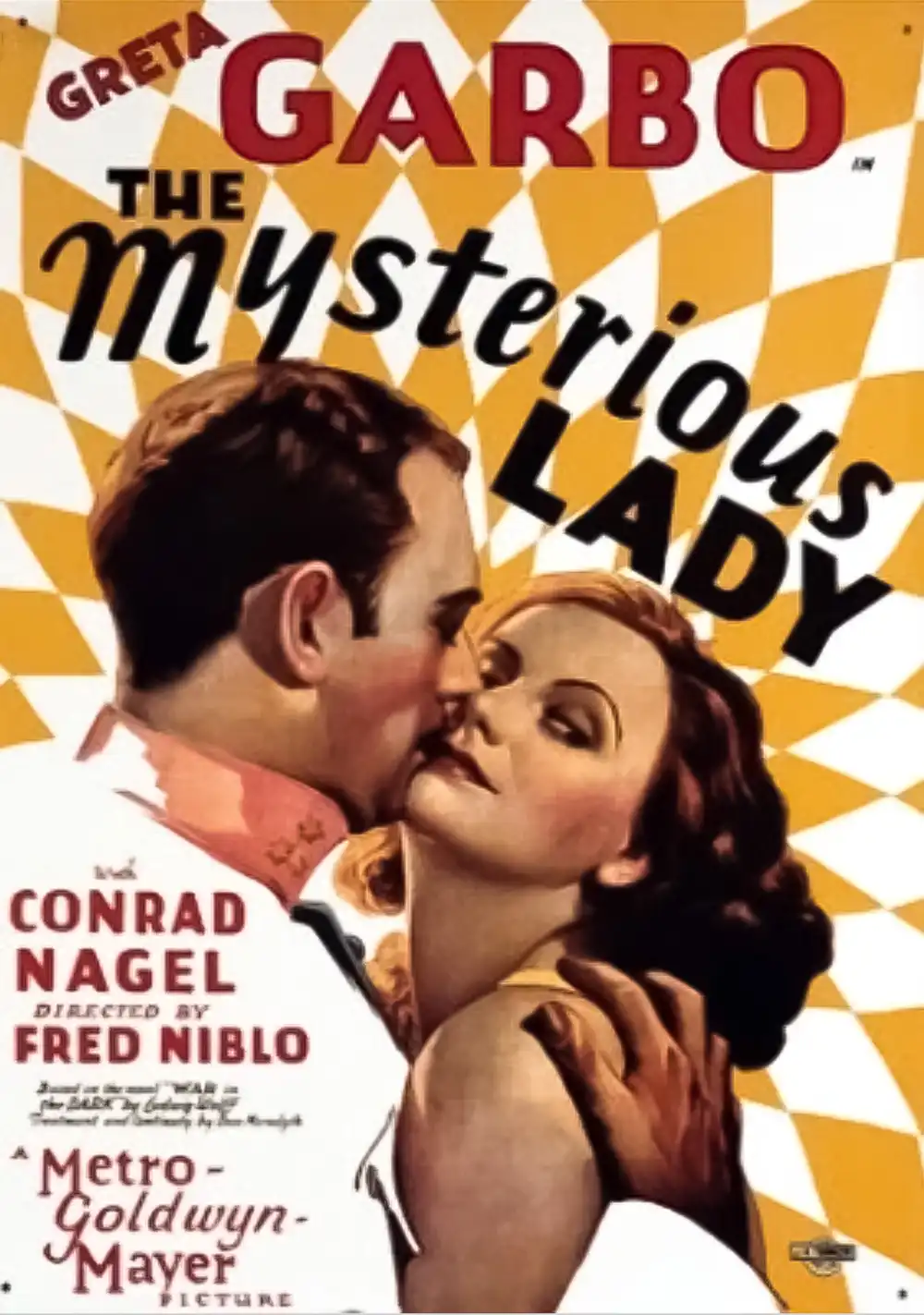
A definitive 7.2/10 rating for a film that redefined the boundaries of cult cinema. The Mysterious Lady remains a cornerstone of transgressive art.
If you are looking for a complex, historically accurate espionage thriller, The Mysterious Lady will likely disappoint you. However, if you want to understand exactly why Greta Garbo became a global icon, this film is essential viewing. It is a movie designed entirely around the geometry of a single face, and it works because that face is capable of holding a close-up longer than almost any other in cinema history. It is worth watching today for anyone interested in the evolution of screen acting and the lush, shadow-heavy cinematography of the late silent era. Casual viewers who struggle with the slow pacing of 1920s melodramas might find the middle act a bit of a slog, but the visual payoff is consistent.
The film opens at the opera in Vienna, and right away, director Fred Niblo establishes that this isn't a movie about plot—it’s a movie about looking. We see Captain Karl von Raden (Conrad Nagel) through his binoculars, scanning the crowd until he lands on Tania (Garbo). There is a specific shot here where the camera lingers on Garbo’s profile as she realizes she’s being watched; she doesn't overact or flutter her lashes. She simply stills herself. It’s a grounded performance in a genre that, at the time, was often prone to wild gesticulation.
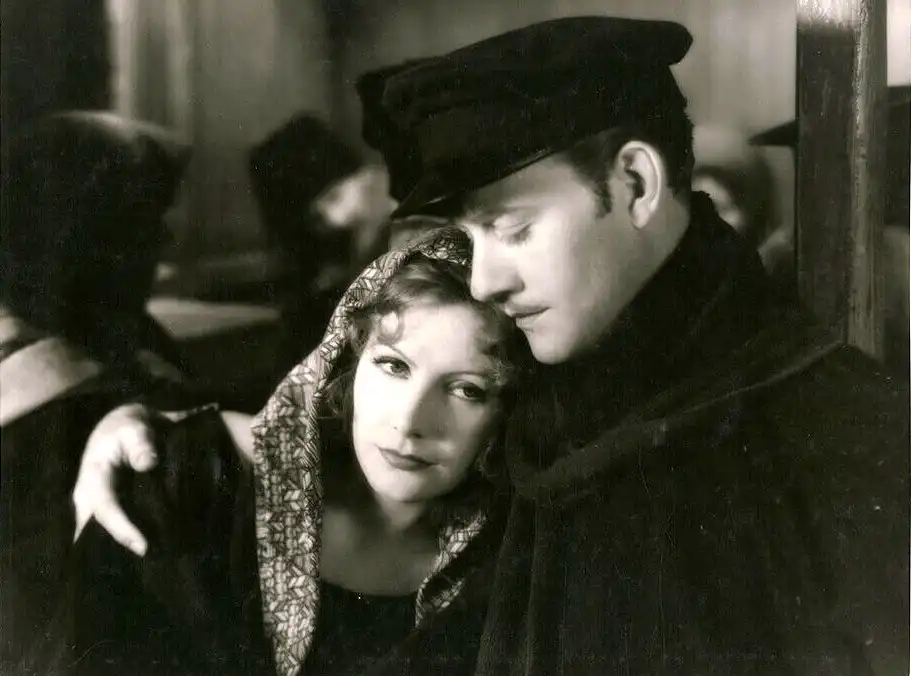
The most famous sequence in the film involves a piano and a candle. Karl visits Tania at her apartment, and the room is drenched in the kind of high-contrast lighting that William Daniels (Garbo’s preferred cinematographer) perfected. The way Tania uses a candle to light Karl’s cigarette—leaning in so the flame illuminates only their eyes—is a masterclass in blocking. You can see the heat between them, which is necessary because the dialogue on the intertitles is often quite stiff. Without that physical chemistry, the idea that a professional soldier would hand over top-secret plans after one night would be laughably unbelievable. With it, you at least understand the intoxication.
If there is a significant weakness in the film, it is Conrad Nagel. While he was a reliable leading man for the period, he feels like a cardboard cutout next to Garbo. In their scenes together, he often falls back on the 'startled officer' look—eyes wide, back straight—which feels dated. When Karl discovers Tania has betrayed him, Nagel’s performance becomes a series of predictable poses of despair.
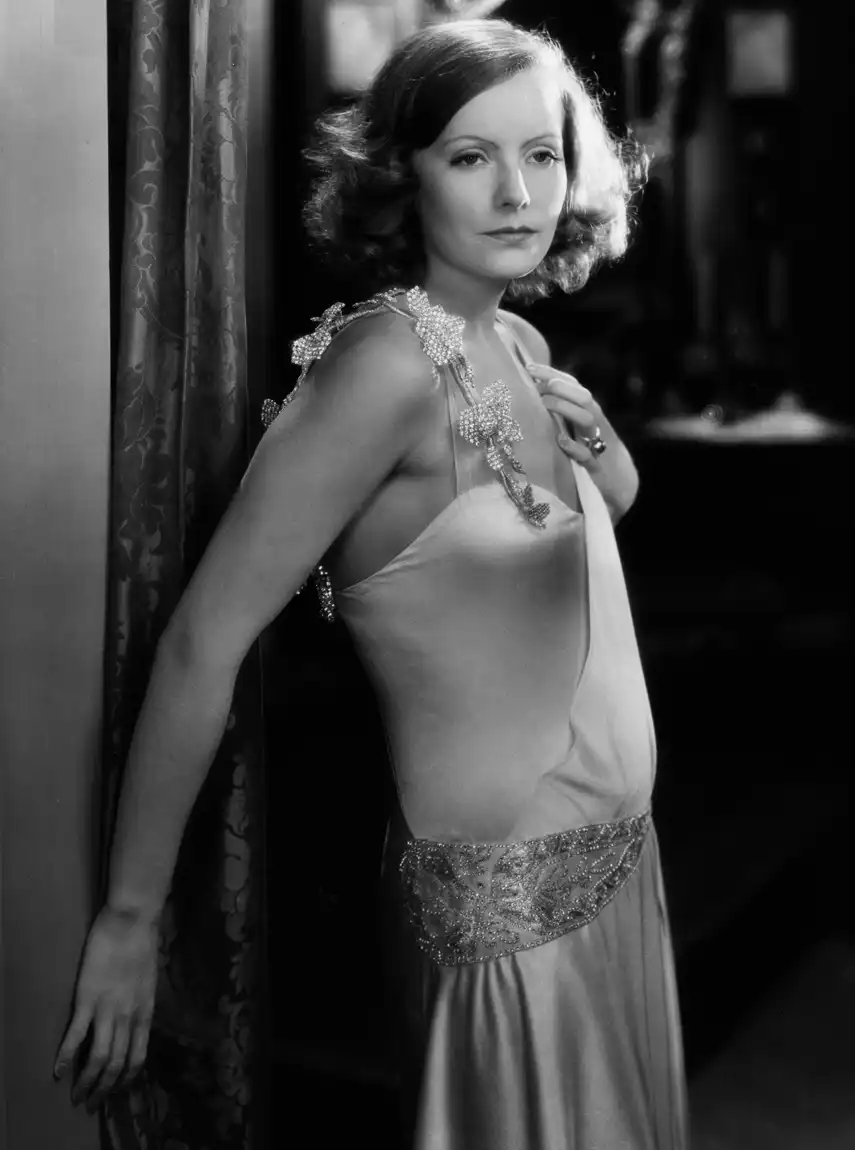
Garbo, conversely, plays the betrayal with a heavy sense of exhaustion. There is a moment after she steals the plans where she sits alone, and you can see the conflict in the way she handles the envelope. She isn't 'acting' guilty; she looks physically burdened. This nuance is what separates The Mysterious Lady from other contemporary spy films like My Official Wife, which leaned much harder into the 'vamp' archetype without the psychological grounding.
The film’s rhythm shifts significantly once the setting moves from the romantic ballrooms of Vienna to the cold, oppressive atmosphere of Russia. The pacing drags here. There is a long stretch where Karl, now a fugitive, infiltrates a Russian party disguised as a musician. While the tension is meant to be high, the editing feels a bit slack. We get several repetitive shots of Karl looking nervous behind his beard and Tania looking nervous from the head table.
The villain of the piece, General Alexandroff (played with oily perfection by Gustav von Seyffertitz), helps pick up the slack. Seyffertitz has a wonderful, predatory screen presence. There is a scene where he watches Tania and Karl through a doorway, and the way he uses his cane to tap out his impatience is a small, concrete detail that makes him feel genuinely threatening rather than just a mustache-twirling caricature. His eventual confrontation with Tania is the film's strongest narrative beat, leading to a climax that is surprisingly cold-blooded for a 1920s romance.
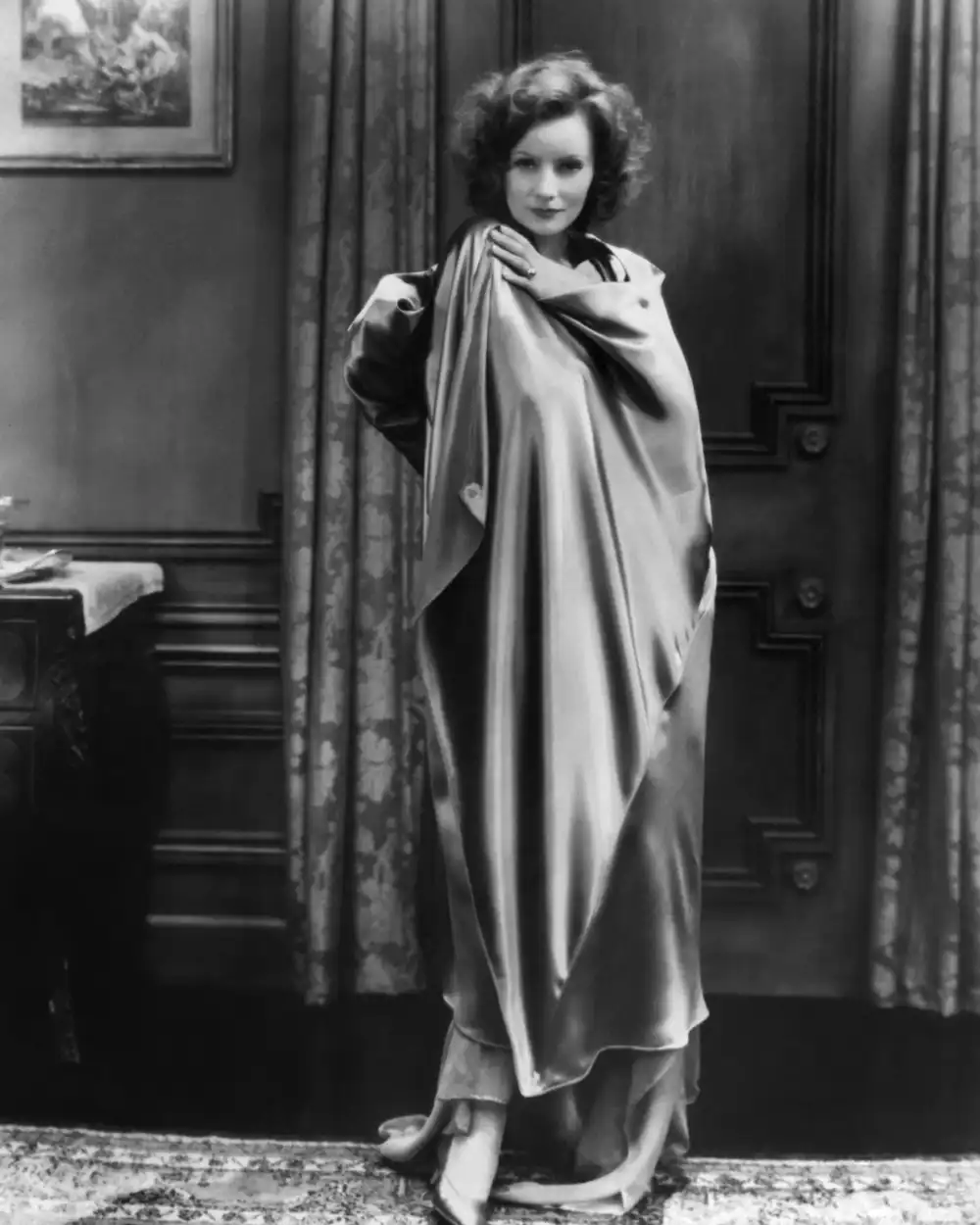
From a technical standpoint, the film is a triumph of the MGM 'house style.' The sets are cavernous and expensive-looking, particularly the General’s private office with its massive desks and looming shadows. The costume choices also serve the story well; Tania begins the film in soft, flowing fabrics that suggest vulnerability, but as the spy plot hardens, her wardrobe becomes more structured and severe.
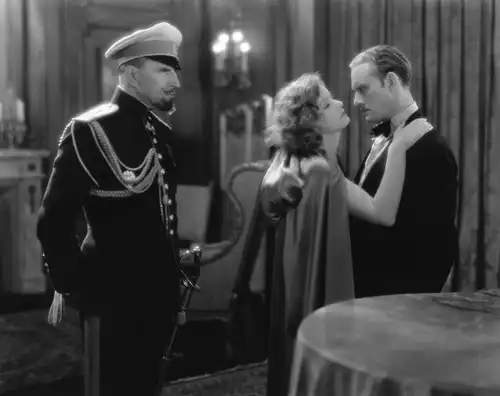
One detail that only someone watching closely would notice is the recurring use of mirrors. Niblo and Daniels frequently frame Garbo in reflections—sometimes two or three at once. It’s a visual metaphor for her dual life as a lover and a spy, but it also serves the practical purpose of showing us her face from multiple angles simultaneously. It is pure vanity filmmaking, but when the subject is Garbo, it’s hard to complain.
The Mysterious Lady isn't a masterpiece of storytelling. The plot is thin, and the 'love at first sight' trope is stretched to its absolute breaking point. However, as a piece of visual art, it is stunning. It captures a specific moment in time when silent cinema had reached its technical peak, just before the arrival of sound changed everything.
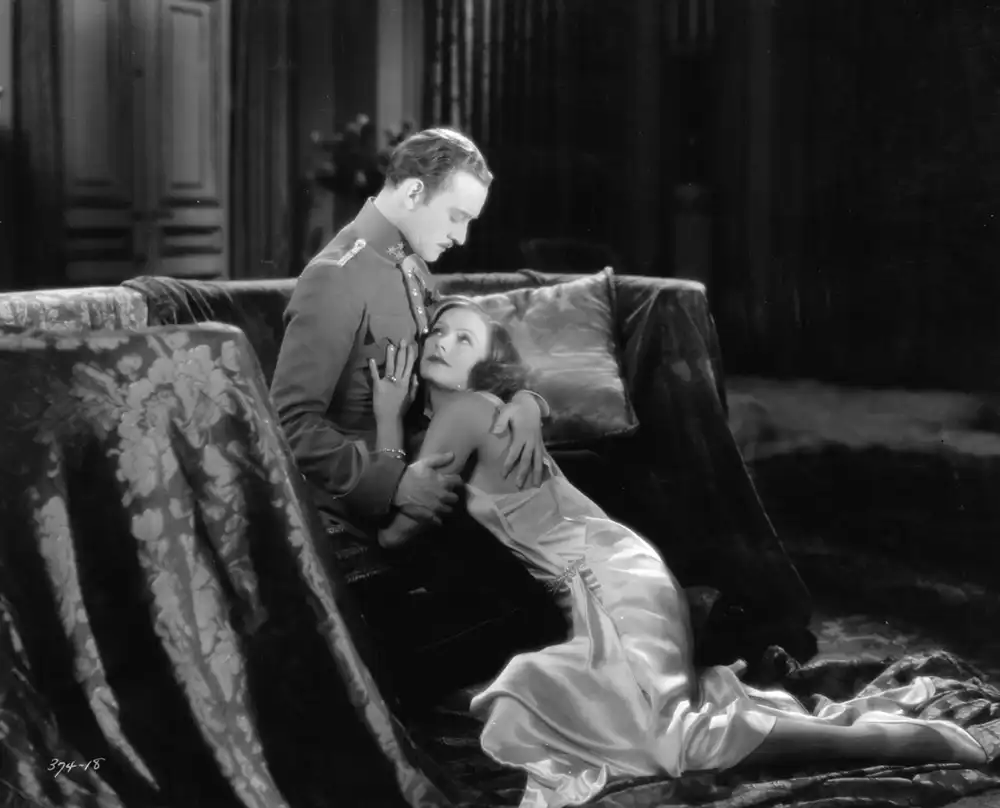
Compared to the grand scale of something like Way Down East, this is a much more intimate affair. It’s a film about glances, the lighting of cigarettes, and the way a uniform fits. If you can forgive the creaky plot mechanics of the middle section, the final twenty minutes deliver a satisfying, if somewhat rushed, resolution. It remains one of the better entries in Garbo’s silent catalog, mostly because it allows her to be a human being rather than just a symbol.
Pros:
IMDb —
1917
Community
Log in to comment.