DbcultAccessing Vault...
6.7/10
Senior Film Conservator
A definitive 6.7/10 rating for a film that redefined the boundaries of cult cinema. The Mysterious Man of the Jungle remains a cornerstone of transgressive art.
Stepping back into the hallowed, often dimly lit archives of early cinema, one occasionally stumbles upon a gem whose thematic resonance and sheer visual audacity transcend its era. Such is the case with 'The Mysterious Man of the Jungle,' a silent-era marvel that, even today, pulses with an untamed energy, inviting viewers to ponder the perennial clash between civilization's relentless march and nature's enduring, often ferocious, embrace. This isn't merely a film; it's an anthropological expedition into the cinematic psyche of a nascent art form, grappling with grand narratives of discovery, exploitation, and the profound, almost spiritual, connection between humanity and the wild.
The film's narrative thrust is deceptively simple, yet its tendrils reach deep into complex philosophical territory. We are introduced to Professor Alistair Finch, a botanist whose intellectual curiosity borders on monomania. His obsession? The fabled 'Orchid of Eternal Youth,' a botanical chimera rumored to bestow immortality, hidden deep within the Amazonian labyrinth. Finch, portrayed with a nuanced blend of scholarly fervor and underlying naiveté, represents the Enlightenment ideal pushed to its perilous extreme—the belief that all secrets of the natural world are merely waiting to be cataloged, dissected, and ultimately, conquered. His expedition, however, is not a purely academic pursuit. It is bankrolled by the shadowy figure of Silas Thorne, an industrialist whose vision for the orchid is devoid of scientific wonder, replaced instead by the cold calculus of profit and power. Thorne's insidious influence casts a long, foreboding shadow over the entire venture, transforming a quest for knowledge into a predatory hunt.
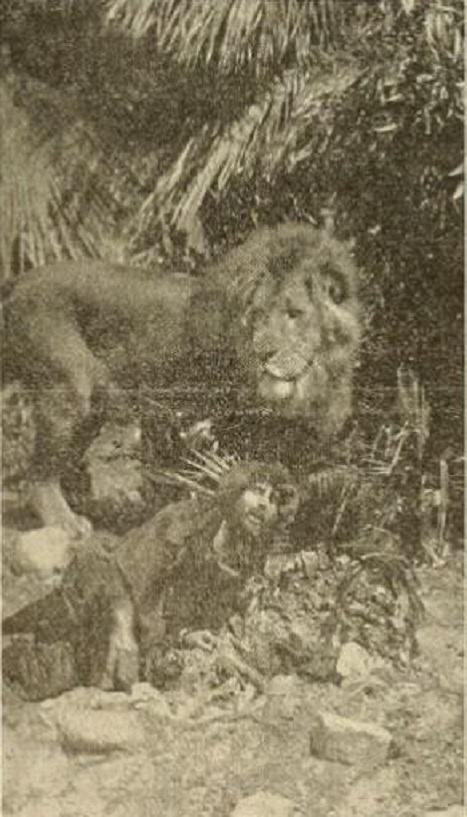
As Finch's party, a motley crew of porters and armed guards, hacks its way through the dense undergrowth, the jungle itself begins to assert its character, transforming from a mere setting into an active antagonist, or perhaps, a divine arbiter. The cinematography, even in its black-and-white limitations, manages to convey the oppressive humidity, the claustrophobic density, and the sheer, breathtaking scale of this primordial world. It's here, amidst the symphony of unseen life, that the true protagonist emerges: 'The Jungle's Sentinel,' embodied with mesmerizing physicality by Otto Breitkreutz. Breitkreutz's performance is a masterclass in silent-era acting, conveying profound emotion and formidable presence through gesture, posture, and an intense gaze. He is not merely a man living in the jungle; he is an extension of it, his movements fluid as a jaguar, his senses attuned to every rustle and whisper. The Sentinel's existence challenges the very notion of 'progress' that Finch and Thorne represent, offering an alternative, harmonious way of being that predates and perhaps even transcends human civilization.
Otto Breitkreutz, an actor whose work often brought a compelling gravitas to the screen, finds perhaps his most iconic role here. His 'Jungle's Sentinel' is a figure of mythic proportions, a Tarzan-esque archetype imbued with a deeper, more spiritual resonance. Breitkreutz eschews overt theatrics, instead crafting a performance built on subtle shifts in expression, powerful physical presence, and an almost animalistic grace. His eyes, often wide with a mixture of suspicion, curiosity, and fierce protectiveness, communicate volumes without the need for intertitles. One particular scene, where he silently observes Finch's camp from the canopy, his silhouette barely discernible against the moonlit leaves, is a testament to his ability to convey both menace and profound solitude simultaneously. It’s a performance that draws parallels with the raw, untamed spirit seen in early adventure films, yet Breitkreutz adds layers of tragic nobility, setting his character apart from mere savage stereotypes. His portrayal of a man torn between his primal instincts and a dawning understanding of the encroaching human world is truly captivating, reminiscent of the complex figures in The Beloved Adventurer, though Breitkreutz's character is less about societal integration and more about fierce, territorial guardianship.
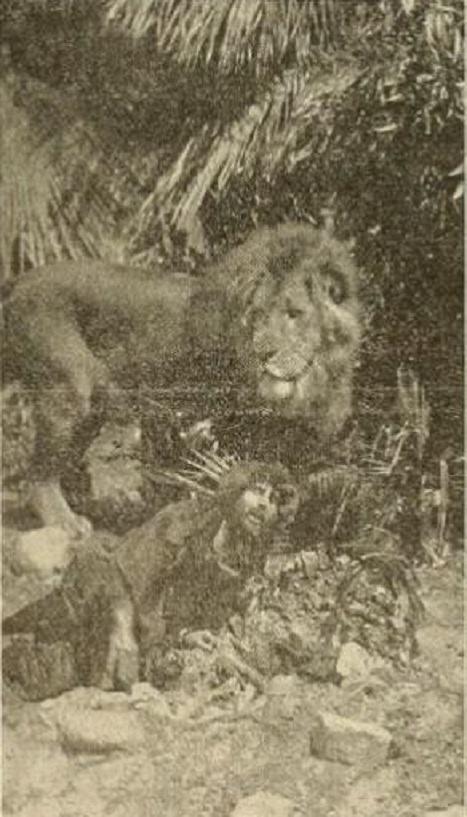
The strength of Breitkreutz's performance lies in his ability to embody the film's central thematic conflict. He is the personification of the jungle's resistance, its ancient wisdom, and its capacity for both awe-inspiring beauty and terrifying power. His struggle is not just against the invading party, but against the very ideology they represent—an ideology that seeks to dominate rather than coexist. This makes his character far more than a simple hero; he is a symbolic figure, a guardian of a vanishing world, evoking the kind of profound, almost elegiac, sentiment found in later environmental narratives. His silent heroism is a powerful counterpoint to the verbose, often misguided, ambitions of the 'civilized' world.
While the specifics of the film's directorial credit are less clear from historical records, the visual storytelling is undeniably masterful for its time. The use of location shooting, which must have been an arduous undertaking, lends an unparalleled authenticity to the jungle sequences. The camera doesn't merely record; it actively participates, often adopting the perspective of an unseen observer, mirroring the Sentinel's omnipresent gaze. The editing, too, contributes significantly to the film's tension, intercutting between the expedition's laborious progress and the Sentinel's silent, watchful movements, creating a palpable sense of impending confrontation. The pacing is deliberate, allowing the audience to luxuriate in the grandeur of the setting before ratcheting up the suspense as the two worlds inevitably collide.
Thematically, 'The Mysterious Man of the Jungle' is surprisingly prescient. It's a foundational text in what would become the 'man vs. nature' genre, but it elevates itself beyond simple adventure by foregrounding the moral implications of colonial expansion and resource exploitation. The 'Orchid of Eternal Youth' becomes a powerful MacGuffin, symbolizing humanity's desperate, often destructive, pursuit of immortality and control, even at the cost of desecrating the very source of life. This theme resonates with the societal anxieties of the early 20th century, a period marked by rapid industrialization and burgeoning global exploration, often at the expense of indigenous cultures and natural environments. In this regard, it shares a critical lens with films like The Walls of Jericho, which explored societal hypocrisy and moral decay, albeit in a different setting.
The film expertly builds towards its climax, a confrontation that is less about brute force and more about the collision of irreconcilable worldviews. The Sentinel, initially a figure of silent observation, is forced to take decisive action as Thorne's true intentions—not just to find the orchid, but to exploit the entire region—become horrifyingly clear. The scenes depicting the Sentinel's strategic sabotage of the expedition's equipment, his almost supernatural ability to navigate and manipulate the jungle to his advantage, are thrilling. They highlight the futility of technological superiority against an opponent who is intrinsically linked to his environment. The film doesn't shy away from depicting the violence that erupts, but it frames it within the context of a desperate defense, a last stand for a way of life under siege. This moral clarity, even in the chaos, is one of the film's greatest strengths.
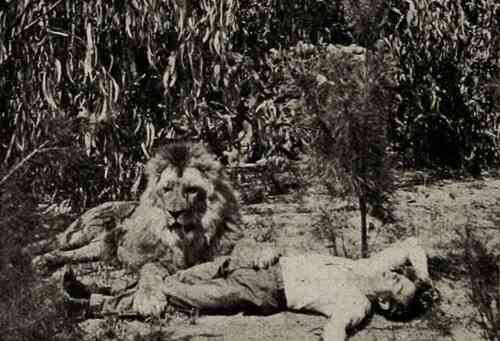
The inclusion of an indigenous community, living near the sacred orchid, adds another layer of poignancy. Their existence, threatened by the same forces that seek to despoil the jungle, underscores the Sentinel's role as a protector of both nature and culture. While the portrayal of indigenous peoples in early cinema can often be problematic, 'The Mysterious Man of the Jungle' attempts to present them with a degree of respect, framing their way of life as one of harmony, in stark contrast to the destructive impulses of the outsiders. This subtle humanization elevates the film beyond mere exoticism, giving it a more profound, humanist core.
Placing 'The Mysterious Man of the Jungle' within the broader context of silent cinema reveals its unique position. While it shares the adventurous spirit of films like The Master Cracksman, its thematic ambitions are grander, delving into ecological and philosophical questions rather than just thrilling escapism. The visual spectacle of the jungle, and the almost mythical quality of Breitkreutz's character, brings to mind the fantastical elements of His Majesty, the Scarecrow of Oz, though grounded in a more tangible, albeit exotic, reality. The stark morality play between the avaricious industrialist and the primal guardian also echoes the clear-cut good-versus-evil narratives prevalent in many early melodramas, albeit with a more nuanced understanding of 'good' and 'evil' tied to environmental ethics.
Its dramatic intensity and allegorical depth can even be compared to the more ambitious literary adaptations of the era, such as The Mystery of Edwin Drood, in its attempt to explore deeper human motivations and societal failings. While 'The Mysterious Man of the Jungle' might lack the intricate plot twists of a Dickensian mystery, it compensates with a raw, visceral power derived from its setting and its central, compelling character. It's a testament to the versatility of silent film that it could encompass both slapstick comedy like Tillie's Punctured Romance and profound ecological dramas like this one, demonstrating the medium's burgeoning capacity for diverse storytelling.
'The Mysterious Man of the Jungle' stands as a compelling artifact from a bygone cinematic era, yet its messages resonate with startling clarity today. It's a powerful reminder of humanity's enduring fascination with the unknown, its insatiable drive for discovery, and the often-catastrophic consequences of unchecked ambition. Breitkreutz's performance as the Sentinel remains a monumental achievement, a silent testament to the power of non-verbal storytelling and the enduring allure of the primal hero. The film's depiction of the Amazon, both as a realm of breathtaking beauty and formidable danger, serves as a potent backdrop for a timeless struggle.
While many silent films have faded into obscurity, 'The Mysterious Man of the Jungle' deserves renewed appreciation for its pioneering spirit, its ambitious scope, and its profound thematic depth. It's a film that demands to be seen not just as a historical curiosity, but as a vibrant, living narrative that speaks to contemporary concerns about environmentalism, indigenous rights, and the delicate balance between progress and preservation. Its final images, often leaving the fate of the orchid and the jungle itself tantalizingly ambiguous, force the audience to confront their own role in the ongoing drama between humanity and the wild. It’s a work that, much like the ancient jungle it portrays, continues to thrive in the imagination, its mysteries slowly unfolding with each viewing, proving that true cinematic art, much like nature itself, possesses an enduring, regenerative power.
Ultimately, 'The Mysterious Man of the Jungle' is more than just an adventure film; it's a cautionary tale, an ode to the untamed, and a showcase for the nascent power of cinema to transport, enthrall, and provoke thought. It reminds us that some mysteries are perhaps best left undisturbed, and some guardians, even in silence, speak the loudest truths. Its place in film history, particularly for its innovative use of location, its compelling lead performance, and its ecological foresight, is undeniable. It's a cinematic journey that truly immerses you in its world, leaving an indelible mark long after the final frame.
IMDb 6.4
1920
Community
Log in to comment.