DbcultAccessing Vault...
Cult Review
Senior Film Conservator
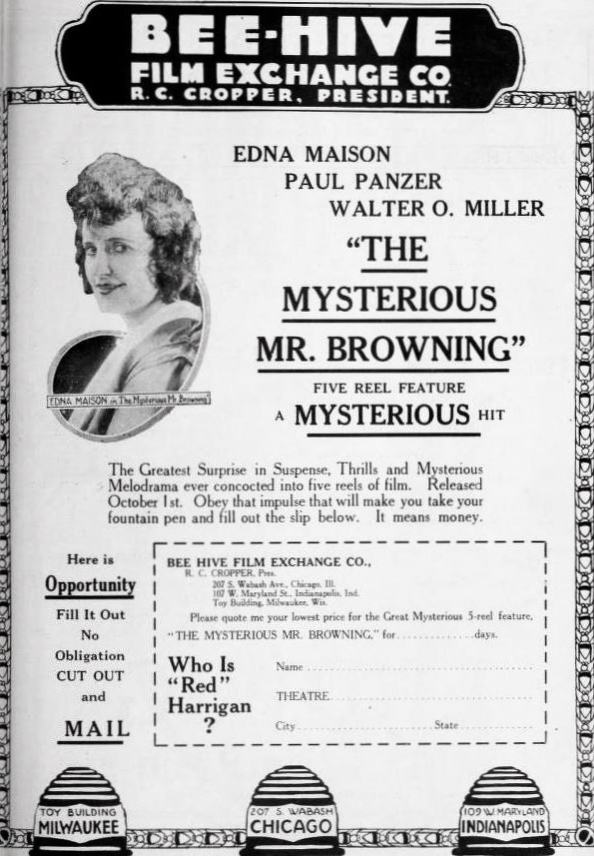
Detroit, 1925, glimmers like tarnished pewter beneath a canopy of coal smoke; into its arterial alleyways slips Mr. Browning—oil-baron by dawn, scarlet-scarved renegade by dusk—piloting a narrative that pirouettes on the knife-edge between Jacobean tragedy and pulp nirvana.
The film’s prologue arrives whispered over a montage of stock-ticker tape: a fortune amassed, a brother lost, a vow murmured behind mahogany doors. Director Paul Scardon—never household-name material, yet a maestro of chiaroscuro—lets exposition seep rather than spill, trusting shadows to do the talking. Within seconds we’re hurled into a speakeasy where the camera itself seems drunk, waltzing past saxophones, past flappers whose cigarette smoke scribbles ephemeral graffiti across the lens. There, Walter Miller sheds his tuxedoed skin and dons the checkered cap of Red Harrigan, a hoodlum whose grin could slice bread.
Miller’s performance is a master-class in bi-located acting: his shoulders arch one way for Browning—patrician, brittle—and collapse another for Harrigan, a marionette whose strings are soaked in bootleg gin. Watch the micro-twitches around the cheekbones; the left side smirks while the right side mourns. Silent cinema seldom receives credit for such granular thespian calculus, yet here it is, etched in 18 frames per second.
Paul Panzer, best remembered as the ill-fated clerk in The Scarlet Car, reinvents himself as Detective Mallory, a bulldog in a fedora. Panzer’s eyes, cavernous enough to swallow plot threads, oscillate between suspicion and reluctant tenderness once blood recognizes blood. Their showdown—on a ferry cleaving the obsidian Detroit River—unfolds in silhouette, the city’s skyline a jagged zipper behind them, and you half-expect the film itself to combust from sheer Oedipal voltage.
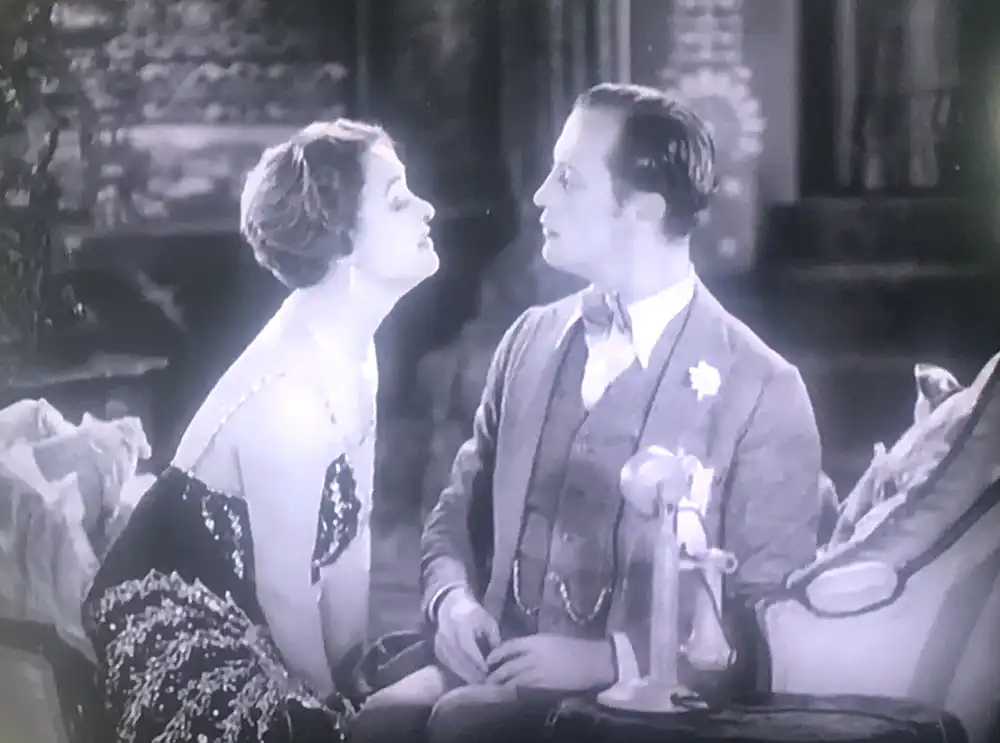
As Vivienne, the copper-heired chanteuse who loves both mask and man, Edna Maison refuses to be the passive fulcrum of fraternal angst. In a pivotal unbroken take—nearly three minutes—she wordlessly weighs loyalty against survival, her pupils dilating like aperture blades. The intertitle, when it finally intrudes, reads merely: “Which half, Vivienne?” but Maison has already answered with a single tear that refuses to drop, clinging like a secret.
The automobile pursuit—sparked by a warehouse payroll heist—rips through Brush Street, hubcaps sparking against trolley rails. Scardon straps the camera to a pursuing Packard’s radiator, predating drone viscerality by a century. We taste gravel, feel axles scream, glimpse the river’s sheen between warehouse ribs. When Browning/Harrigan vaults onto a coal barge, the stunt (performed by Miller himself) lands with a thud that rattles the sprocket holes. Compare this kinetic bravura to the pastoral locomotive of Hearts in Exile and you’ll see how swiftly urban anxiety replaced idyllic romance once the Jazz Age detonated.
What elevates The Mysterious Mr. Browning above routine cops-and-robbers is its willingness to treat crime as metaphysical inquiry. Every looted payroll is a down-payment on brotherhood; every bullet fired boomerangs toward kinship. The script—credited to the nebulous “Writing Committee”—poses a riddle: if society’s ledger claims one brother while the abyss swallows the other, does morality demand a balancing act written in gunpowder? The finale refuses catharsis; Mallory holsters his revolver, not in forgiveness but in exhausted recognition that justice and fraternity share no Venn overlap.
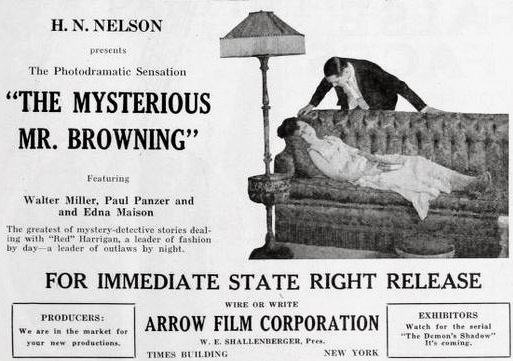
Though shot in monochrome, tinting supplies emotional chromatism: amber for interiors (warmth, deceit), cobalt for exteriors (alienation), and a startling crimson wash during the climactic pier shoot-out. Contemporary restorations rarely replicate these nuances, so if you chance upon a 16-mm collector’s print—God help your social calendar—say yes. Note how the crimson sequence bleeds into yellowed intertitles; it’s as though celluloid itself blushes at the fratricidal reveal.
No original score survives, but archival cue sheets suggest a motif: “Somewhere a Violin” for Browning’s pensive moments, Maple Leaf Rag re-scored for brass during heists. Modern festival accompanists often fuse Detroit techno basslines with 1920s stride piano—an anachronism that, paradoxically, re-anchors the film in Motor City DNA. Try hearing Carl Craig’s Bug in the Bassbin under the ferry standoff; the subwoofers quake like the river itself groaning under secrets.
Place this film beside The Conflict—both hinge on dueling brothers—but whereas that mountain melodrama externalizes strife through landscape, Mr. Browning internalizes it within the city’s concrete arteries. Or stack it against After Dark: both flirt with underworld glamour, yet whereas the latter romanticizes the gutter, Scardon insists the gutter reciprocates, swallowing romantics whole.
Like most of Vitagraph’s late-silent output, prints are scarce—LOC holds a 35-mm negative with French intertitles; Brussels Cinematek possesses a truncated but tinted dupe. Streaming? Criterion Channel rotates it on “Silent Tuesdays,” though often geo-blocked. Your best bet: annual Detroit Institute of Arts silent-film gala each October, complete with live Motown ensemble re-interpreting period cues. Arrive early; the locals treat it like Tigers opening day.
Should you miss the celluloid, chase down the 2021 Kino Blu-ray—2K scan, optional commentary by sleuthing scholar Janet Stites whose anecdotes about Walter Miller’s post-film career in carnival stunt shows are alone worth sticker price. Beware bargain-bin editions; they’re muddy, cropped, and scored with generic banjos that murder tension faster than a censor’s scissors.
Some films entertain; others exhale ghosts that follow you past the lobby. The Mysterious Mr. Browning does both, then asks you to tabulate the moral cost of every shadow you cast. Ninety-seven years on, its questions remain unpaid debts: How far will you descend to retrieve the part of yourself the world misplaced? And once you surface, lungs burning, who exactly gasps for air—outlaw, brother, or the city that birthed both?
Seek it. Wrestle it. Let the Detroit River’s black mirror judge which half of you survives the night.
IMDb 5.9
1928
Community
Log in to comment.