DbcultAccessing Vault...
Cult Review
Senior Film Conservator
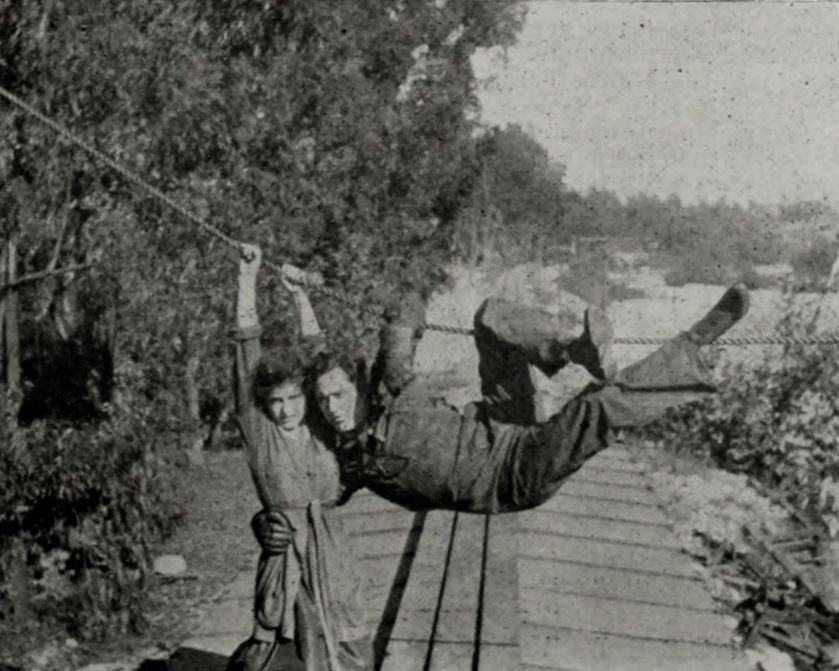
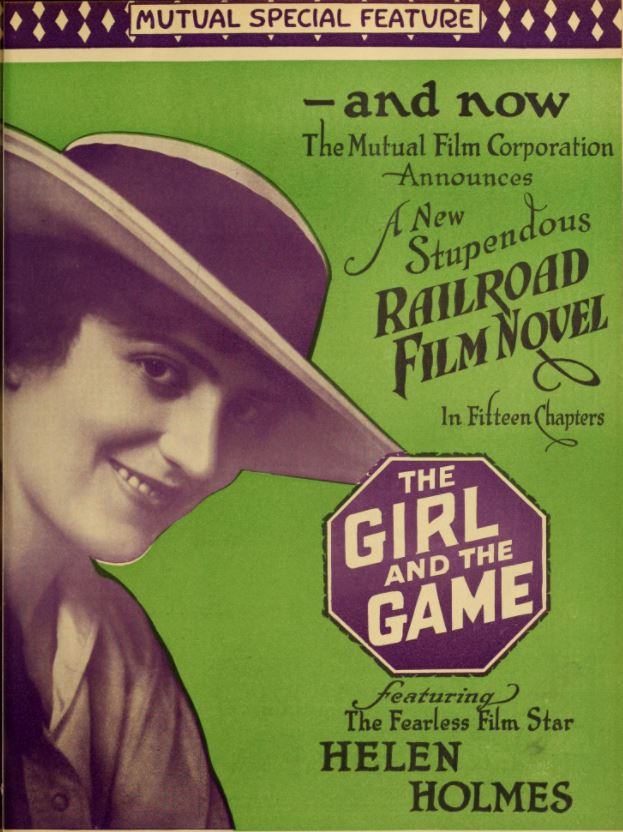
In the pantheon of early cinema, few figures command the screen with the sheer physical audacity of Helen Holmes. While her contemporaries were often relegated to the drawing rooms of high society or the tragic parlors of melodrama, Holmes reclaimed the industrial landscape as a feminine domain. The Girl and the Game, specifically the inaugural episode 'Helen's Race with Death,' serves as a definitive manifesto for the 'Serial Queen' genre—a period where the kinetic energy of the railroad mirrored the rapid acceleration of the medium itself.
The film opens with a deceptively tranquil prologue. We see the young Helen, an emblem of inherited privilege, shadowed by a nurse and a chauffeur. This domestic security is punctured by the introduction of Storm, a newsboy whose very name suggests the turbulence of his class position. When Storm rescues the toddler from a miniature locomotive, the screenplay establishes a thematic resonance that will reverberate through their adult lives. This isn't merely a plot device; it is a structural foundation that explores the concept of the 'life debt' within the framework of burgeoning American capitalism. Unlike the more static historical epics like Richelieu, this film breathes through its movement.
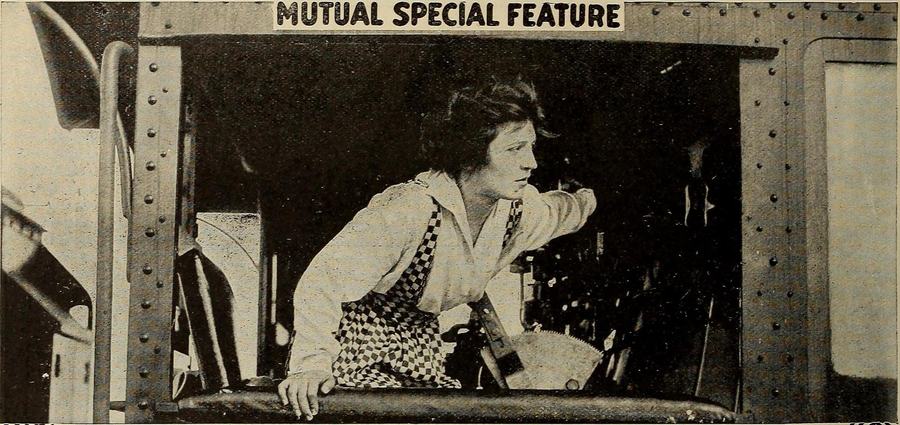
As the narrative leaps forward in time, the sophistication of J.P. McGowan’s direction becomes evident. The transition from the miniature train of the prologue to the thundering behemoth of the C.W.R.R. is a masterful stroke of visual irony. The central crisis—an air pump failure on No. 245 over Black Rock Pass—is handled with a technical specificity that would make modern action directors envious. There is a tactile reality to the danger here. When we see the crew scrambling over the decks of the freight cars to apply hand brakes, we aren't looking at green-screen artifice; we are witnessing the perilous labor of the early 20th century captured on silver halide.
The sequence involving the emergency telephone and the frantic telegraphing of orders highlights a specific era of technological anxiety. Information in 1915 moved faster than a man, but not always faster than a runaway train. This lag creates the 'dead zone' of suspense where the film thrives. Comparing this to the claustrophobic tension of Time Lock No. 776, one sees a similar fascination with the failure of modern systems, though The Girl and the Game opts for the expansive, outdoor peril of the American West rather than the interiority of a vault.
The climax of the episode—Helen’s race against the clock—is a sequence of escalating obstacles that defines the 'thrill-a-minute' ethos. The moment she reaches the bridge, only to find it raised for a battleship, represents a collision of three disparate worlds: the natural (the horse), the industrial (the train), and the military-industrial (the ship). Her decision to spur her horse into the river is a moment of transcendent cinematic bravado. It is here that Holmes differentiates herself from the more ethereal heroines found in works like La dame aux camélias. Helen is not a victim of her emotions; she is a master of her environment.
The cinematography during the river crossing utilizes wide shots that emphasize the scale of her isolation against the churning water. When she emerges, sodden but undeterred, and resumes her gallop, the film reaches a fever pitch. The editing rhythm accelerates as the two trains—the runaway freight and the passenger No. 19—draw closer. The use of cross-cutting here is as sophisticated as anything in the better-known Griffith canon, maintaining a spatial clarity that is often lost in modern, hyper-kinetic editing.
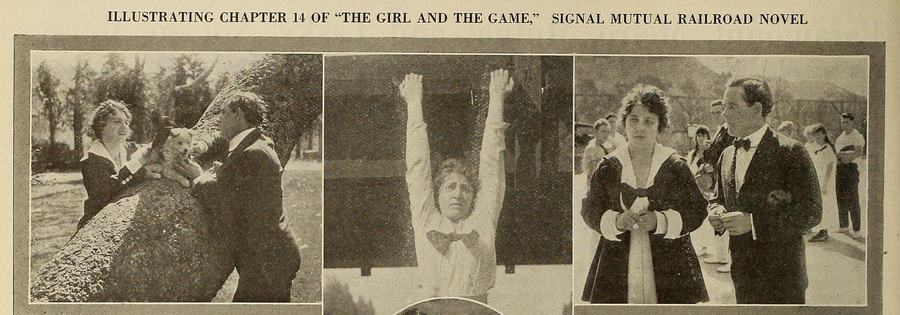
While The Girl and the Game is ostensibly an action serial, it possesses a surprising amount of social subtext. Storm’s journey from an orphan newsboy to a fireman is a quintessential 'American Dream' narrative, yet the film doesn't shy away from the inherent dangers of that climb. His refusal to abandon the engine, even as the rest of the crew opts for the safety of the caboose, speaks to a working-class stoicism that was a staple of the era. This contrasts sharply with the domestic tragedies explored in A Modern Magdalen, where the struggle is internal and moralistic. Here, morality is expressed through the physical preservation of the machine and the lives it carries.
The film also invites comparison to Shore Acres in its depiction of the conflict between familial duty and external catastrophe. However, where Shore Acres leans into the pastoral, McGowan’s work is firmly rooted in the grit and grime of the railroad. The 'Game' in the title refers not just to the literal competition for the railroad lines, but to the gamble of life itself in an increasingly mechanized world.
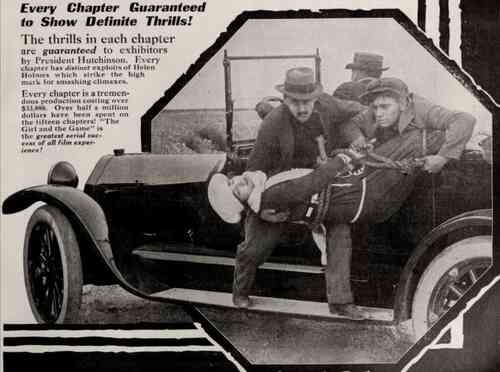
One cannot discuss this film without acknowledging the sheer beauty of its location shooting. The Black Rock Pass sequences offer a rugged, unvarnished look at the American landscape. The smoke from the locomotives creates a naturalistic chiaroscuro, a visual texture that is far more evocative than the theatrical sets of The Purple Mask. There is a documentary-like quality to the way the trains are filmed—the way the steam obscures the frame, the way the steel vibrates under the weight of the cars.
The final act, where Helen breaks the switch lock with a stone, is a potent image of the individual asserting control over the massive infrastructure of the state. It is a moment of raw, unmediated agency. When Storm finally jumps to safety and is recovered by Helen, the narrative circle is completed. The debt is paid, not through a financial transaction, but through a shared survival of the industrial furnace. This resolution is far more satisfying than the melodramatic conclusions of many contemporary European imports like Den hvide Slavehandels sidste Offer.
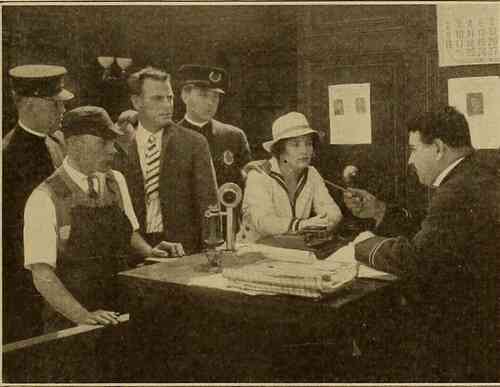
The Girl and the Game remains a staggering achievement in the history of action cinema. It successfully bridges the gap between the 'cinema of attractions' and the narrative complexity of the feature film. Helen Holmes, as both star and co-writer, crafted a persona that was both physically formidable and intellectually sharp. She was a pioneer who understood that the true power of cinema lay in its ability to capture the impossible in a way that felt entirely tangible.
For modern viewers, the film offers more than just historical curiosity. It is a masterclass in pacing and visual storytelling. Whether it is the frantic scribbling of a message on a signal flag or the desperate spurs of a horse at a riverbank, every action is imbued with a sense of urgency that transcends the century since its release. In an era of CGI-heavy blockbusters, there is something profoundly moving about watching a woman risk her life for a shot, standing on the edge of a thundering train, proving that the game of cinema is the most thrilling race of all.
IMDb 5.8
1932
Community
Log in to comment.