DbcultAccessing Vault...
Cult Review
Senior Film Conservator
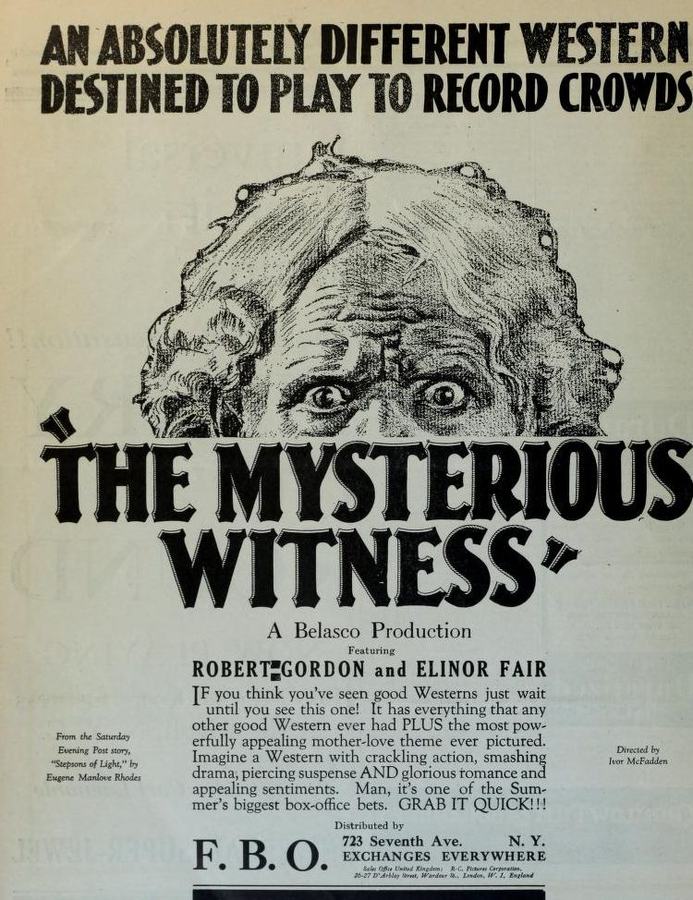
When the dust‑laden reels of early American cinema flicker to life, few titles evoke the raw, unvarnished moral calculus of the frontier quite like The Mysterious Witness. Directed by a yet‑to‑be‑named auteur of the silent era, the film stitches together a tapestry of filial devotion, courtroom ingenuity, and the inexorable pull of love, all against the backdrop of an unforgiving desert landscape.
At its core, the story follows Johnny Brandt (Robert Gordon), a young drifter who, motivated by the twin forces of poverty and responsibility, abandons his ailing mother (Nanine Wright) to seek employment on a remote ranch. The narrative thrust is propelled not merely by Johnny’s physical journey but by the psychological tension between truth and deception. The foreman’s machination—an accusation of murder that lands Johnny behind bars—serves as a crucible in which the protagonist’s integrity is tested.
The film’s most audacious narrative gambit arrives in the courtroom scene, where Johnny invokes his horse as an alibi. This choice, bordering on the surreal, is rendered with such earnestness that it transcends farce, becoming a meditation on the agency of non‑human witnesses. The horse’s palpable fear—captured through deft close‑ups and kinetic intertitles—acts as a silent, yet eloquent, testimony that sways the jury. In this moment, the film aligns itself with the broader tradition of animal symbolism in cinema, echoing the emotional stakes found in The Goddess where a dog’s loyalty mirrors human fidelity.
Robert Gordon delivers a performance that balances stoic resolve with fleeting vulnerability. His expressive eyebrows and the slightest tremor in his hands convey a spectrum of emotions without uttering a single word. Nanine Wright, as the mother, embodies the archetype of the self‑sacrificing matriarch; her eyes, often glazed with tears, communicate a lifetime of unspoken grief. Elinor Fair, portraying the ranch owner’s daughter, provides a nuanced counterpoint—her flirtatious glances and gentle smiles hint at a burgeoning agency that challenges the era’s gender expectations.
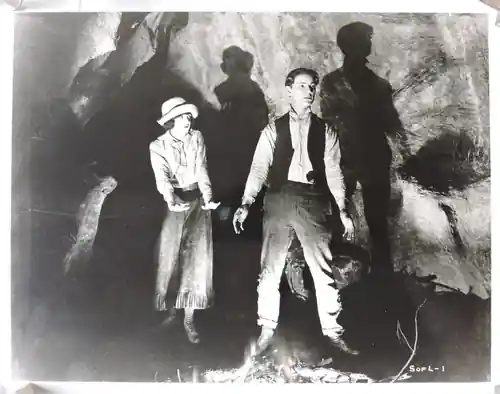
The supporting cast—Wharton James as the duplicitous foreman and Jack Connolly as the steadfast rancher—populate the narrative with clear moral delineations. Their performances are amplified by the film’s reliance on physicality; a clenched jaw, a shuffling foot, a lingering stare become the lexicon of conflict.
Cinematographer Eugene Manlove Rhodes (also the screenwriter) employs a chiaroscuro technique that juxtaposes the stark, sun‑bleached expanses of the ranch with the oppressive shadows of the jail cell. The use of deep focus in the courtroom allows the audience to simultaneously track the horse’s jittery movements and the jurors’ shifting expressions, creating a layered visual narrative. The film’s palette—muted earth tones punctuated by the occasional flash of a crimson bandana—mirrors the emotional volatility of its characters.
A particularly striking sequence occurs during Johnny’s return to his mother. The camera lingers on the rust‑colored horizon as the sun sets, bathing the scene in a warm amber glow reminiscent of the hue #C2410C, while the mother’s silhouette is backlit, evoking a sense of hopeful redemption.
When situated alongside contemporaneous works, The Mysterious Witness shares thematic DNA with Charles Chaplin’s Just Peggy, where an underdog protagonist battles systemic injustice. Both films leverage the courtroom as a crucible for truth, yet while Chaplin employs overt comedy, Rhodes opts for a solemn, almost lyrical, approach.
The motif of an animal as a pivotal witness finds echo in the Italian silent drama The Forbidden Thing, wherein a dog’s bark becomes the catalyst for a murder revelation. This intertextual resonance underscores a silent‑era fascination with non‑verbal testimony.
Rhodes’ screenplay is a masterclass in economy. Each intertitle is meticulously crafted, delivering exposition without redundancy. The pacing oscillates between languid, contemplative ranch scenes and the rapid, tension‑filled cuts of the trial, mirroring the protagonist’s internal rhythm. The narrative arc adheres to a classical three‑act structure, yet subverts expectations through the horse‑witness device, an inventive twist that elevates the film from formulaic western to a study in legal theatrics.
Accompanying the visual tableau is a live piano score, historically performed with a blend of plaintive minor chords during the prison sequences and bright, staccato motifs during the reunion. This auditory dichotomy accentuates the film’s emotional beats, guiding the audience through Johnny’s despair, hope, and eventual triumph.
Although The Mysterious Witness never achieved blockbuster status, its influence permeates later genre hybrids that blend western settings with courtroom drama. Scholars often cite the film when discussing early cinematic explorations of animal agency, positioning it alongside works like Footprints for its pioneering use of non‑human characters as narrative linchpins.
Modern retrospectives, such as the 2022 silent‑film revival at the Los Angeles Film Forum, have resurrected interest, prompting a re‑evaluation of its artistic merit. The film’s preservation status remains precarious; however, recent digitization efforts have ensured that its haunting courtroom tableau can be streamed in high definition, allowing new audiences to appreciate its visual poetry.
In sum, The Mysterious Witness stands as a testament to the silent era’s capacity for narrative innovation. Its deft interweaving of familial devotion, legal intrigue, and animal symbolism renders it a compelling study for cinephiles and scholars alike. The film’s understated performances, meticulous composition, and daring screenplay coalesce into a work that, despite its age, feels remarkably contemporary. For those seeking a film that challenges conventional storytelling while honoring the rugged aesthetic of early westerns, this title offers a richly textured, emotionally resonant experience.
IMDb 5.6
1935
Community
Log in to comment.