DbcultAccessing Vault...
Cult Review
Senior Film Conservator
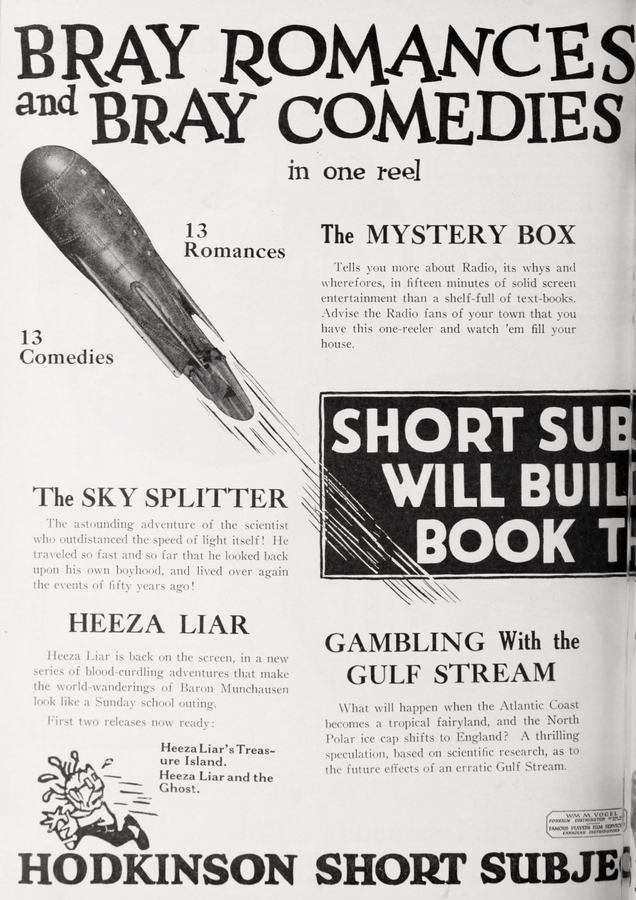
In the annals of early cinema, few artifacts capture the zeitgeist of technological marvel quite like John Norling’s 1921 offering, 'The Mystery Box'. This isn't merely a film; it’s a fascinating time capsule, a didactic yet subtly enchanting exploration of an emerging phenomenon that would irrevocably alter the fabric of society: radio. At a juncture when the invisible currents of the airwaves were transforming from scientific curiosity into a pervasive domestic presence, Norling, serving as both writer and director, crafts a narrative that is part allegorical fable, part industrial exposé, and entirely a testament to cinema's burgeoning power to both entertain and educate.
The film opens with an arresting sequence, an animated vignette featuring the 'Radio Bug' – a whimsical, almost mischievous entity that embodies the unseen, often perplexing nature of wireless technology. Emerging from a shop display, this animated figure, a precursor to countless cartoon characters yet to grace the silver screen, is a brilliant stroke of metaphorical genius. It’s a harbinger, an invisible force made manifest, and its attack on a young boy isn't just a plot device; it’s a symbolic representation of humanity's initial, often wary, encounter with a technology that operates beyond the realm of immediate sensory perception. The sting is not merely physical; it's an initiation, a visceral prompt that compels interaction with the very source of this invisible 'affliction'. This early foray into animation, while rudimentary by today's standards, speaks volumes about Norling's innovative spirit and the willingness of early filmmakers to experiment with mixed media to convey complex ideas. It sets a tone that is both playful and profoundly inquisitive, inviting the audience to ponder the unseen energies that were beginning to shape their world.
The subsequent doctor's consultation, leading to the prescription of a radio outfit, is a moment of delightful, almost surreal, irony. Imagine a medical professional prescribing a technological device as a remedy, an early acknowledgment of radio's therapeutic or, at the very least, distracting and entertaining qualities. This scene cleverly positions the radio not just as a luxury item, but as a beneficial, perhaps even essential, component of modern living. Once installed, the radio swiftly transforms from a mere appliance into the vibrant epicentre of family entertainment. It’s a communal hearth, a source of shared experience and wonder, drawing family members together in rapt attention. This depiction underscores radio's immediate impact on domestic life, illustrating its power to foster connection and provide a window to a wider world, long before television or the internet would assume a similar role. The film subtly celebrates this shift, portraying the radio as a benign, unifying force in the home, a stark contrast to the initial apprehension embodied by the 'Radio Bug'.
What follows is a remarkable pivot, a journey from the intimate domestic sphere to the industrial heartland of wireless communication: the Westinghouse broadcasting station in New Jersey. This segment of the film transforms into a captivating documentary, a grand tour behind the curtain of technological magic. Norling meticulously guides the viewer through the labyrinthine mechanics of radio transmission, demystifying the invisible. We are shown the towering antennae, silent sentinels reaching towards the heavens, from which invisible waves are dispatched. The film then delves into the intricate process of sound modulation, illustrating how audible signals are translated into electrical impulses, subtly altering the very fabric of these ethereal waves. This visual explanation, undoubtedly aided by explanatory intertitles, was groundbreaking for its time, providing a layperson's guide to a complex scientific marvel. It’s a testament to the early cinema's role not just as an entertainer, but as a powerful educator, bridging the gap between scientific innovation and public understanding.
The climax of this technical exposition lies in the 'detector' – the ingenious component within the home receiver that translates these modulated waves back into recognizable sound. The film emphasizes its precision, its ability to reproduce sounds 'exactly like those of the sending station', completing the miraculous circuit of communication. This entire sequence is a masterclass in early scientific filmmaking, demonstrating how the nascent medium of cinema could illuminate abstract concepts with clarity and wonder. John Norling, in this segment, functions less as a storyteller and more as a guide, a technological Virgil leading his audience through the inferno of scientific principles to the paradise of understanding. His dedication to detailing the process, rather than merely showcasing the outcome, elevates 'The Mystery Box' beyond a simple promotional piece, imbuing it with genuine educational value and a sense of historical significance.
John Norling, as the singular creative force behind 'The Mystery Box', showcases a unique directorial sensibility. His ability to seamlessly blend disparate elements – whimsical animation, poignant domestic drama, and meticulous industrial documentary – speaks to a visionary approach that was perhaps ahead of its time. In an era when cinema was still largely finding its voice, Norling understood its potential not just for narrative storytelling but for disseminating information and shaping public perception of emerging technologies. His film isn't just about radio; it's about the very act of understanding, of pulling back the veil on the unseen forces that govern our modern world. He invites his audience to marvel at the ingenuity of human invention, fostering a sense of wonder and appreciation for scientific progress.
Comparing 'The Mystery Box' to other films of the period highlights its distinctiveness. While many contemporary productions, such as The Bohemian Girl or even The Legion of Death, focused on dramatic narratives, historical events, or established literary adaptations, Norling chose to illuminate the present and predict the future. His film stands apart from the prevalent melodramas or adventure serials, instead carving a niche in what we might today call edutainment. Even films like Life of Christ, while instructional in their own religious context, operated within a completely different thematic and stylistic framework. Norling's work here is less about grand human drama and more about the drama of scientific discovery and its societal integration. It’s a pragmatic yet poetic celebration of human ingenuity, a stark contrast to the escapist fantasies or moralistic tales that dominated much of early cinema.
The early 1920s were a period of immense change and technological acceleration. The First World War had just concluded, and a new era, often dubbed the 'Roaring Twenties', was dawning, characterized by rapid industrialization, social transformation, and the widespread adoption of new inventions. Radio was at the forefront of this revolution. From nascent amateur broadcasts to the establishment of commercial stations, the airwaves were alive with potential. 'The Mystery Box' captures this moment perfectly, acting as both a chronicler and an evangelist for the new medium. It addresses, implicitly, the public's curiosity and perhaps a degree of apprehension surrounding this 'invisible' technology. By demystifying its workings, Norling helped to foster trust and excitement, paving the way for radio's integration into daily life.
The film's didactic approach echoes a broader trend in early 20th-century media, where educational content often intertwined with entertainment. This was an age of discovery, and cinema, as a powerful new medium, was uniquely positioned to document and explain these advancements. While films like Mules and Mortgages might have illustrated more traditional aspects of rural life or economic realities, 'The Mystery Box' firmly plants itself in the modern, urban, technologically advanced future. It's a film that looks forward, embracing the dynamism of its era rather than dwelling on the past. Even a film from the same year, like The Winding Trail (1921), likely presented a more conventional narrative, making Norling's blend of animation and industrial explanation particularly striking for its time.
Technically, 'The Mystery Box' is a fascinating study in early filmmaking techniques. The seamless transition from live-action to animation, while perhaps rudimentary, demonstrates an early understanding of mixed-media storytelling. The use of intertitles would have been crucial for explaining the complex scientific principles, ensuring that the audience, regardless of their prior knowledge, could follow the intricate journey of a radio wave. The pacing, shifting from the narrative charm of the 'Radio Bug' to the deliberate, explanatory cadence of the Westinghouse tour, is expertly managed, maintaining engagement throughout its relatively short runtime. It doesn't rely on grand sets or dramatic performances, but rather on the inherent wonder of its subject matter and the clarity of its exposition.
The film's legacy extends beyond its historical significance as an early educational film. It stands as a testament to cinema's enduring capacity to interpret and present the world around us, even its most abstract facets. In a contemporary context, where digital signals and invisible networks are ubiquitous, 'The Mystery Box' offers a charmingly quaint yet fundamentally insightful look at how previous generations grappled with similar technological revolutions. It reminds us that the wonder of connection, of voices and music traversing vast distances through the ether, was once a profound 'mystery' that required careful, cinematic elucidation. While films like Fan Fan or The Heart of a Lion might explore human emotions or heroic deeds, Norling's film focuses on the heroism of human invention and the emotional impact of technology on daily life.
It’s also an intriguing piece for those interested in the evolution of corporate communication and public relations. Westinghouse, a major player in electrical and radio technology, clearly understood the power of film to showcase its innovations and educate potential consumers. This film serves as an early example of branded content, demonstrating how industries leveraged the new medium of cinema to connect with the public and explain their contributions to modern life. It's a precursor to countless industrial films and corporate documentaries that would follow, making 'The Mystery Box' not just a film about radio, but a film about the very intersection of technology, media, and public engagement.
Ultimately, 'The Mystery Box' is more than a historical curiosity; it’s a vibrant, insightful document of a pivotal moment in human history. John Norling, with his unique blend of narrative charm and instructional clarity, crafted a film that demystified a revolutionary technology and celebrated its profound impact on everyday life. It stands as a testament to the versatility of early cinema, its capacity to be both an entertaining spectacle and an invaluable educational tool. For anyone fascinated by the dawn of broadcasting, the evolution of media, or the ingenuity of early filmmakers, this film is an essential viewing experience, a clear signal from the past that still resonates with clarity and wonder today. It reminds us that the 'mystery' of technology, when thoughtfully explained, can become the source of enduring fascination and progress. Unlike purely dramatic works such as The Rescue or even the more lighthearted The Antics of Ann, Norling's film found its unique strength in blending fact with a touch of allegorical fiction, creating a truly singular cinematic experience that continues to inform and delight a century later.
IMDb 6.1
1937
Community
Log in to comment.