DbcultAccessing Vault...
7/10
Senior Film Conservator
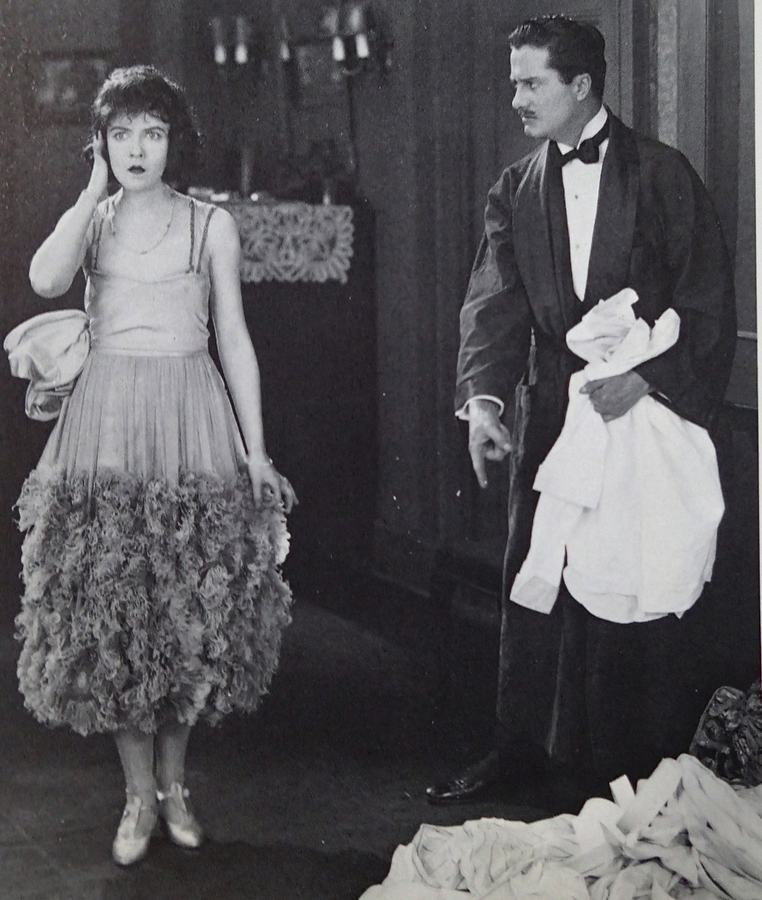
A definitive 7/10 rating for a film that redefined the boundaries of cult cinema. Remodeling Her Husband remains a cornerstone of transgressive art.
The 1920s stood at a precipice, caught between the lingering Victorian morality of the previous century and the burgeoning liberation of the Jazz Age. Within this cultural friction, 'Remodeling Her Husband' emerges not merely as a comedic trifle, but as a sophisticated manifesto on gender dynamics, directed by none other than the legendary Lillian Gish.
It is impossible to discuss this film without acknowledging the staggering pedigree of its creators. While Lillian Gish is immortalized as the 'First Lady of American Cinema' for her ethereal presence in front of the lens, her singular foray into the director's chair reveals a keen, analytical mind for spatial storytelling and comedic timing. Partnered with the razor-sharp wit of a young Dorothy Parker—who contributed to the scenario—the film possesses a sardonic edge often missing from the more sentimental fare of its contemporaries like The Commuters.
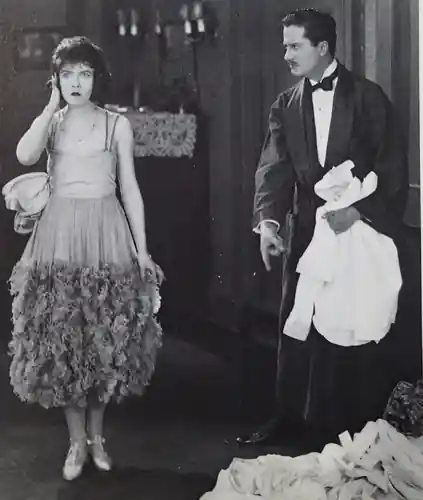
Dorothy Gish, often overshadowed by her sister's dramatic gravitas, proves here to be a comedic force of nature. As Janie Wakefield, she navigates the transition from starry-eyed bride to cynical career woman with a physical vocabulary that is both expressive and remarkably modern. Unlike the passive heroines found in Honor's Altar, Janie is a protagonist defined by her reactions to the male gaze and her eventual rejection of it.
The plot moves with a rhythmic precision, establishing Jack Valentine (James Rennie) as a man whose charm is his only currency. The early scenes of their marriage are underscored by a creeping dread, as Janie begins to perceive the cracks in Jack's fidelity. The taxi sequence—a masterpiece of silent suspense—utilizes the urban landscape of New York to emphasize Janie's isolation. Seeing her husband with another woman isn't just a personal blow; it is a rupture in the social contract of the era.
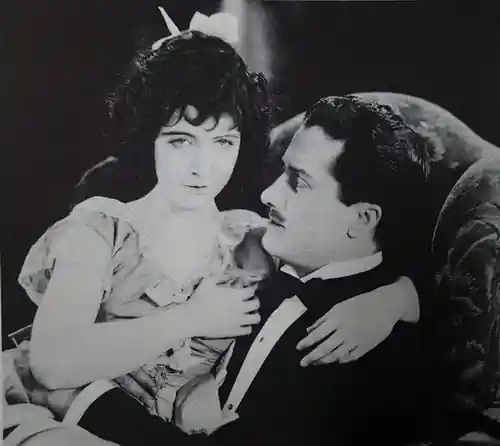
Where many films of this period, such as Chains of the Past, might focus on the internal suffering of the betrayed woman, 'Remodeling Her Husband' externalizes this conflict through Janie’s interactions with the 'fascinating widow' across the hall. Harda Daube plays the widow with a predatory grace that serves as a mirror to Janie’s own domesticity. It is a battle of archetypes: the wife versus the siren. Yet, the film refuses to vilify the women entirely, instead pointing the satirical finger at Jack’s infantile inability to resist the slightest feminine distraction.
The most radical departure occurs when Janie abandons the domestic sphere for the cutthroat world of finance. This isn't merely a plot device; it is a reclamation of identity. In the halls of her father’s Wall Street firm, Janie discovers that the same analytical skills required to manage a wayward husband are equally effective in managing market fluctuations. This thematic shift places the film in conversation with The Floor Below, though Janie’s ascent is fueled by a specific type of vengeful competence that is uniquely satisfying.

The visual language of the office scenes stands in stark contrast to the soft-focus domesticity of the film's first half. Lillian Gish utilizes sharp lines, bustling extras, and a faster editing pace to illustrate Janie’s newfound agency. She is no longer a character waiting for a man to return; she is a woman whom men must wait to see.
The final act of the film introduces a fascinating moral ambiguity. Jack’s return is not prompted by a genuine moral epiphany, but by a realization of his own obsolescence. His threat of suicide is the ultimate theatrical gesture—a desperate attempt to regain control through emotional blackmail. Janie’s decision to return to him only after he is 'remodeled' suggests a cynical understanding of the marital bond. She doesn't return because she believes he has changed; she returns because she has successfully broken his spirit and reshaped him to fit her requirements.
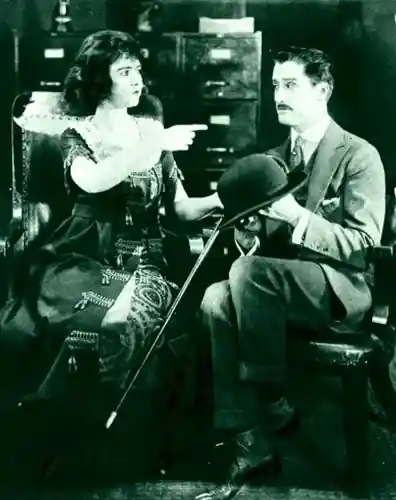
In this regard, the film is much more complex than Diamonds and Pearls or In the Bishop's Carriage. It suggests that for a woman to survive in a patriarchal society, she must become a master of the same manipulative games played by the men around her. The 'remodeling' is a form of domestic engineering, a cold-eyed restructuring of a failing institution.
As a lost film (largely reconstructed through contemporary accounts and surviving stills), 'Remodeling Her Husband' occupies a ghostly space in cinematic history. However, the influence of Lillian Gish’s direction is palpable in the surviving descriptions of the lighting and composition. She reportedly insisted on a specific type of naturalistic lighting that was ahead of its time, eschewing the stagey, flat illumination common in 1920. This attention to visual texture likely gave the film a groundedness that made its satirical bites even more effective.

Comparing this work to international contemporaries like the Dutch Levensschaduwen or the Hungarian Méltóságos rab asszony, one sees a uniquely American preoccupation with the intersection of capitalism and the nuclear family. While European cinema of the time often leaned into expressionism or heavy melodrama, the Gish/Parker collaboration opted for a dry, observational wit that feels strikingly contemporary even a century later.
The character of Janie Wakefield serves as a precursor to the screwball heroines of the 1930s. She possesses the wit of Claudette Colbert and the tenacity of Barbara Stanwyck. By the time we reach the conclusion, Janie has moved beyond the victimhood seen in The Toilers. She has navigated the 'House of Mystery' that is the male psyche and emerged with the blueprint for her own survival.
One might argue that the ending is a compromise—a return to the status quo. However, the power dynamic has been irrevocably shifted. Jack is no longer the pursuer; he is the project. Janie’s 'success' in Wall Street ensures that her return to the home is a choice, not a necessity. This economic independence is the true subtext of the film, providing a layer of security that elevates the story above mere romantic comedy.
In the pantheon of silent cinema, 'Remodeling Her Husband' deserves a prominent place of study. It represents a rare moment where female creators held the reins of a major production to dissect the very institutions that often sought to marginalize them. The film avoids the heavy-handed moralizing of Silence of the Dead and the simplistic heroism of The Man Who Beat Dan Dolan.
Verdict: A sophisticated, biting, and visually inventive comedy that proves Lillian Gish was as capable behind the camera as she was in front of it. Dorothy Gish delivers a career-defining performance that bridges the gap between slapstick and psychological realism. While the 'remodeling' of the husband may be a cynical victory, the film's true triumph is the remodeling of the silent film heroine into a woman of agency, intellect, and indomitable will.
Related viewing for enthusiasts of early 20th-century social dramas: The Rajah, Denny from Ireland, and the political intrigue of Ferdinand Lassalle.

IMDb —
1912
Community
Log in to comment.