Summary
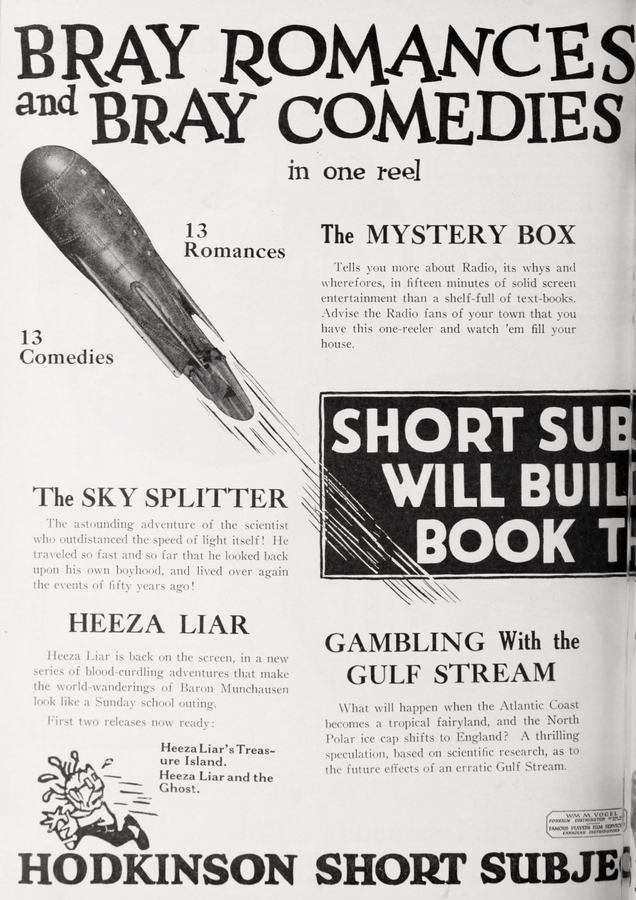
In an audacious blend of nascent animation and instructional exposition, John Norling's 'The Mystery Box' commences with a whimsical yet unsettling sequence: a diminutive, anthropomorphic 'Radio Bug', a creature of pure kinetic energy, springs forth from a shop display, menacing unsuspecting pedestrians. Its swift, unseen sting afflicts a young boy, precipitating a medical consultation wherein the physician, with an almost alchemical prescription, mandates the installation of a domestic radio apparatus. This technological marvel swiftly transforms the household, evolving from a mere device into the very nexus of family leisure and communal engagement. The narrative then gracefully pivots, transporting the viewer beyond the confines of the domestic sphere to the bustling Westinghouse broadcasting station in New Jersey. Here, the film meticulously unveils the intricate mechanics of wireless communication: the towering antennae, the silent propagation of ethereal waves, the subtle modulations of sound translated into invisible energy, and finally, the miraculous detection and faithful reproduction of these impulses by the home receiver, thereby completing a circuit of modern enchantment. It's a cinematic journey from corporeal affliction to technological transcendence, a demystification of the invisible forces shaping a new era.
Synopsis
At the start, a little animated figure, the "Radio Bug," in a display window is shown attacking passersby. He stings a small boy severely, the doctor examines the patient and leaves directions which the family discover prescribe a radio outfit. Once it is set up, it becomes the center of the family entertainment. The remainder of the reel takes us to the broadcasting station (Westinghouse, N. J.) where we are shown the antennae from which are sent out waves. Sounds at the sending station cause modulations of the radio waves. These in turn are detected by the radio receiver, and translated by a "detector," which reproduces waves exactly like those of the sending station.
Review Excerpt
"
Decoding the Invisible: 'The Mystery Box' and the Dawn of Wireless Wonders
In the annals of early cinema, few artifacts capture the zeitgeist of technological marvel quite like John Norling’s 1921 offering, 'The Mystery Box'. This isn't merely a film; it’s a fascinating time capsule, a didactic yet subtly enchanting exploration of an emerging phenomenon that would irrevocably alter the fabric of society: radio. At a juncture when the invisible currents of the airwaves were transforming ..."