DbcultAccessing Vault...
Cult Review
Senior Film Conservator
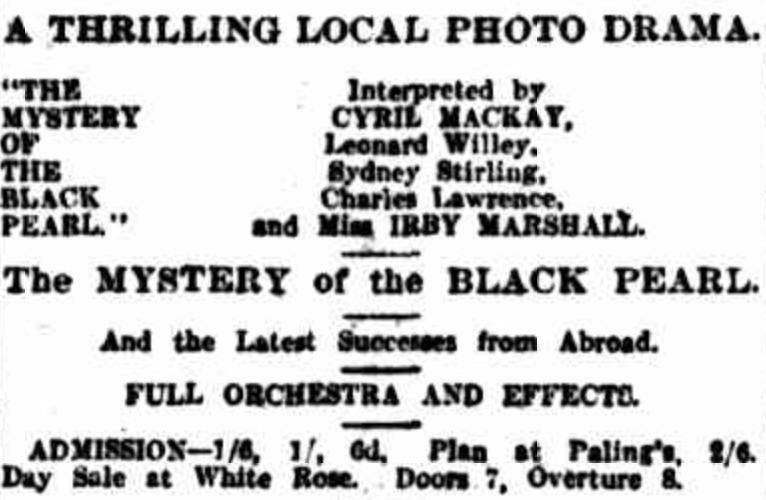
Unveiling the Enigma: A Retrospective on The Mystery of the Black Pearl
Stepping back into the nascent days of cinematic storytelling, one encounters a certain magic, an almost visceral connection to the art form in its purest, most expressive state. Among the treasures unearthed from this rich epoch, few resonate with the quiet intensity and intricate craftsmanship of The Mystery of the Black Pearl. This isn't merely a film; it's a meticulously woven tapestry of suspense, character study, and early directorial ambition that, even a century later, continues to captivate the discerning viewer. It stands as a testament to the power of visual narrative, proving that compelling drama requires neither spoken word nor advanced technology, but rather a profound understanding of human nature and the art of suggestion.
Released during a period when cinema was rapidly evolving from mere novelty to a legitimate artistic medium, The Mystery of the Black Pearl carved out a distinct niche for itself. While many contemporaries were still perfecting the art of the chase or the dramatic tableau, this film ventured into the more cerebral realms of the detective story, demanding active participation from its audience. It presented a narrative that was both thrillingly immediate and subtly complex, a rare combination for its time. The plot, conceived with remarkable ingenuity by Leonard Willey, revolves around the eponymous black pearl, a jewel shrouded in legend and coveted by many, whose sudden disappearance from a high-society gathering ignites a firestorm of suspicion and intrigue. The pearl itself becomes almost a character, a silent, dark heart around which the human drama pulsates.
The film's opening sequences are a masterclass in establishing atmosphere. Through a series of artfully composed shots and evocative intertitles, we are introduced to Mrs. Eleanor Vandergelt's opulent mansion, a gilded cage of wealth and social standing. The camera lingers on intricate details—the sheen of polished mahogany, the sparkle of crystal, the rustle of silk gowns—all designed to immerse us in a world where appearances are paramount and secrets lurk beneath every polished surface. The grand ball, the scene of the crime, is depicted with a vibrant energy that belies the silent medium, a whirlwind of waltzing couples and hushed conversations, building a palpable tension before the audacious theft occurs. The moment of discovery, rendered through a close-up on Mrs. Vandergelt's horrified face, is a punch to the gut, instantly transforming the celebratory mood into one of chilling dread. This deft manipulation of mood and expectation is a hallmark of the film's enduring appeal.
At the heart of this unfolding enigma is Detective Julian Thorne, portrayed with a compelling gravitas by Cyril Mackay. Mackay’s performance is a revelation, a masterclass in silent acting where every subtle gesture, every flicker of the eye, conveys volumes. Thorne is not the boisterous, physically imposing detective often seen in early cinema; instead, he is a figure of quiet intensity, his mind working tirelessly behind a facade of calm observation. He is a proto-Sherlock Holmes, relying on keen deduction rather than brute force. Mackay imbues Thorne with a profound sense of intelligence and moral rectitude, making him an instantly sympathetic and admirable protagonist. His method of investigation, characterized by meticulous examination of clues and astute psychological profiling of suspects, feels remarkably modern for a film of this vintage. The way he interacts with the various personalities, drawing out their secrets without uttering a single word, is a testament to Mackay's skill and the strength of Willey's character conception.
The supporting cast, too, delivers performances that elevate the material beyond mere melodrama. Sydney Stirling, as the elegant but emotionally fragile Mrs. Vandergelt, embodies the societal anxieties of the era. Her initial haughtiness gives way to a vulnerable desperation, a transformation Stirling conveys with poignant subtlety. We see not just a victim of theft, but a woman whose carefully constructed world is crumbling around her, her social standing threatened by the scandal. Her performance is a delicate balance of aristocratic poise and raw human emotion. Similarly, Charles Lawrence, as the perpetually nervous valet, provides a nuanced portrayal of a man caught between loyalty and desperation. His shifty glances and hesitant movements immediately mark him as a prime suspect, yet Lawrence skillfully hints at a deeper, more tragic story beneath the surface, preventing his character from becoming a mere caricature. His performance adds significant depth to the ensemble, illustrating the film's commitment to exploring the complexities of human motivation.
Perhaps the most intriguing performance comes from Leonard Willey himself, who not only penned the screenplay but also takes on a pivotal role, likely that of the enigmatic foreign count or a shadowy figure with a hidden agenda. Willey’s presence on screen is magnetic, imbuing his character with an air of sophisticated menace or tantalizing mystery. His eyes, often narrowed in contemplation or widened in feigned innocence, become powerful tools of non-verbal communication. It’s a testament to his multifaceted talent that he could craft such a compelling narrative and then inhabit one of its most critical figures with such conviction. His character serves as a vital counterpoint to Mackay’s stoic detective, creating a dynamic tension that propels the plot forward with an relentless momentum. The scenes between Thorne and Willey’s character are particularly charged, feeling like a silent dance of wits and wills, a chess match played with glances and subtle shifts in posture.
The film's technical achievements, while perhaps rudimentary by today's standards, were groundbreaking for their time. The cinematography, though limited to black and white, makes ingenious use of lighting and shadow to heighten the dramatic effect. The low-key lighting in the clandestine meetings, the stark silhouettes against the moonlit city, and the dramatic spotlights on faces during moments of revelation all contribute to a visual language that is both effective and artistically resonant. The editing, too, demonstrates a sophisticated understanding of pacing, building suspense through judicious cuts and intercutting between different plot threads. The use of close-ups is particularly effective, drawing the audience into the characters' emotional states and revealing crucial details without the need for exposition. This early mastery of cinematic grammar puts it in conversation with other pioneering works like The Mystery of the Rocks of Kador, which also explored the visual potential of suspense, or the dramatic intensity found in Der Eid des Stephan Huller.
Leonard Willey’s screenplay is, without doubt, the backbone of The Mystery of the Black Pearl. His narrative is a tightly wound spring of suspicion and revelation, with each scene meticulously crafted to either advance the plot or deepen our understanding of the characters. The dialogue, conveyed through elegantly phrased intertitles, is economical yet impactful, avoiding unnecessary exposition and allowing the visuals and performances to carry the emotional weight. Willey demonstrates a keen understanding of genre conventions, expertly deploying red herrings, unexpected twists, and a thrilling climax that ties all the disparate threads together. The pacing is relentless, building steadily towards a crescendo of discovery, a trait that sets it apart from some of the more languid narratives of its era. This narrative precision is akin to the complex storytelling seen in early literary adaptations like Oliver Twist or Les misérables, where intricate plots were essential to the source material.
The film’s thematic explorations are as rich as its plot. Beyond the immediate thrill of the whodunit, The Mystery of the Black Pearl delves into the corrupting influence of greed, the fragility of social status, and the deceptive nature of appearances. The black pearl itself serves as a potent symbol: a beautiful object that nonetheless brings misfortune and exposes the darker facets of human desire. It questions the moral fabric of high society, suggesting that beneath the veneer of civility lie base impulses. This subtext elevates the film from a simple genre piece to a more profound commentary on the human condition, a characteristic shared with more socially conscious films of the period, albeit in a different vein, such as The Redemption of White Hawk, which explored moral quandaries.
One cannot discuss the film without acknowledging its enduring impact on the mystery genre within cinema. It established many of the tropes and narrative structures that would become staples of detective films for decades to come: the brilliant, eccentric detective, the array of suspicious characters, the meticulous gathering of clues, and the dramatic reveal. Its influence can be felt in countless subsequent thrillers, a testament to its foundational role. While films like Zigomar contre Nick Carter explored similar ground, The Mystery of the Black Pearl distinguished itself through its psychological depth and refined execution. It proved that a silent film could be not only exciting but also intellectually stimulating, inviting audiences to piece together the puzzle alongside the protagonist.
The film's climax is a masterstroke of suspense. As Detective Thorne gathers all the suspects in the grand drawing-room, the tension becomes almost unbearable. The camera slowly pans across their faces, each registering a different emotion—fear, defiance, feigned innocence—creating a palpable sense of anticipation. The revelation of the true culprit is handled with dramatic flair, a sudden, shocking twist that recontextualizes everything that came before. The subsequent chase, though brief, is executed with a dynamism that keeps the audience on the edge of their seats, culminating in a satisfying resolution that brings a sense of justice to the disrupted world of the Vandergelts. This dramatic confrontation and resolution are reminiscent of the heightened theatricality found in productions like The Life and Death of King Richard III, albeit adapted for the burgeoning cinematic language.
For modern audiences accustomed to rapid-fire dialogue and CGI spectacle, a silent film might seem a daunting prospect. However, The Mystery of the Black Pearl transcends its historical context. Its visual storytelling is so potent, its characterizations so clear, and its narrative so compelling that it speaks a universal language. It serves as a vital reminder of cinema's foundational artistry, demonstrating how much could be achieved with limited resources but boundless creativity. Viewing it today is not merely an exercise in historical appreciation; it is an immersive experience that transports one to a bygone era, allowing us to witness the birth of sophisticated narrative filmmaking firsthand. The film's ability to maintain its grip on the viewer's attention without a single spoken word is a powerful testament to its masterful construction.
In conclusion, The Mystery of the Black Pearl stands as a towering achievement in early cinema, a compelling mystery that is as much a psychological drama as it is a thrilling whodunit. Leonard Willey’s masterful script, combined with the nuanced performances of Cyril Mackay, Sydney Stirling, Leonard Willey, and Charles Lawrence, creates a cinematic experience that is both intellectually stimulating and deeply engaging. Its innovative use of visual storytelling, its meticulous construction of suspense, and its enduring thematic resonance cement its place as an indispensable piece of film history. It is a film that demands to be seen, studied, and celebrated, offering a profound glimpse into the genius of silent-era filmmaking and the timeless allure of a good mystery. Its legacy is not just in the clues it lays bare, but in the enduring fascination it evokes, proving that some pearls, though black, shine brighter than any diamond in the annals of cinema.
IMDb 5.8
1923
Community
Log in to comment.