DbcultAccessing Vault...
Cult Review
Senior Film Conservator
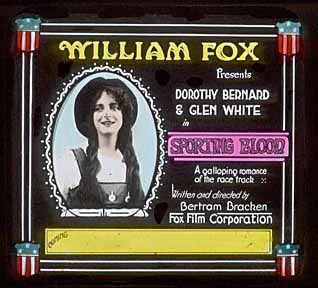
The camera opens on a racetrack at dawn, mist curling like cigar smoke around the hooves of a chestnut colt; within minutes we understand that every creature here—human or equine—is merchandise in a grand, cynical cash-and-flesh bazaar. Sporting Blood never bothers to preach; it simply lets the chips—and the panties—fall where they may, then coolly scoops up the winnings.
Bertram Bracken’s screenplay, lean as a greyhound and twice as fast, posits a single outrageous dare: Mary Ballard’s body versus ten grand. Pre-code Hollywood loved trading women like poker chips, yet few films dared make the transaction this explicit. The scene in Mary’s drawing-room—where she lifts a Lalique cigarette lighter as though it were Excalibur and proposes the bet—plays out in one brazen, unbroken take. No cutaways to scandalized aunts, no moral insert-shot of a crucifix; just two predators sniffing money and skin across a mahogany table.
Madeleine Le Nard’s Mary is all tapered arrogance—every syllable leaves her mouth as though stamped by the mint. Watch how she unbuttons a single glove while negotiating the stake: the slow reveal of her wrist is more erotically charged than most modern sex scenes. As Dave Garrison, George Morgan sports a pencil-thin moustache that looks forever dipped in irony; his eyes flicker like faulty neon, calculating odds even when embracing Bessie. Claire Whitney’s Bessie, by contrast, is a trembling watercolor of naïveté—her sob in the stable aisle arrives as a hushed, animal sound, the moment the film acknowledges collateral damage.
Director Charles Brabin, armed with leftover sets from a bigger MGM racing picture, turns economy into elegance. He shoots the paddock through a tangle of stirrups and leather, so half the frame strobes with metallic glints—an abstract ballet of greed. During the big race, intercut shots of ticking stopwatches, squealing gulls, and a brass band fuse into a percussive fugue that anticipates the montage pyrotechnics of Le Cirque de la Mort. The finish-line collapse of May Belle is rendered from ground level: hooves thunder overhead, dust swallows the lens, and for a heartbeat we are corpses on the turf staring at the sky of our own ruin.
Modern readings split along fault lines. Some hail Mary as a protofeminist mastermind—she weaponizes the very commodification meant to subjugate her. Others see the film confirming patriarchal arithmetic: a woman’s worth is still her flesh, even when she pockets the purse. The brilliance, perhaps, is that the movie accommodates both takes without breaking a sweat. Compare this ambiguity to The Woman in 47, where the heroine’s revenge is morally sanitised by a last-reel conversion, or to The Wolf Woman, where vengeance tips into outright monstrosity—Sporting Blood plants its flag in the messy middle.
Released during Hollywood’s awkward puberty between silent and full-talkie, the film flaunts both dialogue passages and long stretches of pure visual storytelling. Listen to the soundtrack dissolve entirely when Mary switches the horses: only the cluck of a restless hen and the creak of stable hinges intrude—silence as suspense. Then, as the race begins, a jaunty brass band storms the mix, so abruptly it feels like someone yanked a tone-cord. The jagged acoustic shifts mirror the era’s technological upheaval; they also keep the viewer perpetually off balance.
For decades Sporting Blood languished on the Library of Congress’s “7” list—films surviving only in foreign archives. A nitrate print surfaced in Brussels in 1998, Dutch intertitles intact, requiring frame-by-frame reconstruction. The current 4K restoration reveals textures previously smothered: the nacreous sheen of Mary’s cigarette case, the liver-colored velour of Dave’s trackside chair, the chalky dust on May Belle’s flanks that almost smells of damp earth. Home-video editions remain scarce, so catching a rep screening feels akin to witnessing a clandestine back-room deal—appropriate for a picture that treats legality as a polite suggestion.
Place it on a spectrum between The Footlights of Fate (all sentimental redemption) and The Fatal Wedding (lurid matrimonial carnage). Sporting Blood occupies the sweet spot where social critique and salacious spectacle interbreed, producing a hybrid more venomous—and more exhilarating—than either parent.
If you crave pre-code cinema that bites, writhes, and leaves teeth marks, stream Sporting Blood wherever you unearth it. Just don’t expect catharsis—expect the chill of a razor against the throat, followed by laughter that could be either triumph or hysteria. The house doesn’t always win, but it always collects something; in this case, a sliver of your moral certainty. Fold or raise—either way, the film keeps your wager.
IMDb —
1919
Community
Log in to comment.