DbcultAccessing Vault...
Cult Review
Senior Film Conservator
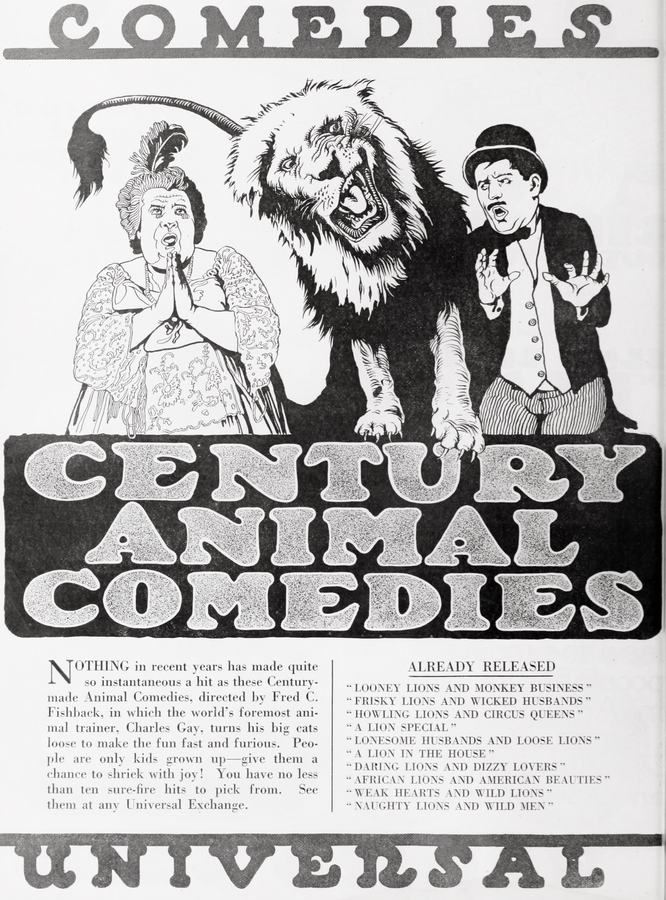
To traverse the landscape of 1920s silent comedy is to engage with a cinema of pure, unadulterated physicality—a medium where the body is both a prop and a poem. Weak Hearts and Wild Lions (1923), directed with a frenetic, almost manic energy by Fred Hibbard, stands as a quintessential artifact of this era. It is not merely a film; it is a chaotic meditation on the fragility of human dignity when confronted with the primal indifference of the animal kingdom. While many contemporary comedies of the period, such as Among Those Present, relied on the social anxieties of the burgeoning middle class, Hibbard’s work dives headlong into the carnivalesque, utilizing the circus as a microcosm for a Darwinian struggle disguised as slapstick.
The film’s opening movement introduces us to 'Chocolate Drop,' a character whose name and predicament reflect the unfortunate racial caricatures of the time, yet whose narrative function serves as a catalyst for the ensuing madness. His brief tenure as a lion feeder is a masterclass in tension-building through editing. The lions provided by the famed Century Lions troupe are not the lethargic beasts of modern zoos; they possess a kinetic, unpredictable presence that feels genuinely hazardous. When they begin to systematically dismantle his hat and threaten his person, his flight to the river is less a comedic beat and more a frantic survival instinct. This sequence sets the stakes: in this world, the lions are the only ones not playing a part.
Enter Jimmy, the 'Village Peeper,' portrayed by the agile and expressive Jimmie Adams. Adams brings a certain peripatetic charm to the role, a man whose curiosity is his primary engine. Unlike the more stoic protagonists found in The Pitfall, Jimmy is a creature of impulse. His initial transgression—peering through the tent flaps at the Queen of the circus—is a meta-commentary on the audience's own voyeurism. The resulting wallop from the circus guard, which sends him spinning into the path of the Manager, is a beautiful piece of choreography that transitions him from an outsider to a central cog in the circus machinery.
At the heart of Weak Hearts and Wild Lions is a three-cornered jealousy that feels as ancient as the medium itself. The Manager, the Lion Tamer, and Jimmy all find themselves ensnared by the charms of the Queen (Lois Nelson). This isn't the high-stakes melodrama of Sapho or the moral weight of The Eternal Magdalene; rather, it is a primal, almost juvenile competition. Hibbard uses this rivalry to drive the plot toward its explosive climax. Jimmy, in a fit of spite aimed at the Lion Tamer, decides to unleash the lions—a decision that shifts the film from a workplace comedy to a proto-disaster movie.
"The genius of the film lies in its refusal to blink. When the lions are released, the comedy takes on a jagged edge. This isn't the choreographed safety of a modern set; it is the raw, unwashed reality of early cinema where the line between stunt and peril was dangerously thin."
The sequence involving the escaped lions is where the film achieves its most surreal heights. The lions, described as 'starved,' make a 'bee line' for the audience. The resulting imagery is a bizarre juxtaposition of the mundane and the predatory. We see lions invading the 'freak show' tents, creating a spectacle within a spectacle. One particular moment involves a performer whose eyes go into a permanent cross-eyed state upon seeing the beasts—a visual gag that feels like a precursor to the animated logic of Tex Avery. This interplay between genuine terror and absurdity is a hallmark of the era, reminiscent of the tonal shifts in Oh, What a Knight.
The technical execution of these scenes is remarkable. The way the lions interact with the environment—draping themselves in circus costumes and wandering through the canvas corridors—suggests a level of animal training that was both impressive and, by modern standards, harrowing. The visual of a lion emerging from a tent, adorned in human finery, is an image of pure Dadaist brilliance. It subverts the power dynamic; the king of the jungle is now a parodic reflection of the humans he has just terrified.
Visually, the film utilizes the flat, bright lighting typical of outdoor circus shoots, which serves to sharpen the details of the chaos. Unlike the shadowed, atmospheric depths of The Hidden Hand or the domestic intimacy of Young America, Weak Hearts and Wild Lions thrives on wide shots that capture the scale of the stampede. The editing is brisk, never lingering too long on a single gag, ensuring that the momentum of the lion chase maintains its frantic pulse. The 'peanut man' sequence, where an innocent vendor is caught in the crossfire of an angry mob and hungry felines, provides a rhythmic counterpoint to the main action, grounding the absurdity in a certain gritty realism.
The resolution of the film is perhaps its most telling moment. The three 'chicken hearts'—the Lion Tamer, Jimmy, and the Queen—emerge from a hole in the ground after the lions have moved on. This literalization of 'hiding one's head in the sand' serves as a final commentary on the characters' bravado. For all their posturing and romantic squabbling, they are ultimately reduced to burrowing creatures when faced with the consequences of their own folly. It is a cynical, yet hilariously apt ending that avoids the sentimental resolutions of films like Bringing Home the Bacon.
In the broader context of 1923 cinema, a year that gave us the quiet desperation of Behind Closed Doors and the communal celebration of the May Day Parade, Hibbard’s film feels like a wild outlier. It lacks the pastoral serenity of The Land Just Over Yonder or the acrobatic precision of Flips and Flops. Instead, it offers a raw, unpolished energy that is rare to find. It shares a certain kinship with the frantic narratives of The Revolutionist, where societal structures are upended by individual obsession.
To watch Weak Hearts and Wild Lions today is to witness the birth of the 'chaos comedy.' It is a film that understands that the funniest thing in the world is often the sight of everything going horribly wrong. Jimmie Adams delivers a performance that, while perhaps overshadowed by the bigger names of the era, exhibits a profound understanding of comic timing and physical vulnerability. The film doesn't aim for the poetic heights of Miyama no otome or the structured narrative of The Seven Sisters. It aims for the gut.
Ultimately, the film succeeds because it treats its wild animals with more respect than its human subjects. The lions are the only characters with a clear, honest motivation: they are hungry. The humans, with their 'weak hearts' and convoluted jealousies, are the ones who appear truly wild. This inversion of the natural order makes for a viewing experience that is as intellectually stimulating as it is viscerally entertaining. It is a testament to the enduring power of silent film—a roar that continues to echo through the decades, reminding us that sometimes, the best way to handle a lion is to simply find a very deep hole and wait for the dust to settle.
IMDb —
1919
Community
Log in to comment.