DbcultAccessing Vault...
Cult Review
Senior Film Conservator
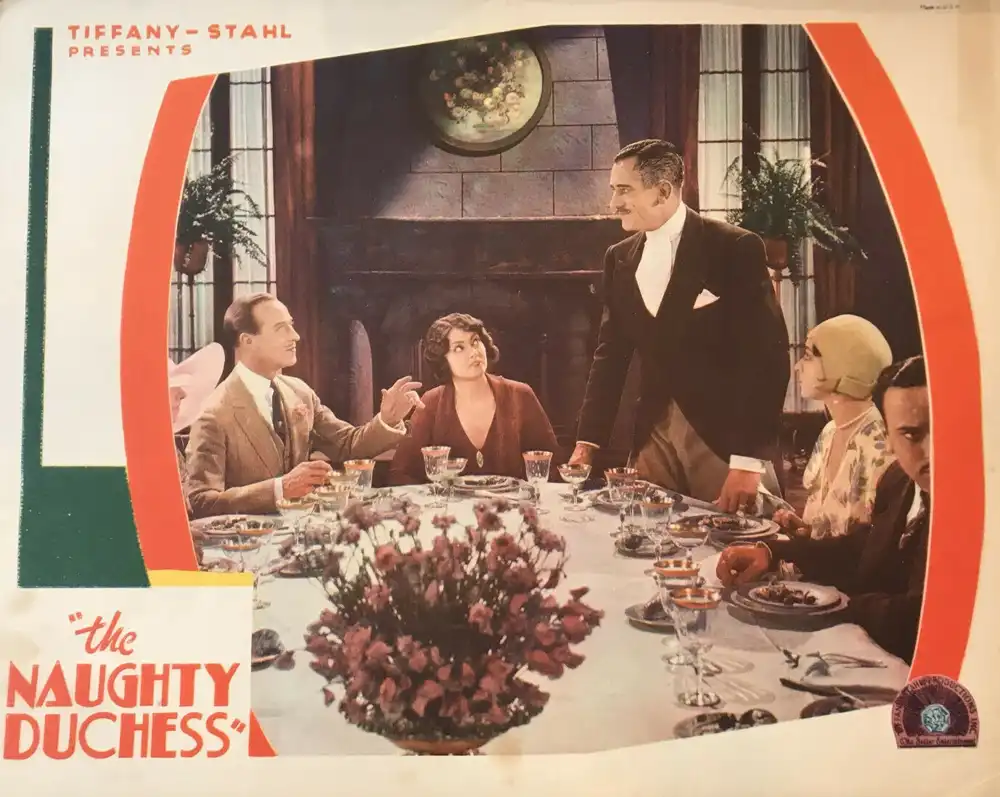
So, The Naughty Duchess. You know, for a film with a title like that, conjuring up images of scandalous whispers and raised eyebrows, it’s actually… pretty tame by modern standards. But then again, it’s 1928, and a duchess even looking sideways at another man was probably enough to set tongues wagging. If you’re a silent film enthusiast, or just curious about the melodrama of the era, this is absolutely worth tracking down. You’ll find some genuinely compelling performances mixed with the sort of dramatic flourishes that make you smile. If you’re expecting fast cuts, subtle acting, or anything resembling a modern narrative pace, you’ll probably be checking your watch. A lot.
The story is boilerplate: young, beautiful Lady Eve (Eve Southern) is pushed into a marriage with the wealthy, older Duke de Alva (H.B. Warner) to save her family from financial ruin. Her heart, naturally, belongs to a dashing young artist, Paul (Duncan Renaldo), who, of course, has no money. It’s a love triangle as old as time, played out with a fair amount of dramatic hand-wringing and yearning glances.
Eve Southern as the titular duchess is interesting. She’s got this intense, almost haunted quality in her eyes that really sells the tragedy of her situation, especially in the early scenes where she’s basically signing her life away. There’s a moment during the wedding, a close-up on her face, where her eyes dart away from the camera, almost imperceptibly. It’s a tiny thing, but it speaks volumes about her reluctance without needing an intertitle to spell it out. Then later, when she’s with Paul, her whole demeanor shifts. She practically glows. It’s a nice contrast, though sometimes her more emotional scenes lean a little too hard into the wide-eyed, trembling lip thing. It’s silent film acting, sure, but some of it felt a bit much, even for the period.
H.B. Warner, as the Duke, is surprisingly nuanced. He’s not just a mustache-twirling villain. You get the sense he genuinely cares for Eve, in his own stiff, aristocratic way. His reaction when he first suspects her infidelity isn’t a burst of rage, but a slow, almost painful realization. There’s a scene where he’s sitting alone in his study, just staring at a portrait of Eve, and the way he slowly brings a hand to his forehead… it’s genuinely heartbreaking. You almost feel bad for him. Almost.
Duncan Renaldo, as the artist Paul, is mostly just… handsome. He’s got the brooding artist look down, and he certainly looks good in a beret. But his performance feels a little less developed than Southern’s or Warner’s. He’s the object of desire, and he fulfills that role perfectly, but there isn’t much beyond that. The chemistry between him and Southern is palpable enough, mostly thanks to Southern doing a lot of the heavy lifting with her longing looks.
The pacing is where this one might lose some viewers. There are stretches, particularly in the middle, where the film settles into a rhythm of longing stares and dramatic walks through gardens. The intertitles sometimes feel like they’re trying to catch up with the emotional beats, rather than enhancing them. You’ll get a long, emotional scene, then an intertitle that essentially says, “She was sad.” Well, yes, we gathered that from the last minute of close-ups.
One scene that sticks out: there’s a ball, all grand and bustling, but the crowd scenes have this oddly empty feeling. Like half the extras wandered off for a smoke break, or maybe they just didn't have the budget for a full ballroom. It’s not terrible, but it makes the 'grand' events feel a little less grand. Then, right after this slightly under-populated party, we get a really effective sequence where Eve and Paul sneak off. The use of shadows and quick cuts there is actually quite good, building a real sense of illicit thrill.
And the 'naughtiness'? It’s mostly implied. A stolen kiss, a secret meeting. For its time, I’m sure this was quite scandalous, but today it feels more like a gentle suggestion of impropriety. The film doesn’t dwell on the actual 'sin' so much as the emotional turmoil it causes. It’s less about the act and more about the guilt and the inevitable fallout. Which, honestly, makes it a more interesting character study than a cheap thrill.
The costumes are generally great, especially Eve’s various gowns, which really emphasize her status and then, subtly, her growing desire for freedom. But there’s one particular hat she wears during a garden scene that just felt… off. Like it belonged to a completely different outfit, or maybe a much older woman. A small thing, but it pulled me out for a second.
Overall, The Naughty Duchess is a solid entry for silent film aficionados. It’s got some truly strong performances from Southern and Warner, a classic tragic romance, and enough period charm to make it an enjoyable watch. Just go in knowing it’s a product of its time, and be prepared for a slower, more deliberate emotional journey. It’s not going to set your world on fire, but it’s a perfectly respectable, if occasionally ponderous, piece of cinematic history.
IMDb 8
1924
Community
Log in to comment.