DbcultAccessing Vault...
5.8/10
Senior Film Conservator
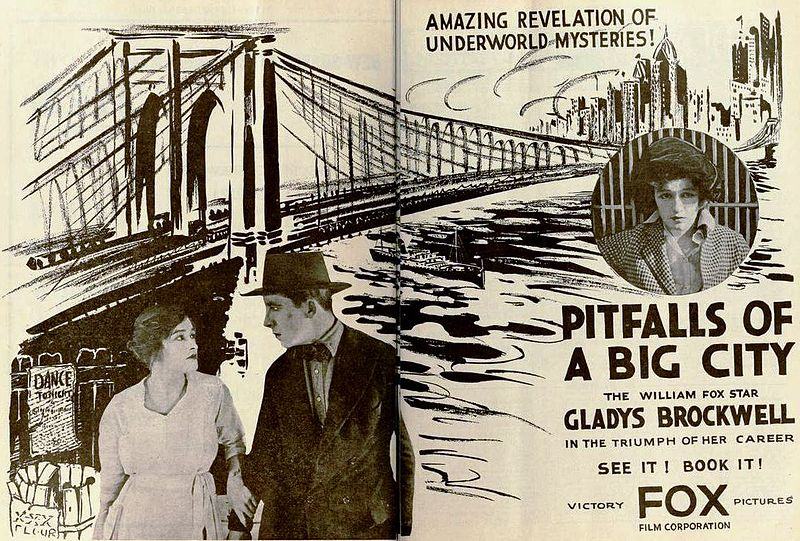
A definitive 5.8/10 rating for a film that redefined the boundaries of cult cinema. Pitfalls of a Big City remains a cornerstone of transgressive art.
The silent era of cinema frequently grappled with the burgeoning anxieties of the industrial metropolis, and Pitfalls of a Big City stands as a quintessential artifact of this thematic preoccupation. The film, directed with a keen eye for the chiaroscuro of the human condition, navigates the treacherous waters of social mobility and the inescapable gravity of one's origins. In the center of this maelstrom is Molly Moore, portrayed by the luminous Neva Gerber, whose performance transcends the melodramatic conventions of the time to offer a nuanced portrait of a woman caught between the shadow of the alleyway and the light of the parlor.
Molly’s struggle is not merely a personal quest for absolution; it is a sociological commentary on the rigid stratifications of early 20th-century America. Her restaurant, situated in the heart of the underworld district, serves as a liminal space where the desperate and the predatory converge. Here, the film establishes its primary conflict: the tension between the desire to 'go straight' and the systemic forces that conspire to pull the reformed back into the abyss. This narrative thread resonates deeply with other works of the period, such as The Straight Road, which similarly explores the arduous path of the fallen woman seeking a foothold in respectable society.
The arrival of Jerry Sullivan (Al Fremont) and Spike Davis (William Sheer) introduces a binary opposition that drives the film’s moral engine. Jerry represents the possibility of redemption through labor and love, a theme echoed in Blackie's Redemption. Conversely, Spike is the personification of the 'pitfalls' mentioned in the title—a man whose soul has been irrevocably warped by the carceral system and his own innate malice. Spike’s refusal to allow Molly to escape her past is the catalyst for the film's most harrowing sequences, highlighting the vulnerability of the reformed when faced with those who profit from their regression.
The dynamic between the two sisters, Molly and Marion (Janice Wilson), provides the emotional core of the narrative. Molly’s decision to keep Marion in a state of blissful ignorance regarding their sordid background is a double-edged sword. While it allows Marion to integrate into the upper-class world of the Pembertons, it also creates a fragile facade that Spike is all too eager to shatter. This sibling dynamic is a recurring trope in silent melodrama, most notably seen in The Big Sister, where the older sibling’s sacrifice becomes the foundation for the younger’s prosperity.
Visually, the film employs the limited technology of 1919 to maximize atmospheric dread. The contrast between the cramped, smoke-filled interiors of Molly’s restaurant and the expansive, opulent halls of the Pemberton estate serves as a visual metaphor for the characters' internal states. The camera work, though largely static by modern standards, utilizes framing to emphasize Molly’s entrapment. When Spike corners her in the restaurant, the composition feels claustrophobic, reflecting her inability to escape the haunting presence of her previous life. This visual strategy is reminiscent of the stylistic choices in Money Mad, where the environment itself acts as an antagonist.
The screenplay by Bennett Cohen is a masterclass in escalating stakes. The transition from a domestic drama to a high-stakes crime thriller is handled with a narrative fluidity that prevents the film from feeling disjointed. The inclusion of Dave Garrity, the plainclothed policeman, adds a layer of procedural realism that was beginning to find its way into the crime genre. His presence suggests that while individual morality is paramount, the mechanisms of the law are necessary to excise the rot of the criminal element. This interplay between personal agency and institutional intervention is a sophisticated touch for a film of this vintage.
When placed alongside its contemporaries, Pitfalls of a Big City emerges as a more gritty and grounded exploration of reform than many of its peers. While Redeeming Love leans heavily into the spiritual and romantic aspects of salvation, Cohen’s script focuses on the material and social consequences of one's past. The film acknowledges that even with the best intentions, the 'pitfalls' are not just personal failings but structural traps designed to keep the marginalized in their place.
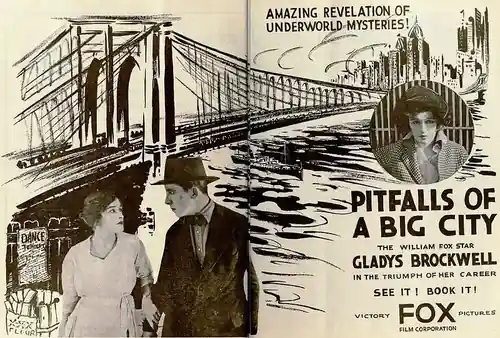
Furthermore, the film’s treatment of the 'big city' as a character in its own right—a predatory entity that devours the unwary—aligns it with the burgeoning traditions of city symphonies and early noir. Unlike the more pastoral escapism of Rose o' Paradise, this film remains firmly rooted in the urban grit. It suggests that the only way to survive the city is through a combination of vigilance, loyalty, and the occasional intervention of a benevolent authority figure. The film’s resolution, while satisfying the audience’s desire for a happy ending, carries a weight of exhaustion; Molly and Jerry’s union is not just a romantic triumph, but a hard-won peace after a grueling war of attrition with their own histories.
Neva Gerber’s portrayal of Molly Moore is the film's undeniable anchor. She avoids the histrionics that often plague silent film performances, opting instead for a quiet intensity that conveys a lifetime of suppressed trauma and resilient hope. Her eyes, often the focus of tight close-ups, tell the story of a woman who has seen the worst of humanity and yet refuses to succumb to cynicism. This level of emotional complexity is what elevates Pitfalls of a Big City above standard genre fare like Stage Struck, which, while entertaining, lacks the psychological weight found here.
The supporting cast also deserves recognition. William Sheer’s Spike is a chillingly effective antagonist, his physicality exuding a constant threat of violence. His interactions with Janice Wilson’s Marion are particularly unsettling, highlighting the film’s willingness to touch upon darker themes of predatory behavior that were often sanitized in later Hollywood productions. The contrast between Marion’s naive innocence and Molly’s weathered wisdom creates a poignant dynamic that underscores the cost of Molly’s protection. It brings to mind the thematic depth of A Woman There Was, which also explored the burden of sacrifice across different social strata.
The climax of the film, centered around the Pemberton engagement party, is a brilliantly constructed sequence of suspense and irony. Molly’s presence at the estate, intended as an act of prevention, becomes the very evidence used to condemn her. This twist of fate is a classic noir trope, emphasizing the cruelty of a system that judges by appearance rather than intent. The escape of Spike and the subsequent arrest of Molly serves as the narrative’s darkest hour, a moment where the 'pitfalls' seem to have finally claimed their victim. This narrative structure, where the protagonist is punished for their virtues, is a sophisticated subversion of the typical 'crime doesn't pay' mantra, suggesting instead that 'reform is a perilous journey.'
The eventual resolution, involving Jerry’s detective work and the assistance of the law, provides a cathartic release. However, the film is careful not to suggest that the struggle is over. The final images of Jerry and Molly wedding are imbued with a sense of solemnity. They are not merely entering a marriage; they are entering a pact to protect one another from the shadows that will always linger at the edges of their lives. This nuanced ending distinguishes the film from more overtly optimistic works like The Romantic Journey, offering a more realistic assessment of the long-term effects of a criminal past.
In the broader context of silent cinema, Pitfalls of a Big City remains a significant, if somewhat overlooked, contribution to the crime and redemption subgenre. Its influence can be seen in the later development of the social problem film and the noir aesthetics of the 1940s. The film’s ability to balance melodrama with a grounded exploration of urban life makes it a compelling watch for both historians and casual fans of the era. It shares a certain DNA with international works of the time, such as the Russian Dukhovnye ochi or the French Les heures - Épisode 4: Le soir, la nuit, which also delved into the spiritual and physical toll of the modern city.
Ultimately, the film is a testament to the power of sisterly love and the possibility of personal transformation. It acknowledges the difficulty of the path but insists on its necessity. Through the character of Molly Moore, the film provides a beacon of hope for those seeking to redefine themselves in a world that is all too eager to define them by their mistakes. It is a cinematic experience that, despite its age, continues to resonate with contemporary audiences who understand that the 'pitfalls' of the big city are not merely historical artifacts, but enduring challenges of the human experience. Whether compared to the high-society dramas of A Rich Man's Plaything or the tragic undertones of Sonho de Valsa, Pitfalls of a Big City carves out its own unique space as a gritty, heartfelt, and intellectually stimulating piece of early film history.
From the screenplay’s taut pacing to the evocative performances of its lead actors, every element of the production works in harmony to deliver a message that is as relevant today as it was in 1919. The film reminds us that while the city may be a labyrinth of temptation and danger, the human spirit possesses an incredible capacity for navigation and survival. It is a work of art that deserves to be remembered, studied, and appreciated for its bold exploration of the murky waters of the human soul.
IMDb 7.1
1934
Community
Log in to comment.