DbcultAccessing Vault...
5.4/10
Senior Film Conservator
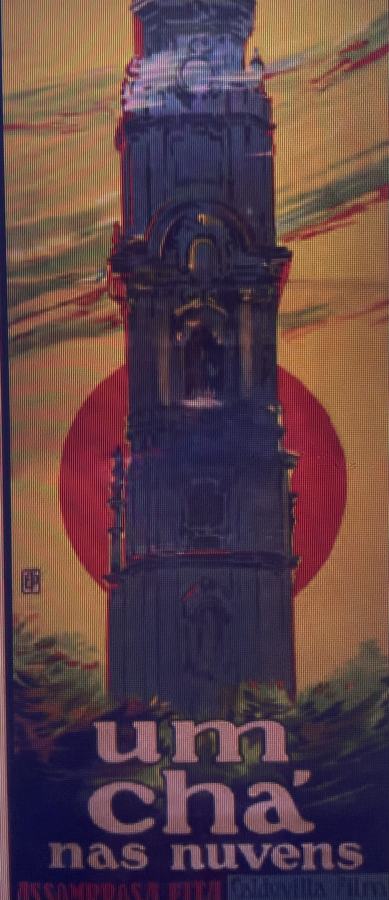
A definitive 5.4/10 rating for a film that redefined the boundaries of cult cinema. Um Chá nas Nuvens remains a cornerstone of transgressive art.
From its opening frames, "Um Chá nas Nuvens" (A Tea in the Clouds) doesn't merely present a story; it unfurls a sensory tapestry, an almost olfactory experience that permeates the screen. This isn't a film to be passively consumed; it demands a willing surrender to its languid pace, its profound silences, and the heavy, humid atmosphere of its setting. We are transported to a secluded, time-weathered village nestled high in the Portuguese mountains, perpetually shrouded in a dense, almost sentient mist. Here, life moves with the deliberate grace of an ancient ritual, and it is within this ethereal embrace that we encounter Elias, portrayed with a mesmerizing, understated intensity by Joaquim Costa. Elias is not just a tea master; he is a custodian of memory, a silent philosopher whose existence has been pared down to the essential, yet whose inner world remains a tumultuous ocean of unspoken grief.
The film's initial exposition, delivered with an elegant economy, establishes Elias's profound loss – the untimely death of his beloved wife, Ana. Her absence doesn't just leave a void; it reshapes the very contours of his reality. His once bustling tea shop now feels like a mausoleum, his meticulous craft a solitary act of devotion. This sense of pervasive melancholy, however, is never mawkish. Instead, it’s infused with a quiet dignity, a testament to the human spirit's capacity to endure, even when fractured. Costa's performance is a masterclass in non-verbal communication; every furrow of his brow, every lingering glance, every tremor in his hand as he prepares his tea, speaks volumes about a soul wrestling with the unbearable weight of remembrance. He exists in a liminal space, caught between the tangible world and the spectral echoes of his past, a state reminiscent of the psychological entrapment explored in films like The Closed Road, though "Um Chá nas Nuvens" opts for a more poetic, less overtly suspenseful, path.
The narrative truly pivots with Elias's discovery of the 'Folha da Saudade' – the Leaf of Longing. This isn't merely a rare botanical specimen; it's a conduit, a whispered legend brought to life. The film treats this magical realism not as a fantastical conceit, but as an organic extension of Elias's emotional landscape. The meticulous scenes detailing its preparation – the careful drying, the delicate grinding, the precise temperature of the water – are imbued with a sacred reverence. When Elias first brews this tea, the resulting vapors don't just carry aroma; they carry memories, coalescing into faint, shimmering images of Ana. These aren't crude apparitions; they are ethereal, transient, a visual poetry that perfectly captures the elusive nature of memory itself. It’s a beautiful, poignant exploration of how we construct and reconstruct our past, making it a powerful companion piece to works that delve into the subjective nature of reality.
The film's visual language is consistently stunning. Cinematographer Sofia Ribeiro paints with light and shadow, using the natural mist and the soft glow of Elias's lanterns to create an almost painterly aesthetic. The color palette is muted, dominated by earth tones, deep greens, and the pervasive grays of the fog, punctuated by the occasional vibrant flash of a tea blossom or the warmth of a fire. This visual style not only grounds the magical elements in a believable reality but also enhances the film's contemplative mood. The sound design, too, is exceptional, utilizing the rustle of leaves, the distant calls of birds, and the gentle gurgle of water to create an immersive, almost tactile experience. Every element contributes to the film's overarching theme of solitude and the quiet beauty found within it. This attention to atmospheric detail rivals the best of slow cinema, drawing the viewer into Elias's world with an almost hypnotic pull.
While Elias's journey into the spectral realm forms the narrative's core, the film is deftly anchored by the performances of Miguel Portullano and Jose Portullano as the estranged brothers, Tomás and Rui. Tomás, played by Miguel, is the pragmatic one, burdened by the practicalities of village life and increasingly concerned by Elias's withdrawal. His attempts to reach out, to pull Elias back to the tangible world, are born of genuine affection but often come across as clumsy or intrusive. Jose's Rui, on the other hand, is more introspective, perhaps even a little superstitious, understanding Elias's grief on a more profound, albeit silent, level. Their dynamic provides a crucial counterpoint to Elias's solitary existence, representing the pull of community and the often-frustrating efforts of loved ones to intervene in another's private sorrow. The subtle tension between the brothers themselves, a history of unspoken resentments and loyalties, adds another layer of human complexity to the narrative, preventing it from becoming solely a character study of Elias.
Then there is Alberto Ghira as the enigmatic 'Guardião da Nevoa' – the Mist Guardian. Ghira's performance is a masterclass in ambiguity. Is he a real person, a local elder who understands the ancient ways? Is he a manifestation of Elias's subconscious, a voice of wisdom or warning? Or is he, perhaps, a more literal spiritual entity, a gatekeeper to the very boundary Elias is attempting to cross? Ghira imbues the character with a quiet authority and a deep, knowing gaze that keeps the audience constantly questioning. His infrequent appearances are always significant, offering cryptic advice or simply observing Elias with an unnerving stillness. The Guardian's role is less about direct intervention and more about posing existential questions, mirroring the viewer's own contemplation. This character, much like the enigmatic figures in films such as The Ghost Breaker, serves to blur the lines between reality and the supernatural, albeit with a far more poetic and less overt horror-driven agenda.
"Um Chá nas Nuvens" is, at its heart, a profound meditation on the nature of grief. It doesn't offer easy answers or a clear path to resolution. Instead, it posits that grief is not a state to be overcome, but a landscape to be navigated, an integral part of the human experience. Elias's communion with Ana's memory through the tea is not merely a coping mechanism; it's an attempt to maintain a connection that defies physical absence. This exploration of enduring love and the desire to transcend mortality aligns with the emotional resonance found in classics like The Prodigal Son, though with a distinctively mystical and internal focus. The film asks: what does it mean to truly remember? Is it to relive, to mourn, or to integrate the past into the present in a way that enriches, rather than diminishes, life?
The film also subtly critiques the modern world's often-impatient approach to sorrow. The village, isolated and traditional, allows for a different rhythm of mourning, one that respects the individual's need for space and time. Tomás's well-meaning but ultimately ill-suited attempts to 'fix' Elias highlight the dissonance between contemporary expectations of grief and the deeply personal, often non-linear, process of healing. This societal observation, while not explicitly stated, is woven into the fabric of the interactions and the stark contrast between Elias's internal world and the external pressures. It's a testament to the film's nuanced writing that these subtle social commentaries emerge naturally from the character dynamics rather than being forced.
The pacing of "Um Chá nas Nuvens" is deliberately unhurried, allowing scenes to breathe, allowing emotions to slowly steep and develop. This might challenge viewers accustomed to faster-paced narratives, but it is precisely this meditative rhythm that allows the film's profound themes to resonate so deeply. Each shot feels carefully composed, each moment pregnant with unspoken meaning. The narrative unfolds not through dramatic confrontations or overt plot twists, but through subtle shifts in Elias's demeanor, the changing quality of the light, and the increasing vividness of his spectral encounters. This cinematic choice elevates the film from a mere story to an experience, a journey into the interior landscape of a grieving soul. It reminds one of the contemplative artistry seen in films like Pyotr Velikiy, where historical grandeur is matched by an equally grand internal drama, though here, the scale is intimate rather than epic.
The writers, whose names are not explicitly given but whose vision is undeniably clear, exhibit a rare poetic sensibility. They understand that some emotions are best conveyed through metaphor and suggestion rather than explicit dialogue. The script is sparse, yet every line feels weighty, every silence meaningful. The film uses the tea itself as a powerful central metaphor: brewing, steeping, infusing, and ultimately, consuming. This process mirrors Elias's internal journey – the slow, deliberate work of processing grief, allowing memories to infuse his present, and ultimately, finding a way to drink from the cup of life again, even if it's flavored with saudade. The titular 'Tea in the Clouds' isn't just a whimsical image; it's a profound statement about the ephemeral nature of existence and the ethereal quality of memory, a place where the earthly and the divine, the past and the present, can momentarily converge.
"Um Chá nas Nuvens" is not a film for everyone. Those seeking conventional narrative arcs, high-octane drama, or definitive resolutions might find its deliberate pace and ambiguous ending challenging. However, for viewers willing to immerse themselves in its unique atmosphere, it offers a deeply rewarding and profoundly moving experience. It’s a film that lingers long after the credits roll, its imagery and emotional resonance echoing in the mind. It encourages introspection, inviting us to consider our own relationship with memory, loss, and the enduring connections that shape our lives. Joaquim Costa's performance alone is worth the price of admission, a masterclass in conveying immense inner turmoil with the utmost subtlety. The collective artistry of the cast and crew has crafted something truly special here, a film that feels both ancient and utterly contemporary in its exploration of the human condition. It stands as a testament to the power of cinema to explore the most intimate corners of the human heart, to articulate the ineffable, and to remind us that even in the deepest sorrow, there can be a profound, almost mystical beauty. It's a cinematic experience that transcends mere entertainment, offering a rare glimpse into the soul's intricate dance with the past, leaving one with a sense of quiet contemplation and a renewed appreciation for the delicate brew of life itself.
The film doesn't shy away from the pain of longing, but it also celebrates the beauty of holding onto what was. It suggests that perhaps, true healing isn't about forgetting, but about learning to live with the ghosts that populate our internal landscapes, allowing them to inform, rather than define, our present. The final moments of the film, without revealing too much, provide a sense of hard-won peace, not necessarily resolution. It's an acceptance of the cyclical nature of life and death, memory and forgetting, joy and sorrow. It’s a cinematic embrace of the 'saudade' itself – that untranslatable Portuguese word for a deep emotional state of nostalgic or profound melancholic longing for an absent something or someone that one loves. "Um Chá nas Nuvens" doesn't just depict saudade; it embodies it, invites the viewer to feel it, and ultimately, to find a strange, comforting beauty within its depths. This is art cinema at its most evocative, a film that speaks directly to the soul, bypassing the intellect to touch something far more primal and enduring.
IMDb 6.2
1932
Community
Log in to comment.