DbcultAccessing Vault...
Cult Review
Senior Film Conservator
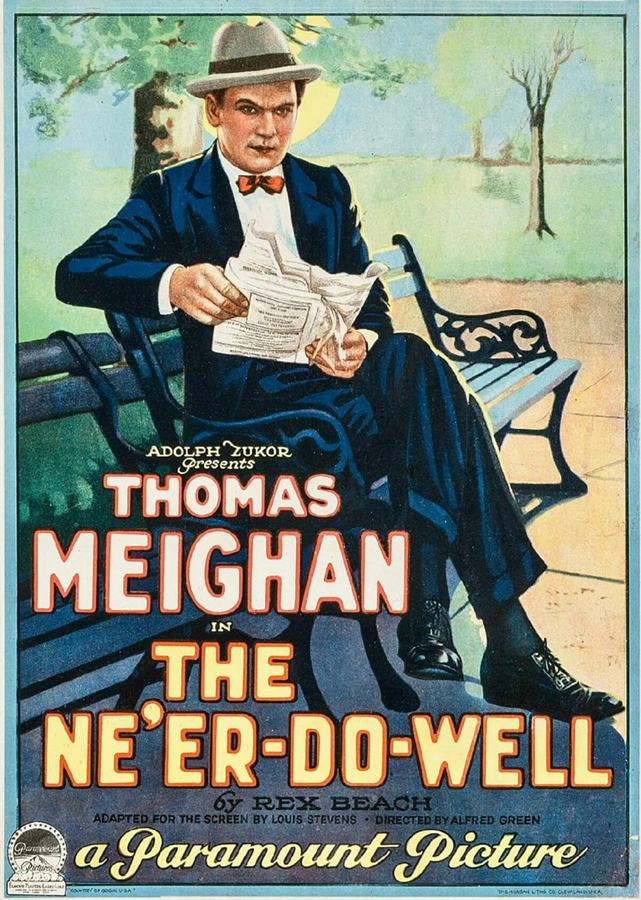
When the reels of The Ne'er-Do-Well whirl, the audience is thrust into a tableau where filial disappointment collides with the exotic allure of early twentieth‑century Panama. The film, scripted by the prolific Rex Beach and Louis Stevens, weaves a tapestry that is at once a cautionary tale and a swashbuckling romance, anchored by the restless energy of its protagonist, Kirk Anthony.
The story unfolds with a decisive act of paternal discipline: Kirk’s father, exasperated by his son’s prodigal ways, arranges his forced passage to the Canal Zone. This inciting incident, reminiscent of the moral reckoning in The Broken Law, sets the stage for a transformation that is both geographical and psychological. In Panama, Kirk’s flamboyance catches the eye of Mrs. Edith Cortlandt, an American expatriate whose own narrative arc mirrors the disillusionment of the post‑war elite.
Yet it is the luminous presence of Chiquita, portrayed with a blend of innocence and defiant poise, that catalyzes Kirk’s internal shift. Her lineage—daughter of a Panamanian general—infuses the film with a cross‑cultural tension that predates the more overt exoticism of later Hollywood epics. The romance between Kirk and Chiquita is not merely a plot device; it serves as a conduit through which the film interrogates notions of identity, class, and the allure of the ‘other’.
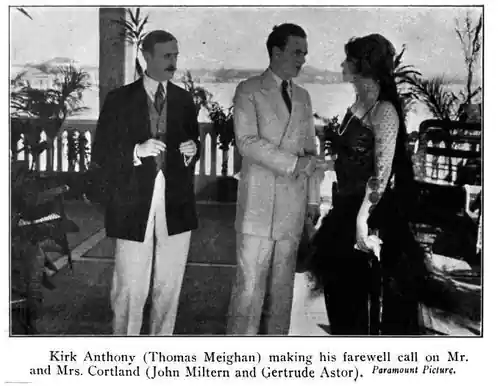
Gus Weinberg inhabits Kirk with a swagger that feels almost theatrical, a vestige of his vaudeville roots. His physicality—broad shoulders, confident stride—conveys a character who speaks louder with his body than any intertitle could manage. Gertrude Astor, as Mrs. Edith, delivers a performance tinged with melancholy, her eyes conveying the weariness of a woman adrift in foreign climes. Lila Lee’s Chiquita radiates a vivacity that is both intoxicating and grounding, offering a counterbalance to Kirk’s brashness.
The supporting cast, notably Cyril Ring as the enigmatic Allen Allan, adds layers of nuance. Allan, a Negro soldier of fortune, is rendered with a gravitas that transcends the period’s typical racial stereotypes. His mentorship of Kirk echoes the mentor‑protégé dynamics seen in The Eternal Law, where experience tempers youthful impetuosity.
The cinematography captures the stark contrast between the oppressive heat of Panama and the cold, industrial ambition of the American railroad. The use of chiaroscuro lighting underscores the moral ambiguity that permeates Kirk’s journey. The railroad sequences, in particular, are choreographed with a kinetic energy that anticipates the later kinetic montages of directors like D.W. Griffith.
Although the film is silent, its musical accompaniment—often performed live in theatres—augments the emotional stakes. The leitmotif accompanying Kirk’s moments of self‑realization is a plaintive violin line that swells as he embraces his new role, echoing the thematic ascent found in The Splendid Sinner.
The film’s pacing is deliberate, allowing each character’s arc to unfurl without haste. The first act establishes the familial conflict, the second immerses the viewer in the exotic milieu, and the third resolves the tension through Kirk’s redemption. This tripartite structure mirrors the classical three‑act model, yet the film injects sub‑plots—such as the intrigue surrounding Stephen Cortlandt’s death—that add complexity without clutter.
The accusation of murder against Kirk serves as a narrative crucible; it forces the audience to confront the fragility of reputation in an era where a single scandal could ruin a man’s prospects. Edith’s revelation of the suicide note is a masterstroke of dramatic irony, restoring balance and reinforcing the film’s message that truth, however obscured, inevitably surfaces.
When positioned alongside contemporaneous works such as Durand of the Bad Lands or The Despoiler, The Ne'er-Do-Well distinguishes itself through its nuanced treatment of cross‑cultural romance and its subtle critique of American imperial ambition. While many silent dramas of the 1920s glorified expansionist narratives, this film offers a more ambivalent perspective, acknowledging both the opportunities and the exploitative undercurrents of the railroad’s advance into Latin America.
The film’s portrayal of a Negro soldier as a figure of moral authority also prefigures the more progressive representations seen in later decades, making Allen Allan an early, albeit limited, forerunner of complex Black characters in American cinema.
Preservation efforts have salvaged a significant portion of the original nitrate prints, allowing contemporary scholars to examine its visual grammar. Modern screenings, often accompanied by newly commissioned scores, have reignited interest in the film’s thematic relevance—particularly its exploration of redemption through labor and love, themes that resonate in today’s discourse on identity and belonging.
Critics today commend the film’s ability to fuse adventure with introspection, noting that its narrative depth surpasses the more formulaic escapism of its peers. The interplay of romance, moral crisis, and industrial ambition renders The Ne'er-Do-Well a compelling study of early twentieth‑century anxieties, making it a valuable artifact for both cinephiles and historians.
In sum, The Ne'er-Do-Well stands as a testament to the silent era’s capacity for sophisticated storytelling. Its layered characters, deft direction, and evocative mise‑en‑scène coalesce into a work that rewards repeated viewings. Whether one approaches it as a historical curiosity or as a narrative masterpiece, the film’s enduring charm lies in its ability to portray a wayward son’s pilgrimage from decadence to duty, all set against the vibrant backdrop of Panama’s nascent modernity.
IMDb 4.5
1934
Community
Log in to comment.