DbcultAccessing Vault...
5.2/10
Senior Film Conservator
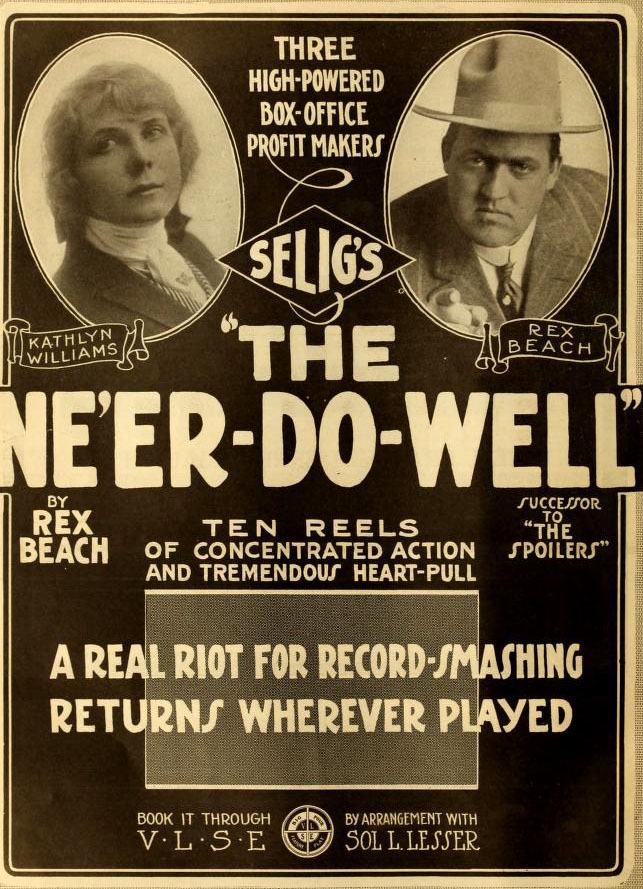
A definitive 5.2/10 rating for a film that redefined the boundaries of cult cinema. The Ne'er Do Well remains a cornerstone of transgressive art.
Picture, if you can, the nickelodeon haze of 1916: a time when intertitles shouted the unspeakable, when Panama still throbbed with the mosquito buzz of unfinished canal dreams, and when college football demigods were national saints. Into that flicker, The Ne’er Do Well arrives like a half-remembered fever—equal parts potboiler and prose poem—bearing Rex Beach’s swaggering fingerprints and a title card that practically winks at moral panic.
Our protagonist, Kirk Anthony, begins as the archetypal golden boy: gridiron marvel, heir to a transcontinental fortune, and incorrigible celebrant. Sidney Smith plays him with the buoyant arrogance of someone who has never required introspection. In the film’s first reel, Kirk’s refusal to join his father’s boardroom priesthood feels less like youthful rebellion than a man allergic to ledgers. The camera lingers on sideline mud, on trumpet blasts, on raucous fraternity detonations—an Eden of perpetual Saturday.
Beach and screenwriter Lanier Bartlett, however, have no intention of letting Eden stand. Enter the embezzler, a grinning cipher in a tuxedo who drugs our hero, strips him of identity, and spirits him aboard a fog-choked steamer bound for Panama. The visual shorthand—top hat swapped for stevedore cap—lands with silent-era bluntness, yet the moral vertigo it signals remains deliciously modern: selfhood as costume, status as paper crane.
At sea, the film’s palette widens. Kathlyn Williams embodies Edith Cortlandt, the diplomat’s wife whose marriage certificate might as well be a treaty parchment. Her fascination with Kirk flickers between maternal and predatory; the iris-in close-ups on her kohl-rimmed eyes feel like surveillance. Williams, a serial queen in her own right, plays the role with brittle poise—one senses she could devour Kirk or discard him depending on the ship’s next roll.
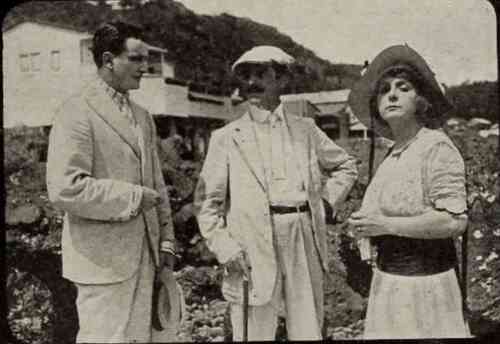
Once in Panama, cinematographer de facto Harry Lonsdale (pulling double duty as supporting actor) drenches the frame in equatorial contrast: blinding whites of naval uniforms against ochre stone, indigo nights bleeding into oil-lamp amber. The riot sequence—sparked by Kirk’s insistence on Yankee firefighting methods inside a Spanish colonial district—unfolds like a Goya print animated: buckets arc, machetes flash, and the camera pirouettes amid crowd panic. It’s here we meet Allan Allan (Wheeler Oakman), the Jamaican sidekick whose pidgin intertitles may raise modern eyebrows yet whose on-screen rapport with Smith supplies the film’s only genuine warmth.
From jail cell to corporate sinecure, Kirk’s trajectory charts a colonialist fantasy: white American energy rescues the tropics from their supposed torpor. Yet the film complicates that fantasy by making his savior a woman—Edith leverages contacts, pulls strings, and spirits Kirk into a cushy canal-zone job. Power, the film whispers, is ultimately sexual, not racial.
Enter Chiquita Garavel, played by Norma Nichols with fan-fluttering coquetry that quickly deepens into something steelier. Their courtship scenes—filmed in the overgrown gardens of San Diego’s Balboa Park doubling as Panama—pulse with silent-era eroticism: a hand brushing a mantilla, a close-up of lips parting around a cigarette holder. When Kirk secretly weds her, he believes himself free of Edith’s gravitational pull; the film, however, tightens the noose.
Because words are scarce in silent cinema, objects become portentous: the suicide note Edith withholds is shown in insert shot—cream paper, wavering like a trapped moth. The husband’s public insult, delivered in a candlelit cantina, feels Shakespearean; Kirk’s vow of revenge arrives via title card in flaming serif. And then—gunshot, fade to black, body slumped over escritoire. The film refuses to show the pull of the trigger, relying instead on a cutaway to a crucifix, a flourish that would make Griffith nod.
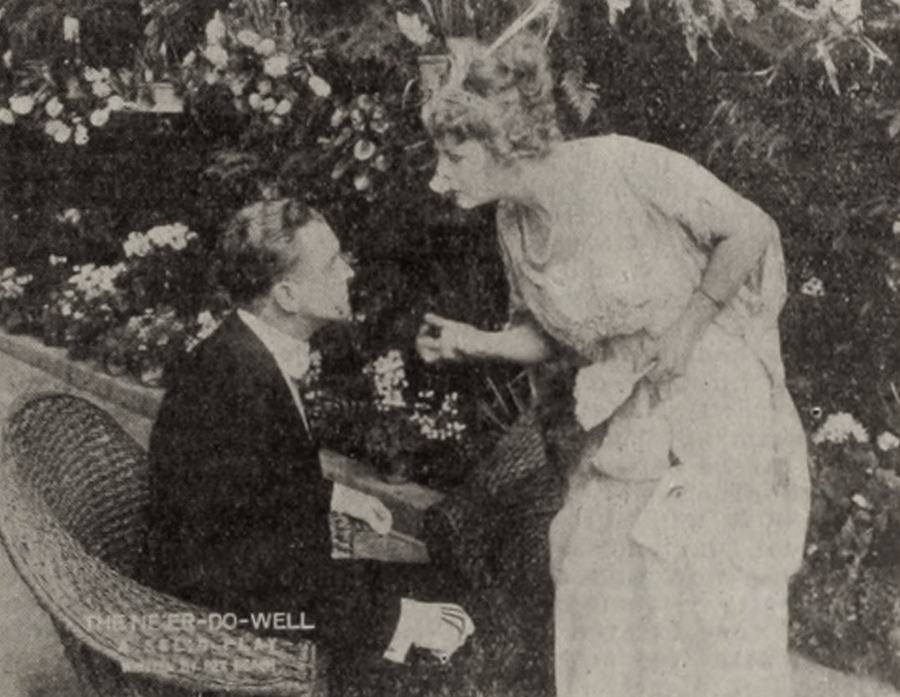
Just when doom seems absolute, paternal deus ex machina materializes: Kirk Sr., portrayed by gravel-voiced Fred Huntley, arrives by private rail car, top-hat brim slicing the frame like a guillotine. His negotiation with Edith—part confession, part business merger—underscores the film’s cynical heart: every sin has a tariff, every silence a price.
Smith’s athleticism, honed on actual football fields, authenticates Kirk’s early swagger, but it’s the actor’s glassy terror in a foreign jail cell that lingers. Watch his shoulders cave, the way fingers spider against stone—physicality substituting for dialogue.
Williams, meanwhile, weaponizes stillness. In medium shot she remains nearly statueque while her eyes conduct storms; the effect is silent-film noir years before the term existed. Some critics claim overacting in silents; Williams proves minimalism was always an option.
As for Oakman’s Allan Allan, the role could have slid into minstrelsy. Instead, the actor injects sly irony—eyebrow arches that undercut patronizing intertitles. Contemporary viewers may squirm, yet within 1916 constraints he crafts a dignity that sidesteps caricature.
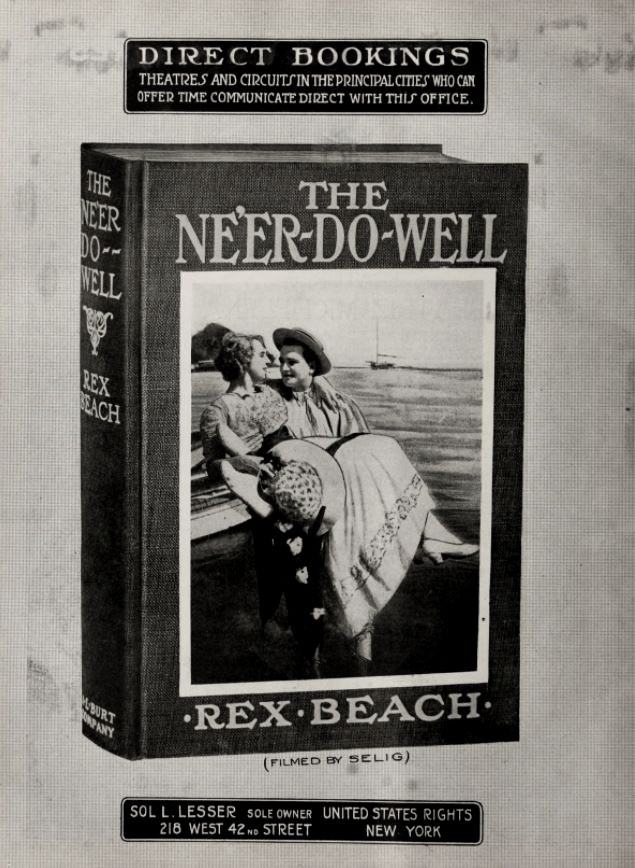
Surviving prints, restored by the San Francisco Silent Film Festival in 2019, reveal two-tone tinting: amber for interiors, cyan for exteriors, a convention that once seemed mere novelty but now reads like emotional EQ. The night scenes glow sea-blue (#0E7490), a chromatic prefiguration of digital teal-and-orange palettes a century later.
Compositions favor diagonals: ship masts slice frames, canal dredges angle like bayonets. Such dynamism counters the staginess often ascribed to early features. Moreover, the riot sequence employs hand-crank under-cranking—step-printed at 18 fps then projected at 24—yielding frenetic motion that rivals modern action montage.
Beach’s yarn predates fellow pulp bard A Florida Enchantment’s gender-bending shenanigans by two years, yet both share a fixation on identity as costume. The Ne’er Do Well likewise anticipates The Eternal City’s collision of romance and geopolitics, though where that 1915 melodrama genuflects toward Rome, Beach’s film fixates on the hem of Manifest Destiny.
Meanwhile, serial-adjacent titles like The New Exploits of Elaine trade emotional complexity for cliffhanger mechanics; Beach’s feature offers cliffhangers of the heart—each reel ends less on peril than on the vertigo of compromised desire.
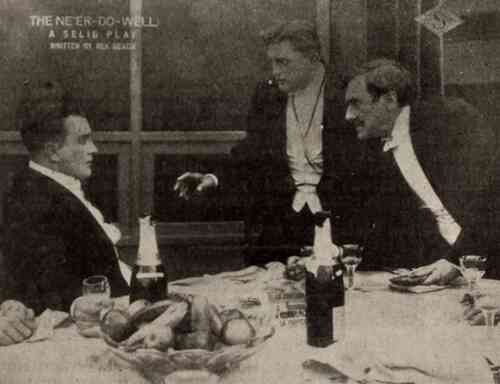
Modern readings inevitably interrogate Edith’s agency. Is she femme fatale or proto-feminist? The film never grants her POV, yet her ability to steer canal politics suggests an autonomy more potent than many a 21st-century blockbuster dame. Her final capitulation to paternal bargaining reads less defeat than strategic retreat—a recognition that patriarchal capital remains the ultimate currency even in the jungle.
Conversely, Chiquita’s arc embodies the peril of the colonized body: desired, wed, discarded from narrative agency once the plot pivots back to US shores. Nichols infuses the part with latent defiance—a tilt of the head, a refusal to wilt—but the screenplay strands her once marriage vows are swapped. Her absence from the closing tableau lands as deliberate erasure, a reminder Beach’s progressivism had limits.
Original exhibition notes prescribe a pastiche: Sousa marches for gridiron pomp, Saint-Saëns’ Danse Macabre for riot mayhem, a tango for Panama nightlife. Contemporary screenings often commission new scores; the 2019 restoration toured with a septet blending brass band, calypso rhythms, and atonal strings—an aural mirror to the film’s cultural collisions. Audiences reportedly gasped at the gunshot bar—percussive whip-crack from a prepared-piano—evidence that silent cinema, properly scored, still detonates.
As of 2024, Kino Lorber’s MOD Blu-ray remains the definitive consumer release, mastered from a 4K negative scan with optional English subtitles for the hard-of-hearing. Streamers flip; the usual suspects (Criterion Channel, Max) rotate Beach titles, yet none list Ne’er Do Well as of press time. Archive.org hosts an unrestored 480p rip—serviceable for the curious, but the tinting is bleached to sepia mush. For purists, specialty retailers like Grapevine Video still stock DVDRs struck from 16 mm show-at-home prints; beware, some lack the final suicide-note reveal, lopped by regional censors in 1918.
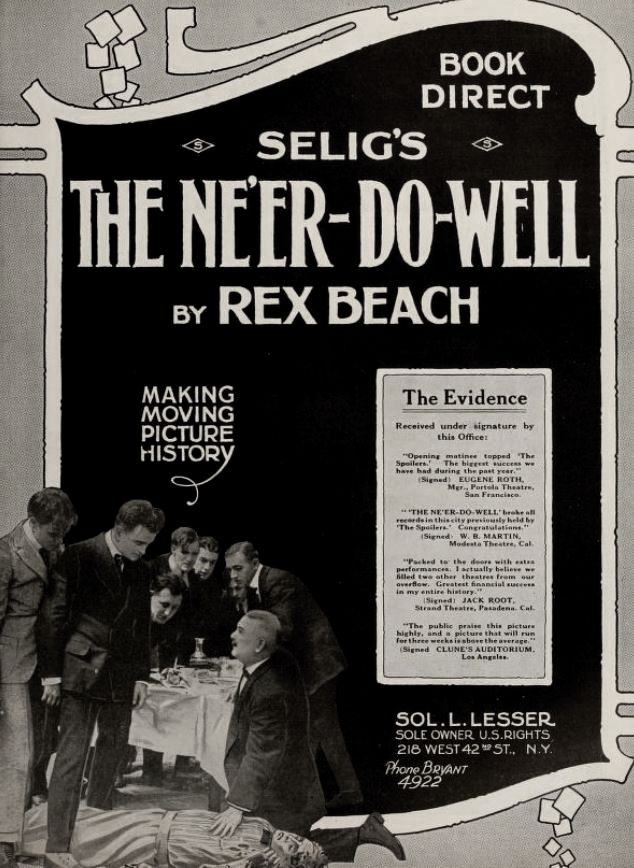
Strip away the footlights of 1916 and you find a story about privilege mugged by geography, about how swiftly identity can be swapped like a suit of clothes. In an era of digital avatars and algorithmic selves, The Ne’er Do Well feels eerily prescient: a cautionary tale warning that the self is only as stable as the paper others choose to print.
Yes, its racial politics creak; yes, its gender politics wobble. Yet the film’s formal daring—its diagonals, its chromatic mood swings, its willingness to let silence scream—renders it essential viewing for anyone charting the genealogy of American cinema. It is both artifact and arrow, a signpost pointing toward the mature melodramas of the twenties and the film-noir fatalism of the forties.
Rating on a 4-point scale: 3.5 burnt-out footballs. Docked half a point for colonial myopia, but awarded full marks for nerve and visual panache. See it with live accompaniment if you can; the communal hush as Edith folds that suicide note is worth every penny of admission.
"To be nobody-but-yourself in a world which is doing its best, night and day, to make you everybody else—means to fight the hardest battle any human being can fight."
— e.e. cummings (quoted on original souvenir program, 1916)
Seventy-five minutes of flickering nitrate remind us that battles over identity are never new, only rebranded. Kirk Anthony staggers out of a Panama jail into the glare of a locomotive headlamp, and we, century-later spectators, recognize our own reflection—half-costumed, half-lost, eternally in transit.
IMDb 6.8
1925
Community
Log in to comment.