DbcultAccessing Vault...
Cult Review
Senior Film Conservator
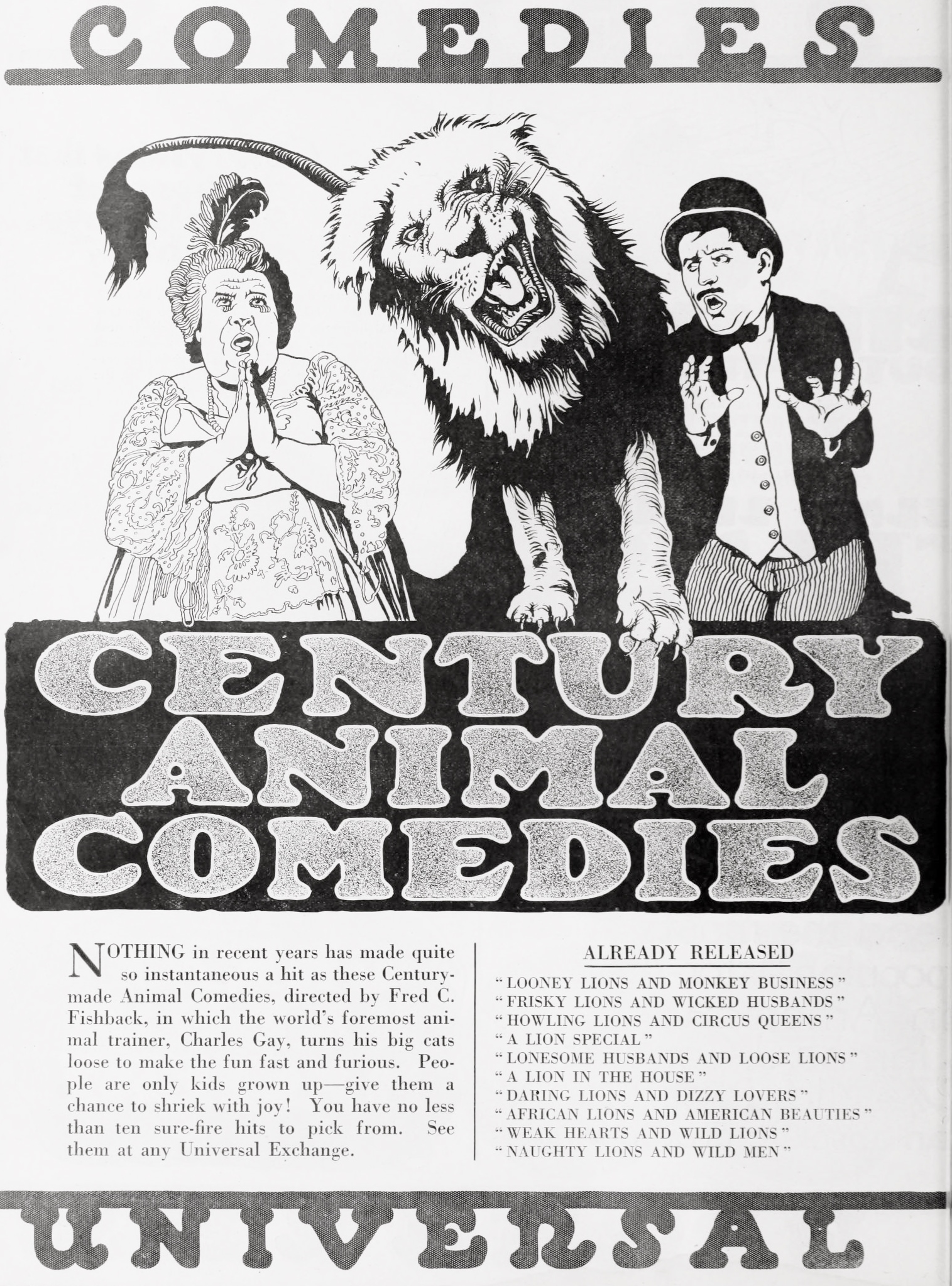
From the moment the opening credits unfurl, Lonesome Hearts and Loose Lions asserts itself not merely as a narrative, but as an experiential journey into the very fabric of human isolation and the catalytic power of unforeseen disruption. This isn't just a film; it's a profound rumination on the quiet desperation that can seep into the most intimate of relationships, only to be violently, thrillingly shaken awake by the untamed forces of nature. The title itself is a poetic juxtaposition, hinting at the internal struggles of its characters and the external chaos that will inevitably erupt, a promise that the film delivers upon with a remarkable blend of pathos and high-stakes adventure.
At its core, the film meticulously crafts the portrait of Mrs. Dan Russell, a woman whose existence has become a tapestry woven with threads of quiet solitude and unspoken yearning. Her husband, Dan Russell, is presented as a figure of enigmatic detachment, perhaps burdened by the weight of societal expectations or simply lost in his own internal labyrinth. Their shared home, initially depicted as a haven of suburban tranquility, gradually reveals itself to be a gilded cage, each room echoing with the silent chasm that has opened between them. The film, with subtle yet piercing precision, illuminates the subtle ways in which love can wither, not through overt conflict, but through neglect, through the slow, insidious erosion of shared moments and genuine connection. Mrs. Russell's performance, though largely conveyed through gesture and expression in the silent era, speaks volumes, embodying the universal ache of a heart that feels unseen, unheard, and utterly alone.
The arrival of Harry Sweet, a character imbued with an almost theatrical vivacity, serves as the initial tremor before the earthquake. Sweet, a showman whose very presence suggests a world beyond the Russells' circumscribed reality, introduces the element of spectacle and the exotic. His traveling menagerie, "The Century Lions," is more than just a plot device; it's a symbol of raw, untamed power, a stark contrast to the domesticated, almost stifling routine of the town. Sweet's charisma is infectious, a spark in the otherwise muted landscape, yet it also carries an undercurrent of unpredictability, a hint of the chaos he inadvertently unleashes. His interactions, however brief, with the Russells, subtly underscore their own emotional stagnation, offering a tantalizing glimpse of a life lived with more zest, more danger, more heart.
The pivotal moment, of course, is the audacious escape of "The Century Lions." This sequence is not merely an action set-piece; it's an allegorical explosion, a literal shattering of the tranquil façade that masks the town's, and particularly the Russells', deeper disquiet. The lions, magnificent and terrifying in their freedom, become a metaphor for the primal forces that lie dormant beneath the veneer of civilization and, more intimately, beneath the carefully constructed politeness of the Russells' marriage. The ensuing pandemonium is a masterclass in tension, capturing the visceral fear and exhilaration of a community suddenly confronted with the wild. The film brilliantly uses this external threat to force an internal reckoning. No longer able to retreat into their individual shells, Dan and Mrs. Russell are thrust together by a shared purpose, a common enemy, and an urgent need for survival.
The pursuit of the loose lions transforms the narrative from a domestic drama into a thrilling adventure, yet it never loses sight of its emotional core. As the townspeople, led by a newly galvanized Dan Russell, mobilize to recapture the beasts, Mrs. Russell finds herself an indispensable participant, her quiet strength emerging in the face of unprecedented danger. The film avoids simplistic portrayals; Dan's transformation isn't instantaneous, but a gradual awakening, spurred by the urgency of the situation and the unexpected resilience of his wife. This shared ordeal becomes a crucible, forging a new connection between them, one built on mutual respect, newfound admiration, and the rediscovery of a long-buried passion. The roar of the lions, once a sound of terror, slowly transmutes into the resounding echo of their reawakened hearts, a testament to the idea that sometimes, profound disruption is necessary for profound change.
The visual storytelling is particularly striking for its era. The cinematography, even in its black and white simplicity, captures the stark contrast between the ordered human world and the untamed wilderness embodied by the lions. The close-ups on Mrs. Russell's face convey a world of unspoken emotion, her eyes reflecting both fear and a burgeoning sense of agency. The sequences depicting the lions' rampage are executed with a surprising degree of realism and intensity, creating genuine suspense. One might draw a parallel to the raw, visceral impact seen in films like The Pitfall, which also delves into unexpected dangers forcing characters to confront their true selves, albeit in a more psychological thriller context. However, Lonesome Hearts and Loose Lions injects a unique blend of domestic drama and animalistic terror that sets it apart.
The film's exploration of loneliness is particularly poignant. Mrs. Russell's initial state resonates with the themes of emotional isolation found in films such as Wanted a Wife or even the deeper, more complex emotional landscapes of Love. Yet, Lonesome Hearts and Loose Lions elevates this theme by introducing an external, almost fantastical element to catalyze change. It posits that sometimes, it takes an extraordinary, even terrifying, event to shatter the complacency and force individuals to truly see each other again. The dynamic between Dan and Mrs. Russell is not merely about conflict resolution; it's about a profound re-understanding, a rediscovery of the qualities that initially drew them together, now illuminated by the harsh, thrilling light of crisis.
Moreover, the film subtly critiques the rigidity of societal norms and the human tendency to domesticate not just animals, but also emotions. The lions, once confined, represent the suppressed wildness within humanity itself, a force that, when unleashed, can be both destructive and incredibly liberating. Harry Sweet, with his unconventional lifestyle and his proximity to these magnificent beasts, acts as a foil to the Russells' staid existence, suggesting alternative paths to fulfillment and excitement. One could even argue a thematic echo with the adventurous spirit of Captain Kidd, Jr., though that film focuses more on treasure hunts, the underlying drive for escape from the mundane is present in both.
The character development, particularly for Dan Russell, is compelling. He transforms from a seemingly indifferent husband into a man of action and purpose. This arc is reminiscent of the journey of self-discovery often seen in films focusing on personal growth, such as A Man's Making, where characters undergo significant internal shifts due to external pressures. However, in Lonesome Hearts and Loose Lions, this evolution is inextricably linked to the grand, perilous spectacle of the escaped animals, adding a layer of primal urgency to his awakening. The film deftly avoids making him a one-dimensional hero; his actions stem from a genuine concern for his wife and community, showcasing a depth that elevates the narrative beyond simple melodrama.
The pacing is remarkably effective, building from a slow, contemplative opening to a thrilling, almost breathless climax. The moments of quiet reflection are as potent as the scenes of high-octane pursuit, allowing the audience to fully absorb the emotional weight of the characters' journeys. The film understands the power of juxtaposition – the tranquil domesticity against the untamed wild, the lonesome heart against the loose lion. This duality is its greatest strength, giving it a timeless quality that transcends its historical context. It's a testament to the filmmakers' understanding of human nature and the inherent drama in the clash between order and chaos.
In a broader cinematic context, Lonesome Hearts and Loose Lions stands as a fascinating example of how early cinema could weave complex emotional narratives with thrilling action. While it doesn't delve into the gritty realism of something like Peterburgskiye trushchobi, it nevertheless offers a profound commentary on societal structures and individual resilience. It's a film that stays with you, not just for its exciting plot, but for its resonant exploration of human connection. The ending, without giving too much away, is deeply satisfying, providing a sense of earned redemption and rekindled hope, demonstrating that even the most fractured bonds can be mended when faced with a common, exhilarating challenge.
The film's legacy lies in its ability to marry the intimate with the epic, to tell a deeply personal story against a backdrop of grand, sweeping drama. It reminds us that sometimes, the greatest adventures aren't found in distant lands, but in the unexpected corners of our own lives, sparked by the very things we fear or try to control. It's a vibrant, compelling piece of cinema that continues to resonate, demonstrating the enduring power of storytelling to illuminate the human condition, with all its lonesome hearts and the loose lions that awaken them.
IMDb —
1926
Community
Log in to comment.