DbcultAccessing Vault...
Cult Review
Senior Film Conservator
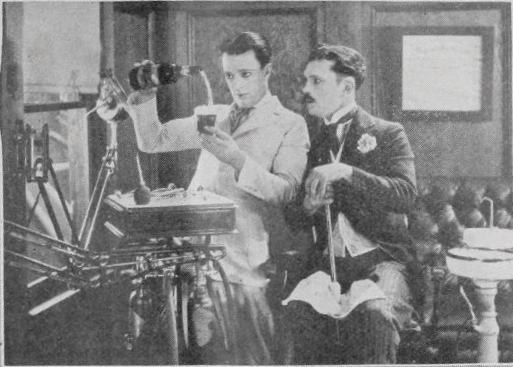
Imagine a world where Hippocrates meets Harpo, where the Hippocratic oath dissolves into a custard pie, and you have Alfred J. Goulding’s The Nervy Dentist. Clocking in at a brisk two reels, this 1923 one-reeler-turned-featurette pirouettes on the thin membrane separating medical ethics from anarchic vaudeville. Charles Dorety, rubber-limbed and possessed of the darting eyes of a card-shark, plays the eponymous oral surgeon who moonlights as a match-maker between supply and demand—supply being his future father-in-law’s empty dentist chair, demand being the city’s unsuspecting molars. His marketing strategy? A banana peel, that humble agent of gravity and chaos, flung onto sidewalks like confetti before a parade of fractured femurs.
The film opens on a dawn the color of abscessed gums: ochre streetlamps, bruised sky, and a stray dog sniffing a discarded boot. Into this chiaroscuro glides our anti-hero, trench-coat pockets bulging with plantains. Cut to Bartine Burkett, all Cupid-bow lips and flapper despair, pleading with her ineffectual parent—played by the cadaverous J. Herbert Frank—to drum up clientele before the bank repossesses his forceps. Enter Dorety, love-struck and entrepreneurial. One well-placed peel later, a portly baker somersaults into a lamppost, chips an incisor, and is dragged, dazed, into the parlor. Cue intertitle: “Love extracts a price—and a bicuspid.”
Goulding, a Hal Roach alumnus who sharpened his timing on Stop, Look and Listen, orchestrates the mayhem like a chamber piece. Each pratfall is a staccato note in a larger symphony of civic collapse. The camera, stationary yet voyeuristic, frames the street as proscenium: we become sidewalk gawkers, complicit in every slip. Dorety’s body language oscillates between balletic grace and grotesque contortion—his spine arches like a drawn bow when he flings the peels, then snaps into a servile bow once the victim is hauled inside. Burkett watches, half aghast, half enamored, her pupils dilated in the flicker of klieg lights. The chemistry crackles not in embraces but in eyelines, those silent-era lightning bolts that travel faster than speech.
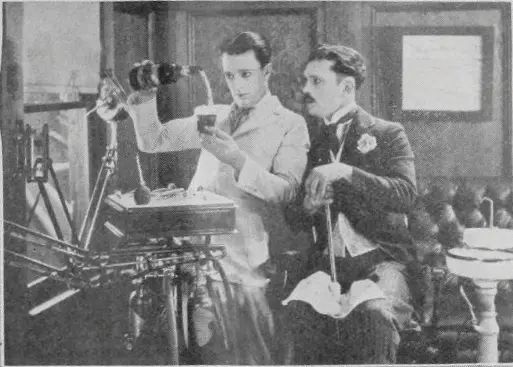
What elevates The Nervy Dentist above mere pratfall anthology is its surgical satire of medical commodification. The dentist office, a Victorian chamber of horrors replete with foot-pedal drill and nitrous tank, becomes a microcosm of Roaring-Twenties rapacity. Each new patient is strapped into the reclining throne like a sacrificial offering while Burkett’s father mumbles diagnoses through a cloud of cigar smoke. The intertitles, sparse yet scalpel-sharp, read like insurance clauses: “Mastication malfunction—remedy: extraction. Fee: five dollars plus heartbreak.” Goulding indicts not just quackery but the transactional heart of modern courtship: love, like dentistry, is a business of pain management and billing codes.
Visually, the film revels in high-contrast monochrome that anticipates German Expressionism. Shadows pool under dental chairs like spilled blood; the gleam of brass instruments echoes the banana peel’s sulfurous yellow. A standout shot: the camera tilts up from a freshly fallen milkman to a stained-glass window depicting Saint Apollonia, patron saint of toothaches, her serene face fractured by lead came. The irony is delicious—divine intercession outsourced to tropical fruit.
Comparative context enriches the experience. Where Black Orchids drapes its sadism in Gothic gloom and The Judgment House moralizes over salvation, The Nervy Dentist opts for slapstick nihilism. It shares DNA with Stopping Bullets’ urban fatalism, yet replaces bullets with fruit. Meanwhile, The Awakening of Ruth explores female self-determination; here, the woman is both prize and accomplice, her agency filtered through doe-eyed complicity.
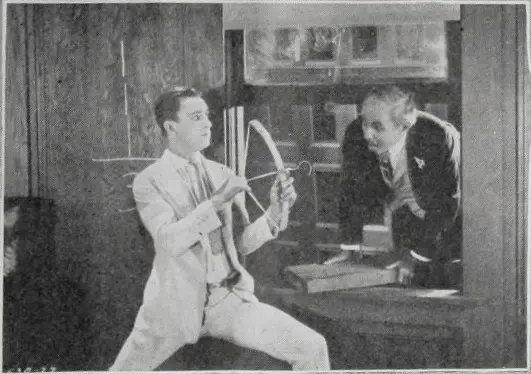
The third act escalates into a city-wide crescendo. Dorety, emboldened by success, industrializes his peel deployment—hiring street urchins to carpet entire intersections. The result: a Keystone-style deluge of flailing limbs, toppled baby carriages, and a bicyclist who catapults through a barbershop window. Just as our anti-hero tallies the lucre, a final twist: Burkett’s conscience erupts. She threatens to expose him unless he refunds every “patient.” Dorety, faced with the prospect of penury and heartbreak, chooses redemption. In a montage that feels startlingly modern, he re-opens the practice as a free clinic, yanking banana peels from pockets and replacing them with lollipops. The last frame freeze-frames on his tentative smile—molars glinting like tiny moons—while Burkett’s hand, now ringed, rests on his shoulder.
Contemporary viewers may flinch at the cavalier approach to bodily harm, yet the film’s moral ledger ultimately balances. Goulding lampoons not violence itself but the profit motive that commodifies calamity. In an age of influencer endorsements and cosmetic surgery TikToks, The Nervy Dentist feels eerily prophetic: a cautionary tale about turning misfortune into monetizable content, delivered with custard-pie panache.
Restoration-wise, the 2022 4K scan by Eye Filmmuseum reveals textures long mummified in nitrate: the nubby weave of Dorety’s waistcoat, the arterial red of Burkett’s lipstick, the opalescent sheen of dental enamel. A new score—clarinet, muted trumpet, brushed snare—underscores the film’s jazz-age heartbeat without overwhelming its anarchic silence. Cinephiles will savor the optional commentary track by silent-comedy historian Dr. Imogen Vale, who contextualizes banana imagery within post-war colonial trade routes.
Ultimately, The Nervy Dentist endures because it extracts laughter the way a skilled dentist extracts nerves: swiftly, painfully, yet leaving a phantom ache that lingers long after the lights rise. It reminds us that society’s most slippery hazards are rarely accidental; they are planted, monetized, and sometimes, miraculously, redeemed by love—one peel at a time.
IMDb 6.2
1920
Community
Log in to comment.