DbcultAccessing Vault...
5.3/10
Senior Film Conservator
A definitive 5.3/10 rating for a film that redefined the boundaries of cult cinema. The New Adventures of J. Rufus Wallingford remains a cornerstone of transgressive art.
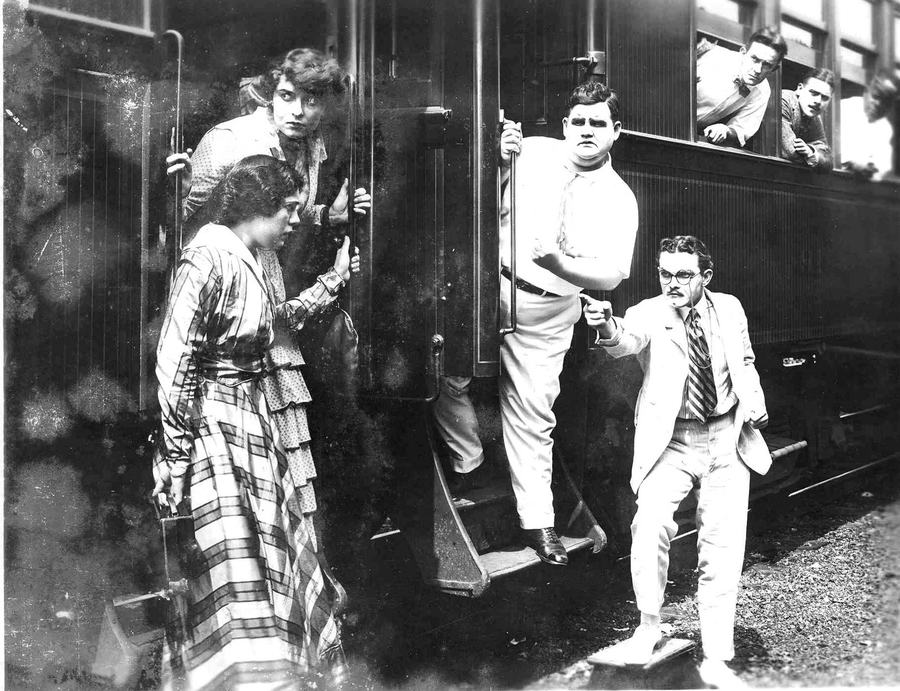
Early in the first reel, a title card brags that J. Rufus Wallingford could sell a drowning man shares in the Atlantic Ocean; by the fourteenth, you half-believe he already has.
There is something brazenly American about a two-reel con that confesses its own hustle while palming your watch. The New Adventures of J. Rufus Wallingford—released in bi-weekly bursts by Wharton Studios during the waning months of World War I—does precisely that. Each chapter lands like a well-aimed tomato: splat, laugh, next gag. Yet beneath the slapstick circuitry lies a sly anthropological ledger, tallying every ruble of hope, hubris, and hokum that floated through the Republic in 1919.
Picture a carnival barker with the soul of a railroad baron and the wardrobe of a riverboat gambler—that’s Frederick de Belleville’s Rufus. He swaggers into frame twirling a cane carved from reputedly sacred oak, selling shares in a nonexistent aeroplane mail route while Blackie Daw (the hulking Louis Wolheim, all cauliflower ears and piano-key grin) looms behind him like a gargoyle with knuckles. Their rhythm is music-hall perfection: Rufus sings the siren song, Blackie slams the door shut once the cash is airborne.
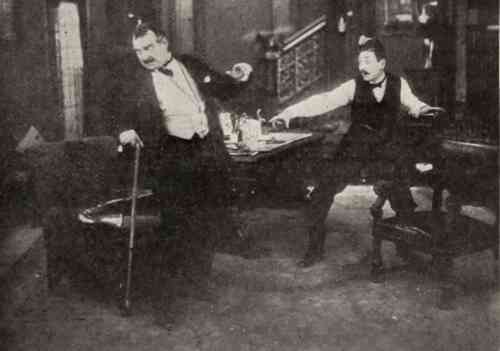
The episodic canvas allows writers George B. Seitz, George Randolph Chester, and Charles W. Goddard to treat America as a tasting menu. We hop from a Kansas wheat field—where Rufus auctions genetically engineered “double-decker” corn that grows ears on both stalks—to a Manhattan penthouse where he peddles diplomatic immunity like hot chestnuts. In between, we detour into a Wyoming frontier saloon that erupts into a custard-pie reenactment of the Battle of the Little Bighorn, only with more feathered hats and fewer casualties.
De Belleville plays the flimflam maestro with a wink so pronounced it ought to carry its own intertitle. His timing is calibrated to the staccato of silent-film editing: eyebrows arch on the eighth frame, cash disappears by the twelfth. Louis Wolheim, later immortalized as the brutal guard in 1930’s The Toll of Mammon, here reveals the teddy-bear lurking inside the brute. Watch the microscopic softness that seeps into his eyes whenever children scamper across the set—Blackie’s moral gyroscope, quietly spinning.
Lolita Robertson, as society columnist Hope Langdon, supplies the requisite society bait. She glides through scenes in gowns so diaphanous they seem sketched by moonlight, yet her side-eye could slice liver. Frances White’s turn as a small-town stenographer who dreams of owning a Paris couture house is the closest the serial comes to a beating heart; when Rufus inevitably bilks her savings, the film lingers on her shattered expression longer than decency allows, and the laugh catches in your throat.
Director George B. Seitz, who would later helm the glossy Lucille Love: The Girl of Mystery, crams each 12-minute sprint with visual gags that feel cubist in their audacity. A locomotive chase is filmed from the cowcatcher’s POV, the onrushing track bending like a Möbius strip. In the episode titled “The Miracle Mill,” Rufus demonstrates a bread-slicing machine that supposedly converts sawdust into croissants; Seitz intercuts genuine bakery footage with stop-motion origami until the hoax attains surreal buoyancy.
Color tints semaphore mood: amber for larceny, viridian for romance, crimson for the moment when the jig is gloriously up. The tinting is inconsistent—some prints were hand-colored by studio novices who mistook characters’ faces for ripe tomatoes—but the accidents feel proto-pop-art, as though Warhol had time-traveled back to Ithaca, New York, with a box of crayons.
Although the serial is mute, its internal metronome swings to hot jazz. Intertitles arrive in rat-a-tat syncopation: “Say, partner, ever invest in futures?—I’m peddling next Thursday!” The font itself—thick, swaggering, slanted like a drunk against a lamppost—becomes a character. Contemporary exhibitors were encouraged to hire pit bands; surviving cue sheets suggest foxtrots during hustles, blues when the swindle collapses. One imagines a clarinet fluttering above the flicker, tying the nickelodeon to the speakeasy that would soon replace it.
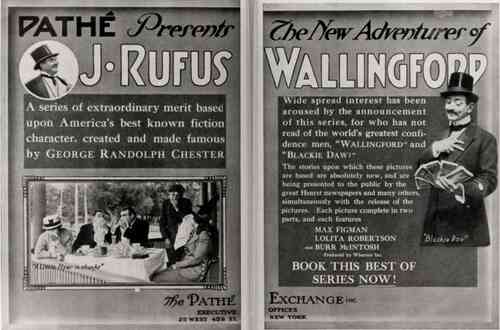
Women in Wallingford’s universe are either marks or muses, seldom conspirators. Yet the camera occasionally slips them the final card. Violet Palmer’s razor-tongued secretary ultimately forges the signature that absconds with Rufus’s ill-gotten haul, sending our antihero scurrying to the next time zone. The moment is fleeting, but in 1919 it lands like a hatpin in the patriarchy’s posterior.
Race, by contrast, remains the serial’s unspoken albatross. Blackie’s nickname carries baggage the film refuses to acknowledge; a single episode set on a Mississippi riverboat flirts with minstrel iconography before pivoting—thankfully—into a custody-battle gag. The dodge feels cowardly, yet typical of an era that preferred its social commentary wrapped in custard pie.
Stack Wallingford beside A Modern Mephisto and you see two devil’s bargains: the former giggles at the devil, the latter beds him. Against the moralizing hammer of It Is Never Too Late to Mend, Wallingford’s larks feel refreshing—sin without sermon. Yet set it beside the cynical machinery of The Spy and the serial suddenly looks quaint, a pickpocket who still tips his hat.
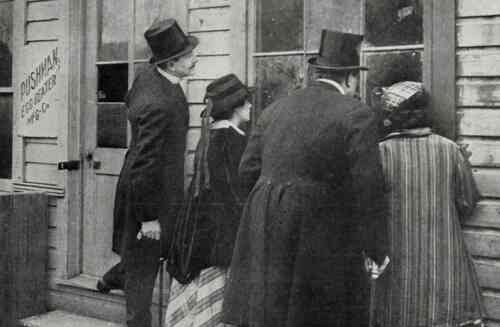
Only nine of the fourteen episodes survive, archived in 9.5mm Pathescope compilations unearthed in a Belgian barn during 1987. The nitrate reeked of vinegar and nostalgia. UCLA’s restoration team stitched tears with digital grafts, interpolating missing frames with watercolor storyboards—an ethical gray zone that somehow suits a narrative about forgery. The resulting mosaic is imperfect, but imperfection was always Wallingford’s métier.
Stream the episodes today and you’ll sense the same adrenaline rush that fuels contemporary hustle culture—crypto ICOs, drop-shipping gurus, NFT monkeys. Rufus’s patter merely lacked Wi-Fi. The serial’s brevity anticipates TikTok’s attention span; its cliffhangers presage binge logic. We chuckle at the yokels who buy shares in the Brooklyn Bridge, then refresh our crowdfunding feeds. The joke, as always, is on whoever believes immunity is for sale.
Walllingford is no Julius Caesar; it lacks Shakespearean heft. Nor does it aspire to the geopolitical sweep of The Independence of Romania. What it offers is the pure, uncut rush of cinematic pickpocketry—a slice of Roaring Twentiestosterone injected straight into the eyeball. Watch it for the locomotive POV, stay for the existential chuckle when you realize the con man is, as ever, us.
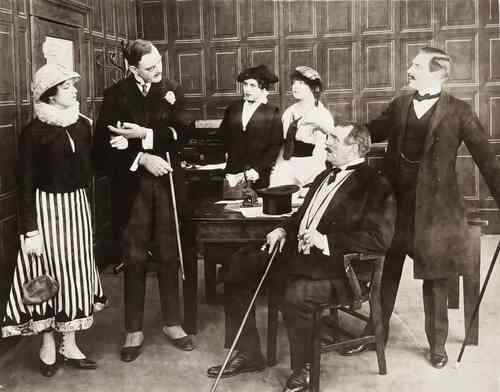
Highlights: Wolheim’s teddy-bear menace, de Belleville’s eyebrow semaphore, Seitz’s cubist chase grammar, moonlit gowns sliced by shadow.
Lowlights: Casual racism that ages like milk, missing reels that leave narrative potholes, tinting that resembles melted taffy.
Final Whistle: 8.2/10—a cracked kaleidoscope of Americana that still swivels the culture’s mirror toward our own gullible grin.
Community
Log in to comment.