DbcultAccessing Vault...
Cult Review
Senior Film Conservator
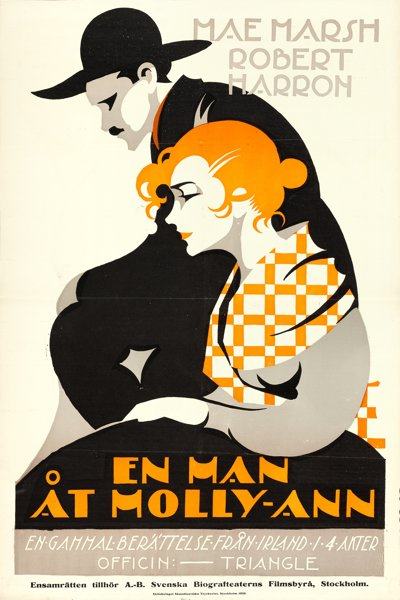
The year 1916 stood as a temporal bridge in the evolution of cinematic grammar, a moment when the primitive flicker of the nickelodeon began to surrender to the sophisticated visual prose of feature-length storytelling. At the heart of this transition lies The Marriage of Molly-O, a production that exemplifies the Fine Arts Film Company’s penchant for blending visceral realism with high-toned melodrama. While D.W. Griffith is often the name that looms largest over this era, his contribution here as a writer provides the skeletal structure for a narrative that feels both intimate and expansive. The film serves as a masterclass in the 'waif' archetype, a role that Mae Marsh inhabited with a spectral intensity that few of her contemporaries could mirror. Unlike the more athletic charm of Mary Pickford or the tragic stillness of Lillian Gish, Marsh brought a nervous, kinetic energy to the screen—a sense of a soul constantly on the verge of being bruised by the world.
In analyzing the visual texture of this work, one cannot ignore the stark contrast between the tenement settings and the aspirational spaces of the upper class. This dichotomy was a recurring theme in the mid-1910s, seen in works like The Yellow Traffic, which similarly grappled with the vulnerabilities of young women in an unforgiving urban environment. In The Marriage of Molly-O, the camera lingers on the dust and the disarray of Molly’s home, creating a sense of claustrophobia that makes her eventual 'marriage'—and the social mobility it represents—feel like a literal escape from a sinking ship. The cinematography, though restricted by the technology of the time, utilizes natural light to highlight the translucent quality of Marsh’s features, making her appear almost otherworldly amidst the grime.
The pairing of Robert Harron and Mae Marsh remains one of the most poignant collaborations in early cinema history. Harron, with his boyish vulnerability and deep-set eyes, provides the perfect counterpoint to Marsh’s frantic grace. Their interactions on screen possess a quietude that bypasses the histrionic gesturing common in the silent era. When they share a frame, the film shifts from a social document into a fragile romance. This chemistry is reminiscent of the emotional depth found in A Good Little Devil, though The Marriage of Molly-O trades that film’s whimsical artifice for a more grounded, almost documentary-like grit. The way Harron looks at Marsh isn't merely the gaze of a lover; it is the gaze of a man recognizing a kindred spirit in the trenches of the industrial age.
The supporting cast adds layers of complexity to a plot that might otherwise seem thin by modern standards. Edwin Harley, as the father, delivers a performance that avoids the easy tropes of the 'drunkard' villain. There is a perceptible sadness in his degradation, a hint of a man defeated by a system he couldn't navigate. This nuanced portrayal of familial decay echoes the themes explored in the international cinema of the time, such as the Belgian drama Drankersken, which also centered on the corrosive effects of alcoholism on the domestic sphere. By grounding the conflict in the home, Griffith’s script ensures that the stakes feel personal rather than merely conceptual.
No Griffith-penned story would be complete without a formidable antagonist, and Walter Long fills this role with a terrifying physical presence. Long, who would later become infamous for his role in 'The Birth of a Nation,' specializes here in a brand of predatory masculinity that feels dangerously real. His pursuit of Molly-O adds a layer of suspense that borders on the thriller genre, not unlike the tension found in The Black Envelope. His presence serves as a constant reminder that for a woman in Molly’s position, the threat of violence is never far away. The film uses Long’s character to critique the lack of protection afforded to the poor, positioning the wealthy hero not just as a romantic interest, but as a necessary shield against the wolves of the slum.
This dynamic of the 'heroic rescue' was a staple of the era, yet The Marriage of Molly-O nuances it by focusing on Molly’s internal journey. She is not merely a passive prize to be won; she is a negotiator of her own fate. This proto-feminist undercurrent can be compared to the resilience shown in Human Cargoes, where the female protagonist must navigate a world of exploitation with only her wits to guide her. Molly’s decision to marry is framed as both a triumph of love and a strategic survival tactic, a duality that adds a fascinating psychological layer to the film’s conclusion.
From a structural standpoint, the film benefits immensely from Griffith’s understanding of pacing. While he did not direct it, his fingerprints are all over the cross-cutting and the rhythmic build-up to the climax. The narrative flow is significantly more sophisticated than earlier efforts like St. Elmo, which relied more heavily on theatrical tableaux. Instead, The Marriage of Molly-O moves with a cinematic fluidity that anticipates the great dramas of the late silent period. It shares a certain DNA with Monsieur Lecoq in its interest in the social mechanics of the city, though it trades the latter’s mystery for a more direct emotional appeal.
Interestingly, the film also touches upon the immigrant experience, specifically the Irish-American identity. This was a subject matter that resonated deeply with the audiences of 1916, who were seeing their own lives reflected on screen for the first time. The portrayal of the 'Irish' temperament—often stereotyped as volatile yet poetic—is handled with a surprising amount of empathy. This cultural specificity gives the film a weight that more generic romances of the time, such as Ivonne, la bella danzatrice, lack. It isn't just a story about a girl; it is a story about a community trying to find its footing in the New World.
The cinematography of The Marriage of Molly-O deserves a closer look. The use of the 'iris-out' and 'iris-in' is not merely a decorative transition here; it is used to focus the viewer’s attention on the minute emotional shifts in Marsh’s face. In an age before the ubiquity of the extreme close-up, these techniques were essential for conveying interiority. This focus on the psychological state of the character is a precursor to the intense character studies seen in European works like Rablélek or the German psychological depth of Der Eid des Stephan Huller - II. The film understands that the real action isn't in the streets, but in the eyes of its protagonist.
Furthermore, the production design captures the transition from the Victorian era to the Modern age. We see the heavy, ornate furniture of the wealthy contrasted with the sparse, broken-down remnants of the Molly-O’s apartment. This visual storytelling does more to explain the class divide than any title card ever could. It’s a testament to the power of silent film to communicate complex social ideas through pure imagery. Even when compared to more plot-heavy films of the era like A Study in Scarlet, The Marriage of Molly-O stands out for its atmospheric richness and its commitment to character over convoluted plotting.
To watch The Marriage of Molly-O today is to witness the birth of the American cinematic heart. It is a film that refuses to look away from the suffering of the poor, yet it insists on the possibility of beauty within that suffering. Mae Marsh’s performance remains a touchstone for any actor seeking to convey vulnerability without weakness. She moves through the film like a candle in a windstorm—constantly flickering, seemingly on the verge of being extinguished, yet somehow staying alight until the very end. The film’s exploration of moral dilemmas and the search for justice in a corrupt world echoes the themes of The Flaming Sword, but with a more delicate touch.
Even the more obscure comparisons, such as the Australian adventure Caloola, or The Adventures of a Jackeroo, highlight how unique The Marriage of Molly-O was in its focus on the urban domestic experience rather than the sprawling outdoor epic. It is a small film with a massive soul. The way it handles the 'marriage' of the title—not as a fairy-tale ending, but as a hard-won peace treaty between different worlds—is surprisingly modern. It acknowledges that while love can bridge the gap between the tenement and the mansion, the scars of the tenement remain. This level of honesty is what prevents the film from becoming a mere relic of sentimentalism. It is a living, breathing piece of art that continues to resonate with anyone who has ever felt like an outsider looking in.
In the broader context of 1916, a year that also gave us the imaginative leaps of A Message from Mars and the tragic weight of La Broyeuse de Coeur, The Marriage of Molly-O holds its ground as a definitive example of American social realism. It doesn't need the spectacle of a cast of thousands or the gimmickry of trick shots. It only needs the face of Mae Marsh and a story that treats the struggles of a poor girl with the same dignity as the fall of kings. It is a reminder that the most profound stories are often the ones told in the quietest voices, hidden in the shadows of the back alleys, waiting for a camera to find them.
IMDb 5.4
1930
Community
Log in to comment.