DbcultAccessing Vault...
Cult Review
Senior Film Conservator
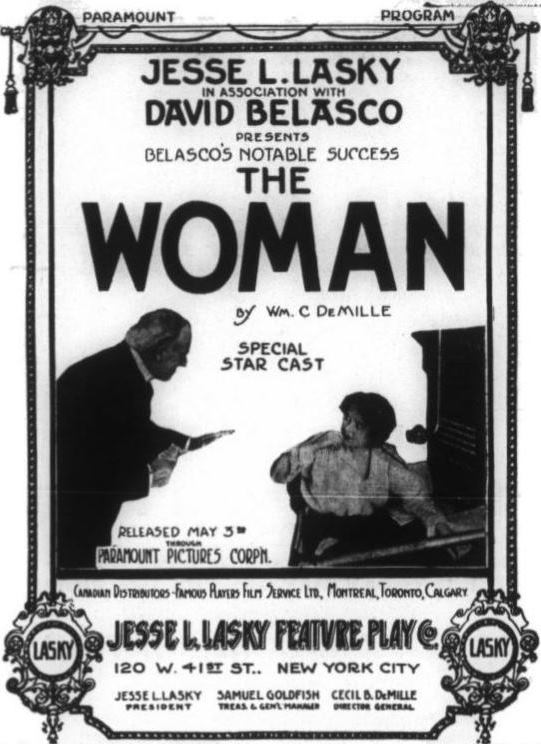
William C. de Mille, often overshadowed by the bombastic spectacle of his brother Cecil, possessed a far more surgical understanding of the human condition and the evolving sociopolitical landscape of early 20th-century America. In The Woman (1915), based on the play by William C. de Mille himself, we find a cinematic tapestry woven with threads of institutional rot and individual integrity. Unlike the visceral urban grittiness found in Traffic in Souls, this film operates within the gilded cages of Washingtonian hotels and the sterile efficiency of the telephone exchange, suggesting that the most profound corruptions are those conducted in whispers over copper wires.
The film introduces us to Matthew Standish (played with a stoic, almost haunting presence by Theodore Roberts), a man whose political trajectory is fueled by a perceived moral purity. He is the 'insurgent'—a term that carried significant weight during the Progressive Era, representing those who dared to challenge the calcified party machines. Standing against him is the quintessential 'Boss,' Jim Blake, and his lieutenant Mark Robertson. These characters are not merely villains; they are the personification of a systemic inertia that views progress as a threat to profit. Their weapon of choice is not the ballot, but the smear campaign—a tactic that remains depressingly contemporary. The narrative’s engine is the Mullins bill, a piece of legislation that serves as a synecdoche for the myriad ways in which public policy is bartered for private gain.
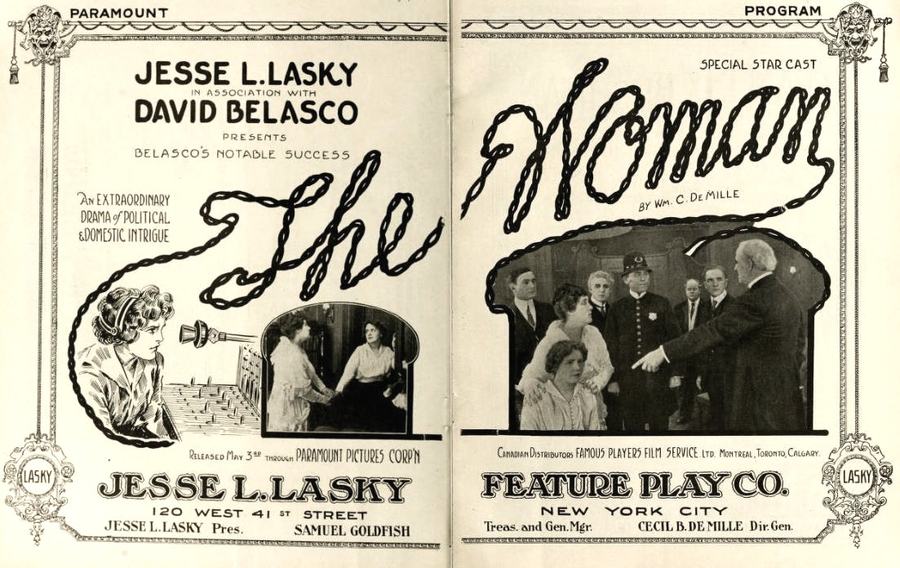
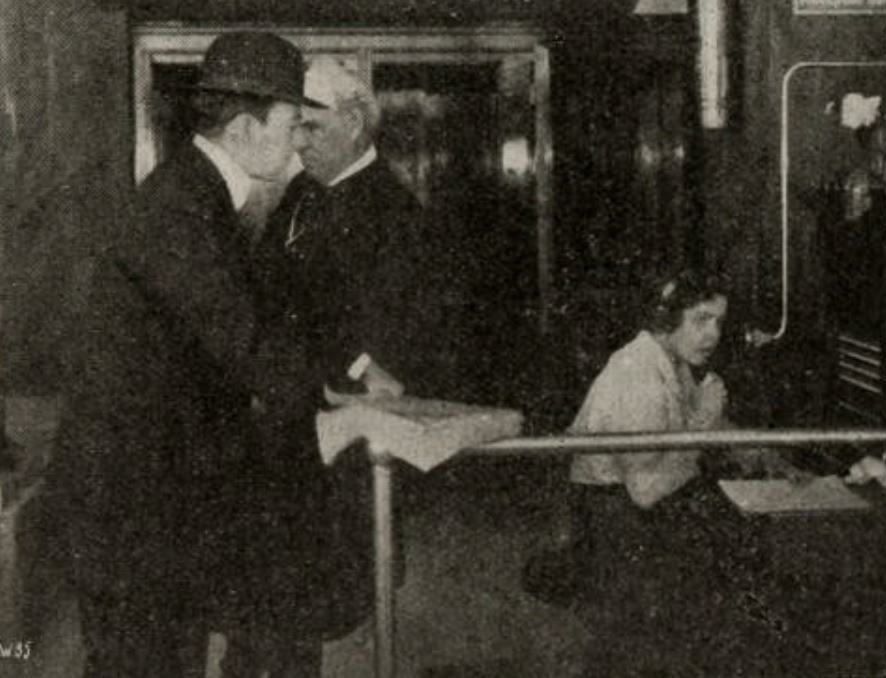
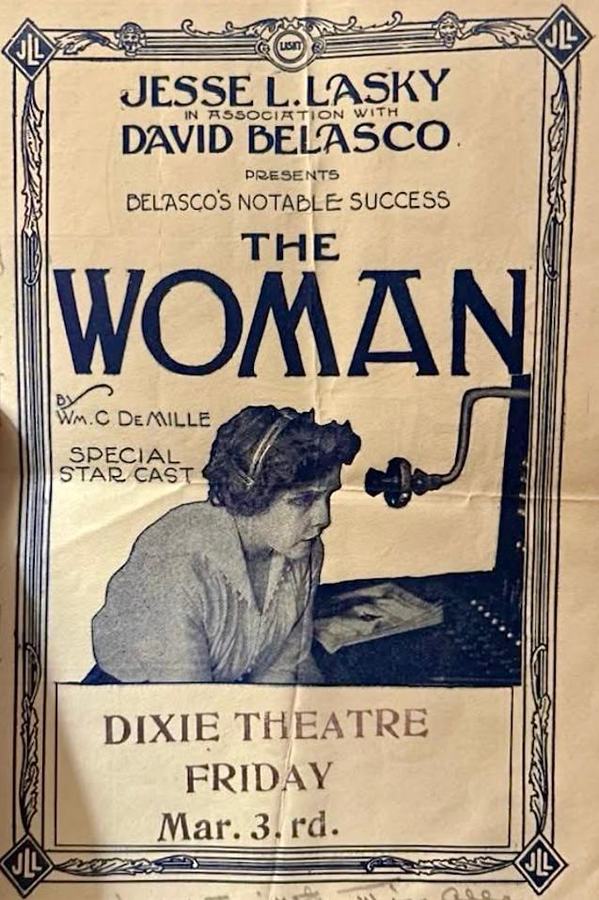
What elevates The Woman above standard political melodrama is its fascination with the technology of the era. The telephone switchboard, presided over by Wanda Kelly (Lois Meredith), serves as the film’s central nervous system. In an age where privacy was becoming increasingly mediated by human intermediaries, the 'hello girl' was the silent witness to history. Wanda is portrayed not as a mere functionary, but as an arbiter of ethics. While films like A Bunch of Keys utilized farcical elements of communication, De Mille treats the telephone with a reverence bordering on the liturgical.
The sequence in which Standish is lured into calling 'Plaza 1001' is a masterclass in suspense. The camera lingers on the mechanical connections, the plugging and unplugging of cords that symbolize the severing and joining of human destinies. When Wanda realizes that the woman Standish is calling is actually the wife of the man trying to destroy him, the film shifts from a political thriller to a domestic tragedy. The irony is delicious and devastating: the very machine built to expose a secret inadvertently uncovers the rot within the architect’s own household. This thematic complexity is reminiscent of the moral ambiguity explored in The Cup of Life, where the consequences of one's past are never truly discarded.
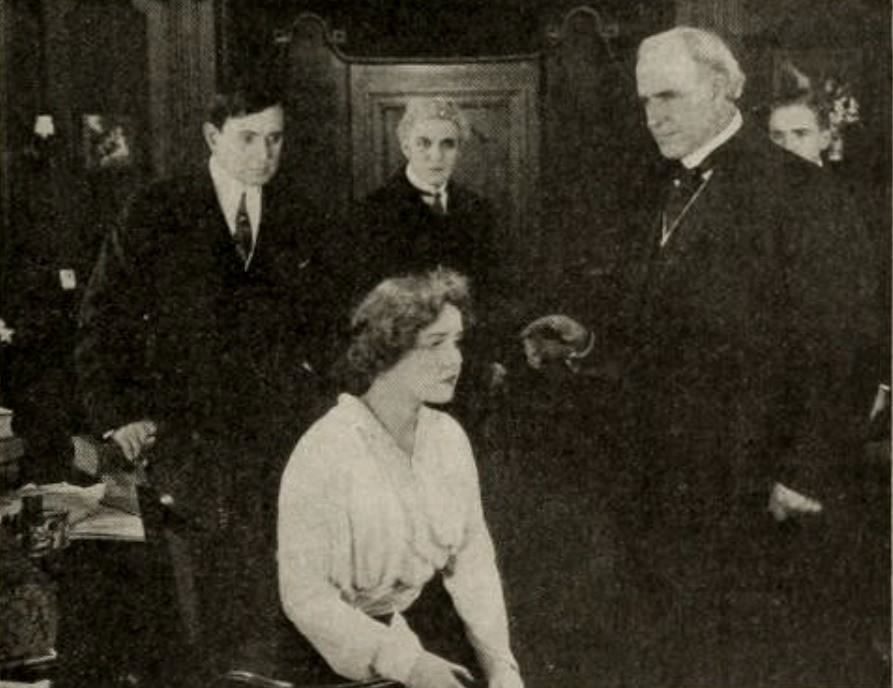
Theodore Roberts delivers a performance that anchors the film’s gravitas. His Standish is a man burdened by the weight of his own idealism, a sharp contrast to the more flamboyant archetypes seen in King Charles II: England's Merry Monarch. However, it is Lois Meredith as Wanda Kelly who provides the film’s emotional core. Her portrayal of the working-class girl who refuses to be bribed or bullied is a precursor to the 'New Woman' of the 1920s. She represents a moral clarity that the men in power have long since traded for influence. The supporting cast, including Ernest Joy as the ruthless Robertson and Mabel Van Buren as the compromised daughter, fill out the ensemble with a theatrical precision that betrays the film’s stage origins without feeling stagey.
One cannot discuss the performances without acknowledging the nuanced direction of De Mille. He utilizes the medium to emphasize the claustrophobia of the political bubble. The interiors are rich with detail, yet they feel oppressive, suggesting that these men are trapped by the very systems they seek to control. This visual language is far more sophisticated than the contemporary The Bushranger's Bride, which relied more on external action than internal psychological tension.
The Woman is particularly biting in its depiction of the 'morals and virtue' campaign. Standish is hailed as a paragon of virtue, yet his past contains a 'blot' that, while perhaps personally significant, has little to do with his ability to govern. De Mille highlights the hypocrisy of a political culture that ignores systemic corruption (the Mullins bill) while obsessing over private indiscretions. This dynamic is a recurring theme in early American cinema, also seen in works like The District Attorney, where the law is often a blunt instrument used for personal vendettas.
The film’s climax, involving the literal disconnection of wires to prevent a newspaper from running a story, is a brilliant literalization of the theme of communication as power. Wanda’s courage in the face of criminal prosecution is not just a plot point; it is a radical statement on the agency of the individual against the monolith of the state. It echoes the themes of social duty found in Australia Calls, though transposed to a much more intimate and domestic setting.
When compared to the Russian melancholia of Deti veka, The Woman feels distinctly American in its pragmatic approach to tragedy. While the former wallows in the inevitability of social decay, De Mille’s film suggests that the 'right' individual can throw a wrench into the machine. It shares some DNA with A Gentleman from Mississippi in its exploration of Washingtonian ethics, but it is far more focused on the female experience within that world.
The film’s resolution, where the 'ring' is defeated and a romance blossoms between Wanda and Blake’s son, might seem like a concession to the demands of early cinema audiences for a 'happy ending.' However, the revelation that the woman at the center of the scandal was the boss’s own daughter leaves a lingering sense of poetic justice that transcends mere sentimentality. It is a reminder that the webs we weave for others often catch our own kin. This sense of inescapable fate is also present in The Buzzard's Shadow, though The Woman handles it with a lighter, more sophisticated touch.
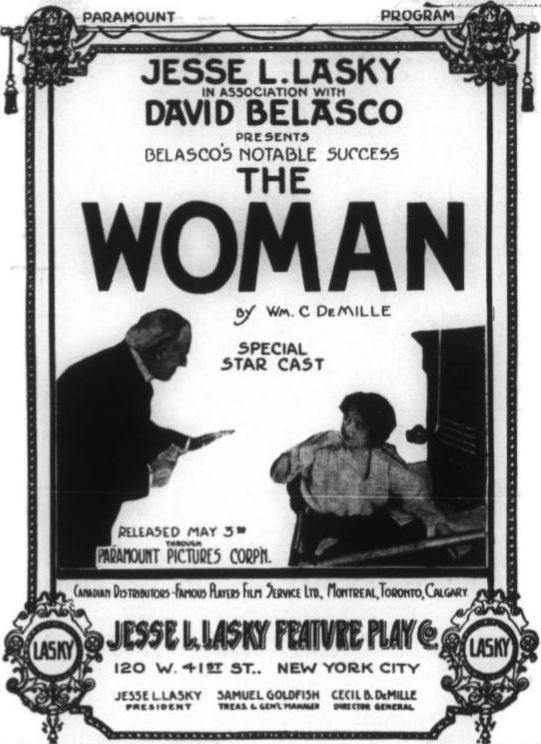
Technically, the film is a testament to the rapid evolution of cinematic grammar in 1915. The use of close-ups on the switchboard, the cross-cutting between the hotel and the political headquarters, and the effective use of lighting to denote character mood all point to a director in full command of his craft. Unlike the somewhat disjointed narrative of The Long Arm of the Law, The Woman maintains a taut, propulsive energy that belies its stage origins. The pacing is deliberate, allowing the tension to simmer before the explosive revelations of the final act.
The cinematography captures the opulence of the era without being distracted by it. The focus remains squarely on the human faces—the sweat on a politician’s brow, the steely resolve in Wanda’s eyes. This focus on the psychological rather than the spectacular is what makes the film endure. It doesn't need the monstrous elements of The Monster and the Girl to evoke a sense of dread; the simple ring of a telephone is enough.
In the broader context of 1915 cinema, The Woman stands as a sophisticated outlier. While many films were still grappling with the basics of storytelling, De Mille was already exploring the intersections of technology, gender, and political ethics. It lacks the overt didacticism of The Flaming Sword, opting instead for a more nuanced portrayal of moral compromise. Even when compared to the character-driven drama of Pauline, The Woman feels more structurally sound and thematically resonant.
The film ultimately posits that while the 'machine' may be powerful, it is constructed of human parts—and those parts are susceptible to conscience, love, and the simple desire for the truth. Wanda Kelly is not just a telephone girl; she is the ghost in the machine, the moral conscience of a nation that was just beginning to realize the power of its own connectivity. As we look back from an era of digital surveillance and instant leaks, The Woman remains a startlingly relevant meditation on the fragility of secrets and the enduring power of a single, resolute voice.
For those interested in the evolution of the political thriller or the history of women in early cinema, this film is an essential text. It proves that even in the silent era, the loudest statements were often made in the quietest moments of defiance. Whether it's the struggle against the Mullins bill or the personal fight for dignity, The Woman captures a moment in time where the old world and the new were in violent, fascinating collision—much like the clashing ideals in The Squatter and the Clown, but with a degree of sophistication that few of its contemporaries could match.
IMDb —
1928
Community
Log in to comment.