DbcultAccessing Vault...
6.8/10
Senior Film Conservator
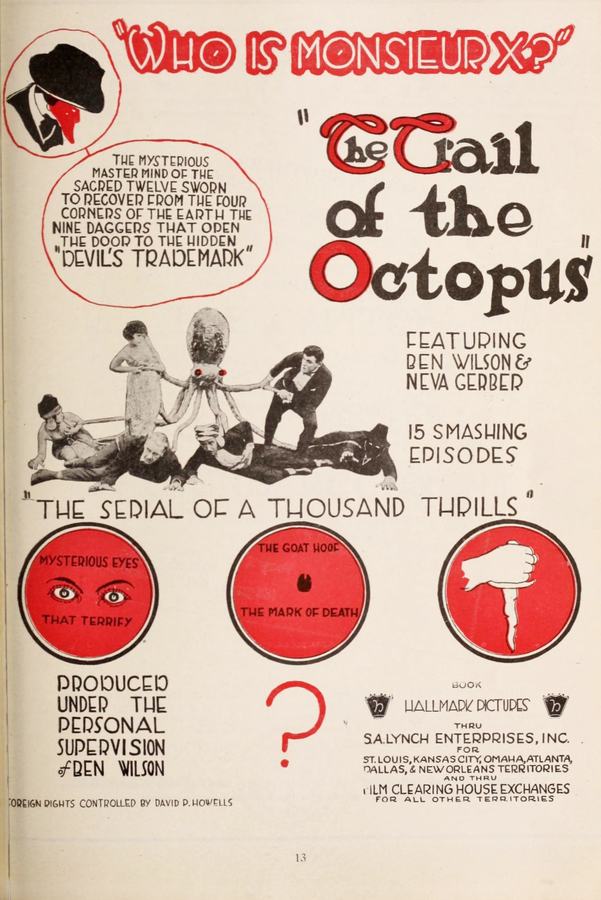
A definitive 6.8/10 rating for a film that redefined the boundaries of cult cinema. The Trail of the Octopus remains a cornerstone of transgressive art.
Stepping into the ephemeral world of early 20th-century cinema, one often encounters the captivating phenomenon of the film serial – a form designed to lure audiences back week after week, chapter after thrilling chapter. Among these episodic spectacles, The Trail of the Octopus emerges as a quintessential example, a sprawling narrative that, even a century later, retains a certain antiquated charm and a fascinating insight into the popular entertainment of its era. This isn't merely a film; it's a serialized odyssey, a testament to the power of suspense and the enduring allure of a well-crafted mystery, even if its pacing and dramatic conventions might feel distinctly alien to contemporary viewers. It represents a particular brand of storytelling, one that thrives on constant peril, dramatic revelations, and the relentless pursuit of a shadowy objective.
At its heart lies a convoluted, yet undeniably compelling, premise. The narrative thrust propels the brilliant criminologist, Carter Holmes (portrayed with an earnest intensity by Harry Archer), into a maelstrom of intrigue centered around the unfortunate Ruth Stanhope (Neva Gerber), a character seemingly destined for perpetual peril. Her repeated kidnappings aren't mere plot devices for dramatic effect; they are integral signposts in a far grander, more sinister design. The ultimate goal? The retrieval of nine mystical daggers, each an indispensable key to unlocking the enigmatic and malevolent secret of the 'Devil's Trademark!' This isn't a simple treasure hunt; it's a race against time, a desperate scramble to prevent an ancient, cursed power from being unleashed upon an unsuspecting world. The stakes are perpetually high, amplified by the episodic nature of the serial, ensuring that each chapter concludes with a tantalizing cliffhanger, a promise of further revelations and heightened danger.
Harry Archer, in the role of Carter Holmes, embodies the quintessential early cinematic detective. His Holmes isn't the cerebral, aloof intellectual of Doyle's conception, but rather a more active, almost swashbuckling figure, capable of both astute deduction and daring physical intervention. Archer brings a gravitas to the role, a sense of unwavering purpose that grounds the more outlandish elements of the plot. He projects an aura of quiet competence, a necessary anchor in a narrative that frequently veers into the fantastical. One can discern the blueprint for countless cinematic heroes who would follow, a blend of intelligence and resilience that resonated deeply with audiences eager for champions of justice. His interactions, particularly with the perpetually distressed Ruth Stanhope, often underscore the prevailing gender dynamics of the era, where the male hero is the unwavering protector, and the female lead, while crucial to the plot's impetus, is frequently in need of rescue.
Neva Gerber's portrayal of Ruth Stanhope is, by design, a study in sustained vulnerability. As the 'oft-kidnapped' heroine, she shoulders the burden of being the narrative's central MacGuffin, the object of desire and the catalyst for much of the action. While modern sensibilities might chafe at the incessant damsel-in-distress trope, Gerber imbues Ruth with a certain delicate fortitude. She isn't entirely passive; her very existence and the secrets she unwittingly holds are the engines of the plot. Her wide-eyed expressions of terror and relief are staples of the serial format, designed to elicit immediate emotional responses from the audience. It's a performance that, within the conventions of its time, effectively communicates the precariousness of her situation and the relentless pressure she endures, making her plight genuinely felt despite the repetitive nature of her predicaments. Her presence is a constant reminder of the urgent need for Holmes's intervention, a beacon of vulnerability in a dark, conspiratorial world.
The ensemble cast surrounding Archer and Gerber contributes significantly to the serial's rich tapestry of characters. Figures like Howard Crampton, C.M. Williams, William A. Carroll, Al Ernest Garcia, Ben F. Wilson, John George, William Dyer, Marie Pavis, and Charles King populate this intricate world, each playing their part in the unfolding drama. Some are shadowy antagonists, their motivations veiled in mystery, while others serve as allies, informants, or mere pawns in the grander scheme. The strength of a serial often lies in its ability to introduce a diverse array of characters, each with a distinct role, even if their screen time is limited. Al Ernest Garcia, for instance, often brought a menacing presence to his roles, and one can imagine him contributing to the sense of pervasive threat that hangs over the narrative. The sheer number of characters involved speaks to the ambition of J. Grubb Alexander's sprawling script, attempting to create a complex web of alliances and betrayals that keeps the audience guessing about the true identity of the mastermind behind the 'Devil's Trademark' conspiracy.
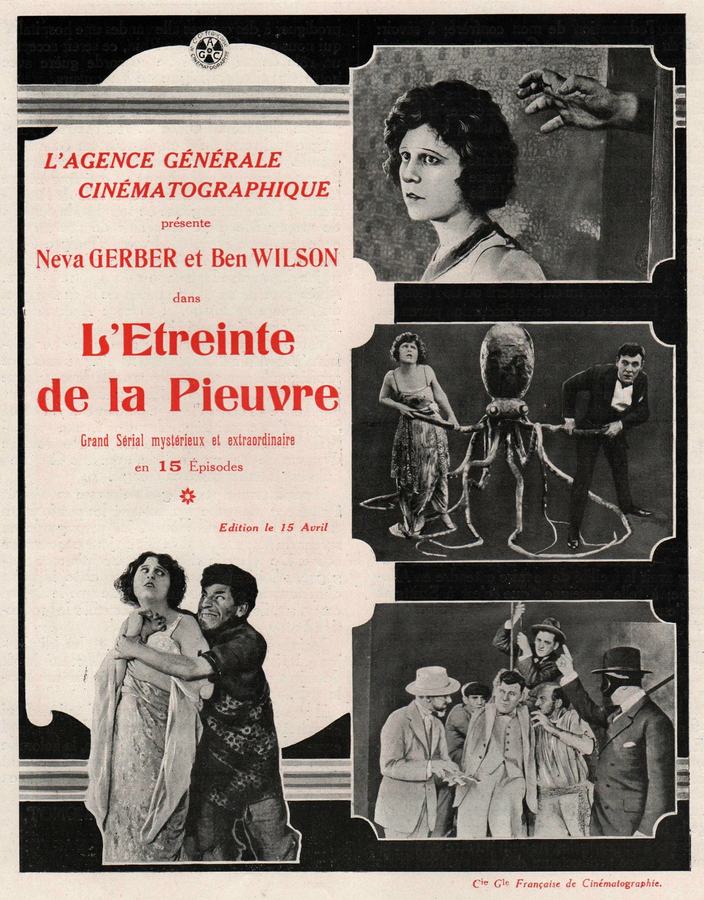
The architect of this intricate web is writer J. Grubb Alexander. His script for The Trail of the Octopus is a masterclass in episodic construction, meticulously crafting each chapter to build upon the last while introducing new twists and turns. The challenge of writing a serial lies in maintaining a coherent overarching plot while ensuring each individual installment delivers its own mini-climax and cliffhanger. Alexander navigates this with considerable skill, weaving together threads of ancient curses, modern villainy, and relentless pursuit. The concept of the 'Devil's Trademark' itself is a brilliant MacGuffin, an abstract evil that provides a powerful, almost supernatural, motivation for the antagonists and a formidable challenge for Holmes. The narrative, while occasionally convoluted, is propelled by a relentless forward momentum, a hallmark of effective serial storytelling, designed to leave audiences breathless and eager for the next installment. This approach, though perhaps less nuanced than a feature film, was perfectly suited for the weekly cinema experience, offering a continuous drip-feed of adventure.
When considering the broader cinematic landscape of its time, The Trail of the Octopus fits squarely within a tradition of adventure and mystery serials. It shares a spiritual lineage with other episodic thrillers that captivated audiences. For example, comparing its intricate, multi-part mystery to something like Manden med de ni Fingre V (The Man with the Nine Fingers V), one can appreciate the international appeal and common structural elements of these early serials – a relentless antagonist, a determined hero, and a complex puzzle to solve across multiple chapters. While The Road o' Strife might offer a more melodramatic, self-contained narrative, the serial format of The Trail of the Octopus prioritizes sustained tension over singular dramatic arcs. It’s a different beast entirely from the observational beauty of Glacier National Park, highlighting the vast stylistic and thematic spectrum of early cinema. The film's emphasis on a grand, overarching conspiracy also echoes the themes of hidden dangers and secret societies found in other contemporary adventure stories, providing a thrilling escape from the mundane.
The direction and pacing, crucial elements in any serial, are handled with an understanding of the medium's demands. Each chapter is meticulously crafted to deliver a mini-narrative arc, culminating in a dramatic predicament that leaves the audience yearning for resolution. The use of intertitles, a necessity of the silent era, is effective in conveying crucial plot points and character dialogue, though they occasionally contribute to a slightly stilted narrative flow by modern standards. The action sequences, while perhaps less elaborate than those of later decades, are competently staged, conveying a sense of urgency and danger. The atmosphere, at times, is genuinely suspenseful, particularly when the 'Devil's Trademark' and its ominous implications are brought to the fore. There's a palpable sense of a world under threat, a dark undercurrent that gives the serial a surprising dramatic weight beyond its adventure trappings. The visual language, though constrained by the technology of the time, effectively communicates the narrative's tension and the characters' emotional states.
Thematically, The Trail of the Octopus explores classic motifs of good versus evil, the pursuit of knowledge (or power), and the enduring battle against ancient malevolence. Holmes represents the triumph of intellect and moral rectitude against forces that seek to exploit dark secrets for nefarious gains. Ruth Stanhope, as the innocent caught in the crossfire, symbolizes the vulnerability of humanity in the face of such overwhelming, conspiratorial evil. The nine daggers themselves are potent symbols, not just of a key to a secret, but perhaps of a fragmented truth that must be painstakingly reassembled. The serial's exploration of a 'cursed' artifact, the Devil's Trademark, taps into a timeless human fascination with the supernatural and the dangerous allure of forbidden knowledge. It suggests that some secrets are best left undisturbed, a cautionary tale woven into the fabric of its adventure. This thematic depth, however subtle, elevates the serial beyond mere escapism, offering a glimpse into societal anxieties and moral frameworks of the period.
Revisiting The Trail of the Octopus today is a journey back in time, an archaeological excavation of cinematic history. It's a reminder of a period when storytelling was less about grand budgets and special effects, and more about intricate plotting, compelling characters, and the sheer power of suspense. While its conventions might feel dated, and its narrative perhaps overly drawn out for a single sitting, its historical significance and its contribution to the evolution of the thriller genre are undeniable. It stands as a testament to the ingenuity of early filmmakers and writers like J. Grubb Alexander, who understood how to hook an audience and keep them invested across multiple weeks. It may not possess the profound dramatic weight of a film like Dante's Inferno or the emotional intensity of The Sin of a Woman, but its unique episodic charm and relentless pursuit of a grand mystery carve out its own distinctive niche. Its legacy lies not just in its individual chapters, but in its collective ambition to deliver a continuous, unfolding spectacle of adventure and intrigue.
In conclusion, The Trail of the Octopus is more than just a relic; it is a vibrant snapshot of a bygone era of popular entertainment. It offers a fascinating glimpse into the mechanics of early serials, showcasing how filmmakers balanced overarching narratives with episodic thrills. The performances, particularly from Harry Archer and Neva Gerber, are emblematic of the acting styles prevalent in silent cinema, conveying emotion and advancing plot through broad gestures and expressive facial work. J. Grubb Alexander's ambitious writing provides a blueprint for serialized storytelling, a formula that would influence countless adventures to come. For aficionados of early cinema, or those curious about the roots of modern thrillers, this serial provides a rich, albeit lengthy, experience. It’s a compelling piece of cinematic archaeology, revealing the foundations upon which much of our contemporary narrative entertainment is built, and demonstrating the enduring appeal of a good mystery, no matter how many chapters it takes to unravel.

IMDb 6.2
1917
Community
Log in to comment.