DbcultAccessing Vault...
Cult Review
Senior Film Conservator
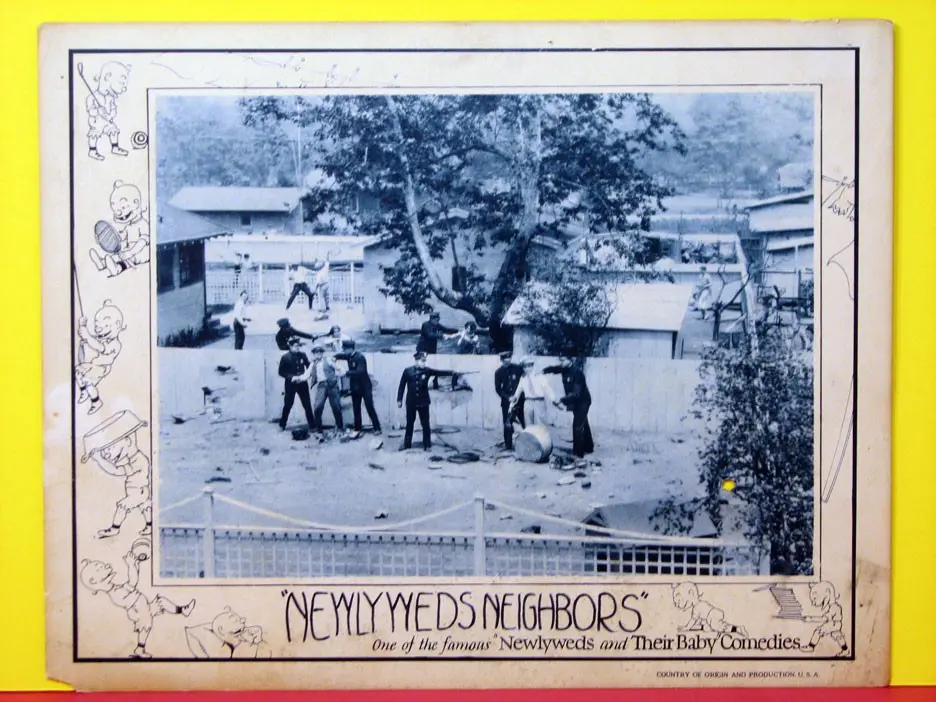
Is this 1926 silent short worth your time today? Short answer: yes, but only if you have a deep appreciation for the surreal, often unhinged roots of early American slapstick.
This film is for historians of the comic strip medium and those who enjoy the 'uncanny valley' of early cinema effects. It is absolutely not for anyone looking for a coherent narrative or modern production values.
Does The Newlyweds' Neighbors hold up as a piece of entertainment? In the strictest sense of humor, it feels dated, yet its visual audacity remains striking. It captures a moment in time when film was still figuring out how to translate the physics-defying logic of newspaper comics into live action.
This film works because it leans into the surrealism of its source material rather than trying to ground the story in reality.
This film fails because the pacing is erratic, even by the standards of a two-reel short, making the ten-minute runtime feel much longer.
You should watch it if you want to see one of the earliest examples of a comic strip successfully transitioning into a recurring film franchise.
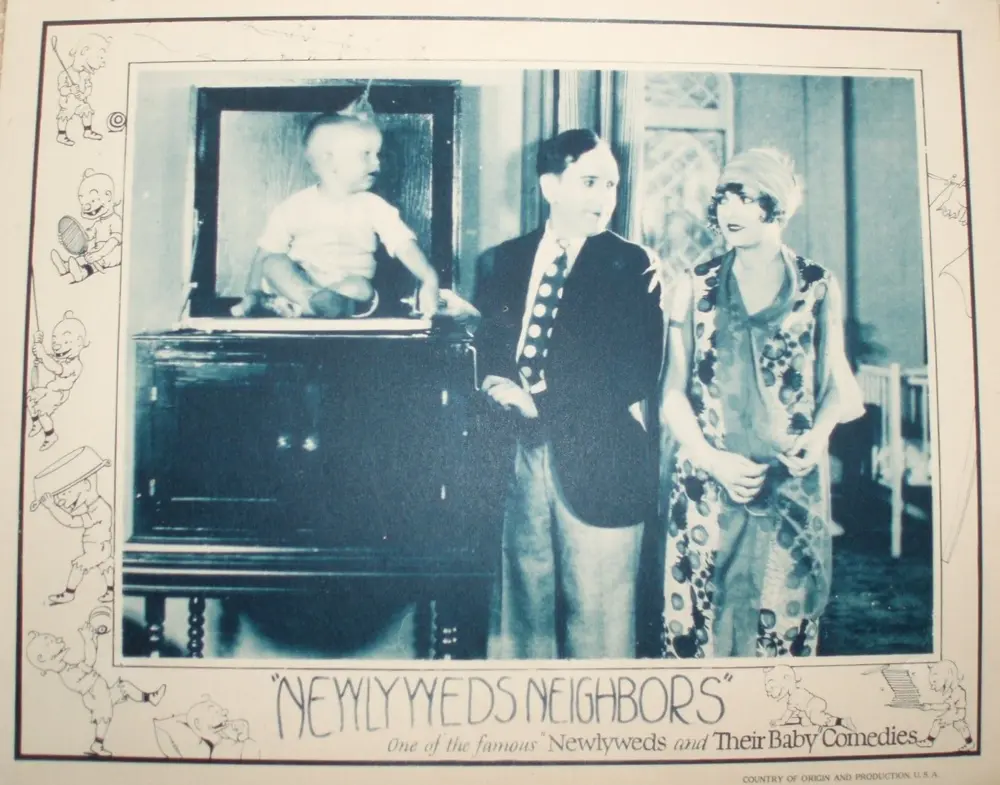
George McManus was a titan of the early 20th-century comic page. His clean lines and architectural detail in 'The Newlyweds' (which later evolved into 'Snookums') provided a blueprint for domestic comedies. When this was adapted into the 1926 short The Newlyweds' Neighbors, the challenge was capturing that specific McManus aesthetic.
The film manages this by emphasizing the 'brat' archetype. Sunny Jim McKeen, playing Snookums, isn't the adorable cherub of modern commercials. He is a force of nature. He is a small, chaotic engine of destruction. In the opening scenes, his simple act of throwing cans is filmed with a repetitive, almost rhythmic intensity that mirrors the panel-by-panel progression of a Sunday comic.
Unlike more grounded films of the era like The Speeding Venus, this short isn't interested in melodrama. It wants to see how much trouble a toddler can cause before the neighbors reach a breaking point. It is domestic warfare in its most primitive form.
One of the most bizarre sequences in the film involves eggs that sprout legs and dance. There is no narrative reason for this. It is a pure visual diversion. However, from a technical standpoint, it is fascinating. The use of stop-motion or practical wire-work to make the eggs 'perform' shows an ambition that many contemporary shorts lacked.
Compare this to the animal-centric gags in Jazz Monkey. While that film relied on the natural antics of a primate, The Newlyweds' Neighbors creates something entirely artificial. It feels like a precursor to the animation-live action hybrids we would see decades later. The eggs are unsettling. They are weird. They are memorable.
The trained goose is another highlight. It interacts with the cast with a level of precision that suggests weeks of rehearsal. In one specific scene, the goose seems more reactive to the neighbor's anger than the human actors are. It adds a layer of absurdist texture to the feud that makes the mundane setting feel like a stage for the impossible.
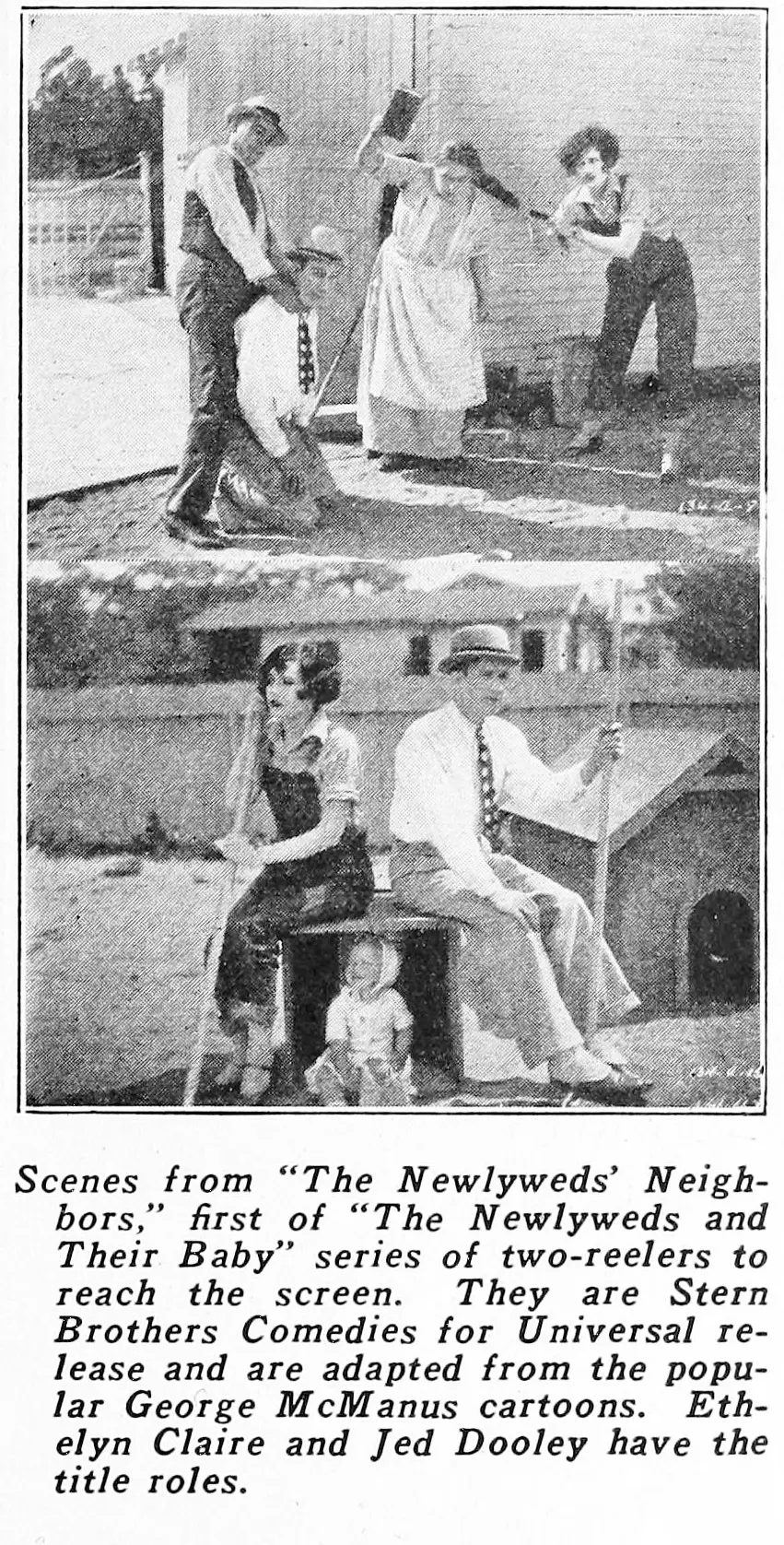
The cinematography in early silent shorts is often static, but here we see some experimentation. The scene where Snookums gets dizzy on a phonograph turntable is a masterclass in early physical comedy. The camera stays fixed, allowing the spinning motion to create a sense of vertigo for the audience. It is simple, but it works.
However, the pacing is where the film struggles. Slapstick requires a build-up and a payoff. Here, the gags often crash into one another without much transition. It lacks the fluid grace found in something like Happy Go Luckies. Instead, it feels like a series of disconnected comic panels brought to life.
The acting is broad, even for the silent era. Ed Dooley and Derelys Perdue play the parents with a frantic energy that borders on the exhausting. They aren't characters so much as they are reactions. Every time Snookums does something 'cute' or 'destructive,' their faces contort into extreme masks of joy or horror. It is effective for the medium, but it lacks the nuance seen in The Dawn of a Tomorrow.
If you are looking for a laugh-out-loud comedy, you might be disappointed. The humor is very much of its time. However, if you are looking for a visual artifact, it is essential viewing. The film represents the bridge between the 19th-century vaudeville tradition and the 20th-century obsession with the 'nuclear family' sitcom.
The neighborly feud trope is one we still see today in everything from 'The Simpsons' to modern prestige dramas. Seeing its infancy here, played out with tin cans and trained geese, provides a necessary context for the evolution of American storytelling. It is a rough draft of the suburban nightmare.
Pros:
- Innovative use of practical effects for the era.
- Captures the specific visual style of George McManus.
- Sunny Jim McKeen gives a surprisingly controlled performance for a child actor.
- The phonograph scene is a genuine highlight of silent physical comedy.
Cons:
- The 'feud' plot is resolved too abruptly.
- Some of the neighbor interactions feel mean-spirited rather than funny.
- The print quality of surviving versions can make the finer details hard to see.
The Newlyweds' Neighbors is a fascinating, if flawed, piece of cinematic history. It isn't a masterpiece. It is a mess. But it is a creative mess. It shows a medium in its adolescence, willing to try anything—even dancing eggs—to keep an audience engaged. While it lacks the emotional depth of The Miracle or the narrative drive of Artie, the Millionaire Kid, it remains a vital entry in the Snookums series. It is a loud, dizzying, and ultimately charming relic of the silent era. It works. But it is deeply weird.
IMDb —
1935
Community
Log in to comment.