DbcultAccessing Vault...
Cult Review
Senior Film Conservator
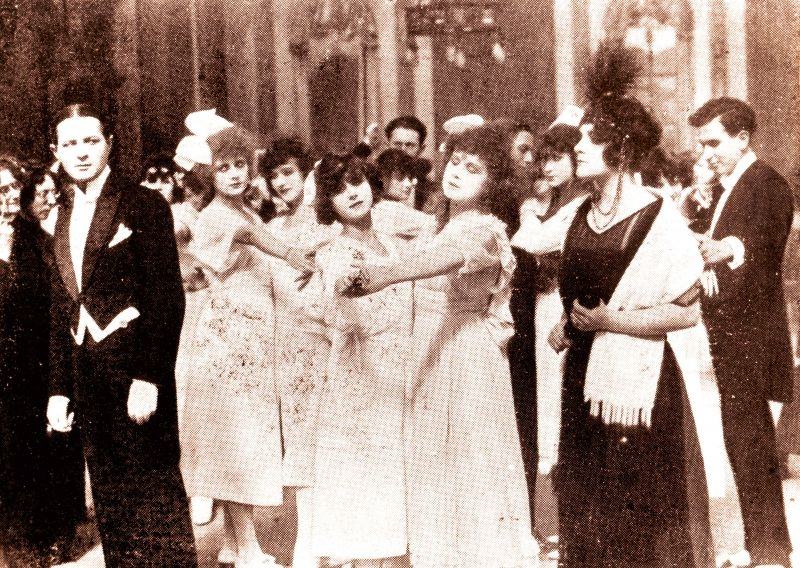
The year 1920 stands as a pivotal epoch in the annals of Hungarian cinema, a period where the burgeoning language of the silver screen began to find its poetic voice amidst the political upheavals of Central Europe. Jön a rozson át! (Coming Through the Rye) emerges from this crucible not merely as an adaptation of Helen Mathers’ Victorian bestseller, but as a testament to the sophisticated artistry of a young Géza von Bolváry. Before he would become a titan of the UFA studios in Berlin, Bolváry demonstrated here an intuitive grasp of the melodrama’s power to transcend linguistic barriers through pure visual storytelling.
Central to the film’s enduring allure is the performance of Ila Lóth. Often referred to as the Hungarian Mary Pickford, Lóth possesses a kinetic vulnerability that anchors the film’s more histrionic moments. Her portrayal of Helen is a masterclass in silent era nuance; she avoids the broad, sweeping gestures common in the theatrical leftovers of the time, opting instead for a micro-expressive approach that anticipates the modern camera's intimacy. When she moves through the rye fields, the interplay of light and shadow across her face suggests a soul in transition, caught between the innocence of childhood and the crushing realities of adult sacrifice.
Her chemistry with Emil Fenyő and the director himself, Géza von Bolváry (who stepped in front of the lens with equal charisma), creates a romantic tension that feels surprisingly contemporary. While some contemporary works like Indiscreet Corinne leaned heavily into the flapper-era playfulness, Bolváry’s work maintains a somber, grounded gravitas that honors the source material’s English roots while infusing it with a distinctly Danubian melancholy.
Bolváry’s direction is characterized by a remarkable spatial awareness. The rye fields are not merely a setting; they are a liminal space where social hierarchies blur and the primal emotions of the characters are allowed to surface. The cinematography, though restricted by the technical limitations of 1920, utilizes deep focus to place the characters within a vast, indifferent landscape. This thematic isolation mirrors the internal struggles of the protagonist, a technique we also see employed with varying degrees of success in Vendémiaire.
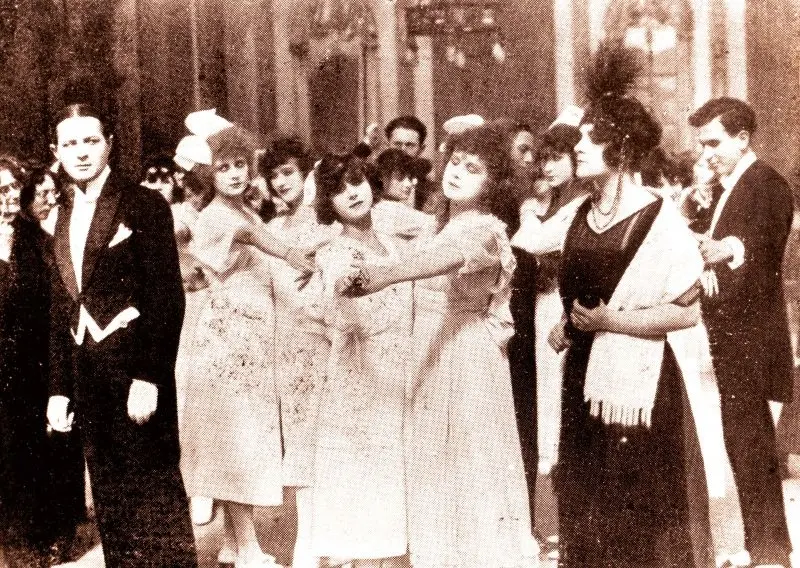
The screenplay by József Pakots expertly condenses Mathers’ sprawling prose into a series of visual vignettes. Pakots understands that in the silent medium, a letter left on a table or a discarded flower carries more narrative weight than a dozen intertitles. This economy of storytelling allows the film to maintain a brisk pace, unlike the somewhat labored progression found in The Usurper or the occasionally disjointed narrative of Stuart Webbs: Das Panzergewölbe.
When examining Jön a rozson át! alongside its peers, its sophistication becomes even more apparent. While Heroic Ambrose explores the masculine struggle through a more comedic or action-oriented lens, Bolváry focuses on the domestic interiority. There is a psychological depth here that rivals A Suspicious Wife, yet Bolváry avoids the cynicism often inherent in the 'suspicious' tropes of the era. Instead, he treats his characters with a profound empathy.
Even in comparison to high-stakes dramas like The Great Circus Catastrophe, which relies on spectacle to engage the viewer, this film finds its 'spectacle' in the human face. The quiet tragedy of a missed connection or a misunderstood word is given the same cinematic weight as a collapsing tent. This focus on the 'small' moments is what elevates the film above the standard fare of All Kinds of a Girl or the more formulaic The Scarlet Car.
The cast is rounded out by stalwarts of the Hungarian stage, including Anna Breznay, Teréz Kürti, and Attila Petheö. Each brings a specific texture to the social fabric of the film. Árpád id. Latabár provides a grounding presence, while Ida Koór and Soma Szarvasi flesh out the world with performances that suggest lives lived beyond the edges of the frame. This ensemble approach creates a lived-in atmosphere that is often missing from contemporary productions like The Golden Goal, which can feel somewhat sparse by comparison.
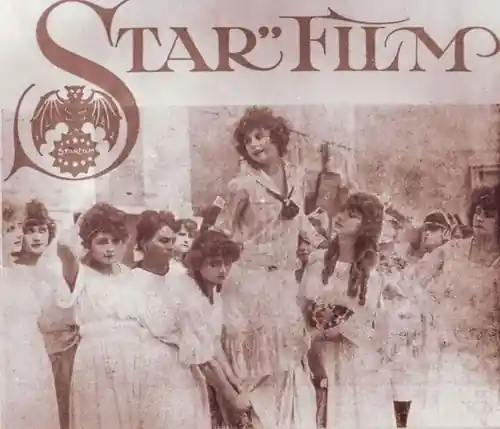
The production design, though hampered by the post-war economy, makes ingenious use of natural locations. The contrast between the stifling interiors of the family estate and the liberation of the rye fields serves as a visual manifestation of the film's central conflict. This use of location as a narrative device is far more advanced than the static sets of Castles for Two or the urban rigidness of Taxi.
At its core, Jön a rozson át! is an exploration of the heavy toll exacted by duty. It echoes the themes found in The Cost of Hatred, but filters them through a romantic prism. The tragedy is not born of villainy, but of a rigid adherence to a social code that has no room for the spontaneity of the heart. This is a recurring motif in the works of Bolváry, who would continue to explore the friction between the individual and the institution throughout his career.
The film’s pacing is deliberate, allowing the viewer to inhabit the emotional state of the characters. Unlike the frantic energy of L'hallali, there is a stillness here that demands attention. It invites a contemplative viewing experience, much like the Scandinavian imports of the time, such as Godsforvalteren. The director understands that silence is not merely the absence of sound, but a canvas upon which the audience projects their own understanding of the characters' pain.
Technically, the film displays a sophisticated use of tinting and toning (in surviving prints and historical records) to denote shifts in time and mood. The golden hues of the rye fields contrast with the cold blues of the evening scenes, a common practice that Bolváry executes with more intentionality than many of his peers. The framing is often painterly, drawing inspiration from 19th-century landscape art to create a sense of timelessness.
The legacy of Jön a rozson át! lies in its ability to remain emotionally resonant despite the century that has passed since its release. It is a vital piece of the puzzle in understanding the development of European cinema. While it may not have the avant-garde reputation of later silent masterpieces, its mastery of the 'language of the heart' makes it a foundational text for anyone interested in the evolution of cinematic melodrama. It stands as a bridge between the Victorian past and the modern future, a delicate flower of a film that survived the harsh winters of history to remind us of the enduring power of a story well told.
In the final analysis, this 1920 production is a shimmering example of how early filmmakers utilized every tool at their disposal to create a world that felt both intimate and expansive. It is a work of profound beauty, anchored by Ila Lóth’s transcendent performance and Géza von Bolváry’s emerging genius. To watch it today is to step through the rye ourselves, into a world of faded elegance and eternal longing.
IMDb 3
1932
Community
Log in to comment.