DbcultAccessing Vault...
Cult Review
Senior Film Conservator
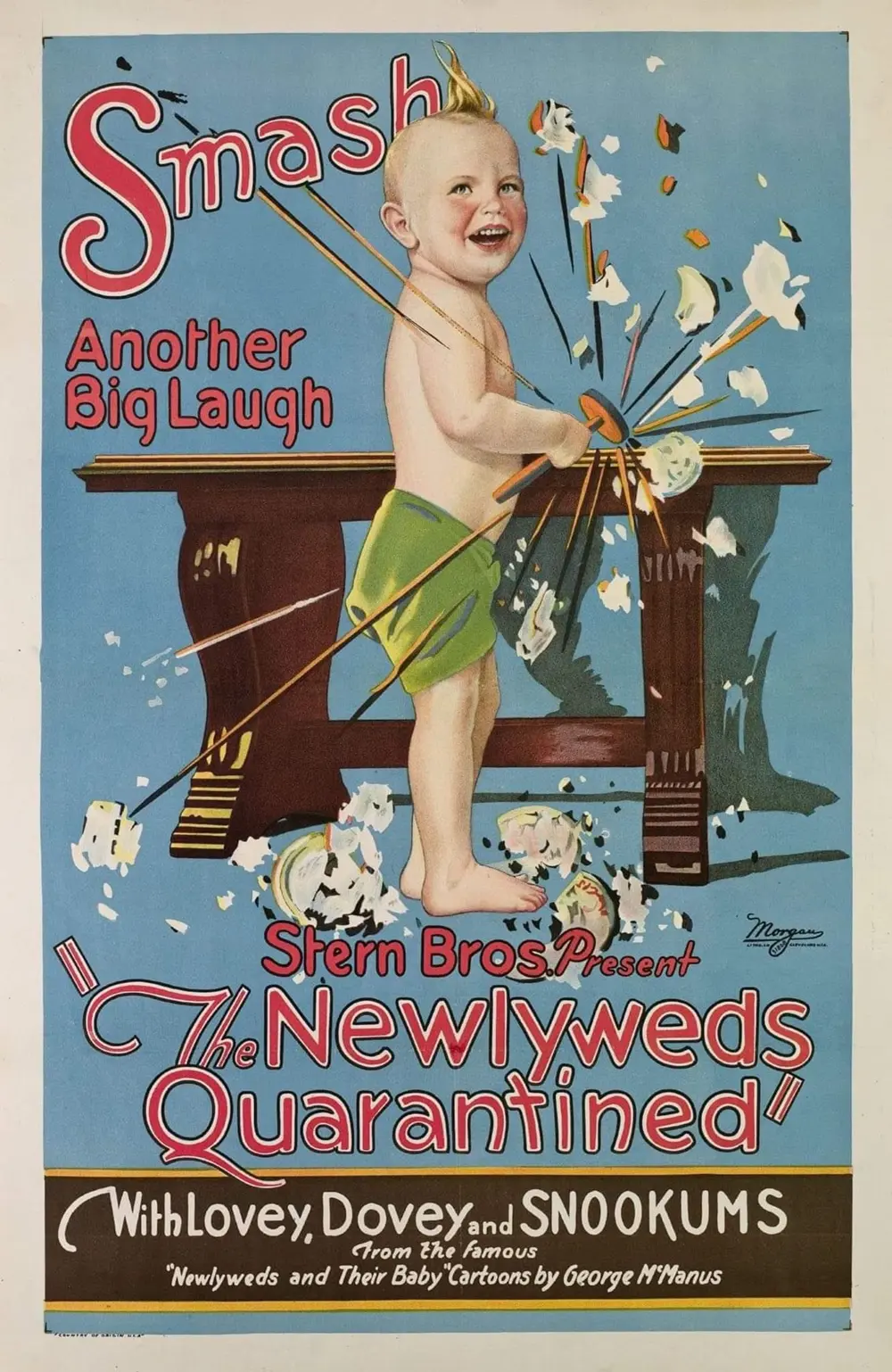
Is 'The Newlyweds Quarantined' a film worth seeking out in the modern era? Short answer: absolutely, but with significant caveats that speak more to its historical value than its universal entertainment quotient.
This particular short, a relic from an earlier cinematic age, will primarily resonate with aficionados of silent cinema, film historians, and those with a keen interest in the evolution of comedic storytelling. It is emphatically not for viewers seeking modern pacing, complex narratives, or high-fidelity visuals.
Before delving into the specifics of The Newlyweds Quarantined, it’s crucial to contextualize it within the landscape of early 20th-century cinema. This was an era dominated by short films, often screened as part of a larger program, designed to elicit immediate, visceral reactions from audiences. Humor was broad, physical, and universally understood, transcending language barriers.
George McManus, the writer behind this particular short, was a prominent cartoonist, best known for his ‘Bringing Up Father’ strip. His comedic sensibilities, rooted in domestic farce and relatable human foibles, translated well to the burgeoning medium of film. The premise of The Newlyweds Quarantined is, in essence, a single-panel gag stretched into a moving picture, a testament to the simplicity and ingenuity of early screenwriting.
This film works because of its audacious, singular premise that, for its time, was remarkably inventive in creating immediate comedic conflict. It leverages the universal discomfort of forced social interaction with a simple, visual gag.
This film fails because its humor is undeniably dated, relying on broad physical comedy and situational absurdity that may not resonate with contemporary audiences accustomed to more nuanced or verbose comedic styles. Its brevity also limits character development.
You should watch it if you are a student of early film history, a silent comedy enthusiast, or someone intrigued by how simple, high-concept ideas were executed in cinema's nascent years. It’s a fascinating historical artifact, more than a pure entertainment vehicle for modern viewers.
The central conceit of The Newlyweds Quarantined is pure, unadulterated comedic gold, especially for its time. The idea that a simple placard, hung by a mischievous character like Snookums, could legally, or at least socially, trap guests within a home is brilliantly absurd. It’s a masterclass in establishing conflict with minimal exposition.
This premise immediately sets up a dynamic of forced intimacy and escalating frustration, ripe for physical comedy and exaggerated reactions. Imagine the initial shock, the futile attempts to reason with the sign, and the eventual resignation of the trapped individuals. It's a scenario that, decades later, found echoes in everything from sitcoms to horror films, proving its foundational strength.
The genius lies in its simplicity. There's no complex backstory required, no intricate character arcs. The audience is immediately plunged into the predicament, understanding the rules of this self-imposed quarantine through visual cues alone. This directness is a hallmark of effective silent comedy.
In silent films, acting is a demanding art form, relying entirely on pantomime, exaggerated facial expressions, and precise physical movements to convey emotion and narrative. Ethlyne Clair, Ed Dooley, and Sunny Jim McKeen, the primary cast members, would have been tasked with bringing this domestic chaos to life without uttering a single word.
Ethlyne Clair, often portraying ingénue or comedic foils, likely embodies the exasperated newlywed wife, her expressions a masterclass in silent film frustration. Picture a dramatic eye-roll or a hand pressed to her forehead in exasperation as Snookums’s antics — or the guests’ reactions — escalate. Her performance would have been key in grounding the escalating absurdity in relatable human emotion, even if exaggerated.
Ed Dooley, presumably the newlywed husband, would likely complement Clair’s performance, perhaps shifting from bemused tolerance to shared despair, his gestures conveying a husband’s futile attempts to control a chaotic household. His physical reactions to the trapped guests and Snookums’s impish glee would be crucial to the film’s comedic rhythm.
Sunny Jim McKeen as Snookums, the instigator of the entire predicament, would have been the engine of the film's humor. His character likely requires a blend of innocent mischief and sly satisfaction. Every gesture, from the triumphant hanging of the placard to his observing the ensuing chaos, would need to convey his specific brand of childlike malevolence. It’s a performance that hinges on precise timing and a palpable sense of glee, a difficult balance to strike in a non-verbal medium.
The chemistry between these actors, even in such a brief format, would be paramount. The success of the gags relies on their ability to bounce reactions off one another, creating a crescendo of comedic tension. Think of the dynamic absurdity found in films like Behind the Front, where physical interaction drives much of the humor, or the character-driven gags in shorts like Andy's Hat in the Ring.
Given its nature as a silent short, the direction of The Newlyweds Quarantined would have prioritized clarity and immediate impact. The camera work, while rudimentary by today's standards, would have focused on capturing the full scope of the physical comedy and the actors' expressions.
Pacing in such films is typically brisk, designed to deliver a succession of gags and escalating situations within a limited runtime. There's no room for lingering shots or subtle character beats; every frame must contribute to the comedic momentum. The director would have orchestrated the movements of the trapped guests, from their initial surprise to their gradual acceptance and eventual frustration, much like a stage play.
Visual gags would be the film's bread and butter. Beyond the central placard, one can easily imagine a series of escalating comedic scenarios: guests attempting ingenious, yet ultimately futile, escape attempts; forced interactions at the dinner table; or perhaps a comical struggle over resources, all played out with broad, physical humor. The humor in The Newlyweds Quarantined would undoubtedly lean into the absurdities of domestic life under duress, a kind of proto-sitcom chaos.
The use of intertitles would be minimal, serving only to introduce the premise or key developments, allowing the visual storytelling to carry the bulk of the narrative. This reliance on visual cues demands a high level of precision in blocking and performance, ensuring that every gesture and expression is legible to the audience.
For the casual modern viewer, The Newlyweds Quarantined might prove a challenging watch. Its humor is from a bygone era, and the lack of sound or color can be a barrier. It requires an open mind and a willingness to appreciate cinema as it was, not as it is.
However, for those with an academic interest or a deep appreciation for the roots of comedy, it offers immense value. It’s a snapshot of a particular comedic sensibility, an early example of high-concept humor executed with charming simplicity. Its accidental prescience regarding forced confinement, albeit in a far lighter context, adds an unexpected layer of interest.
It works. But it’s flawed. Its biggest strength is also its biggest weakness: its unwavering commitment to a single, simple gag. This can feel repetitive to modern sensibilities, but it’s precisely what makes it a fascinating artifact.
The Newlyweds Quarantined is far more than a simple, antique short film; it’s a fascinating historical artifact that encapsulates the ingenuity and charm of early silent comedy. While its humor might not consistently land with a modern audience, its core premise remains remarkably robust and even, in a strange twist of fate, somewhat prescient. It serves as a valuable reminder of how foundational comedic concepts were established in cinema's infancy, relying on universal human reactions to absurd situations.
For those willing to bridge the gap of a century, to appreciate the artistry of pantomime and the directness of visual storytelling, this film offers a delightful, if brief, journey into the past. It's not a film to be consumed for pure escapist entertainment today, but rather to be studied, appreciated, and perhaps even chuckled at, for its enduring spirit of comedic invention. Seek it out if you cherish cinematic history; otherwise, approach with an understanding that you’re engaging with a piece of cultural heritage, not a contemporary blockbuster.
IMDb 7.1
1923
Community
Log in to comment.