DbcultAccessing Vault...
Cult Review
Senior Film Conservator
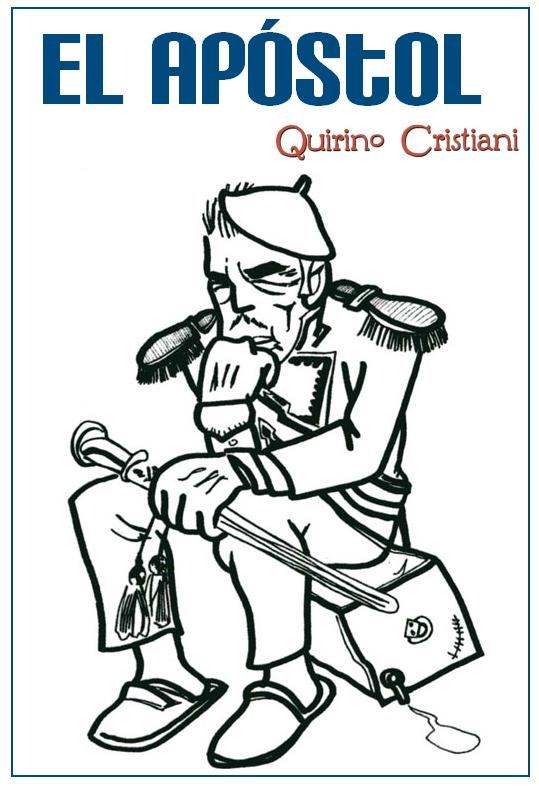
Imagine a world where cinema, still in its infancy, dared to dream beyond mere spectacle and chronicle, venturing into the audacious realm of animated political satire. This isn't just a hypothetical; it's the very essence of Quirino Cristiani's El apóstol, a film that, despite its tragic disappearance, looms large as a monumental achievement in cinematic history. To speak of El apóstol isn't merely to discuss a movie; it's to excavate the genesis of an art form, a bold declaration of animation's capacity for complex, biting social commentary, long before it was considered a medium for anything more than childish diversions.
In 1917, the world was a tumultuous place, embroiled in the Great War, yet in Argentina, a different kind of revolution was quietly unfolding on celluloid. Quirino Cristiani, a visionary Italian-Argentinian animator, accomplished something truly unprecedented: he created the world's first feature-length animated film. While contemporaries were still perfecting the art of live-action narrative, often with melodramatic flair like in The Colleen Bawn or the dramatic tension of The Juggernaut, Cristiani was meticulously crafting 58,000 frames, bringing to life a satirical narrative with an astonishing 14 drawings per second. This wasn't a whimsical fairytale; it was a scathing, pointed critique of the political establishment, specifically targeting then-President Hipólito Yrigoyen. The sheer audacity of this undertaking, both technically and thematically, marks Cristiani as a true pioneer, a cinematic alchemist who saw the boundless potential of hand-drawn images to convey intricate political ideas.
The plot itself is a marvel of allegorical brilliance. It thrusts President Yrigoyen into the role of a modern-day Jupiter, descending from the celestial realms not to bestow blessings, but to unleash divine wrath upon his own capital, Buenos Aires. The imagery of a leader literally burning his city with "Jupiter's thunderbolts" is extraordinarily potent, a metaphor so direct and yet so fantastical that it transcends mere caricature. This isn't just a president making unpopular decisions; this is a leader embodying the destructive force of unchecked power, a commentary far more incisive than the simpler, often romanticized narratives found in films like The Midnight Wedding or The Supreme Temptation. Cristiani wasn't just animating; he was sermonizing through satire, lampooning the perceived corruption and inefficiencies of Yrigoyen's administration with a fiery, unforgettable spectacle.
To fully appreciate El apóstol, one must immerse themselves in the political cauldron of early 20th-century Argentina. Hipólito Yrigoyen, a towering figure of the Radical Civic Union, had risen to power in 1916 as Argentina's first president elected by universal male suffrage. His presidency was marked by ambitious social reforms and a strong nationalist stance, but also by significant opposition and accusations of authoritarianism and a heavy-handed approach to governance. The country was grappling with immense social and economic changes, and Yrigoyen's policies, while progressive in some aspects, alienated powerful conservative factions and even some within the working class who felt their needs were not being met. Cristiani, a keen observer of his adopted homeland, channeled this palpable discontent into his art, crafting a film that resonated deeply with the public's frustrations.
The decision to portray Yrigoyen as a vengeful deity, actively destroying his own capital, was not merely humorous; it was a profound statement on the perceived betrayal of the electorate. The 'thunderbolts' symbolize the destructive consequences of political decisions, the metaphorical fires of discontent that governance can ignite. This level of direct, unvarnished political commentary in a feature film, let alone an animated one, was virtually unheard of. While other films of the era might have touched on social issues, they rarely did so with such pointed, allegorical ferocity. Think of the relatively straightforward narratives of films like East Is East or The Heart of Midlothian; their social critiques were often embedded within more conventional dramatic structures. Cristiani, however, used animation's inherent capacity for exaggeration to amplify his message, creating a visual language that was both accessible and devastatingly effective.
Considering the technological constraints of 1917, the creation of El apóstol was nothing short of miraculous. Cristiani and his small team would have relied on painstaking cel animation techniques, where each frame was drawn, painted, and then photographed. The estimated 58,000 frames for a 70-minute runtime speaks to an unimaginable level of dedication and manual labor. While we can only speculate on the exact stylistic choices, it's clear that the animation would have been fluid enough to convey the narrative effectively, a significant leap from the crude, jerky movements often associated with earlier animated shorts. This was a pioneering effort that laid groundwork, much like how early filmmakers experimented with narrative techniques in films such as Driftwood or The Mischief Maker, but Cristiani did so in an entirely new medium.
The very act of animating a feature-length film was a gamble, a testament to Cristiani's belief in the medium's potential. Most animated works at the time were short, often comedic interludes or technical demonstrations. Cristiani, however, saw animation as a vehicle for complex storytelling and profound social commentary. He understood that the plasticity of animation, its ability to distort reality and create entirely new worlds, made it uniquely suited for satire. The president transforming into a god, wielding thunderbolts – such imagery would be far more challenging, if not impossible, to achieve convincingly in live-action cinema of the era without extensive and often cumbersome special effects. Animation offered a freedom of expression that Cristiani exploited to its fullest, making the impossible vividly real.
The most heartbreaking aspect of El apóstol is its status as a lost film. In 1926, a devastating fire at the film laboratory of Federico Valle, Cristiani's producer, consumed all known copies of the film. This catastrophic event didn't just destroy celluloid; it erased a pivotal piece of cinematic history, a testament to innovation and artistic courage. Imagine losing the earliest works of cinema, the very foundations upon which modern film was built. It’s a tragedy that echoes the loss of countless other early films, a stark reminder of the fragile nature of our cultural heritage. While we can still study and appreciate the surviving works of the era, such as Zaza or Stingaree, the absence of El apóstol leaves a palpable void, a missing link in the evolutionary chain of animation.
The loss of El apóstol means we can never truly witness the full scope of Cristiani's genius, how he orchestrated the movements, the visual gags, and the dramatic pacing of his animated political epic. We rely on contemporary accounts, fragmented descriptions, and the undeniable fact of its existence to piece together its significance. This situation forces us to acknowledge the precariousness of early film preservation. Many films from this nascent period, often made on highly flammable nitrate stock, simply perished due to neglect, decay, or accident. The story of El apóstol is thus not just about a groundbreaking film, but about the broader battle to preserve our collective cinematic memory, a battle often lost, as evidenced by the similar fates that befell many silent era treasures. It makes us wonder what other forgotten masterpieces, perhaps as ambitious as Dødsklippen or as charming as The Swagman's Story, might have been lost to time.
Despite its physical absence, El apóstol's legacy endures, a phantom limb of film history that reminds us of the boundless creativity that defined early cinema. Its very existence shattered preconceived notions about animation, proving that the medium could tackle complex adult themes, engage in political discourse, and command the attention of an audience for an extended period. Cristiani’s work paved the way for future animators to explore narrative depth and social commentary, influencing generations of artists who would eventually push the boundaries of animation into the revered art form it is today. He demonstrated that animation was not merely a novelty but a powerful tool for satire, storytelling, and cultural reflection.
The film's impact was immediate. It was a box office success, reportedly drawing large crowds in Buenos Aires, which further solidified its importance. Its critical reception, while not extensively documented for modern analysis, suggests that it was recognized for its novelty and its daring political stance. This success undoubtedly inspired Cristiani to continue his pioneering work, including another animated political satire, Sin dejar rastros (Without a Trace), also lost, and the first animated film with sound, Peludópolis, which fortunately survives in fragments. His career is a testament to an unwavering dedication to animation as a serious art form, a vision that stood in stark contrast to many contemporary producers who saw film primarily as entertainment, much like the lighthearted fare of Her Shattered Idol or The Lotus Dancer.
The enduring fascination with El apóstol also lies in its potent use of political satire. Satire, at its best, holds a mirror to society, distorting reality to reveal uncomfortable truths. By portraying President Yrigoyen as a vengeful god, Cristiani exaggerated the perception of his power and its potential for misuse, tapping into a universal anxiety about unchecked authority. This kind of sharp, incisive commentary is a cornerstone of democratic discourse, allowing for critique in a way that is both entertaining and thought-provoking. It's a tradition that continues to thrive in modern media, but Cristiani proved its efficacy in the earliest days of cinema, using the nascent medium to its full, subversive potential.
Consider the power of such an image: the leader, meant to protect and serve, instead becoming the instrument of destruction. This resonates across cultures and time periods, speaking to the cyclical nature of political power and its temptations. El apóstol, even in its lost state, serves as a powerful reminder of the role artists play in challenging authority and sparking public debate. It's a testament to the fact that even in an era dominated by more simplistic narratives or the emerging grand spectacles of directors like D.W. Griffith, a single animator in Buenos Aires dared to use his craft to ignite a conversation, a fiery critique that, even though its visual evidence is gone, continues to burn brightly in the annals of film history. It stands as a monument to what could be achieved with vision, skill, and an unwavering commitment to creative expression, much like the dedication seen in productions like Dan, but with a unique, animated political edge.
IMDb 6.7
1932
Community
Log in to comment.