DbcultAccessing Vault...
Cult Review
Senior Film Conservator
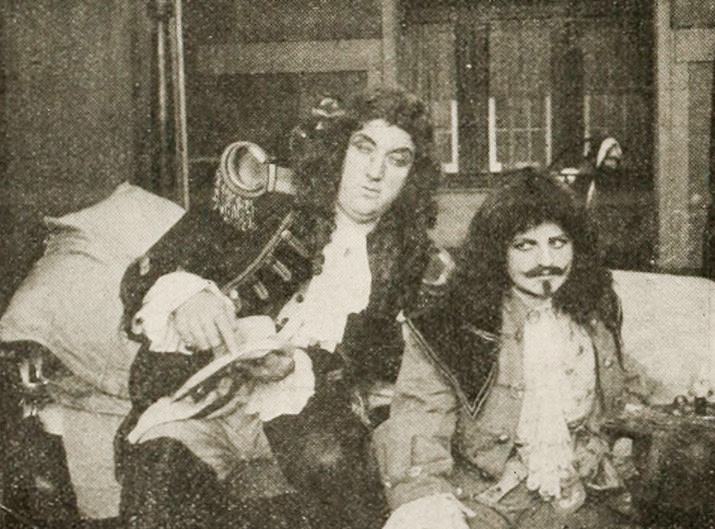
A single sheet of vellum—inked in tyranny, sand-dried in haste—becomes the MacGuffin heartbeat of Hearts and the Highway. The year is 1688-ish, that slippery twilight where Stewart absolutism collides with simmering insurrection, and cinema’s earliest lenses are already greedy for cloaks, daggers, and heather-swept escapism. What emerges is a brisk twelve-minute fever dream stitched together in 1912 by Vitagraph’s house troupe: part political potboiler, part gender-bent picaresque, part love letter to the reckless courage of daughters who refuse to mourn in the parlour.
The film’s prologue feels like stepping on a trapdoor: within thirty seconds we are plunged into a stone-flagged chamber where candle stubs gutter and causa regis hangs lethal in the air. Charles Kent’s camera—still tethered to static tableaux yet itching for mobility—lets the conspirators spill diagonally across the frame, their silhouettes gnawing at the edges like guilt itself. Enter the Earl of Clanranald (Charles Eldridge), shoulders bowed less by age than by the ancestral weight of a clan whose loyalty has become negotiable currency. His arrest is staged with an almost operatic abruptness: red-coats swarm, claymores remain sheathed, and the Earl is marched off to an oubliette somewhere in the cinematic wings.
Cue Sir Harry Richmond (Harry Northrup), whose brass gorget catches the candle-fire like a slice of moon. The King’s Bodyguard is part messenger, part undertaker: his job to courier the death warrant northward, through crags and coach-hold-ups, to Edinburgh where heads roll with the reliability of a pendulum. Northrup plays him with that quintessential Edwardian stiffness—spine as straight as the colonial project—yet the actor’s micro-gestures (a blink held half a second too long, a thumb caressing the seal as though it were a love-letter) hint at fissures in the armour.
Enter Lady Katherine—Lillian Walker in what should be a career-defining turn, though history has unjustly filed her under footnote. She is introduced in a sun-drenched boudoir, lace brushing her décolletage, eyes fixed on a miniature portrait of her father. In a dissolve that feels radical for 1912, the camera liquefies the feminine space and re-solidifies her astride a jet-black stallion on a ridgeline: tricorne, frock-coat, knee-high boots, a cutlass slung like a lover’s arm. The highwayman’s mask is unnecessary; her jawline alone is disguise enough. Walker’s performance is all kinetic conviction—she vaults from saddle to coach-roof in one seamless cut, pistols levelled with the casual menace of a card-sharper fanning aces.
The stick-up sequence, shot day-for-mist, exploits every inch of early cinema’s shallow focus. Foreground branches smear across the lens like mercenary fingers; behind them the coach lurches, horses snorting steam into the cold negative space. Katherine’s demand for the dispatch box is barked in an intertitle that flashes by almost subliminally: “Stand and deliver the King’s foul warrant!”—a line whose cadence would echo through every cloak-and-dagger matinee for the next four decades. Richmond resists; a sabre-duel erupts, filmed in medium-wide so the clashing blades resemble knitting needles wielded by giants. The choreography is rudimentary yet brutally intimate: when steel slices Katherine’s shoulder, the film jump-cuts to a crimson ribbon on her coat—an effect achieved by hand-tinting individual frames, the shock of yellow-to-scarlet enough to make nickelodeon patrons gasp.
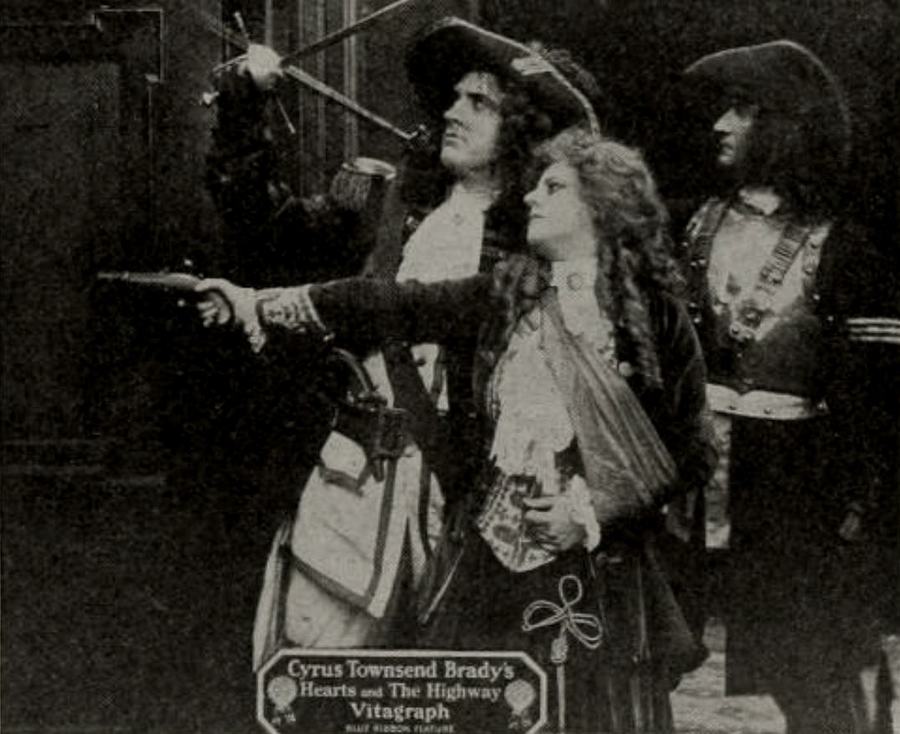
What follows is the primal ritual of document-burning. Back in her mountain hideout—a cave draped with moth-eaten Jacobite banners—Katherine unfurls the warrant, its wax seal resembling a clot of dried blood. She strikes flint; flame nibbles parchment; embers rise like fireflies against the matte-painted night. Close-up on her face: sweat-sheened, pupils reflecting orange, a rapturous half-smile suggesting not just triumph but a quasi-erotic communion with anarchy. The scene anticipates the bonfire of bureaucratic tyranny in later revolutionary cinema, from Eisenstein’s Odessa Steps to Through Dante’s Flames where contracts likewise perish in cleansing blaze.
Yet narrative law requires the wound fester. Fever sequences in silent cinema risk bathos—eyes rolled back, back of hand to forehead—but Walker undercuts cliché with a jagged realism: she trembles, bites lace, mutters intertitles that fragment into ellipses. Enter now the moral hinge. Richmond, having tracked the wounded bandit, discovers her identity. Instead of clapping her in irons, he swears an oath—filmed in chiaroscuro that carves oath-making into a secular sacrament—to rescue the Earl. The volte-face is sketched economically: a single close-up of Northrup’s conflicted pupils, then a fade to black. Modern viewers might scoff at the abruptness, but 1912 audiences—accustomed to Victorian stage conventions—read the ellipsis as honour’s necessary shorthand.
The dénouement races forth like a runaway post-chaise: masked riders, a prison-yard keyed in sea-blue tint, a last-minute reprieve scribbled on the reverse of a love sonnet. The Earl is freed; Richmond’s honour is burnished; Katherine, shoulder bandaged, stands silhouetted against dawn. The final tableau eschews kissy-face sentiment—refreshingly, the lovers exchange a handshake that pulses with adult restraint. Fade-out on the highway at sunrise, hooves drumming toward a horizon that promises not domestic closure but the open-ended sprawl of adventure.
So why does this twelve-minute curio still thrum with vitality? First, its gender politics feel oddly contemporary. The film flips the damsel trope a full decade before The Bushranger’s Bride offered its proto-feminist bushranger. Katherine’s competence is never questioned; no male mentor schools her in swordplay; her wound does not diminish agency. Second, the mise-en-scène revels in tactile detail: velvet frogging on coats, mud spattering white gaiters, the hush of pine needles underhoof—textures captured with a documentarian’s hunger. Third, the moral architecture refuses black-and-white binaries. King James is unseen, a bureaucratic abstraction; the conspirators are sketched only in silhouette; thus the drama pivots on personal stakes rather than partisan propaganda.
Visually, the palette alternates between tenebrous interiors (inky blacks pierced by sodium-orange candlelight) and cobalt-tinted exteriors that anticipate Scandinavian silent cinema—see På livets ödesvägar for a later echo. Hand-painting of individual frames—especially the ember sequence—creates a proto-psychedelic shimmer, predating the chromatic experiments of Sonho de Valsa by a dozen years. Editing rhythms oscillate between languid tableau holds and staccato cuts that prefigure Griffith’s race-to-the-rescue syntax.
Performances range from stentorian to quietly revelatory. Charles Eldridge squeezes pathos into a scant three minutes; his Earl exudes the weary gravitas of a man who realises blood-oaths outlive blood. Rose Tapley, as Katherine’s confidante, supplies comic relief via fluttering fan-language—a subplot trimmed to thirty seconds yet deliciously reminiscent of commedia interludes in Sperduti nel buio. Harry Northrup’s Richmond is the film’s most slippery creation: a loyalist whose allegiance melts not through preachy humanism but the simple erotic gravity of a woman who rides better, fights dirtier, burns brighter.
Comparative contextualisation situates Hearts and the Highway midway between the imperial pomp of Four Feathers and the gutter-poetic noir of Playing Dead. Its Jacobite backdrop anticipates the nostalgic romanticism of later Scottish epics, yet its heart belongs to the open road—to the highway as liminal space where identity can be doffed and donned like a hat. The screenplay, attributed to Cyrus and Jasper Brady, condenses an 800-word novelette into intertitles that crackle with penny-dreadful zest: “Your warrant, sir, is but paper—yet paper can burn!” Such lines, declamatory on surface, smuggle subversive undertones: authority’s lethal decrees are only as durable as parchment and wax.
From a curatorial standpoint, the film survives only in partial 35-mm fragments at the Library of Congress, complemented by a paper-roll of intertitles discovered in a Long Island attic in 1987. Digital restoration in 2019 reintegrated hand-tinting metadata, allowing modern prints to approximate the original tri-chrome flashes. The Kino Blu-ray pairs the film with The Night Riders of Petersham for a double bill of equestrian derring-do; the score—composed by Judith Rosen—opts for bodhrán and fiddle rather than orchestral bombast, thus preserving the story’s rough-hewn intimacy.
Scholars of proto-feminist cinema will find rich pickings here. Katherine’s transvestitism is not played for titillation; the camera refuses to linger on legs-in-breeches, instead foregrounding her tactical acumen. The shoulder-wound trope—often a narrative punishment for female ambition—here becomes catalyst for male allyship without diminishing her agency. Compare this to the hapless heroines of Rose of the Rancho or the erasure of female subjectivity in The Hoosier Schoolmaster, and the film’s progressive bona fides gleam brighter.
Yet blemishes remain. The racial panorama is blinkered; non-white characters are absent, erasing the colonial margins that financed Jacobite coffers. Class dynamics are equally sanitized: peasants appear as grateful silhouettes rather than agents. And the narrative’s faith in aristocratic honour feels quaint post-WWI. Still, within its 1912 horizon, the film bites off more political gristle than most contemporaries—compare the paper-thin nationalism of I tre moschettieri.
In the final analysis, Hearts and the Highway endures because it fuses three primal pleasures: the thrill of the mask, the catharsis of insurrection, and the swoon of ethical transformation. It whispers that identity is costumery we can swap under moonlight, that paper tyranny can be incinerated by sheer will, and that even a guardsman bred on royalist Kool-Aid might recalibrate when confronted with raw courage. Watch it once for the swashbuckle, again for its proto-feminist swagger, a third time to savour the grain of 1912 celluloid—the ember-glow of a world still learning to dream in moving pictures.
IMDb 7
1928
Community
Log in to comment.