DbcultAccessing Vault...
Cult Review
Senior Film Conservator
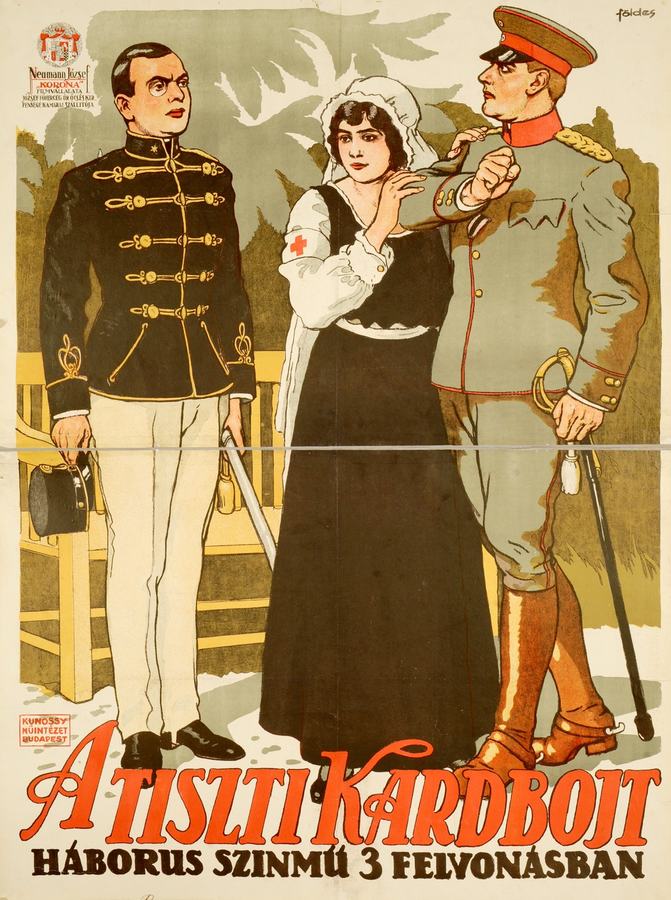
To delve into the cinematic archaeology of Alexander Korda's earliest directorial efforts is to embark on a journey through the nascent stages of Hungarian filmmaking, a period often shrouded in the mists of time and lost celluloid. Among these foundational works, A tiszti kardbojt, or 'The Officer's Sword Knot,' stands as a compelling, albeit largely reconstructed, testament to Korda's burgeoning talent and his profound engagement with themes that would echo throughout his illustrious career. While the complete film remains elusive, piecing together fragments of critical reception, production notes, and the common narrative tropes of its era allows us to appreciate its likely impact and artistic ambition.
Released during a tumultuous period in Central European history, A tiszti kardbojt emerges from a fertile ground of social commentary and romantic melodrama. Korda, even in these formative years, demonstrated a keen eye for human drama, often set against a backdrop of rigid societal structures and moral quandaries. The film's very title, 'The Officer's Sword Knot,' immediately evokes a world governed by honor, military protocol, and the intricate symbolism of class and duty. It is a world where a small, decorative element can carry the weight of a family's reputation or an individual's integrity.
The narrative, as best as can be surmised, is a rich tapestry woven with threads of forbidden love, systemic corruption, and a desperate quest for truth. At its heart lies Lieutenant István Várady, portrayed with a stoic yet vulnerable intensity by Ödön Pajor. Pajor, a prominent figure in Hungarian theater and early cinema, likely imbued István with a palpable sense of idealism, making his eventual disillusionment all the more poignant. István is depicted as an officer of unimpeachable character, a man whose moral compass points true north in a society increasingly veering off course. His commitment to duty, however, is severely tested by the machinations of his superior, Colonel András Kovács, a character likely brought to life with menacing gravitas by Gábor Rajnay.
Colonel Kovács represents the darker underbelly of the establishment, a man consumed by avarice and a ruthless desire for social climbing. His ambition drives him to arrange a marriage for his daughter, Elza, with the powerful but morally ambiguous Baron Richter. This forced union is not born of affection but of calculation, a strategic move to consolidate power and wealth. Elza, played with a delicate yet spirited resolve by Irén Gombaszögi, finds herself trapped between filial obligation and the stirrings of her own heart. Gombaszögi, known for her expressive performances, would have undoubtedly conveyed Elza's inner turmoil with great sensitivity, making her plight deeply resonant.
The true dramatic tension ignites with the revelation of Elza and István's secret love. Their clandestine romance is a dangerous defiance of the societal norms that dictate their lives, a fragile flame flickering in the shadow of the Colonel's oppressive will. Korda, even in these early works, demonstrated an astute understanding of how personal desires clash with public expectations, a theme he would revisit in later, more internationally acclaimed films. The stakes are raised considerably when István, through his unwavering dedication to justice, uncovers evidence of Colonel Kovács's deep-seated corruption, involving embezzlement and a past dishonorable act. This past misdeed is inextricably linked to a specific, ornate sword knot – a family heirloom, perhaps, or a symbol of a forgotten military unit – which becomes the central MacGuffin, a tangible link to the Colonel's tarnished legacy.
The sword knot itself is a brilliant narrative device. More than just a prop, it functions as a powerful symbol. Initially, it represents the outward show of military prestige and inherited honor. However, as István delves deeper into the Colonel's misdeeds, the knot transforms into a metaphor for the intricate, often corrupted, ties that bind individuals to their pasts and to each other. It signifies the tangled web of morality, where the public facade of honor can conceal a private reality of deceit. The film, through this symbolism, likely explored the hypocrisy inherent in aristocratic and military circles, a common critique in early 20th-century European literature and cinema.
Elza's struggle forms the emotional core of the film. Faced with the devastating truth of her father's venality, she is torn between the profound loyalty owed to her family and the imperative to support István and uphold justice. Irén Gombaszögi's performance would have been crucial in conveying this agonizing dilemma, her silent expressions and gestures speaking volumes about a young woman caught in an impossible bind. Her eventual decision to side with truth and love, even if it means exposing her own father, would have been a moment of profound courage and sacrifice, a testament to the film's exploration of personal integrity over societal pressure.
Even in this early period, Korda’s directorial hand was evident. His approach to storytelling, even within the confines of silent cinema, was characterized by a meticulous attention to visual detail and a sophisticated understanding of character psychology. While the film predates the widespread adoption of complex editing techniques, Korda likely utilized dramatic lighting, carefully composed frames, and the expressive power of his actors to convey emotion and narrative progression. The use of close-ups, though perhaps not as prevalent as in later films, would have been strategically employed to emphasize critical moments of revelation or internal conflict, particularly in the performances of Gombaszögi and Pajor.
The supporting cast also contributed significantly to the film's texture. Mici Haraszti, a celebrated stage actress, likely brought a commanding presence to her role, perhaps as a matriarchal figure or a society grande dame, offering either solace or further obstruction to the young lovers. Ödön Pajor's intensity as István would have been complemented by the nuanced performances of actors like Ili Vörös and Lajos Szõke, whose roles, though perhaps smaller, would have added layers to the social fabric of the story. Jenõ Horváth and Gyula Fehér, stalwarts of Hungarian cinema, would have rounded out the ensemble, each contributing to the rich, dramatic atmosphere Korda sought to create.
To fully appreciate A tiszti kardbojt, it is helpful to place it within the broader context of early European cinema. Many films of this era grappled with similar themes of social injustice, class struggle, and the clash between individual desire and societal constraint. One might draw parallels to the stark social realism found in films like Strejken, which depicted labor struggles with raw intensity, or the melodramatic explorations of moral failing in The Reckoning. While A tiszti kardbojt leans more towards romantic drama, its underlying critique of aristocratic corruption aligns it with a broader cinematic movement that sought to expose the hypocrisies of the powerful.
The intricate plot, revolving around a secret and its exposure, also finds echoes in contemporary thrillers and mysteries. One could consider the intricate web of deception in films like Fantômas: The False Magistrate, where hidden identities and criminal masterminds drive the narrative. While Korda's film is less about pure crime and more about moral transgression, the suspense generated by István's investigation and Elza's dilemma would have captivated audiences in a similar fashion. The stakes in A tiszti kardbojt are not merely legal, but deeply personal and reputation-defining, making the unraveling of the plot all the more compelling.
Furthermore, the film's focus on a specific, symbolic object – the sword knot – as a key to unlocking a larger truth, is a common trope in narrative filmmaking. This technique can be seen in various forms across cinematic history, where an artifact or a small detail holds immense narrative weight. It’s a device that allows for a tangible representation of abstract concepts like honor or guilt, making the story more accessible and visually engaging for a silent film audience.
Despite its relative obscurity today, A tiszti kardbojt represents a crucial step in Alexander Korda's evolution as a filmmaker. It showcases his early fascination with grand narratives, complex characters, and the intricate dance between personal morality and societal pressures. His ability to marshal a talented ensemble cast, even in these nascent years, speaks volumes about his inherent leadership and artistic vision. The film, in its reconstructed form, serves as a vital piece of the puzzle that is Korda's early Hungarian period, offering insights into the stylistic and thematic foundations upon which he would build a global cinematic empire.
The tragic culmination of the drama, with its shattering revelations and redefined sense of duty, would have left a profound impression on contemporary audiences. The film's likely exploration of how honor, once tarnished, can never truly be restored, resonates with a timeless quality, speaking to universal human experiences of betrayal, sacrifice, and the enduring quest for integrity. It is a powerful reminder that even in the earliest days of cinema, filmmakers like Korda were already crafting sophisticated narratives that explored the depths of the human condition with remarkable skill and insight.
For those who appreciate the rich history of European cinema and the foundational works of its pioneering directors, A tiszti kardbojt, even in its spectral form, remains a fascinating subject of study. It underscores the importance of preserving and reconstructing early films, not just as historical artifacts, but as vibrant examples of artistic expression that continue to inform and inspire. Korda's 'Officer's Sword Knot' is more than just an early film; it is a whisper from the past, reminding us of the enduring power of storytelling and the enduring appeal of a well-crafted drama, even when its full glory is now largely imagined.
IMDb 6.2
1925
Community
Log in to comment.