DbcultAccessing Vault...
Cult Review
Senior Film Conservator
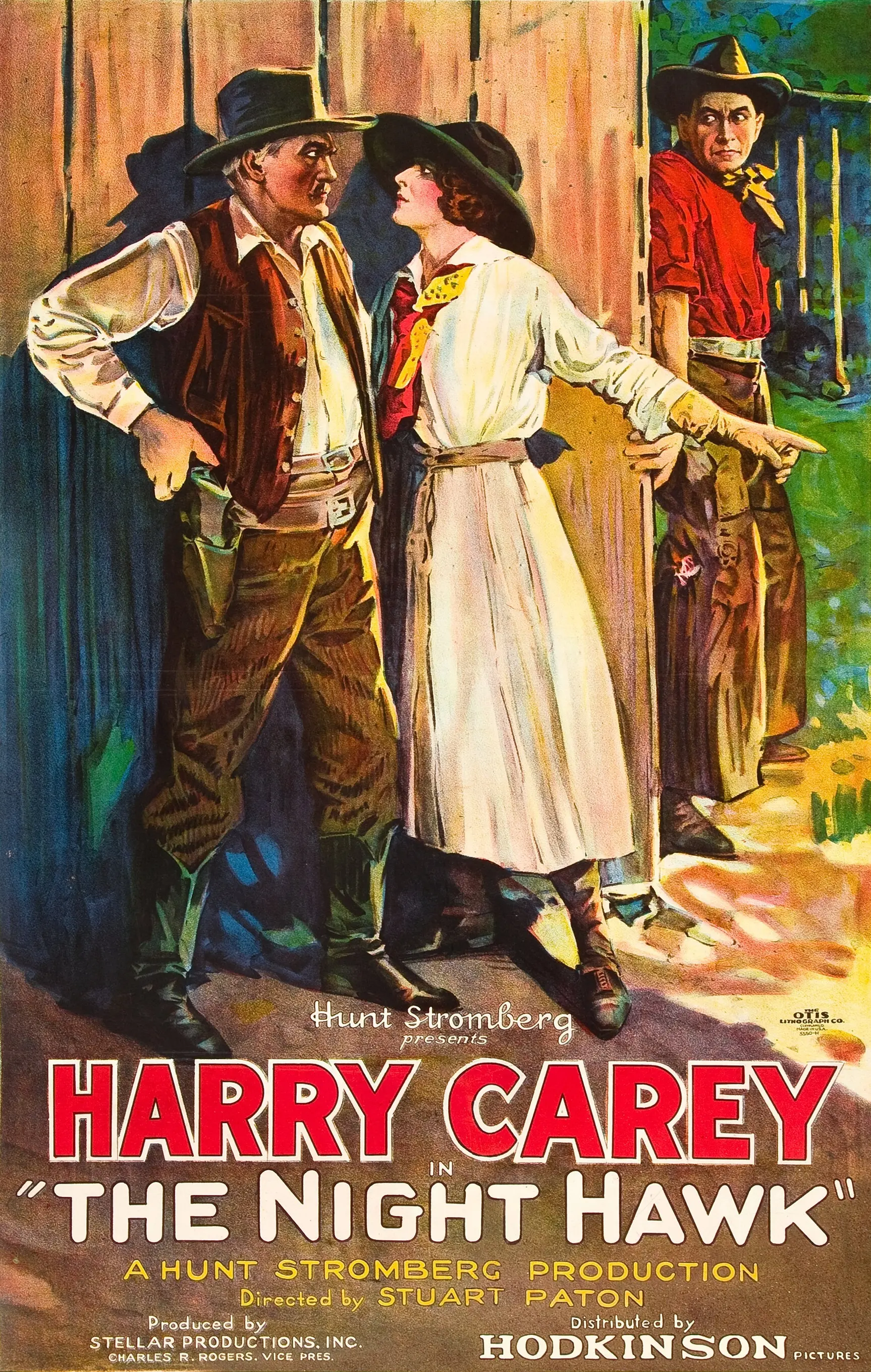
The Night Hawk (1924) emerges from the annals of early Hollywood with a narrative as intricate as it is captivating. This film, directed with a keen understanding of the evolving cinematic language, tells the story of a cunning New York City crook, referred to as 'Night Hawk,' who finds himself entangled in a complex web of alliances, betrayals, and personal awakening.
Lee Shumway, in the lead role, delivers a nuanced performance that hints at the deep-seated complexities of his character. Night Hawk, originally sought after by the police for a robbery, is unexpectedly drawn into a series of events that challenge his very essence. His journey begins when he meets José Valdez, a Mexican American who has come to the city with a dark mission: to hire an assassin to kill the sheriff of a western town. The plot thickens as Night Hawk accepts the job, unaware of the emotional stakes that will soon unfold.
The initial camaraderie between Night Hawk and José Valdez is palpable, built on a mutual understanding of the dark underbelly of the city. Yet, the chemistry between the characters quickly shifts as Night Hawk falls in love with the sheriff's daughter, Clia Milton. This love interest complicates his mission, forcing him to confront his own moral compass. The tension between duty and heart is expertly handled, creating a narrative that is both thrilling and emotionally resonant.
As Night Hawk heads westward to fulfill his assignment, his journey becomes a poignant exploration of his evolving character. The film deftly interweaves action sequences with introspective moments, painting a vivid picture of a man caught between his past and his future. The contrast between the bustling, modern city and the rugged, untamed west serves as a metaphor for Night Hawk's internal struggle.
The narrative takes a dramatic turn when José Valdez's father, a cattle rustler, illegally seizes the position of sheriff. This revelation adds an unexpected layer of conflict, forcing Night Hawk to choose between his desires and his duties. In a masterful turn of events, Night Hawk not only joins the sheriff's posse but also becomes a symbol of moral clarity in a chaotic situation.
The film's climax is a testament to its director's skill in crafting tension and resolution. Night Hawk's single-handed rescue of Clia from José's brigands is a breathtaking sequence that encapsulates the film's themes of redemption and sacrifice. The emotional weight of the scene is underscored by the cinematography, which captures the stark contrasts between light and shadow, reflecting the duality of Night Hawk's character.
Joseph W. Girard, Fred Kelsey, and other supporting actors add depth to the ensemble, providing a rich tapestry of characters that enrich the narrative. The use of period-specific settings and costumes enhances the authenticity of the film, making the viewer feel fully immersed in the world of early 20th-century America.
The screenplay, co-written by Carlysle Graham Raht and Joseph F. Poland, is a testament to the collaborative effort in crafting a compelling story. The dialogue is sharp and witty, often hinting at the social and political issues of the time. The film's pacing is deliberate, allowing the audience to fully absorb the narrative's complexities.
Comparatively, 'The Night Hawk' stands out among its contemporaries, such as 'The Victory of Virtue,' for its nuanced exploration of character and theme. While films like 'The Summer Girl' and 'Call of the Mate' may offer lighter fare, 'The Night Hawk' delves into the darker aspects of human nature, making it a more profound viewing experience.
For cinephiles and those interested in the evolution of film as an art form, 'The Night Hawk' is a must-see. Its blend of drama, romance, and action is a testament to the craftsmanship of early Hollywood. Lee Shumway's performance, in particular, is a standout, offering a complex portrayal that resonates long after the credits roll.
In conclusion, 'The Night Hawk' (1924) is a remarkable film that stands as a high watermark in early cinema. Its intricate plot, well-developed characters, and精湛的叙事技巧使其成为一部不可多得的艺术杰作。无论是对于影迷还是电影爱好者,这部影片都值得一看。
IMDb —
1923
Community
Log in to comment.