DbcultAccessing Vault...
Cult Review
Senior Film Conservator
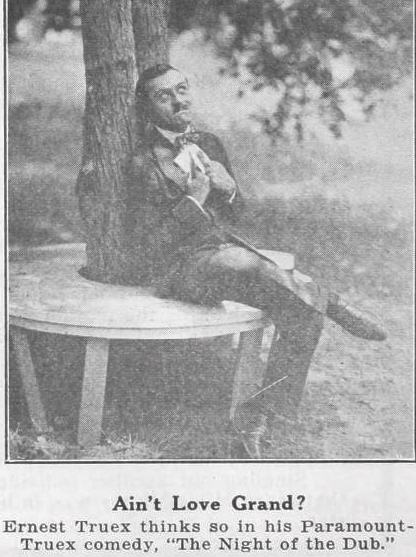
Step into the early 20th century's bustling metropolis and its quieter, more intimate counterpoint – the small town – as we dissect the compelling narrative of 'The Night of the Dub.' This film, a fascinating relic from an era when storytelling relied purely on visual nuance and the evocative power of intertitles, plunges us into the heart of a universal human predicament: the desire to be perceived as more than one truly is. It's a tale spun around the delicate threads of social aspiration and the inherent dangers of a meticulously crafted lie, presenting a psychological drama that resonates with timeless relevance even today. The film's brilliance lies not just in its plot mechanics, but in its profound exploration of identity, the relentless pressure of societal expectations, and the inevitable, often painful, collision between illusion and reality.
At the core of 'The Night of the Dub' is our protagonist, a character who embodies the anxieties and ambitions of a particular social stratum. He is a 'dub,' a clerk, a man of modest means toiling in the shadow of a Wall Street titan. Yet, in the comforting familiarity of his hometown, he has painstakingly cultivated an entirely different persona: that of the titan himself. This isn't merely a casual embellishment; it's a full-blown performance, a grand theatrical production staged for an audience eager to believe in the success of one of their own. Vallie Belasco Martin, in the central role, delivers a performance that, even through the lens of silent cinema, conveys the immense internal struggle of a man caught between his humble reality and his grandiose fabrication. His expressions, his gestures, the very way he carries himself, must communicate the fragile bravado and underlying terror of a man constantly on the verge of exposure. The film asks us to consider the psychological toll of such a deception: the constant vigilance, the fear of a misplaced word, the gnawing anxiety that his carefully constructed world could crumble at any moment. This isn't just about financial pretense; it’s about the very fabric of his social standing, his self-worth, and his future.
The narrative, deftly penned by Mrs. Sidney Drew, Albert Payson Terhune, and Tom Bret, meticulously builds towards its central conflict. The initial setup, establishing the protagonist's dual life, is handled with an economy of storytelling typical of the era, yet pregnant with dramatic potential. The tension ratchets up considerably with the arrival of the actual Wall Street broker in the protagonist's hometown. This isn't just a plot device; it's a dramatic catalyst that forces our 'dub' into an impossible corner. The writers skillfully orchestrate a series of near-misses and awkward encounters, each one threatening to puncture the protagonist's elaborate balloon of lies. The beauty of this film's construction lies in its ability to generate suspense without relying on dialogue, using instead the universal language of human vulnerability and the fear of social disgrace. One might draw parallels to the tight narrative structure seen in films like The Closed Road, where characters are often trapped by circumstances of their own making, or the intricate web of deceit found in Scamps and Scandals, though 'The Night of the Dub' leans more heavily into the dramatic and psychological consequences of its central deception. The stakes are profoundly personal, touching upon the protagonist's reputation, his relationships, and his entire future.
While Vallie Belasco Martin undoubtedly anchors the film, the supporting cast plays a crucial role in fleshing out this small-town world and intensifying the protagonist's predicament. Francis Pierlot, Arthur Rankin, Charles Haskins, David Torrence, Ernest Truex, Harry English, and Dan Duffy, though often in roles that might seem secondary, contribute significantly to the film's texture. In silent cinema, every actor's physical presence, their facial expressions, and their ability to react non-verbally are paramount. They must convey suspicion, camaraderie, admiration, and eventual disillusionment without uttering a single word. Consider, for instance, the subtle shifts in expression that might indicate a friend's dawning suspicion, or the oblivious good humor of the real broker, entirely unaware of the dramatic tension he is inadvertently creating. This ensemble's collective performance creates a believable social milieu, one where gossip thrives and reputations are fragile. The effectiveness of their portrayal is what makes the protagonist's fear of exposure so palpable; it's not just a personal failure but a public humiliation he desperately seeks to avoid. Their interactions provide the necessary mirrors against which the protagonist's false identity is constantly, precariously, reflected.
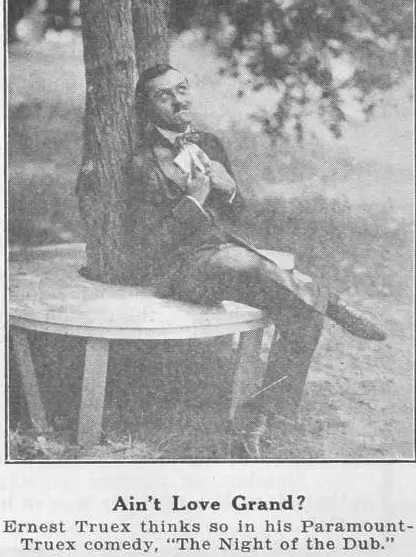
'The Night of the Dub' is far more than a simple comedy of errors or a straightforward drama of deception. It's a poignant commentary on the societal pressures that drive individuals to invent grander versions of themselves. The allure of Wall Street, a symbol of immense power and wealth, provides the perfect backdrop for our protagonist's fantasy. It represents a world far removed from his humble origins, a world he desperately wishes to inhabit, at least in the eyes of others. This thematic exploration of social aspiration and class distinction is a recurring motif in cinema, from early works like Expeditricen fra Østergade, which often depicted the struggles and dreams of working-class individuals, to more complex narratives concerning social mobility and its challenges. The film subtly critiques the superficiality of judging individuals solely on their perceived status, while simultaneously highlighting the moral quagmire that deception inevitably creates. The protagonist’s journey forces us to confront uncomfortable questions about authenticity: is it ever justifiable to lie for love, for respect, for a place in society? The film doesn't offer easy answers, instead immersing us in the protagonist's agonizing struggle as the walls of his deception begin to close in. It's a study in the human condition, where the desire for acceptance often clashes with the harsh realities of one's circumstances.
The directorial choices made in 'The Night of the Dub' are crucial to its enduring impact. In the silent era, effective direction meant not only guiding performances but also meticulously framing shots, utilizing visual metaphors, and pacing the narrative through intertitles. The film likely employed close-ups to emphasize the protagonist's internal turmoil and wider shots to establish the contrasting environments of his humble home and the imagined grandeur of Wall Street. The tension of the impending reveal would have been masterfully built through careful editing, juxtaposing scenes of the 'dub' desperately trying to maintain his facade with the innocent, yet threatening, actions of his employer. The writers, Mrs. Sidney Drew, Albert Payson Terhune, and Tom Bret, deserve immense credit for crafting a story that, despite its simplicity, is rich in dramatic potential and psychological depth. Their understanding of human nature and the mechanics of suspense allowed them to create a narrative that held audiences rapt without the benefit of spoken dialogue or complex sound design. This is where the artistry of silent film truly shines: in its ability to communicate complex emotions and intricate plots through pure visual storytelling. The film's ability to maintain high stakes and emotional resonance through purely visual means is a testament to the era's sophisticated approach to cinematic narrative, much like the intricate character studies found in films such as Mrs. Balfame, which explored the complexities of identity and secrecy through a different lens.
What makes 'The Night of the Dub' continue to resonate is its exploration of themes that are inherently human and universal. The fear of being found out, the desire for upward mobility, the struggle between who we are and who we pretend to be – these are not confined to a particular era or social class. The film serves as a poignant reminder of the fragile nature of reputation and the heavy burden of living a lie. The inevitable climax, where truth confronts falsehood, carries a weight that transcends its silent origins. It forces us to empathize with the protagonist's plight, even as we acknowledge the folly of his actions. The film's conclusion, whatever its specific resolution, would undoubtedly leave the audience pondering the true cost of pretense and the value of authenticity. In a world increasingly saturated with curated online personas and carefully constructed public images, the message of 'The Night of the Dub' feels as relevant now as it did over a century ago. It’s a timeless cautionary tale, reminding us that while the allure of a grander self can be intoxicating, the eventual reckoning with reality is often a bitter pill to swallow. The film’s nuanced portrayal of a man caught in his own web of deceit provides a compelling lens through which to examine our own relationship with truth and perception. It stands as a testament to the power of early cinema to tackle complex psychological and social issues with remarkable depth and sensitivity.
Examining 'The Night of the Dub' within the broader tapestry of early cinema reveals its unique position. While films like Wanted a Wife might explore social expectations and romantic entanglements, often with elements of mistaken identity, 'The Night of the Dub' focuses more acutely on the professional and social ramifications of a deliberate, long-term deception. The psychological tension is akin to the feeling of being under constant scrutiny, a thematic thread that might be subtly present in a title like The Eye of God, where characters grapple with judgment or an omnipresent threat. The protagonist's desperate attempts to maintain his facade, often leading to increasingly elaborate and precarious maneuvers, echo the frantic machinations one might find in a serial like Beatrice Fairfax Episode 14: The Hidden Menace, where secrets and threats are constant companions. The film’s engagement with the idea of a 'transgression'—a breaking of social and ethical norms—is quite direct, making it a valuable companion piece to a film explicitly titled Transgression, though the specifics of the moral boundary being crossed would differ. The film also touches upon the contrast between city and small-town life, a common trope, but here, it’s not just a setting; it’s the very crucible in which the protagonist’s identity is forged and threatened. The big-city ambition, represented by Wall Street, clashes dramatically with the close-knit, gossipy nature of his hometown, creating a potent dynamic that drives the plot forward. This interplay of environments amplifies the pressure on the protagonist, as his entire social world is contained within the very place he sought to impress. The film’s ability to weave these elements into a coherent and gripping narrative is a testament to the skill of its creators and its enduring power as a piece of cinematic art.
'The Night of the Dub' ultimately offers a profound meditation on the human condition, stripped bare of dialogue and relying on the raw power of visual storytelling and emotive performance. It’s a film that reminds us of the universal yearning for acceptance, the dangers of living a lie, and the often-painful path to self-discovery. The meticulous craft of its writers and the expressive performances of its cast coalesce to create a compelling drama that transcends its era. For those interested in the foundational narratives of cinema, or simply in a timeless story of identity and consequence, 'The Night of the Dub' stands as a compelling and essential watch. It's not merely a historical curiosity but a vibrant, emotionally resonant piece of art that continues to speak volumes about who we are, and who we pretend to be. Its legacy lies in its masterful execution of a narrative that, despite its silent presentation, rings with the loudest truths about human ambition and vulnerability. The film ensures that the 'dub's' night of reckoning becomes a mirror for our own reflections on authenticity. It underscores the profound impact silent films had on developing narrative techniques that are still relevant today, proving that a story, told well, needs no words to move the soul and provoke thought. The film is a powerful example of how early cinema grappled with complex moral and social dilemmas, offering insights that remain pertinent in our contemporary world.
IMDb 6.1
1930
Community
Log in to comment.