DbcultAccessing Vault...
5.6/10
Senior Film Conservator
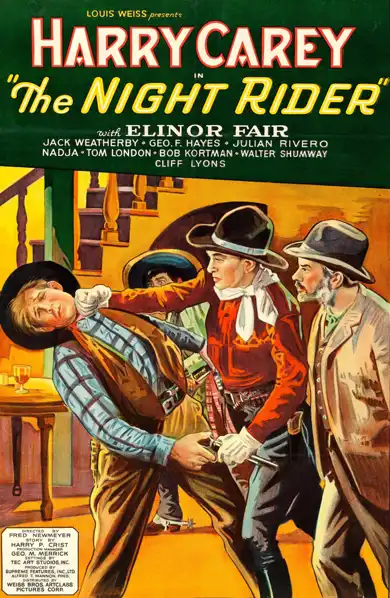
A definitive 5.6/10 rating for a film that redefined the boundaries of cult cinema. The Night Rider remains a cornerstone of transgressive art.
So, The Night Rider from 1932. Is it worth tracking down? Well, if you’re into really old Westerns, the kind where everyone squints a lot and the horses do most of the heavy lifting, then yeah, maybe for a historical curiosity. But if you’re hoping for some snappy dialogue or, you know, a plot that twists more than a garden hose, you’ll probably find yourself hitting fast-forward. This one’s definitely for the hardcore vintage film buffs or folks just curious about what “talkies” felt like when they were still figuring things out. Everyone else? You can safely skip it. 🤷♀️
The setup is classic B-movie stuff. We’ve got Officer John Brown (played by Ben Corbett), who goes undercover as “Jim Blake.” His mission? To catch this mysterious outlaw, the Night Rider. He lands a job on the Rogers ranch, which, surprise, turns out to be right in the middle of all the shenanigans. You just know it’s going to lead to some dramatic discoveries.
Corbett as Blake is... stoic. He rides well, which is important for a cowboy. He also has a real knack for just appearing in places. Like, one minute he’s not there, the next, he’s just standing, watching. It’s efficient, I guess, for moving the story along without too much fuss. His eyes do a lot of the acting, which is good because his lines are pretty direct. No frills.
The pacing here is something else. Sometimes it feels like they’re in a hurry to get to the next scene, sometimes it's like they've forgotten there's a camera rolling. There are these long stretches of just riding. And riding. Then more riding. You see a lot of dust. And rocks. It’s very authentic, I suppose, to the actual act of horseback travel. 🐎
One of the big reveals is this secret passage from the Rogers mine to the Rogers house. It’s used by the Night Rider, obviously. Finding it feels a bit easy. Blake just kinda... stumbles on it. It’s not a grand detective moment, more like, “Oh, look, a hidden door!” Still, it serves its purpose. Adds a bit of intrigue, even if it’s a simple one.
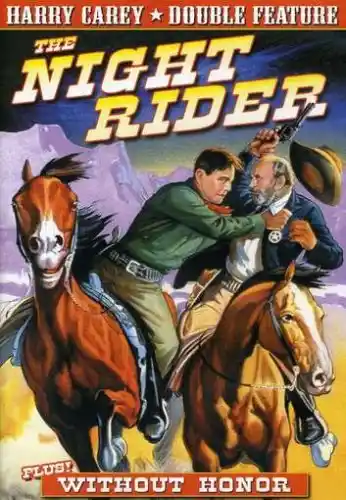
Then comes the note. The Night Rider writes a note to his henchmen. And Blake finds it. This is where the plot gets, shall we say, ingenious for its time. Blake decides to practice the Night Rider's handwriting. Yes, handwriting analysis is the key to catching the villain! It’s a twist you don’t see every day, even in old Westerns. It’s actually kinda charming in its simplicity. You wouldn't think penmanship would be a big deal in the Wild West, but here we are. ✍️
The dialogue is often very direct, almost like stage directions spoken aloud. People state what they’re doing or what they’ve just done. “I found the note.” “You did well.” It's very economical, not much room for subtext or character development beyond their immediate function in the plot. Which is fine. It’s a 55-minute movie, they gotta get through it.
And speaking of characters, you get a whole slew of recognizable faces from the era. George 'Gabby' Hayes shows up, even if it’s not in his most famous persona. You can spot him, and it’s a nice little nod to how many of these folks just churned out picture after picture back then. He doesn't get to be too “Gabby” here, more just another guy in the mix. But still, it's Gabby Hayes!
The action scenes are, well, functional. There’s a lot of shooting, but it's not always clear who's shooting at whom. Dust clouds help with that. And the punches look a little... rehearsed. But again, it’s 1932. They weren't going for realism, more for the general idea of a fight. Horses galloping is always a good stand-in for excitement.
What struck me was just how clean everyone seemed, even after a dusty ride or a skirmish. Their hats are usually perfectly placed. No sweat, no grime. It's a movie kind of West, not a gritty reality. I guess that's part of the charm, too, in a way. The idealized cowboy.
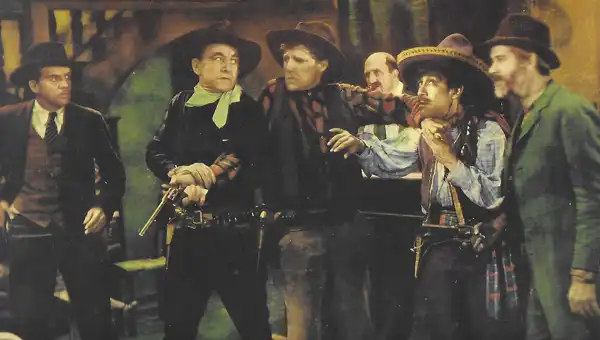
The whole handwriting thing, it really becomes the central puzzle. Blake practicing it, then using it to trick the gang. It's not a car chase, it's a document forgery plot. Very sophisticated for a B-western, in its own quaint way. It shows a little bit of creative thinking, trying to differentiate itself, even if just by a hair.
The climax involves the big reveal of the Night Rider. And the trap. It unfolds exactly as you expect, no real surprises, but that’s not really the point of these films. It’s about the comfort of the familiar. The bad guy gets caught. The good guy wins. All tidy.
There are some oddly long shots of just scenery, too. Not grand, sweeping vistas, but just... a rock. Or a small patch of desert brush. It’s like they were filling time or really wanted you to appreciate the locale. I kept wondering if someone forgot to yell “Cut!” 🏞️
All in all, The Night Rider is a pretty solid example of what early 1930s Westerns were doing. It’s got the basic plot, the stoic hero, a bit of mystery, and plenty of riding. It’s not going to blow your mind, but it’s a quick, easy watch if you're in the mood for something from way back when. It feels like a quick sketch of a story, not a full painting. And that’s okay. Sometimes a sketch is all you need.
Some notes I jotted down:
IMDb 6.3
1936
Community
Log in to comment.