DbcultAccessing Vault...
6.2/10
Senior Film Conservator
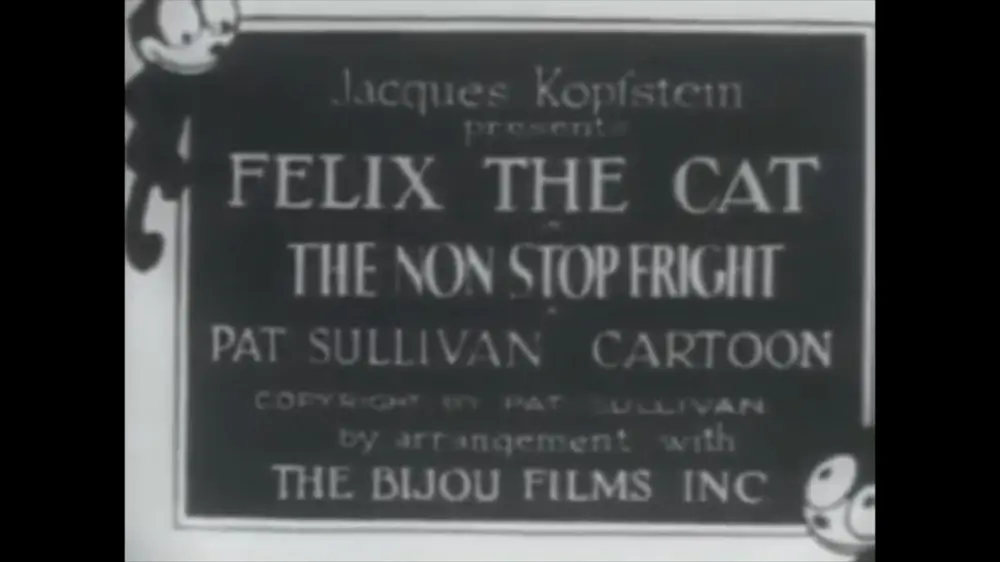
A definitive 6.2/10 rating for a film that redefined the boundaries of cult cinema. The Non-Stop Fright remains a cornerstone of transgressive art.
Is The Non-Stop Fright worth watching today? Short answer: yes, but with significant caveats that demand a specific kind of viewer.
This early animated short is an essential, if often baffling, watch for animation historians and those with an appreciation for the wild, untamed imagination of the silent era, but it will likely frustrate modern audiences seeking narrative coherence or sophisticated character arcs.
This film works because: Its boundless, uninhibited imagination and pioneering spirit in early animation are truly remarkable, offering a raw glimpse into the birth of a medium.
This film fails because: Its narrative is thin to non-existent, often relying on dated, problematic tropes and a relentless, exhausting pace that prioritizes visual gags over character or emotional depth.
You should watch it if: You are an animation historian, a scholar of early cinema, or someone who appreciates surrealist, chaotic humor and can contextualize the cultural insensitivities of the era.
The Non-Stop Fright, an early animated marvel often attributed to the legendary Otto Messmer, is less a conventional narrative and more a fever dream committed to celluloid. It’s a testament to the untamed creative spirit that characterized the nascent days of animation, where logic was a mere suggestion and imagination reigned supreme. This short film, starring the iconic Felix the Cat, plunges viewers into an unrelenting torrent of visual gags and impossible scenarios, all in pursuit of a prize for the first solo flight to Timbuktu.
From the moment Felix fashions an airplane out of a humble barrel, the film declares its intent: suspend disbelief, or be left behind. This isn't just a flight; it's a journey into the absurd, a whimsical odyssey that defies the laws of physics and narrative convention. The film’s greatest strength, and perhaps its most polarizing quality, is its sheer, unadulterated chaos.
For those accustomed to the structured storytelling of modern animation, The Non-Stop Fright can feel like a jolt. It exists in a perpetual state of escalation, each predicament more outlandish than the last, with Felix often serving as a bewildered participant rather than a proactive hero. His reactions are often as priceless as the bizarre events unfolding around him.
Otto Messmer’s influence, palpable throughout, is what elevates The Non-Stop Fright beyond a mere curiosity. The animation, while primitive by today's standards, is groundbreaking for its era. Felix's rubber-hose limbs, his expressive, shifting eyes, and the fluid, almost improvisational movement of the world around him are hallmarks of Messmer's pioneering style. The film doesn't just animate characters; it animates ideas, transforming everyday objects into fantastical tools and obstacles.
Consider the sequence where Felix's barrel-plane dives beneath the ocean. Instead of merely sinking, the plane transforms into a submarine, complete with a periscope. He then engages in a bizarre underwater brawl with anthropomorphic sea creatures, their forms morphing and stretching with a delightful elasticity. This isn't just a scene; it's a masterclass in early visual problem-solving, a director's playful refusal to be constrained by reality.
The pacing is relentless, a true "non-stop" experience that lives up to its title. There's little room for breath, little time for reflection. This directorial choice, while potentially exhausting, forces the viewer to engage with the film on its own terms – a continuous stream of visual stimuli. It's an early example of how animation could create its own rules, crafting a world entirely distinct from live-action cinema.
The film's tone is largely lighthearted and adventurous, though tinged with the occasional moment of genuine peril. Messmer knew how to balance the whimsical with just enough tension to keep Felix's plight engaging. It’s a delicate dance, often executed with a simple, elegant stroke of the pen.
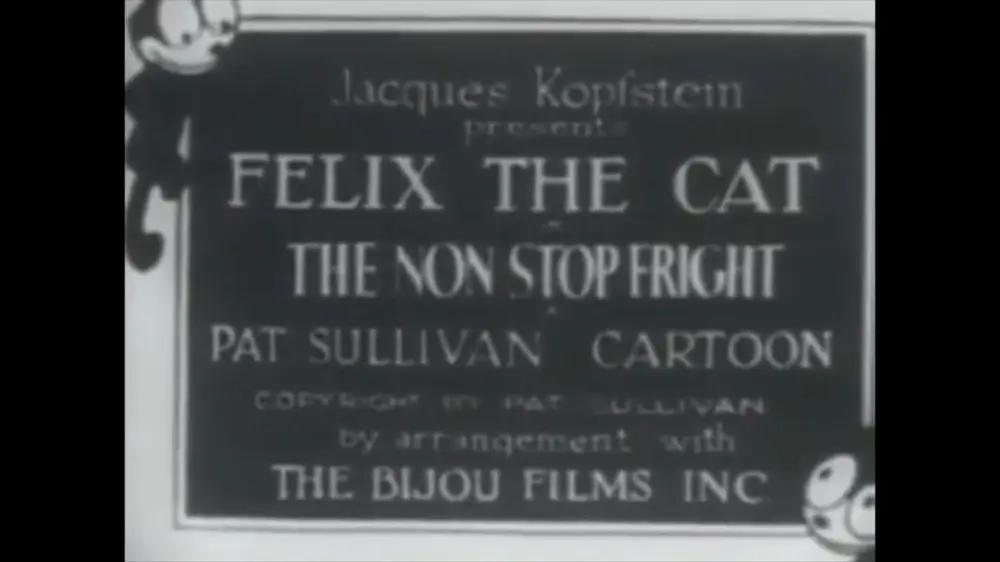
Felix the Cat, as portrayed here, is less a complex character and more a vessel for adventure. He embodies the intrepid, slightly mischievous spirit of the early 20th century, a cartoon everyman thrust into extraordinary circumstances. His motivations are simple – a big money prize – but his resilience is boundless. He doesn't question the absurdity; he simply reacts to it, often with a shrug or a clever, if temporary, solution.
The narrative, such as it is, is episodic. Felix encounters a problem, solves it (often in an illogical but visually entertaining way), and immediately moves to the next. This structure, common in early shorts like Pop Tuttle's Tac Tics or even some of the more surreal moments in The Bluffer, prioritizes a rapid-fire succession of gags over a cohesive plot arc. There’s no character development, no profound revelations, just pure, unadulterated forward momentum.
However, this lack of conventional narrative is also where the film stumbles in a modern context. Upon Felix's arrival in Africa, the film unfortunately devolves into a series of encounters with "unfriendly animals and tribesmen" that are deeply rooted in the racist caricatures prevalent in early 20th-century media. These depictions are jarring, offensive, and serve as a stark reminder of the era's problematic worldview. While important for historical context, they significantly detract from the film's overall charm and make it a difficult watch for contemporary audiences.
It’s a brutal truth: many pioneering works carry the baggage of their time. The Non-Stop Fright is no exception. Its imaginative highs are occasionally undercut by its cultural lows, creating a viewing experience that is both historically significant and ethically challenging.
While 'cinematography' in traditional live-action terms doesn't fully apply to early animation, the visual composition and 'camera work' in The Non-Stop Fright are remarkably effective. Messmer understands how to use the frame to maximize impact. Close-ups on Felix's expressions, dynamic shots of the barrel-plane soaring or plummeting, and the ingenious use of squash-and-stretch principles all contribute to a highly engaging visual language.
The black and white aesthetic, far from being a limitation, enhances the film's dreamlike quality. Shadows and stark contrasts are used to create mood and emphasize the often-surreal environments Felix finds himself in. The visual gags are the heart of the film, from Felix using a fish as a makeshift propeller to his ingenious (if ridiculous) escapes from danger. These moments are delivered with a punchy, almost slapstick rhythm that is immensely effective.
The overall tone is one of relentless, almost manic energy. It’s a film that demands your attention, not through intricate plotting, but through sheer visual audacity. It moves with the speed of a runaway train, powered by inventive sight gags and Felix's indomitable, if sometimes bewildered, spirit. It works. But it's flawed.
Yes, The Non-Stop Fright is worth watching today, but with a critical eye and an understanding of its historical context. It offers an invaluable glimpse into the origins of animated storytelling and the boundless imagination of its creators.
However, modern viewers must be prepared for its dated cultural depictions and its lack of a strong, coherent narrative. It’s a piece of history, not necessarily a piece of timeless entertainment for every audience.
It is particularly valuable for students of animation, film historians, and those interested in how popular culture reflected societal attitudes in the early 20th century. For casual viewers seeking a relaxing, emotionally resonant film, this is likely not the one.
The Non-Stop Fright is a fascinating, if sometimes frustrating, artifact of early animation. It’s a whirlwind of unbridled creativity, showcasing the genius of Otto Messmer and the nascent power of the animated medium. The film’s relentless pace and inventive visual gags are a masterclass in silent cartoon comedy, pushing the boundaries of what was possible with ink and celluloid. Its influence on subsequent generations of animators is undeniable, paving the way for the likes of Walt Disney and Warner Bros.' golden age.
However, to watch it today is to engage in a complex dialogue with history. While its innovative spirit is commendable, its problematic depictions of non-Western cultures are a significant hurdle. These elements are not merely dated; they are offensive, and ignoring them would be a disservice to critical analysis. It stands as a powerful reminder that even groundbreaking art can be deeply flawed, reflecting the prejudices of its time.
Ultimately, The Non-Stop Fright is not a film for everyone. It is a niche experience, essential for those who wish to understand the foundations of animation and the evolution of popular culture, but less so for the casual viewer seeking pure entertainment. It’s a film that demands context, conversation, and a willingness to confront the uncomfortable truths of cinematic history. Its value lies less in its ability to universally entertain today, and more in its undeniable importance as a stepping stone in the grand, often messy, journey of animated storytelling. It’s a piece of history that continues to provoke, to challenge, and to remind us just how far both animation and societal understanding have come.
IMDb 6.8
1926
Community
Log in to comment.