DbcultAccessing Vault...
Cult Review
Senior Film Conservator
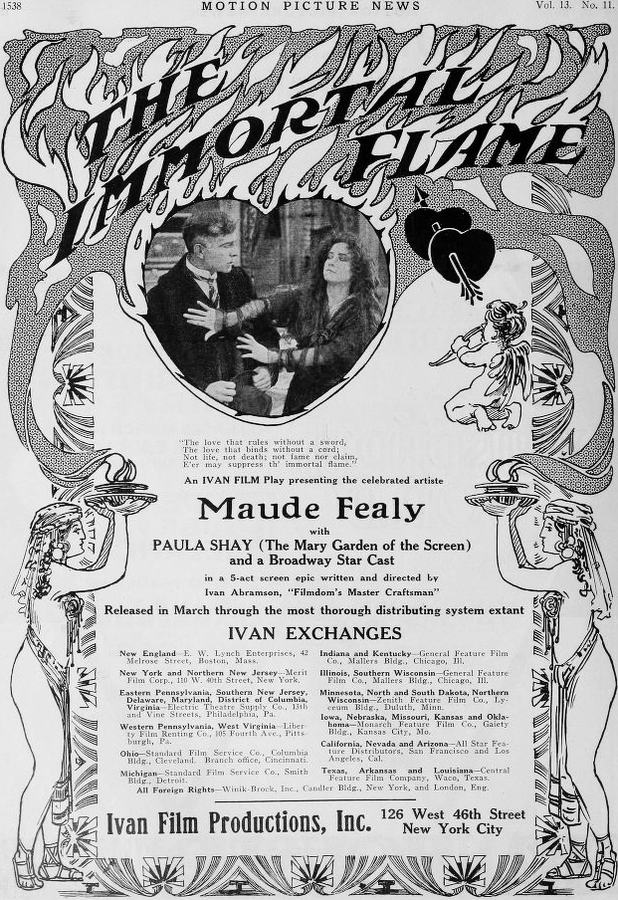
In the flicker-pulse of 1915, when the world still smelled of kerosene and the future was a reel yet to be threaded, Ivan Abramson etched a fever dream titled The Immortal Flame—a film that arrives like a love letter scorched at the edges, its smoke curling around the viewer long after the final iris-in. The surviving print, scarred and spliced, feels less like a narrative artifact than a séance: Ada Forbes steps from the emulsion as both victim and accomplice, her face a chiaroscuro of desire and resignation.
On the surface, the story obeys the melodramatic rails: a woman bartered for political currency, a marriage that calcifies into alabaster handcuffs, the return to a past lover now unattainable. Yet Abramson refuses the comfort of moral geometry. Ada’s bargain with her father is filmed in a single, unbroken take that glides from the paternal library—globes, dusty atlases of power—to the daughter’s gloved fingers closing over the contract, as though she were signing her own death warrant with ink distilled from crushed rubies. The camera doesn’t condemn; it witnesses. Every cut feels like a scar.
Years collapse in a dissolve that superimposes Ada’s wedding veil over her vacant stare; the veil becomes a spider’s web, the pearls resemble trapped flies. Stapleton, played by Charles Michael Edwards with the porcelain smirk of a man who has never been refused, is less a villain than a bureaucrat of the heart. His political machine churns in the background—posters, torchlit rallies, bribes slipped into waistcoat pockets—while Ada’s silhouette roams cavernous halls that echo like mausoleums. The film’s genius lies in refusing to show the Senatorial oath; we only see Ada’s reflection in a mirror, her corset loosened, the medal of office dangling from her husband’s neck like a brand.
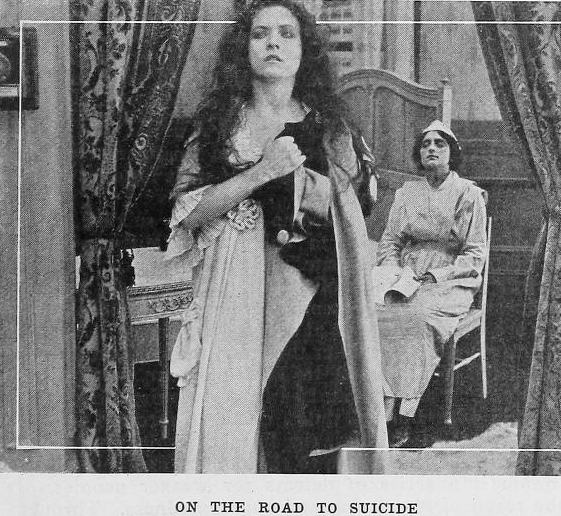
Enter Eugene Cory—James Cooley imbues him with the languid fatigue of a poet who suspects words are traitors. The lovers’ reunion is staged in an artist’s studio where half-finished canvases leer like cracked saints. Lighting is sourced from a single skylight: dust motes swirl in the beam, turning the air into a visible ache. Their embrace is not rapture but recognition, two exiles comparing passports of despair. Note the detail: Ada’s glove peels away finger by finger, the fabric snapping like tiny bones—Abramson’s tactility borders on the fetishistic, yet it serves the theme of bodies commodified.
Alice Wood—Louise Guischard in a performance of glass-pane fragility—materializes in the doorway, her shadow stretching across the floor like spilled ink. The ensuing confrontation is a masterclass in negative space: the women occupy opposite thirds of the frame, Eugene a blur between them. Alice doesn’t scream; she inhales, a reverse sigh that sucks oxygen from the room. Ada’s promise to renounce Eugene is delivered with her back to camera, a refusal to let us verify the truth in her eyes. The scene ends on a freeze-frame of Alice’s hand on the doorknob—an unspoken what now? that haunts the remainder of the film.
News of the mother’s illness arrives via telegram—a Western Union slip fluttering onto polished parquet like a death-moth. Abramson cuts from the telegram’s stark text to Ada’s face reflected in a dark window, the outside world a nullity. This is 1915, so the breakdown is rendered symbolically: a staircase dissolving into a spiral, an iris that closes until Ada’s eye fills the screen, the pupil dilating into a void. The doctor—Joseph Burke channeling a proto-Freudian somberness—prescribes “rest, isolation, and the absence of excitation,” a triumvirate that sounds like a curse.
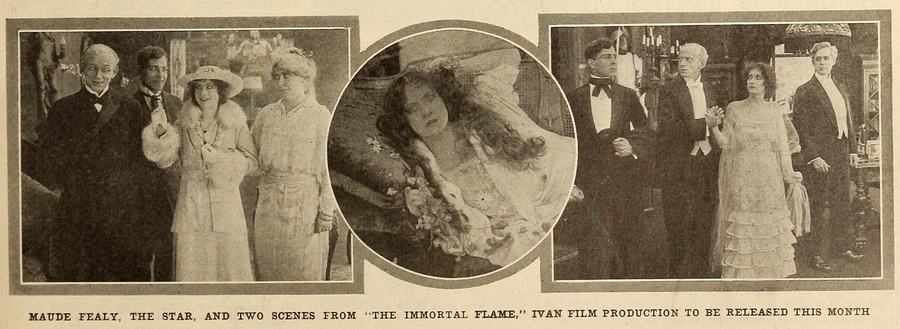
The nurse, played by a youthful Kittens Reichert, is introduced in a proto-noir chiaroscuro: lamp-light carving hollows under her eyes, the ticking metronome of a pocket watch counting down to dereliction. When she succumbs to sleep, Abramson lets the camera linger on the empty rocking chair, its rhythmic creak continuing a cappella—the first intimation that the film itself might be haunted.
Ada’s escape is not frantic but somnambulant. She glides through corridors draped in funeral crepe, her nightgown trailing like a comet tail. Exterior shots were filmed on the Hudson during late autumn—fog coils off the water, streetlamps bleed into the mist. The river becomes a screen onto which the film projects its subconscious: every ripple a skipped memory, every reflection a distorted self. Ada’s immersion is shown in profile, her arms floating outward as if welcoming an old companion. There is no struggle, only surrender. The current swallows her; the image fades to white, not black—a reversal that suggests transfiguration rather than extinction.
Edna Luby’s Ada is a vessel of quiet catastrophe. Watch the micro-movements: the way her lower lip trembles then steels itself, the blink that arrives half a second too late. She never plays the victim; she plays the archivist of her own ruin, cataloguing every slight with the precision of a curator. Opposite her, Cooley’s Eugene is all eroded bravado; when he clasps Ada’s hand, his thumb rubs the inside of her wrist—an intimacy so specific it feels stolen from a private reel.
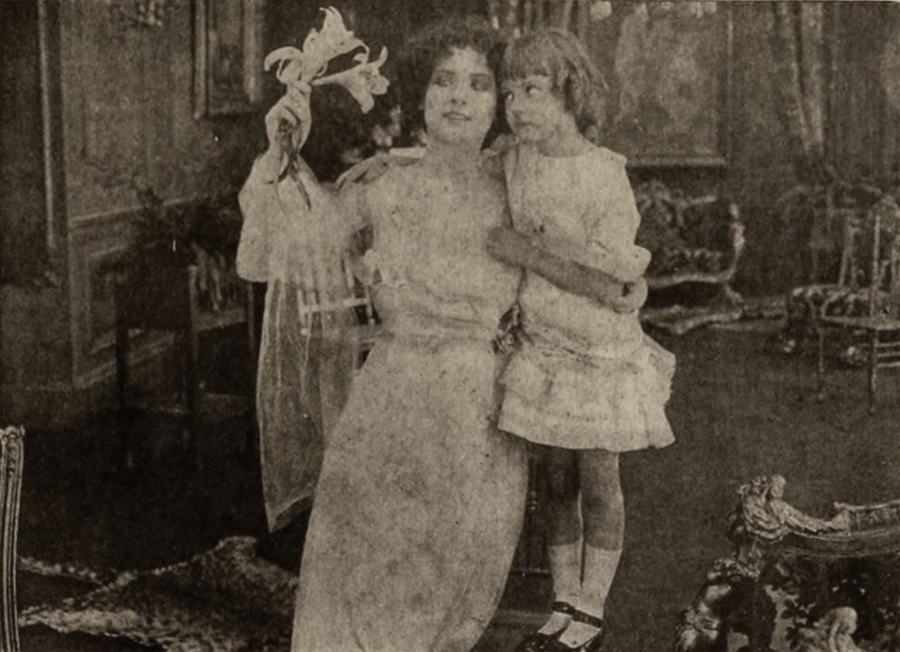
Edwards’s Stapleton deserves reappraisal. He eschews moustache-twirling villainy for the soft-spoken certainty of a man who believes the world is a ledger. In the late-film confrontation, he stands before a map dotted with electoral pins; when Ada declares her departure, his fingers tighten around a flagpole until the standard quivers—territorial grief encoded in body language.
Though shot in black-and-white, the film bleeds color through association. Ada’s boudoir is trimmed with tangerine drapes—when she appears in a champagne-silk negligee, the eye mentally paints the fabric with sunset hues. Stapleton’s study is paneled in walnut; under gaslight the grain resembles dried blood. The river sequence was tinted cyan in original prints, a ghostly turquoise that made audiences report dreams of drowning in turquoise glass. Reference the tableaux of Intolerance a year later, and you’ll spot Abramson’s influence: history as fever, montage as apocalypse.
Unlike contemporaries such as The Legacy of Happiness or Her Great Price, which punished female transgression with sanctimonious finales, The Immortal Flame refuses tidy penance. Ada’s death is neither condemnation nor absolution; it is the logical endpoint of a society that commodifies affection then feigns shock when the merchandise breaks. The final intertitle—“And the river kept its secret”—delivered over an image of ripples subsiding into black, is so devoid of moral embroidery it feels almost modern, a precursor to the neutral gaze of later adaptive tragedies.
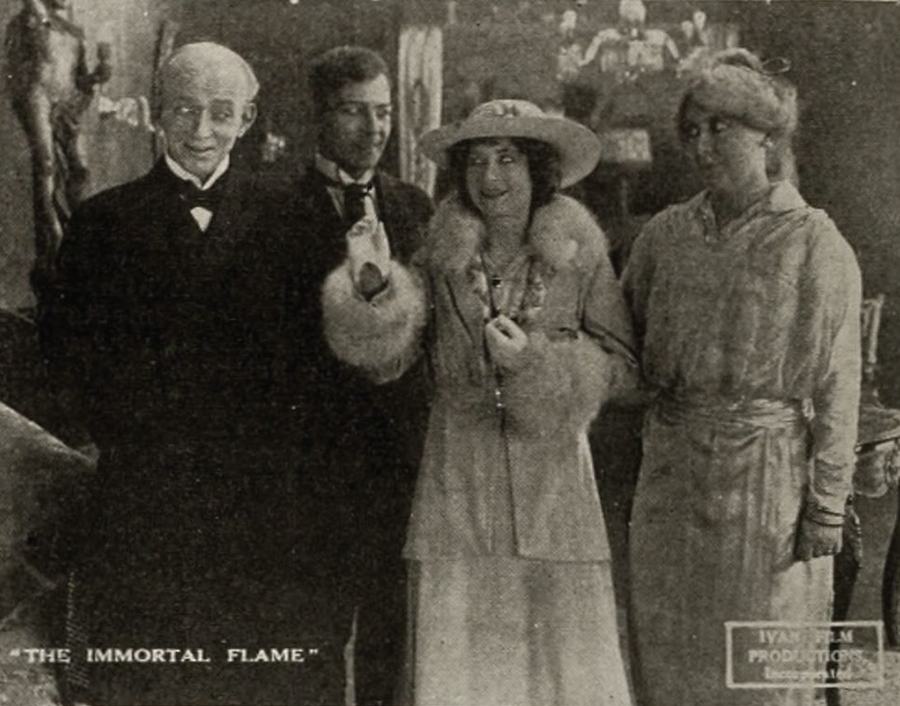
Surviving exhibition notes indicate the film toured with a commissioned score for string quartet and timpani. Musicians were instructed to let the timpani heartbeat double Ada’s pulse during the river sequence, then cut to silence the moment she submerges. Contemporary reviewers spoke of auditoriums holding collective breath, the hush so complete “one could hear the carbon rods crackling in the projector.” Today, most restorations pair the film with minimalist drones; I recommend seeking the Melnikoff Quartet’s 1998 recreation—their use of col legno strings replicates the sound of water under ice.
Place The Immortal Flame beside Madame X and you see two divergent anatomies of maternal sacrifice; pair it with Lights of London and you chart how urban modernity swallows women whole. The DNA of Ada’s river-soaked exit resurfaces in Through Fire to Fortune’s climactic storm, yet where the latter rescues its heroine at the last second, Abramson denies us the raft.
Why does The Immortal Flame still scorch? Because it anticipates every subsequent tale of a woman crushed beneath the gears of male blueprint: the Ada Forbes of 1915 prefigures the femme fatales of noir, the anti-heroines of New Hollywood, the broken dolls of contemporary prestige TV. Yet unlike those narratives, it offers no posthumous redemption, no voice-over from beyond explaining the lesson. The film simply ends, the screen flooding with white, leaving us blinking in the dark, our retinas imprinted with the afterimage of a flame that refused to be immortalized.
Seek it out if you can—scratches, gaps, and all. Let the emulsion crumble; the story is in the cracks. And when the river finally claims Ada, listen for the faint echo of your own breath catching. That is the sound of cinema remembering what it was like to be dangerous.
IMDb —
1921
Community
Log in to comment.