DbcultAccessing Vault...
Cult Review
Senior Film Conservator
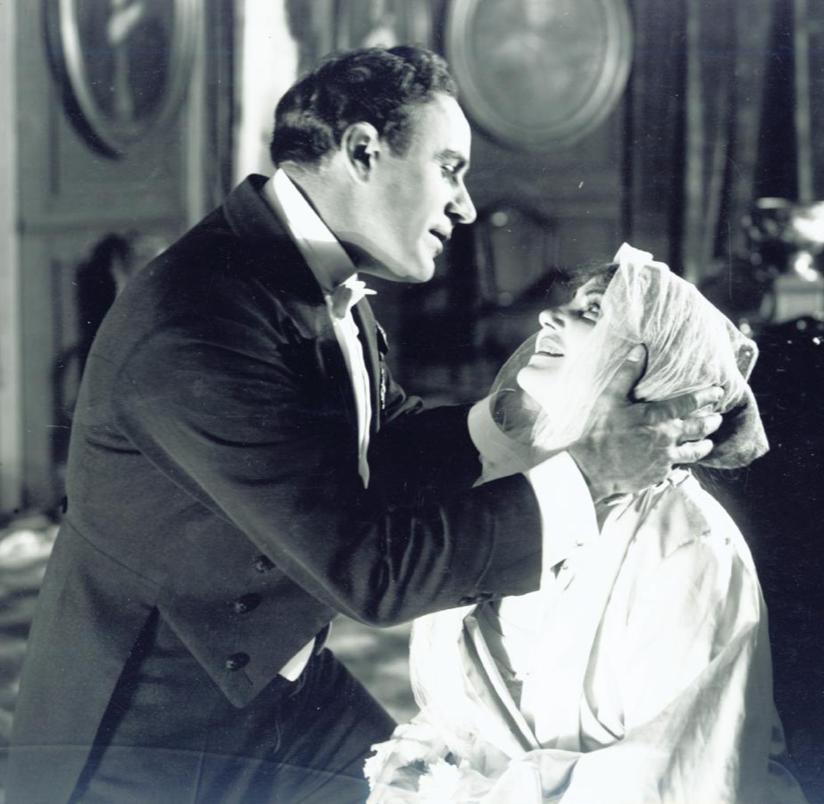
In the annals of early cinematic history, particularly within the vibrant, yet often overlooked, landscape of Danish silent film, certain works emerge as poignant testaments to the enduring power of narrative. Prinsens Kærlighed (The Prince's Love), a captivating drama penned by the insightful Irma Strakosch, stands as a quintessential example of its era's romantic sensibilities, deftly weaving a tale of fated encounters, societal constraints, and the relentless pursuit of happiness against formidable odds. Released during a period when Danish cinema was carving out a significant niche on the international stage, this film, with its stellar cast including the legendary Valdemar Psilander and the luminous Gudrun Houlberg, offers more than just a glimpse into past storytelling; it provides a profound meditation on universal themes that continue to resonate with audiences today.
The narrative unfurls with an almost mythic simplicity, yet its emotional depth is anything but shallow. We are introduced to Prince Harro, portrayed with an arresting blend of youthful vigor and nascent melancholy by Valdemar Psilander, during a sylvan hunt. It is here, amidst the wild beauty of nature, that destiny intervenes, orchestrating his fateful meeting with the young Melitta, brought to life with delicate grace by Gudrun Houlberg. Their initial encounter is imbued with an almost palpable sense of enchantment, a spark of recognition that transcends social strata and immediate circumstances. The film masterfully establishes their burgeoning affection, depicting a love that feels both immediate and timeless, a powerful force that promises to defy the rigid structures of their respective worlds. Psilander, a titan of the Danish silent screen whose charisma was legendary, imbues Harro with a compelling blend of princely dignity and human vulnerability, making his instant devotion to Melitta entirely believable. His presence alone elevates the film, much as it did for countless features of the era, drawing comparisons to the commanding screen presence of actors in films like The Wrath of the Gods, albeit in a vastly different thematic context.
However, the idyllic bliss of their nascent romance is cruelly shattered, illustrating the swift, unyielding hand of fate so often depicted in early dramas. Melitta's father, her sole familial anchor, succumbs to an untimely demise, plunging her into a profound sorrow and leaving her vulnerable in a world that offers little solace to the unmoored. Simultaneously, the labyrinthine machinations of royal duty tighten around Prince Harro. His uncle, a figure often embodying the cold pragmatism of dynastic succession, has already orchestrated Harro's betrothal to another woman, a strategic alliance designed to solidify power and lineage rather than foster genuine affection. This sudden confluence of personal tragedy and political imperative casts a long, ominous shadow over the lovers, transforming their initial joy into a crucible of hardship. The screenplay, under Irma Strakosch's careful guidance, ensures that these pivotal plot points feel less like convenient contrivances and more like the inexorable unfolding of a grand, tragic design. The emotional weight of these developments is expertly conveyed through the nuanced performances, particularly Houlberg's portrayal of Melitta's grief, which is both deeply personal and universally resonant.
The struggle that ensues is a classic narrative arc: two souls bound by an unbreakable love, yet torn asunder by external forces seemingly beyond their control. This theme of forbidden love and societal expectation is a recurring motif in cinematic history, echoing through countless tales, from ancient mythologies to contemporary dramas. In Prinsens Kærlighed, it is explored with a particular poignancy, highlighting the stark choices characters are forced to make when confronted with the irreconcilable demands of heart and duty. The film delves into the moral complexities faced by Harro, caught between his genuine affection for Melitta and the immense pressure to fulfill his princely obligations, a dilemma not dissimilar to the emotional quandaries faced by characters in other period romances such as Her Price, where personal sacrifice often dictated the narrative's tragic or triumphant turns.
The strength of Prinsens Kærlighed undeniably rests upon the shoulders of its remarkable ensemble cast. Valdemar Psilander, widely considered one of the earliest male sex symbols and a leading star of the Nordisk Film studio, delivers a performance that is both commanding and deeply sensitive. His Harro is not merely a figurehead but a man grappling with profound emotional conflict. Psilander's ability to convey complex inner turmoil through subtle facial expressions and gestures, a hallmark of silent acting, is on full display here. One can observe the flicker of hope in his eyes, the despair etched onto his brow, and the determined resolve in his posture, all without uttering a single word. His presence alone was often enough to guarantee a film's success, a testament to his unparalleled screen magnetism during the era.
Gudrun Houlberg, as Melitta, provides the perfect counterpoint to Psilander's intensity. Her portrayal is one of delicate strength and unwavering devotion. Houlberg's Melitta is not a passive damsel in distress; rather, she is a woman who, despite immense personal loss and societal pressure, maintains an inner fortitude. Her emotional journey, from joyous love to profound grief and then to resilient hope, is rendered with a compelling authenticity that draws the audience deep into her plight. The chemistry between Psilander and Houlberg is palpable, a crucial ingredient for any successful romance, and it elevates their characters' struggles beyond mere melodrama into something truly affecting. Their scenes together are particularly powerful, conveying a depth of connection that makes their separation all the more agonizing.
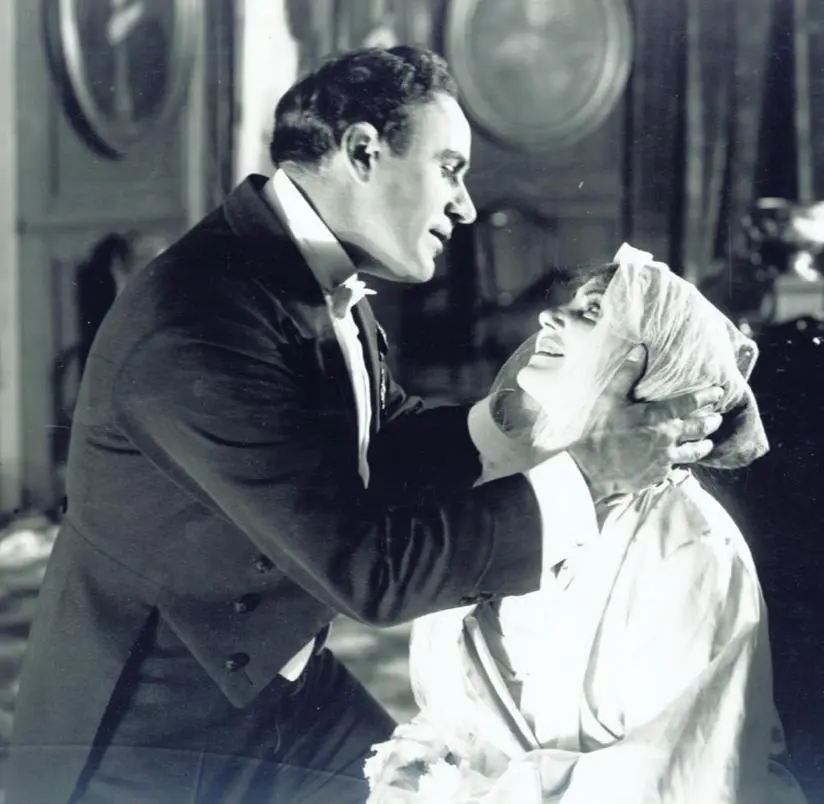
The supporting cast further enriches the narrative tapestry. Frederik Jacobsen, likely in a role of authority or a paternal figure, brings a gravitas that grounds the more fantastical elements of the royal drama. Henny Lauritzen, a veteran actress of the era, often excelled in roles that demanded sternness or a touch of world-weariness, and her contribution here undoubtedly adds to the film's dramatic tension. Robert Schyberg, Torben Meyer, Peter Jørgensen, and Erik Holberg, while perhaps in less central roles, contribute to the intricate social fabric of the film, populating its world with believable characters who either aid or obstruct the lovers' path. Their collective performances demonstrate the high caliber of acting prevalent in Danish cinema at the time, where the nuances of pantomime and expression were finely honed arts. This level of ensemble acting, where even minor characters contribute significantly to the overall atmosphere and plot progression, is a feature often admired in well-crafted silent films, distinguishing them from productions where supporting roles might feel merely ornamental.
The architectural integrity of Prinsens Kærlighed owes much to the skillful pen of Irma Strakosch. Her screenplay navigates the treacherous waters of romantic melodrama with a commendable balance, avoiding excessive sentimentality while still maximizing emotional impact. Strakosch understands the fundamental human desire for connection and the tragic beauty of love thwarted by circumstance. The plot, while adhering to certain conventions of the period, is structured to build suspense and empathy effectively. She crafts a journey for Harro and Melitta that is replete with trials and tribulations, ensuring that their eventual reunion feels earned and deeply satisfying rather than simply inevitable. The obstacles they face—loss, familial duty, social stratification—are not merely plot devices but profound challenges that test their character and the very essence of their bond. The progression from initial infatuation to a love forged in the fires of adversity is meticulously charted, demonstrating a sophisticated understanding of dramatic pacing. Strakosch's work here can be appreciated for its elegant simplicity and its ability to tap into universal themes, much like the timeless tales found in The Only Son or The Stolen Triumph, where human desires and moral choices drive the core conflict.
As a product of the silent era, Prinsens Kærlighed relies heavily on visual storytelling, a craft that Danish filmmakers of the period had honed to a fine art. While specific directorial credits might be less emphasized in surviving records compared to star power, the film's visual language speaks volumes. The use of natural settings for the initial romantic encounters, contrasting sharply with the more ornate and restrictive interiors of the royal court, effectively underscores the thematic tension between freedom and duty. Cinematography, even in its nascent stages, played a crucial role in conveying mood and emotion. The framing of shots, the subtle movements of the camera (where applicable), and the manipulation of light and shadow all contribute to an atmosphere that amplifies the characters' internal states. The visual compositions would have guided the audience's emotional response, from the lightheartedness of the initial romance to the stark despair of separation and the eventual warmth of reconciliation. This visual dexterity is a hallmark of the era, where every gesture, every set piece, and every frame had to communicate meaning without spoken dialogue. It's a testament to the ingenuity of early cinema, reminding us that powerful narratives don't always need sound to resonate deeply.
The film also serves as an important artifact in understanding the broader landscape of early 20th-century European cinema. Danish film production, particularly from Nordisk Film, was prolific and influential, exporting its melodramas and thrillers across the globe. Prinsens Kærlighed fits squarely within this tradition, showcasing the studio's knack for producing emotionally charged stories with high production values for the time. It represents a period when cinema was rapidly evolving, moving beyond mere novelty to become a sophisticated art form capable of exploring complex human emotions. Comparing its narrative style to contemporaries like The Silent Lady or even the more comedic Bringing Up Betty reveals the diverse range of storytelling approaches, yet Prinsens Kærlighed remains steadfast in its commitment to profound romantic drama.
The core of the film's enduring appeal lies in its depiction of the arduous journey Harro and Melitta must undertake. Their path is not one of smooth sailing but a tempest-tossed voyage fraught with emotional storms and external pressures. They endure separations, the pain of unfulfilled promises, and the constant threat of their love being irrevocably extinguished by the demands of their world. This period of hardship serves as a crucible, testing the authenticity and resilience of their bond. It is through these trials that their love matures from an initial infatuation into a profound, unshakeable commitment. The audience is invited to witness their suffering, to empathize with their yearning, and to root for their ultimate triumph against a backdrop of seemingly insurmountable obstacles. The narrative structure, pushing them apart only to draw them back together, creates a compelling rhythm that keeps the viewer invested in their fate, a narrative technique that transcends the silent film era, finding echoes in modern storytelling.
The film's resolution, while ultimately leading to happiness, is presented not as a simplistic fairytale ending but as a hard-won victory. The happiness they find is tinged with the memory of their struggles, making it all the more precious and meaningful. It suggests that true love is not merely found but forged, refined through adversity, and cherished for the sacrifices made along the way. This nuanced portrayal of happiness, acknowledging the scars of the journey, adds a layer of sophistication to what might otherwise be a straightforward romantic drama. It elevates Prinsens Kærlighed beyond a mere escapist fantasy, grounding it in a more profound understanding of the human condition and the complexities of lasting affection, perhaps in a more earnest way than even a film like A Florida Enchantment, which explores romantic entanglements through a comedic lens.
Ultimately, Prinsens Kærlighed stands as a testament to the enduring power of classic storytelling and the universal appeal of a love story that defies the odds. It is a film that, despite its age and the constraints of its medium, manages to evoke genuine emotion and explore themes that remain relevant. The performances, particularly those of Psilander and Houlberg, are captivating, demonstrating the artistry required to communicate complex inner worlds without spoken dialogue. Irma Strakosch's screenplay is a masterclass in dramatic construction, guiding the audience through a narrative that is both predictable in its broad strokes yet compelling in its intricate details. For enthusiasts of early cinema, particularly those interested in the golden age of Danish film, Prinsens Kærlighed is an essential viewing experience. It is a reminder that the fundamental human desires for love, acceptance, and happiness are timeless, and that the struggles to achieve them, even in a world vastly different from our own, are deeply relatable. This film, therefore, is not merely a historical artifact but a living narrative, its echoes still resonating with the heart's eternal quest for connection.

IMDb 4
1924
Community
Log in to comment.