DbcultAccessing Vault...
Cult Review
Senior Film Conservator
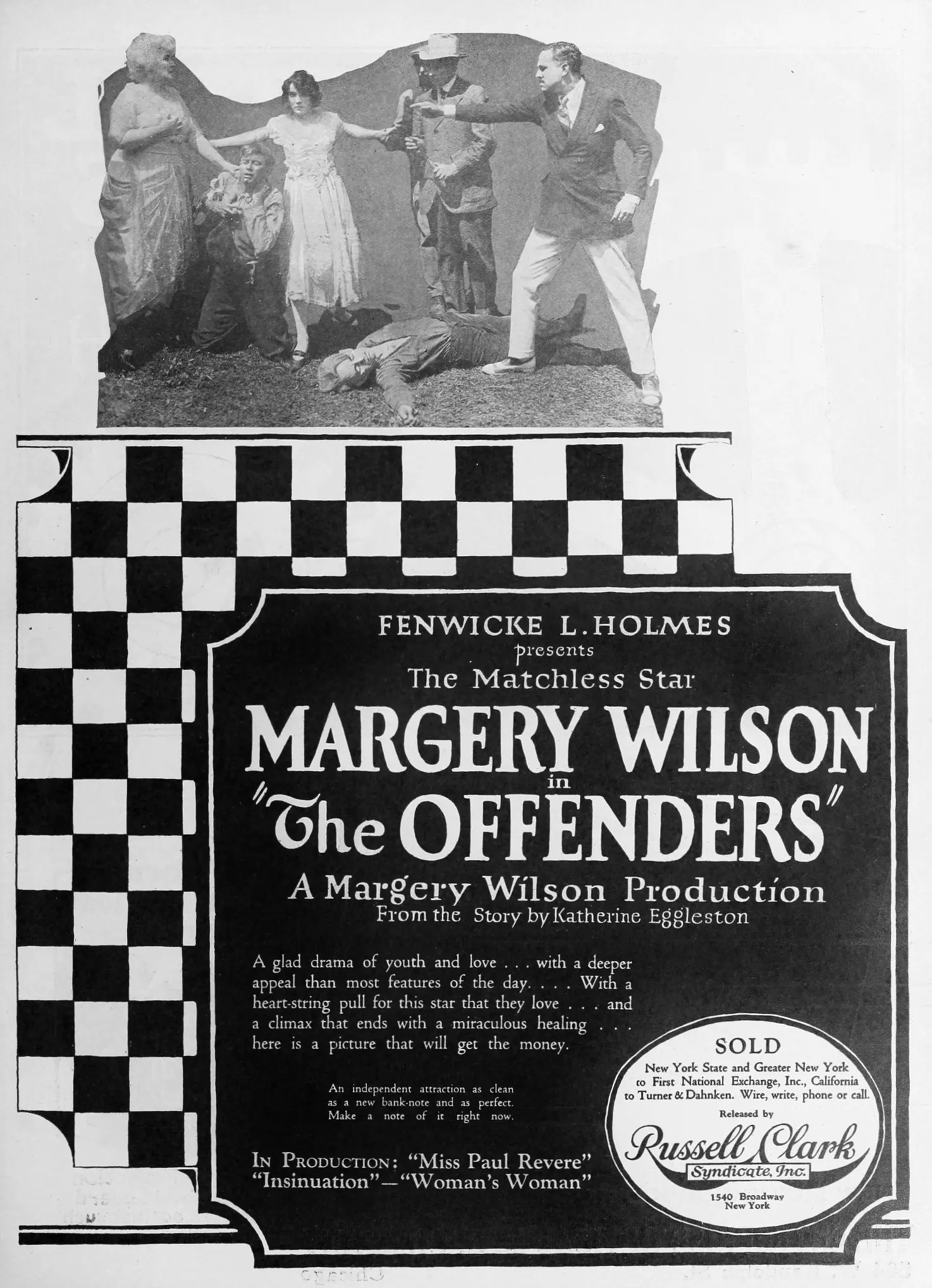
The 1922 cinematic landscape was a crucible of narrative experimentation, a period where the visual grammar of the medium began to transcend mere pantomime to touch upon the profound complexities of the human condition. In the center of this evolutionary storm sits The Offenders, a film that navigates the treacherous waters of moral ambiguity, psychological trauma, and the eventual triumph of truth. Written by the astute Katherine Holmes, the film serves as a poignant reminder of the era's fascination with the 'wronged woman' trope, yet it elevates this motif through a sophisticated interplay of characters that feel remarkably modern in their internal conflicts.
The film plunges the viewer into an environment defined by its lack of light—both literal and metaphorical. We find ourselves in the company of a gang of crooks, a collective of souls who have long since abandoned the path of righteousness. The setting is reminiscent of the gritty realism found in Beatrice Fairfax Episode 9: Outside the Law, where the boundaries between the legal and the illicit are perpetually blurred. Within this den, the protagonist, played with a haunting vulnerability by Margery Wilson, acts as the moral anchor. Wilson, a veteran of the D.W. Griffith school of performance, brings a subtle, tremulous energy to the role. She is not merely a damsel in distress; she is a survivor navigating a minefield of predatory intentions.
The gang itself is a fascinating study in archetypal villainy. Bradley Barker and J.P. Gifford portray their respective roles with a menacing physicality that suggests a history of violence long before the first frame begins. Unlike the more stylized villainy seen in Fantomas - On the Stroke of Nine, the 'offenders' here feel grounded in a recognizable, albeit heightened, reality. They are not masterminds of global chaos but petty, desperate men whose small-scale cruelties have devastating consequences for the innocent.
Perhaps the most compelling element of the film is the performance of Percy Helton. Known to later audiences for his distinctive, high-pitched voice in sound-era character roles, here Helton is a silent revelation. His portrayal of the 'half-wit'—a term of the era that we would now describe through a lens of neurodiversity—is handled with a surprising amount of pathos. He is the only character who offers the protagonist any semblance of genuine affection, yet his cognitive limitations make him a tragic figure. He is a witness who cannot bear witness, a repository of truth that lacks the key to its own vault.
The cinematic device of a witness who is physically or mentally unable to testify is a recurring theme in silent melodrama, often used to heighten the stakes of a trial or an accusation. In The Offenders, this trope is utilized with surgical precision. When the gang commits a murder and expertly shifts the blame onto the girl, the audience feels a visceral sense of frustration. We are privy to the truth, yet we are as helpless as Helton’s character to communicate it. This creates a powerful bond between the viewer and the screen, a shared secret that demands resolution.
Katherine Holmes’ screenplay does not shy away from the social implications of the story. The ease with which the girl is condemned speaks volumes about the precarious position of women in the early 20th century. Without a male protector or a stable social standing, she is an easy target for the machinations of the corrupt. This thematic thread echoes through other films of the period, such as Her Moment or Don't Call Me Little Girl, which also deal with the reclamation of female agency in the face of systemic oppression.
The pacing of the film is deliberate, building a sense of dread as the trial approaches. The courtroom scenes are staged with a starkness that emphasizes the girl's isolation. Against the sea of judgmental faces, she stands alone, her only hope resting on a man who barely understands his own name. The tension is palpable, a testament to the directorial hand that guides the ensemble. While the film lacks the grand historical scale of Armenia, the Cradle of Humanity under the Shadow of Mount Ararat, it achieves a similar emotional resonance through its focus on individual suffering and the quest for justice.
The third act of The Offenders introduces a plot point that was a staple of the era: the medical miracle. The 'half-wit' is cured, a transformation that today might seem overly simplistic or medically dubious, but within the context of 1920s storytelling, it serves as a powerful metaphor for the restoration of order. As Helton’s character regains his mental clarity, he also regains his voice. The scene where he finally speaks the truth is the film's emotional zenith. It is a moment of catharsis that justifies the preceding hour of misery.
Compare this to the lighter, more comedic resolutions found in films like A Pair of Sixes or June Madness, and the weight of The Offenders becomes even more apparent. This is a film that takes its stakes seriously. It understands that for the protagonist, the outcome is not just about winning a game or a bet; it is about life, liberty, and the pursuit of a shattered reputation. The resolution is not merely a happy ending; it is a hard-won victory against a system designed to fail people like her.
Technically, the film utilizes the limited tools of its time to great effect. The use of shadow and light to define the gang’s hideout creates a sense of claustrophobia that contrasts sharply with the open, albeit cold, spaces of the courtroom. The cinematography captures the nuances of the actors' expressions, which is crucial in a silent film where a single look must convey a paragraph of dialogue. The editing, particularly during the murder sequence and the subsequent framing, is tight and effective, ensuring that the audience never loses track of the narrative threads.
While it may not have the frenetic energy of Call a Taxi or the whimsical charm of Le peripezie dell'emulo di Fortunello e compagni, The Offenders possesses a gravitas that is often missing from contemporary productions. It is a film that demands your attention and rewards it with a rich, albeit dark, tapestry of human experience. The supporting cast, including Mrs. A.B. Chandler and Squire Boyden, provide a solid foundation for the lead actors, creating a world that feels lived-in and authentic.
Looking back at The Offenders from a modern perspective, it is easy to dismiss some of its more melodramatic flourishes. However, to do so would be to overlook the genuine artistry at play. This film is a precursor to the noir genre that would dominate the 1940s, sharing its DNA with stories of innocent people caught in the gears of a corrupt world. It shares the rugged spirit of Pure Grit and the relentless momentum of Michael Strogoff, yet it remains uniquely focused on the internal psychological battle of its characters.
The film also stands as a fascinating companion piece to Bull Arizona - The Legacy of the Prairie, as both films explore the concept of legacy and the weight of the past. In The Offenders, the legacy is one of crime and the struggle to break free from it. The protagonist’s journey is not just a physical one, but a spiritual quest to reclaim her identity from those who seek to define her by her associations.
In the final analysis, The Offenders is a triumph of silent storytelling. It manages to balance a complex plot with deep character development, all while maintaining a consistent and engaging tone. The performances of Margery Wilson and Percy Helton are particularly noteworthy, providing the emotional core that anchors the film’s more sensational elements. It is a work that deserves to be remembered not just as a relic of its time, but as a compelling piece of drama that still has much to say about the nature of truth and the resilience of the human spirit.
For those interested in the evolution of the crime thriller, or for those who simply appreciate a well-told story of redemption, The Offenders is essential viewing. It is a stark, beautiful, and ultimately hopeful film that reminds us that even in the darkest of places, the truth has a way of coming to light. Whether it’s the frantic wires of Monty Works the Wires or the romantic entanglements of What Love Will Do, few films of the era capture the sheer desperation and eventual relief of a life saved from the brink of destruction quite like this Katherine Holmes masterpiece. It is a cinematic gem waiting to be rediscovered by a new generation of film lovers.
IMDb —
1929
Community
Log in to comment.