DbcultAccessing Vault...
Cult Review
Senior Film Conservator
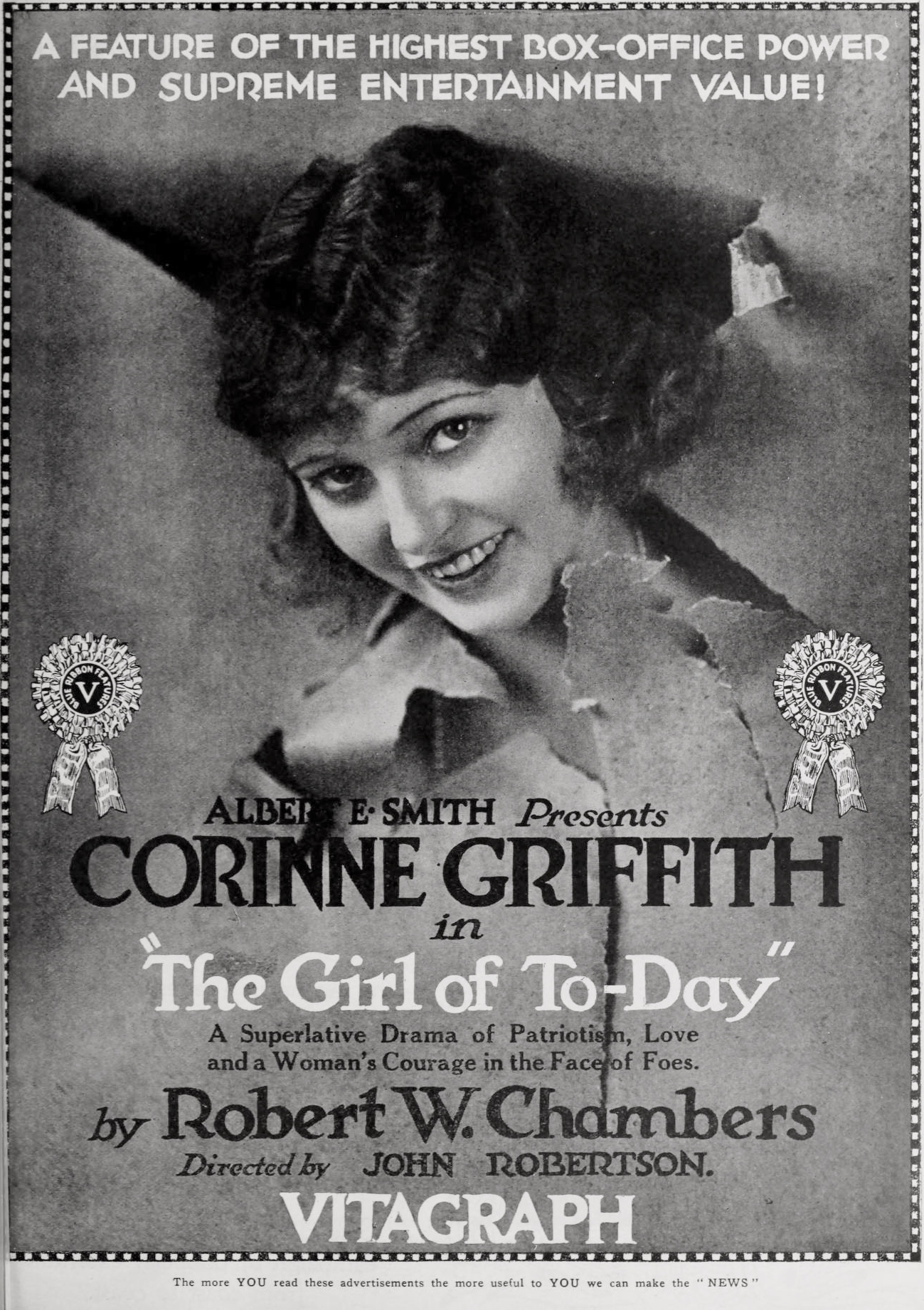
Stepping back into the cinematic landscape of 1918, one encounters a fascinating artifact of its time: The Girl of Today. Directed by John S. Robertson, this silent drama, penned by John S. Robertson, Robert W. Chambers, and Harry O. Hoyt, is more than just a period piece; it’s a vibrant testament to the anxieties and aspirations of a nation embroiled in the Great War. At its heart lies Corinne Griffith, a luminous star of the era, whose portrayal of the resolute Leslie Selden elevates what could have been a mere melodrama into a compelling narrative of female fortitude and patriotic vigilance. The film doesn't just entertain; it mirrors the collective psyche of America, grappling with external threats and discovering strength within its own citizens, particularly its women.
The plot unfurls with a captivating urgency, drawing viewers into a world where charm conceals treachery and everyday life is shadowed by the specter of espionage. Leslie Selden, a paragon of beauty and fervent patriotism, finds herself at the nexus of a romantic entanglement with two distinct gentlemen. There’s Jack Wynn, a dashing young man whose military service is yet to commence, representing the honorable, albeit somewhat naive, American youth. His counterpart is the seemingly sophisticated Dr. Wolff, a Danish scientist whose foreign allure masks a sinister identity: he is, in fact, a cunning German agent. This duality immediately establishes a palpable tension, suggesting that danger can lurk beneath the most respectable facades. The film cleverly leverages the public’s wartime distrust of foreigners, a common trope in propaganda of the period, to build its villain’s menace. Unlike the clear-cut heroes and villains of a Western like The Range Boss, The Girl of Today delves into the more insidious, covert threats of intelligence work, making its antagonist all the more chilling.
As the narrative progresses, Dr. Wolff’s nefarious intentions become terrifyingly clear. He is orchestrating a diabolical plot: the simultaneous bombing of several crucial munitions factories and the complete destruction of New York City’s water system. The sheer scale of this proposed devastation underscores the gravity of the threat and the high stakes involved. Jack Wynn, perhaps initially blinded by Leslie’s charm or his own youthful optimism, soon uncovers Wolff’s true colors. His discovery leads him to confront the spy at his home, a brave but ultimately ill-fated decision that results in his immediate imprisonment. Wolff, with a chilling lack of compunction, then crafts a deceitful note, framing Jack as a deserter who has fled to evade the draft. This act of psychological warfare is designed not only to discredit Jack but also to manipulate Leslie, preying on societal judgments against those perceived as unpatriotic during wartime. It's a cruel twist, a betrayal of trust that echoes the hidden deceptions explored in films like Masks and Faces, where appearances are rarely what they seem.
However, Wolff gravely underestimates Leslie Selden. Her suspicions, far from being assuaged by the forged note, are instead ignited. This is where The Girl of Today truly shines, presenting a female protagonist who is not merely a damsel in distress but an active, intelligent agent of her own destiny. Rather than succumbing to despair, Leslie takes decisive action. She alerts the authorities, demonstrating a civic responsibility and sharp intellect that was increasingly celebrated in women during this period of societal upheaval. Her next move is nothing short of ingenious: she plants a dictograph in Wolff’s house. This piece of then-modern technology becomes her ears, allowing her to clandestinely gather the damning evidence of Wolff’s scheduled bombings. This proactive approach by Leslie positions her as a proto-feminist icon, a woman who doesn't wait for men to solve the problem but actively participates in safeguarding her community. Her resourcefulness is a stark contrast to more traditional female roles, perhaps even more direct in its action than the social commentary found in Her Right to Live, which often explored women's struggles within existing societal structures.
The climax of the film is a masterclass in silent film suspense. Armed with the irrefutable evidence from the dictograph, Leslie, accompanied by the police, races to Wolff’s residence. Their arrival is timed with breathtaking precision, just as Wolff is preparing to murder Jack and unleash his catastrophic plan upon the city. The ensuing confrontation is fraught with tension, a desperate struggle against time and villainy. Leslie's presence is not merely symbolic; it is her intelligence and courage that directly lead to the foiling of the plot, securing Jack’s life and averting widespread disaster. This dramatic resolution underscores the film's central message: that ordinary citizens, particularly women, possess extraordinary capabilities when faced with dire circumstances. Corinne Griffith’s performance throughout this sequence is particularly noteworthy, conveying a blend of fear, determination, and heroism through subtle gestures and powerful expressions, a hallmark of skilled silent film acting. Her portrayal of Leslie Selden is undeniably one of the film’s strongest assets, making her character resonate with audiences then and now.
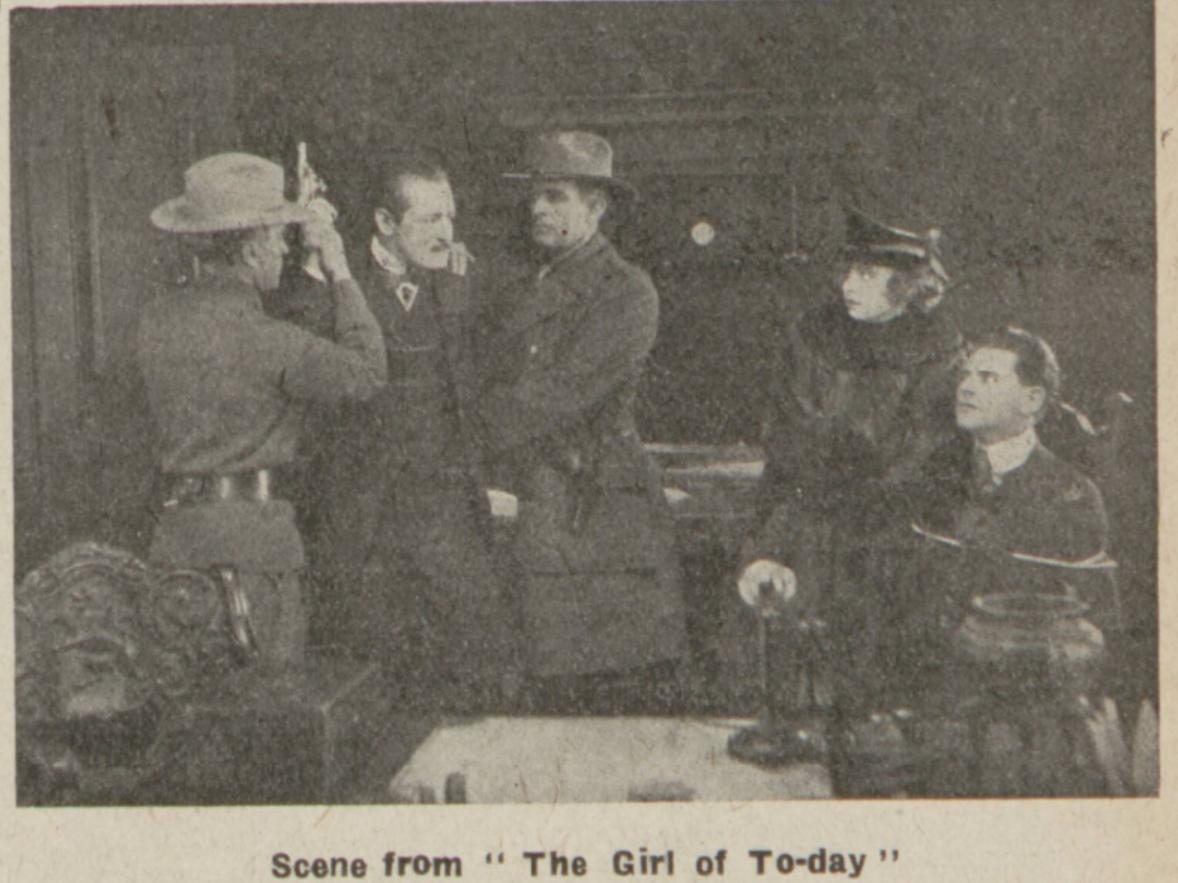
The ensemble cast of The Girl of Today delivers performances that, while constrained by the conventions of silent cinema, effectively convey the emotional and dramatic weight of the story. Corinne Griffith as Leslie Selden is, without a doubt, the film's beating heart. Griffith, known for her elegance and expressive eyes, embodies Leslie with a compelling blend of vulnerability and unwavering resolve. She navigates Leslie's journey from a seemingly ordinary, courted woman to a sharp-witted counter-espionage agent with remarkable conviction. Her nuanced acting conveys suspicion, fear, determination, and ultimately, triumph, without uttering a single word. Leslie is not just a passive object of affection; she is the catalyst for action, a modern woman taking charge in a crisis. This depiction of female empowerment, while perhaps not as overtly political as the suffragette movements depicted in A Militant Suffragette, is nonetheless a significant cultural statement, reflecting a changing perception of women’s roles during wartime.
Opposite Griffith, Marc McDermott takes on the role of the insidious Dr. Wolff. McDermott, a veteran character actor of the silent era, brings a chilling gravitas to the villain. His Wolff is not a cartoonish antagonist but a man whose intelligence and seemingly genteel demeanor make his villainy all the more sinister. McDermott's performance relies on subtle gestures and menacing stares, effectively communicating Wolff’s duplicity and cold-blooded intent. He embodies the wartime fear of the ‘enemy within,’ a sophisticated infiltrator rather than an overt combatant. This portrayal of a cunning, deceptive antagonist is crucial for building the film's suspense and provides a stark contrast to the straightforward heroism of Jack and Leslie. The theme of hidden identities and malevolent secrets is explored with a similar intensity in Lady Audley's Secret, where the villain's true nature is slowly unmasked, creating a sense of dread and psychological tension.
Webster Campbell, as the earnest Jack Wynn, provides the romantic interest and a foil for Leslie's burgeoning heroism. While Jack is brave in confronting Wolff, his capture highlights Leslie’s superior ingenuity and agency. Campbell portrays Jack with a youthful vigor that makes his predicament all the more sympathetic. He represents the innocent American caught in the web of espionage, a character designed to elicit concern and underscore the urgency of Leslie's mission. Charles A. Stevenson and Ida Darling round out the cast, providing solid supporting performances that flesh out the world of the film, adding to the atmosphere of a society grappling with unseen dangers. Their contributions, though perhaps less central, help ground the extraordinary events in a believable domestic setting, enhancing the sense that this could happen anywhere, to anyone.
The Girl of Today is steeped in the zeitgeist of World War I. Patriotism is not just a theme; it’s the very air the characters breathe. Leslie Selden embodies the idealized American citizen of the home front: beautiful, morally upright, and fiercely loyal to her country. The film acts, in many ways, as a piece of subtle propaganda, encouraging vigilance and demonstrating that heroism is not confined to the battlefields of Europe. It taps into the widespread fear of German infiltration and sabotage, a very real concern for Americans during the war. The notion of an enemy agent plotting destruction on American soil resonated deeply with audiences, making the threat feel immediate and personal.
Beyond patriotism, the film offers a compelling exploration of female agency. Leslie Selden is a far cry from the passive heroines of earlier cinematic eras. Her intelligence, initiative, and bravery are the driving forces of the plot. She doesn’t wait to be rescued; she orchestrates the rescue. This portrayal reflects the shifting roles of women during WWI, as they stepped into jobs previously held by men and gained new levels of independence and social recognition. The film implicitly champions the idea that women have crucial contributions to make beyond the domestic sphere, particularly in times of national crisis. This theme of a woman taking matters into her own hands, even against established authority or social norms, can be seen in other contemporary films like Judge Not, where moral complexities often fell to female characters to navigate and resolve.
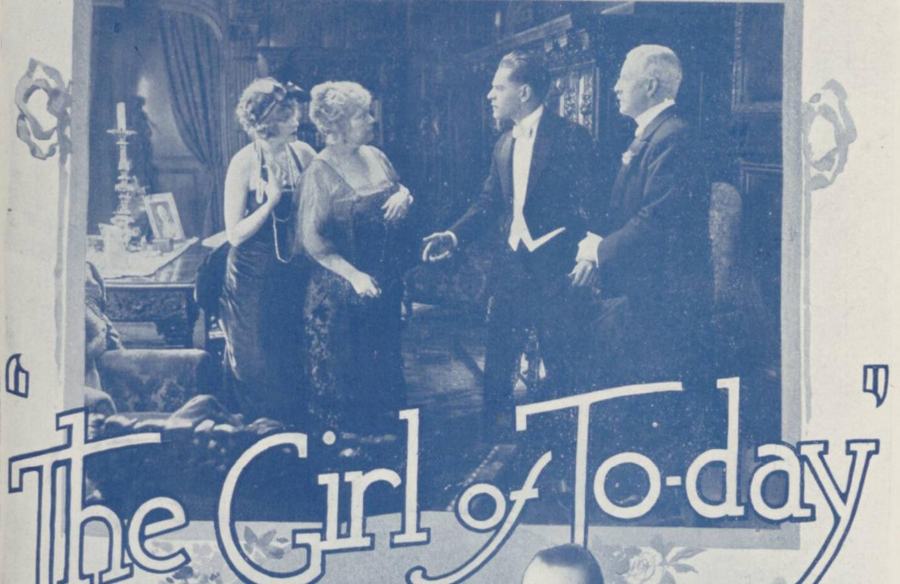
The narrative also delves into themes of trust and deception. Wolff’s ability to masquerade as a respected scientist highlights the dangers of misplaced trust and the necessity of discerning truth from artifice. The forged note, designed to discredit Jack, is a potent symbol of how easily truth can be twisted, particularly during wartime when fear and suspicion are rampant. Leslie’s ability to see through this deception underscores her intelligence and critical thinking, qualities that were essential for any citizen to possess in such turbulent times. The very title, The Girl of Today, suggests a new kind of woman, one who is alert, resourceful, and capable of defending her nation not with brute force, but with wit and courage. This 'girl' is a symbol of a modernizing society, where traditional gender roles are being re-evaluated in the face of unprecedented global conflict.
John S. Robertson's direction is commendable for its ability to build tension and maintain a brisk pace, a crucial element for engaging silent film audiences. He effectively uses close-ups to emphasize character emotions and key plot points, a technique that was becoming more refined in the late 1910s. The scenes involving the dictograph, in particular, are cleverly staged, maximizing the suspense of Leslie’s clandestine eavesdropping. The visual storytelling is clear and concise, ensuring that even without dialogue, the audience fully grasps the intricacies of the plot and the motivations of the characters. Robertson’s skill in crafting a compelling spy thriller without the benefit of sound is a testament to the power of visual narrative.
The screenplay, a collaborative effort by John S. Robertson, Robert W. Chambers, and Harry O. Hoyt, is tightly constructed, moving the plot forward with purpose and escalating the stakes effectively. Robert W. Chambers, a prolific writer known for his romantic fiction and supernatural horror, brings a certain flair for dramatic intrigue to the narrative, while Harry O. Hoyt likely contributed to the tautness of the spy plot. The writers skillfully weave together romance, espionage, and patriotic duty into a cohesive whole. The use of the dictograph as a plot device is particularly inspired, providing a tangible means for Leslie to gather intelligence and highlighting the technological advancements that were slowly permeating daily life, even during wartime. The film's structure, with its clear build-up of threat and a climactic resolution, is a template for many thrillers that would follow, showcasing the nascent development of genre conventions in cinema.
From a technical perspective, the film's production values, typical for a major studio release of its time, are solid. The sets, though not elaborate, effectively convey the domestic tranquility threatened by Wolff's machinations and the clandestine nature of his lair. The editing, while perhaps not as rapid-fire as later thrillers, is effective in maintaining suspense and clarity. The film relies heavily on intertitles, not just for dialogue, but also to convey exposition and internal thoughts, guiding the audience through the narrative. These intertitles are often crafted with dramatic flair, adding to the film’s overall impact and helping to shape the audience's perception of the characters and events. The use of light and shadow, while perhaps not as experimental as some German Expressionist films that would follow, is nonetheless effective in creating mood and highlighting dramatic moments, particularly in Wolff’s shadowy abode.
In conclusion, The Girl of Today stands as a compelling and historically significant silent film. It is more than just a period piece; it is a vibrant snapshot of America during World War I, grappling with fears of espionage, celebrating patriotism, and witnessing the emergence of powerful female figures in popular culture. Corinne Griffith’s captivating performance as Leslie Selden remains the film’s crowning glory, imbuing her character with a strength and intelligence that transcends the limitations of silent cinema. The film's themes of female agency, wartime vigilance, and the triumph of good over insidious evil resonate even today, offering a glimpse into the anxieties and hopes of a bygone era. It reminds us that courage and ingenuity are timeless virtues, capable of thwarting even the most nefarious plots.
While many silent films fade into obscurity, The Girl of Today deserves recognition for its engaging plot, strong performances, and its reflection of a pivotal moment in history. It is a testament to the power of early cinema to not only entertain but also to comment on and shape societal values. For anyone interested in the intersection of silent film, wartime propaganda, and the evolving portrayal of women on screen, this film offers a rich and rewarding experience. It's a reminder that even in an age without sound, the stories told on screen could be loud, clear, and profoundly impactful, delivering a message of national unity and individual heroism that was desperately needed during a time of global conflict.
IMDb 6.8
1915
Community
Log in to comment.