DbcultAccessing Vault...
Cult Review
Senior Film Conservator
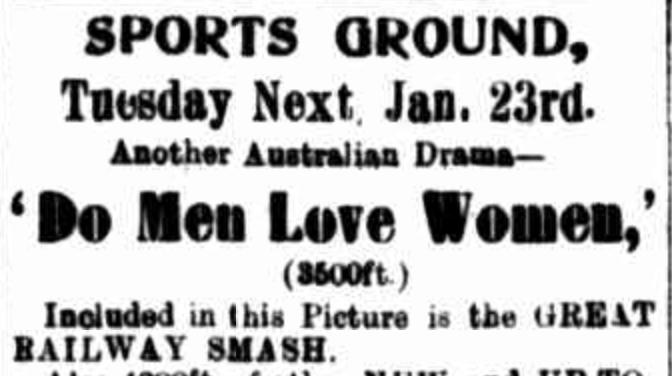
Stepping back into the flickering shadows of early cinema, one encounters a fascinating, often overlooked, landscape of narrative experimentation and nascent thematic courage. Among these historical artifacts, the enigmatic Do Men Love Women? stands as a peculiar, yet remarkably resonant, artifact. Released in an era when film was still grappling with its voice, this production, whose original writers remain largely uncredited – a common plight for the unsung architects of foundational cinema – boldly attempts to tackle a question that, even today, continues to echo through our cultural discourse. While the technical limitations of its time are undeniably present, the film's ambition to explore the intricate dance between gender, expectation, and genuine affection is striking.
At its core, Do Men Love Women? is less a straightforward romance and more a philosophical inquiry, draped in the trappings of a social drama. We are introduced to Eleanor Vance, a character whose intellectual vivacity feels remarkably ahead of her time. Her clandestine journalistic pursuits, undertaken under a male pseudonym, immediately establish her as a woman chafing against the restrictive corsets of societal expectation. This narrative choice, though perhaps subtly presented through the visual language of silent film, speaks volumes about the burgeoning desire for female autonomy that simmered beneath the surface of early 20th-century life. Eleanor's struggle is not merely one of personal desire but a microcosmic representation of a larger societal shift.
The film masterfully sets up a stark dichotomy in Eleanor's romantic prospects. On one hand, there is Mr. Harrington, the embodiment of conventional suitability. His affections, while earnest, are rooted in practicality and social standing. He represents the safe, predictable path, a life prescribed by patriarchal norms. His love, if one can call it that, feels more like a transaction, an acquisition of a suitable wife. This portrayal, while perhaps caricatured by modern standards, effectively highlights the societal pressures placed upon women to marry for security rather than genuine emotional or intellectual compatibility. It’s a theme that, even in rudimentary form, possesses a compelling honesty.
Then enters Julian Thorne, brought to life with a nuanced performance by Charles Villiers. Villiers imbues Thorne with an enigmatic charm, portraying him as a figure who seems to transcend the pedestrian expectations of the day. Thorne appears to see Eleanor not merely as a potential wife, but as an intellectual equal, a kindred spirit. His allure lies in his perceived recognition of her inner world, her hidden depths. This creates a compelling tension: is Thorne the answer to Eleanor's yearning for authentic connection, or is his intellectual appreciation merely a more sophisticated veneer for the same possessive male gaze? Villiers’ subtle gestures and expressions, vital in silent cinema, convey this ambiguity with commendable skill. His performance anchors much of the film's dramatic weight, making Thorne a character who is both appealing and subtly disquieting.
The film's exploration of these contrasting male figures is where its true artistry, however nascent, lies. It dares to ask if love, as understood by men, is truly for the woman herself, or for the idealized role she is expected to fulfill. This query, posed through the simple yet effective narrative arc, transcends the specific historical context and touches upon universal anxieties about identity and acceptance within romantic relationships. The internal monologue of Eleanor, conveyed through intertitles and the expressive physicality of the lead actress, becomes the film’s emotional compass.
One might draw a parallel between Eleanor's predicament and the struggles depicted in later, more polished melodramas like La dame aux camélias, where societal judgment and personal desire clash with tragic consequences. While Do Men Love Women? doesn't reach such operatic heights, its foundational concern for a woman's agency within a stifling social framework is undeniably present. The film’s narrative structure, though linear, is punctuated by moments of quiet introspection and public confrontation that build towards its pivotal climax.
The film's dramatic crescendo arrives with the public revelation of Eleanor's secret authorship. This moment is not merely a plot device; it is a profound catalyst, forcing all characters to drop their pretenses. Harrington’s reaction, predictably rooted in embarrassment and a wounded sense of propriety, solidifies his image as a man incapable of truly seeing beyond superficial roles. Thorne’s response, however, is more complex. Does he embrace her audacity, or does his initial admiration falter in the face of her unconventional defiance? Villiers navigates this tightrope walk with admirable restraint, allowing the audience to ponder the sincerity of his character’s progressive facade. The scene becomes a crucible, testing the true mettle of each man's purported affection.
The resolution of Do Men Love Women? is perhaps its most compelling and subtly revolutionary aspect. It eschews a simplistic 'happily ever after' that might have satisfied contemporary audiences, opting instead for a more ambiguous, yet ultimately empowering, conclusion. Eleanor's decision, whatever its specific form, is presented as an assertion of self-worth, a declaration of independence that transcends the need for external validation. This narrative bravery, for an early film, is commendable. It suggests that the answer to the titular question is not a simple 'yes' or 'no,' but rather a complex 'it depends' – dependent on the individual man, the societal context, and crucially, the woman's own definition of love and self. It’s a resolution that feels less like a definitive answer and more like an open-ended invitation for continued contemplation.
In the silent era, the actor’s body and face were the primary vehicles for conveying emotion and narrative. Charles Villiers, as Julian Thorne, delivers a performance that is both expressive and remarkably nuanced for its time. His portrayal avoids the broad, often melodramatic gestures common in many early films, instead favoring a more internalized approach that hints at Thorne's complex inner world. Villiers uses his eyes and subtle shifts in posture to convey intellectual curiosity, burgeoning affection, and eventual uncertainty, making Thorne a far more intriguing figure than a simple romantic lead. His presence lends the film a gravitas that elevates it beyond mere entertainment, inviting the audience to engage with Thorne's motivations on a deeper level. This kind of understated acting was not always the norm, often making performances like Villiers' stand out against the more theatrical styles seen in contemporaries like The Great Circus Catastrophe or even the dramatic flourishes of Cleopatra.
The chemistry, or lack thereof, between Villiers and the actress playing Eleanor is another critical element. Their interactions, primarily visual, communicate the intellectual sparring and emotional push-and-pull central to the film’s premise. Villiers’ ability to project an aura of both charm and potential danger is crucial in maintaining the central ambiguity of Thorne’s character. He avoids making Thorne an outright villain or a flawless hero, instead presenting a figure whose progressive ideals are perhaps not as fully formed as they first appear. This complexity is a testament to Villiers' skill and the director's vision, allowing the audience to question Thorne's sincerity right alongside Eleanor.
Placing Do Men Love Women? within its historical context further illuminates its significance. This was a period of immense growth and experimentation for cinema. Films were rapidly evolving from simple actualities like Jeffries-Sharkey Contest or May Day Parade into more complex narratives. While not a technical marvel on the scale of Defense of Sevastopol or the ambitious multi-reel productions emerging in Europe like Les misérables, Do Men Love Women? represents a step forward in thematic complexity. It demonstrates an early understanding of film's potential not just to entertain, but to provoke thought and reflect societal anxieties.
The film's visual language, though constrained by the technology of the time, effectively utilizes composition and staging to convey power dynamics and emotional states. Close-ups, though sparse, are employed with deliberate intent to highlight moments of profound realization or internal conflict. The use of natural light, and the rudimentary set designs, while simple, serve to ground the narrative in a recognizable reality, allowing the audience to focus on the human drama unfolding. This pragmatic approach to filmmaking, prioritizing story and character over spectacle, aligns it with other character-driven works of the era, such as Der Eid des Stephan Huller, which also delved into psychological depth.
Ultimately, Do Men Love Women? remains a compelling historical document. It offers a window into the nascent stirrings of feminist consciousness in popular culture, and a brave, if imperfect, attempt to address a profoundly complex question. The film doesn't provide easy answers, nor should it. Instead, it invites reflection on the nature of love, the constraints of gender, and the enduring quest for authenticity in relationships. Its themes resonate even in our contemporary landscape, reminding us that while the external forms of courtship and societal expectations may have evolved, the fundamental human desire for genuine connection and understanding remains unchanged.
To dismiss Do Men Love Women? as merely a relic of a bygone era would be to miss its enduring power. It serves as a reminder that even in cinema's infancy, artists were grappling with weighty philosophical questions, attempting to articulate the nuances of the human heart through a medium still learning to speak. Charles Villiers’ performance, in particular, elevates the material, providing a focal point for the audience’s engagement with Thorne’s ambiguous charm. This film, far from being a simple period piece, functions as a foundational text in the long cinematic tradition of exploring gender, identity, and the timeless, often perplexing, question of love. It’s a testament to how early filmmakers, with limited tools, could still craft narratives that sparked genuine introspection and challenged prevailing norms, much like later, more celebrated works such as Anna Karenina or Jane Eyre would, albeit with far greater resources and narrative complexity. The raw, unvarnished honesty of films like Do Men Love Women? offers a unique charm, a directness that sometimes gets lost in the polished productions of later decades.
IMDb —
1922
Community
Log in to comment.