DbcultAccessing Vault...
Cult Review
Senior Film Conservator
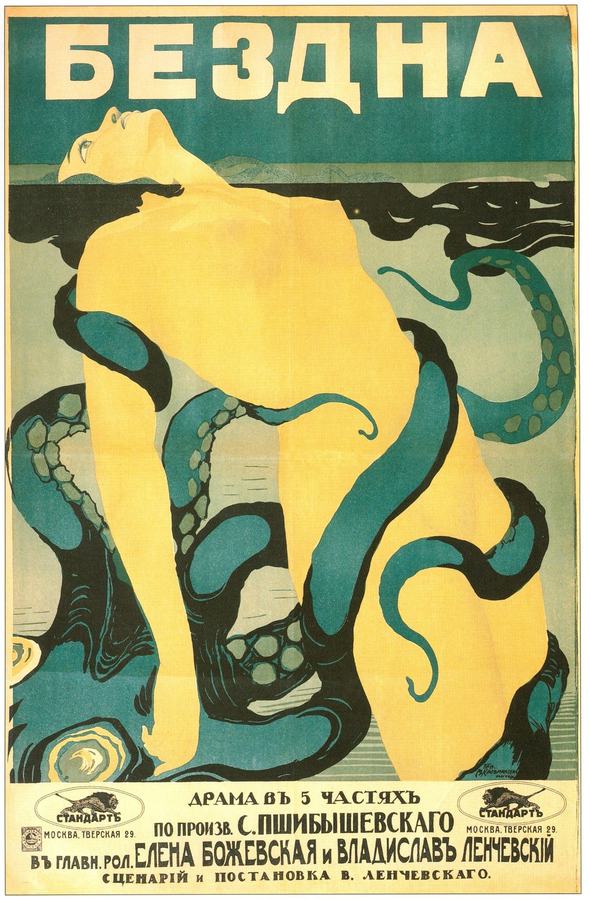
Stepping back into the nascent years of cinematic storytelling, one occasionally stumbles upon a narrative fragment, a whisper from the past, that still manages to echo with profound human truth. Such is the case with 'Topiel,' a film born from the literary mind of Stanislaw Przybyszewski, whose work often delved into the tumultuous undercurrents of the human psyche. While the full scope of this historical cinematic endeavor might be shrouded in the mists of time, the surviving plot synopsis alone, brief as it is, speaks volumes about the eternal conflicts that have plagued lovers across generations. It’s a testament to the enduring power of classic drama, even when presented in its most skeletal form, to evoke a sense of poignant tragedy and an understanding of the intricate dance between personal desire and societal obligation.
The very premise of 'Topiel' is a stark, almost brutal, examination of love's vulnerability in the face of deeply entrenched social structures. We are introduced to Robert Skalski, a character whose passionate declaration of love for Ludwika forms the emotional bedrock of the entire narrative. His plea for her hand in marriage is not merely a conventional proposal; it is, by all accounts, an outpouring of the soul, a desperate entreaty born of profound affection. One can almost picture the intensity in Wladyslaw Lenczewski's eyes, the fervent gestures, the raw vulnerability etched across his face as he lays bare his heart. This isn't just a man asking a woman to be his wife; it's a soul imploring another to complete a shared destiny, to forge a future together against an unyielding world.
Yet, Ludwika, portrayed by the undoubtedly nuanced Helena Bozewska, stands firm in her refusal. Her resistance, however, is not a testament to a lack of reciprocal feeling, but rather a chilling demonstration of the invisible chains that bind her. The plot reveals her apprehension stems from a reluctance to defy her uncle and aunt, the very individuals who nurtured her from childhood. This single detail transforms 'Topiel' from a simple love story into a profound exploration of gratitude's burdensome weight and the moral labyrinth it can create. How does one reconcile the fierce, unyielding demands of the heart with the deep-seated obligation to those who provided solace and sustenance in formative years? It’s a question that resonates with a timeless quality, echoing through countless literary and cinematic works where personal happiness is pitted against familial duty.
The genius of Przybyszewski's original concept, and presumably the film's execution, lies in its ability to highlight this internal conflict without necessarily needing grand, external antagonists. The true antagonist here is the societal expectation, the unwritten contract of indebtedness, and the psychological burden of perceived disloyalty. Ludwika’s choice, or rather her inability to choose freely, becomes a microcosm for the broader struggles of individuals trapped within the rigid social mores of their time. Her decision is less about rejecting Robert and more about protecting a delicate ecosystem of familial harmony, even if that harmony comes at the devastating cost of her own romantic fulfillment. One can only imagine the silent agony conveyed by Bozewska, the internal struggle manifesting in subtle gestures, averted gazes, and perhaps even tears unshed.
In the silent era, the onus on actors was immense. Without spoken dialogue, every emotion, every nuance of character, had to be conveyed through exaggerated facial expressions, precise body language, and the sheer force of their presence. Wladyslaw Lenczewski, as Robert, would have been tasked with embodying the very essence of desperate love, his performance a physical manifestation of a heart on the brink. Helena Bozewska, in turn, would need to navigate the treacherous waters of conflicted emotion, portraying a woman torn between profound affection and an equally profound sense of duty. Maria Mirska, likely in a supporting role that perhaps amplified the societal pressures or offered a counterpoint to the central romance, would contribute to the overall emotional tapestry, each actor a crucial thread in this delicate weave.
The title itself, 'Topiel,' which translates to 'Drowning' or 'The Drowned,' carries a potent symbolic weight. It suggests not merely a physical submersion but a psychological one – a drowning in sorrow, in unfulfilled desires, in the inescapable currents of fate. This metaphorical 'drowning' could apply to Ludwika, whose true self and desires are submerged beneath the expectations of others, or to Robert, whose hopes are drowned in the bitter waters of rejection. It even hints at the possibility of a tragic resolution, a common trope in the melodramas of the period, where unrequited love often led to desperate measures or profound despair. The very choice of title imbues the sparse plot with a sense of impending doom and melancholic inevitability.
The central conflict of 'Topiel' – love versus duty – is a narrative wellspring that filmmakers have drawn from for over a century. One can draw parallels to the grand, sweeping tragedies where personal desires are crushed under the weight of larger forces. Think of the societal pressures and class divides that complicate relationships in films like The Pride of the Clan, where lineage and expectation dictate the boundaries of affection. Or consider the stark moral dilemmas presented in The Code of Marcia Gray, where characters grapple with difficult choices that often lead to personal sacrifice for the greater good, or at least, for the avoidance of greater harm.
The intensity of Robert’s passionate confession also brings to mind the dramatic declarations found in more overtly tragic narratives, even those of much later periods. The raw, almost theatrical emotionality of the silent era allowed for such grandiose expressions of feeling, much like the operatic scale of devotion seen in a timeless classic such as Hamlet, where love and loyalty are inextricably tangled with betrayal and madness, albeit on a much larger, royal canvas. The silent film medium, stripped of dialogue, compelled performers and directors to communicate through visual poetry, relying on the universal language of human emotion to tell their stories. This reliance on visual storytelling meant that every gesture, every tilt of the head, every lingering glance, carried immense narrative weight, making the unspoken often more powerful than any spoken word could be.
Stanislaw Przybyszewski, as the writer behind 'Topiel,' was a pivotal figure in European modernism, known for his intensely psychological and often morbid explorations of human nature. His literary works were characterized by a focus on the subconscious, the erotic, and the darker aspects of the human condition. Translating such a sensibility to the nascent art of cinema would have been a fascinating challenge. One can surmise that 'Topiel' would have been imbued with his characteristic depth, moving beyond a superficial romance to delve into the psychological toll of Ludwika’s internal struggle. The film, therefore, likely served as an early cinematic vehicle for the kind of complex, emotionally charged storytelling that would later become a hallmark of art cinema.
The portrayal of the uncle and aunt, though unseen in the plot synopsis, would have been crucial. Were they tyrannical figures, or simply well-meaning but unwittingly restrictive? The nuance here would dictate the audience's sympathy and the overall tone of the film. Maria Mirska's contribution, perhaps as one of these guardians or another character influencing Ludwika's decisions, would have been instrumental in shaping the emotional landscape. Even in a seemingly minor role, a skilled actor can imbue a character with enough gravitas to shift the entire dynamic of the central conflict. The silent film era, with its reliance on archetypes and clear emotional signals, often used supporting characters to externalize the internal struggles of the protagonists.
The aesthetic of silent film often leaned into melodrama, not as a weakness, but as a necessary tool to convey heightened emotion without dialogue. 'Topiel' would have thrived on this, allowing the performances of Lenczewski and Bozewska to carry the narrative weight. The cinematography, even in its early forms, would have played a critical role in establishing mood and emphasizing key emotional beats. Imagine close-ups on Ludwika's tormented face, or wide shots that emphasize Robert's isolation in his plea. The director's choices in framing, lighting, and editing would have transformed Przybyszewski's psychological insights into a visual spectacle of human drama.
Consider the power of a single, lingering shot in such a film. A shot of Ludwika's hand trembling as she considers Robert's proposal, or a shot of Robert's hopeful yet pained expression as he awaits her answer. These visual cues, accompanied by a live orchestral score, would have created an immersive emotional experience for audiences of the time. The film's title, 'Topiel,' suggests a certain bleakness, perhaps even a tragic ending. This aligns with many films of the era that explored the darker aspects of human experience, like Woe to the Conqueror; or, The Law of War, where grand historical events often lead to profound personal suffering.
The romantic idealism of Robert, contrasted with Ludwika's practical, duty-bound resistance, forms a classic dramatic tension that continues to captivate. It speaks to the universal struggle between aspiration and reality, between the fervent desires of youth and the sobering responsibilities that life often imposes. This dichotomy is a rich vein for storytelling, explored in everything from grand epics like The Last Days of Pompeii, where individual fates are intertwined with cataclysmic events, to more intimate dramas that focus on personal sacrifice.
In conclusion, while 'Topiel' may exist primarily as a historical footnote for many, its core narrative exemplifies the enduring power of classic cinema to distill complex human emotions into compelling drama. The interplay between Robert's passionate love and Ludwika's conflicted duty, rooted in the expectations of her benefactors, creates a timeless tableau of human struggle. It reminds us that even in the earliest days of film, storytellers were grappling with the profound questions of love, loyalty, and the often-painful choices dictated by the human heart and the societal fabric. The film, even in its abstract form, serves as a poignant reminder of the sacrifices often demanded by affection and the silent battles waged within the soul when love and duty collide. It’s a testament to the fact that some stories, like the relentless pull of the tide, never truly recede from our collective consciousness, continuing to resonate with a quiet, melancholic power.
IMDb 6.9
1935
Community
Log in to comment.