DbcultAccessing Vault...
Cult Review
Senior Film Conservator
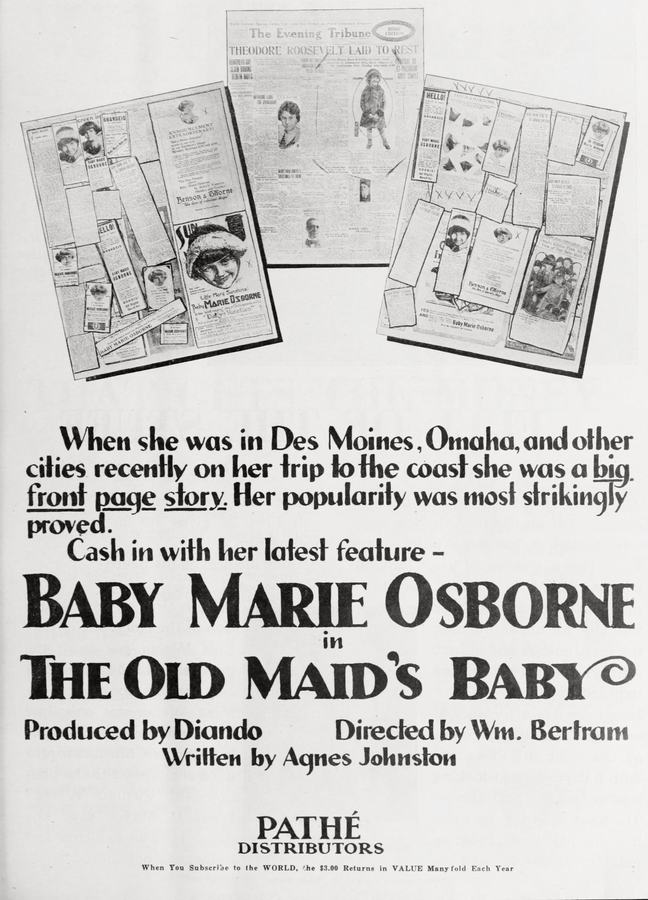
The year 1919 was a threshold in cinematic history, a moment when the medium began to shed its primitive skin and embrace complex, often contradictory, thematic structures. The Old Maid's Baby, directed by William Bertram, stands as a fascinating relic of this era, offering a narrative that is as tonally dissonant as it is emotionally resonant. It is a film that dares to place a circus elephant and a treatise on the fourth dimension in the same frame, challenging the audience to find the connective tissue between the visceral thrill of the sawdust ring and the icy corridors of academia.
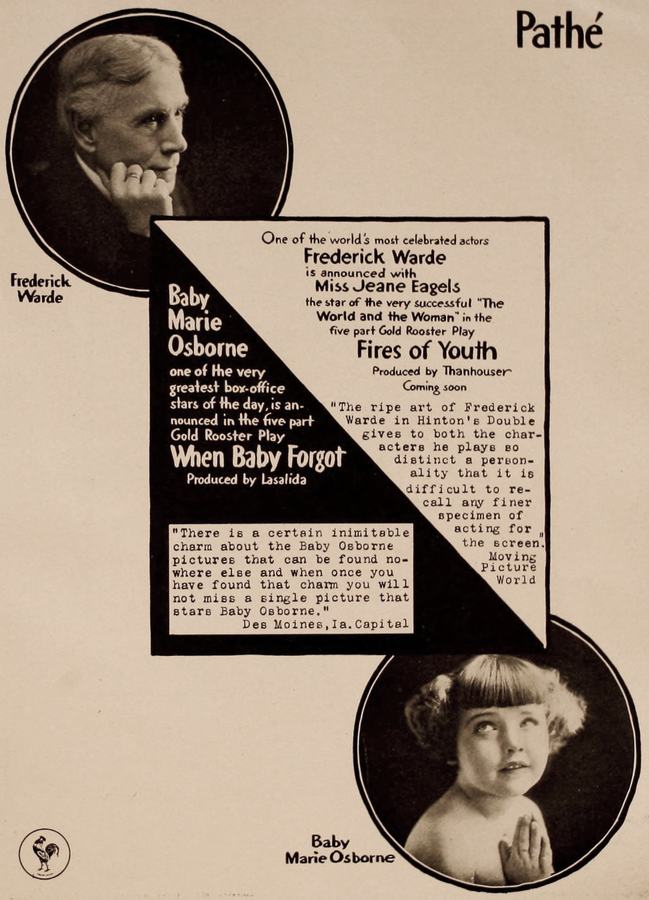
At the heart of this idiosyncratic drama is Marie Osborne, known to the world as 'Baby Marie.' Her performance as Tiny is a masterclass in the precocious naturalism that defined early child stardom. Unlike the saccharine caricatures often found in the works of the period, Osborne’s Tiny carries a weight of worldly experience. Her friendship with an elephant and a lame dog isn't merely a visual gimmick; it serves as a metaphorical anchor, grounding her in a world of unconditional, non-verbal empathy. This stands in stark opposition to the adult world she eventually inhabits—a world where communication is weaponized through mathematics and social standing.
The opening sequences, depicting the nomadic life of the circus, are shot with a sense of kinetic energy that rivals The Marathon. We see Tiny’s mother, a woman who chose elopement with a clown over the stifling expectations of her hometown, performing a nightly stunt of parachuting from a balloon. The visual language here is one of flight and freedom, which makes the subsequent tragedy all the more claustrophobic. When the parachute fails—a sequence handled with a surprising lack of melodrama—the film shifts from a picaresque adventure into a somber exploration of grief and intellectual isolation.
Perhaps the most intriguing element of The Old Maid's Baby is the character of Sylvia, played with a brittle intensity by Marion Warner. Labeled an 'old maid' by the reductive social standards of her town, Sylvia is actually a woman possessed by an all-consuming passion for mathematics. In an era where female protagonists were often relegated to domestic or romantic roles, as seen in the more traditional A Mother's Secret, Sylvia’s obsession with the 'fourth dimension' is a radical character trait. She is not lonely because she lacks a man; she is isolated because her intellect transcends the provincial minds surrounding her.
However, the film frames this intellectualism as a double-edged sword. Sylvia’s devotion to her book—a work she believes will revolutionize the field—renders her emotionally stunted. She views Tiny not as a grieving niece, but as a biological variable to be managed. This leads to the introduction of the film’s antagonist, Professor Caldwell (Jack Richardson). Caldwell is the quintessential academic predator, a man who recognizes Sylvia’s genius and seeks to dismantle it to preserve his own mediocre status. His attempt to direct Tiny’s upbringing 'scientifically' is a chilling precursor to the social engineering themes that would later permeate 20th-century literature.
Visually, the film employs a contrast between the expansive, sun-drenched outdoor scenes of the circus and the dark, shadow-heavy interiors of Sylvia’s study. The cinematography by the uncredited cameraman (typical of the era) utilizes the depth of field to emphasize Tiny’s smallness within the large, imposing house. When Tiny, overwhelmed by the loss of her parents and the coldness of her new environment, attempts to drown herself, the sequence is shot with a haunting stillness. It lacks the frenetic editing of The Birth of a Nation, opting instead for a lingering, observational style that forces the viewer to confront the child's despair.
The intervention of the dog and the eventual rescue by Frank Dodge (Jack Connolly) marks the transition into the film’s final act. Frank represents the bridge between Sylvia’s world of theory and Tiny’s world of feeling. He is the 'man of action' who respects Sylvia’s mind without being intimidated by it. This dynamic is far more sophisticated than the romantic tropes found in The Red-Haired Cupid, as it requires a mutual recognition of intellectual and emotional worth.
The plot to destroy Sylvia’s manuscript on the fourth dimension is where the film takes an almost Hitchcockian turn toward suspense. Professor Caldwell’s villainy is not rooted in physical violence but in intellectual theft—a crime that feels particularly modern. The 'fourth dimension' serves as a brilliant metaphor for the film’s themes; it represents a reality that exists beyond the three dimensions we can see, much like the emotional depth that Sylvia must learn to navigate. Tiny and Frank’s exposure of the Professor’s plot is not just a victory for Sylvia’s career, but a validation of her humanity.
This resolution avoids the easy sentimentality often found in films like The Gentle Intruder. Instead of Sylvia simply 'softening' and giving up her studies, she finds a way to integrate her intellectual life with her new role as a guardian. The film suggests that the 'old maid' was never a caricature of a woman who couldn't find love, but rather a woman who hadn't yet found a context where her mind and heart could coexist.
Critically analyzing The Old Maid's Baby requires one to look past the occasional technical limitations of 1919. The pacing can be idiosyncratic, and the inclusion of Ernest Morrison as the 'precocious child' friend of Tiny introduces the complex racial dynamics of the era, which—while less overtly problematic than in The Birth of a Nation—still reflect the segregated social landscape of early Hollywood. However, Morrison’s performance is charismatic and serves as a vital counterpoint to the stiff formality of the white adult characters.
When compared to other films of the period, such as the gritty The Devil's Pay Day or the allegorical Thou Shalt Not Covet, Bertram’s work here feels uniquely domestic yet intellectually ambitious. It doesn't rely on grand historical sweeps or biblical moralizing. Instead, it finds drama in the collision of two disparate lifestyles: the transient, physical world of the circus and the stationary, cerebral world of the mathematician.
The final proposal from Frank to Sylvia is not presented as a surrender of her independence, but as a partnership. By exposing the Professor, Tiny has not only saved her aunt’s book but has also cracked the emotional shell that Sylvia had built around herself. The film ends on a note of synthesis. The 'Old Maid' is no longer a pejorative term, and the 'Baby' is no longer an intruder. They have formed a new kind of family, one that values the complexities of the fourth dimension as much as the simple loyalty of a dog.
In the broader context of silent cinema, The Old Maid's Baby is a hidden gem that rewards the patient viewer. It manages to be a star vehicle for a child actor while simultaneously exploring themes of intellectual property, academic jealousy, and the struggle for female autonomy. It is as much a precursor to modern 'indie' dramas as it is a product of its time. For those interested in the evolution of narrative complexity in film, or for those who simply want to see a very talented elephant share the screen with a mathematical genius, this film is an essential, if eccentric, viewing experience.
Note: For those exploring the theme of maternal sacrifice in this era, The Mother of Dartmoor provides an interesting thematic contrast to Sylvia's intellectualized maternal journey.
IMDb —
1919
Community
Log in to comment.