DbcultAccessing Vault...
Cult Review
Senior Film Conservator
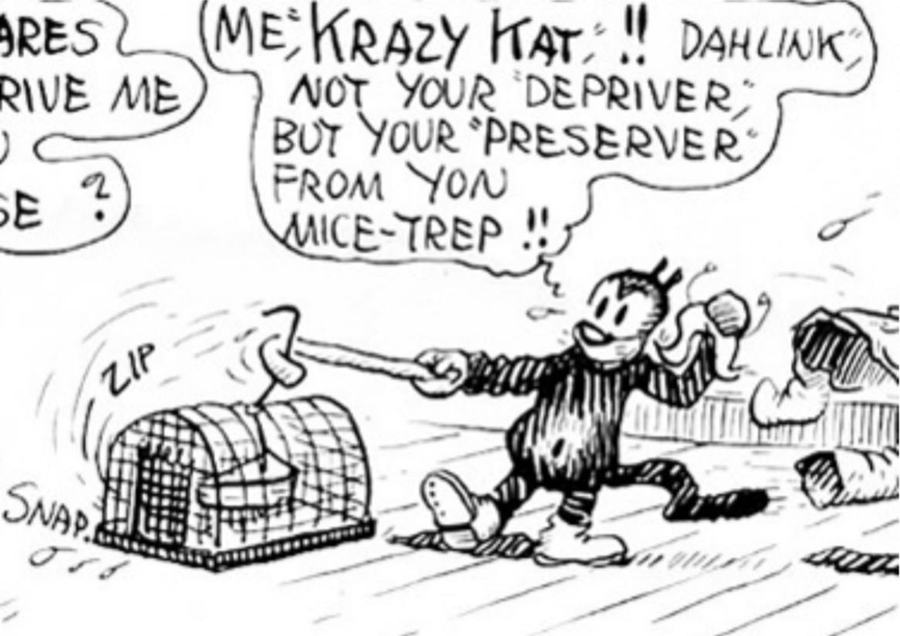
*How I Became Krazy* is not a film for the faint of heart. George Herriman’s audacious vision, brought to life by Vernon Stallings’ magnetic performance, is a visceral plunge into a mind on the brink of collapse. From its opening sequence—a man methodically painting a canvas while whispering to it like a lover—Herriman establishes a tone that is equal parts hypnotic and unsettling. This is a film that dares to ask: What if madness is not a failure of the mind, but its most unfiltered form of expression?
Stallings’ protagonist, a reclusive artist haunted by his own brilliance, is a character who defies easy categorization. His genius is both a gift and a curse, a force that isolates him from the world while drawing him inexorably toward self-annihilation. The script, penned by Herriman, is a masterclass in ambiguity. Dialogue often spirals into nonsensical poetry, and plot logic gives way to emotional truth, creating an experience that feels less like a linear story and more like a fever dream. This tonal ambiguity is what makes *How I Became Krazy* so compelling—it doesn’t just tell a story; it forces you to inhabit the protagonist’s disintegrating psyche.
Visually, the film is a tour de force. Herriman employs a color palette that oscillates between the clinical (sterile whites and grays) and the hallucinatory (neon pinks and electric blues) to reflect the protagonist’s mental state. The cinematography is equally daring, with long, unbroken takes that feel like they’re happening in real time, only to be shattered by abrupt cuts to distorted reflections and shadowy figures. These techniques evoke the same sense of disorientation as in *The Manxman*, but with a far more chaotic energy. The camera feels less like an observer and more like a participant in the protagonist’s unraveling.
One of the film’s greatest strengths lies in its supporting cast, each of whom embodies a facet of the protagonist’s psyche. A cab driver who recites Nietzsche while driving through a rain-soaked city (think the existential wanderer of *Heliotrope*) becomes a fleeting confidant, while a barista with a penchant for existential riddles serves as a grounding presence that the protagonist simultaneously craves and resists. These interactions are never resolved in conventional ways—conversations end mid-sentence, characters vanish without explanation—leaving the viewer to grapple with the same sense of incompleteness as the protagonist.
The film’s soundtrack, a blend of atonal jazz and distorted classical music, amplifies the tension between beauty and chaos. In one scene, the protagonist listens to a record of Chopin while slashing at a canvas with a butter knife; the dissonance between the music’s elegance and his violent actions is both jarring and poetic. This duality is central to the film’s thesis: that art and madness are two sides of the same coin, each feeding into the other in a recursive loop. It’s a concept that resonates with the themes explored in *Of No Use to Germany*, though Herriman’s approach is far more intimate and personal.
What sets *How I Became Krazy* apart from its contemporaries is its refusal to offer catharsis. Unlike the tidy resolutions of films like *Dolly Does Her Bit*, this story ends in ambiguity. The final scene—a close-up of the protagonist’s face as he stares into a mirror, only to see a reflection that is not his own—is a haunting reminder of the film’s central question: If genius is a form of madness, then what remains when the madness consumes the genius?
Technically, the film is flawless. The editing, particularly in the third act, is a marvel of precision, with cross-cutting between the protagonist’s delusions and reality that blurs the line between the two. The sound design deserves special mention; whispers echo in the background, static crackles from radios, and the absence of sound in certain moments is as jarring as the cacophony in others. These elements coalesce into an immersive experience that lingers long after the credits roll.
If there is a criticism to be made, it is that the film’s ambition occasionally outpaces its execution. Some of the supporting characters feel underdeveloped, and a subplot involving a mysterious letter (reminiscent of the enigmatic narratives in *Capitan Groog and Other Strange Creatures*) feels more like a distraction than a meaningful thread. However, these are minor quibbles in a film that is otherwise a triumph of visionary storytelling.
In the final analysis, *How I Became Krazy* is a film that demands to be experienced rather than understood. It is a work of raw, unfiltered emotion that challenges the viewer to confront uncomfortable truths about creativity, identity, and the human condition. For those willing to embrace its chaos, it offers a reward unlike any other—a glimpse into the abyss, and a strangely beautiful reflection of the self.
IMDb —
1923
Community
Log in to comment.